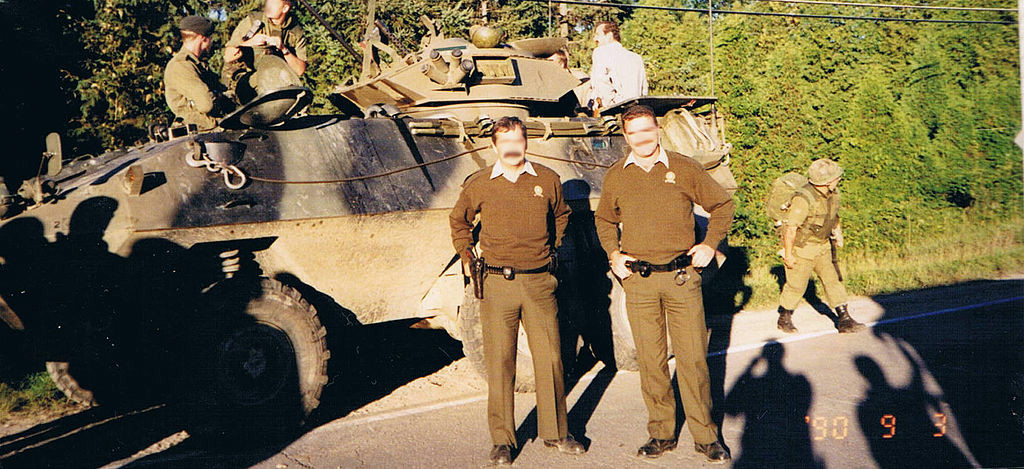
Today in Labor History August 28, 1990: New York state police closed all roads to the St. Regis Mohawk reservation to prevent Mohawks from crossing the international border during a protest to defend Mohawk land from private development of a golf course. On March 11, 1990, members of the Mohawk community erected a barricade blocking access to the dirt side road between Route 344 and "The Pines". After ignoring 2 court injunctions ordering them to remove the barricades, the police intervened, deploying tear gas and concussion grenades, and opening fire on the Mohawks. After a 15-minute gun battle, the police retreated, abandoning six cruisers and a bulldozer, which the Mohawks seized. The conflict lasted from 7/11-9/26/1990, with 2,500 non-local activists and warriors supporting 600 local Mohawks against an army of 4,500 soldiers and 2,000 police. One person was killed on each side. After 26 days of siege without supplies being let through, the land defenders ended the struggle. However, the cops and military continued to attack them after they began to leave, including a 14-year-old, who was bayoneted near the heart, and who almost died from his wound. But the golf course expansion was halted. #workingclass #LaborHistory #mohawk #indigenous #police #solidarity #seige image
image
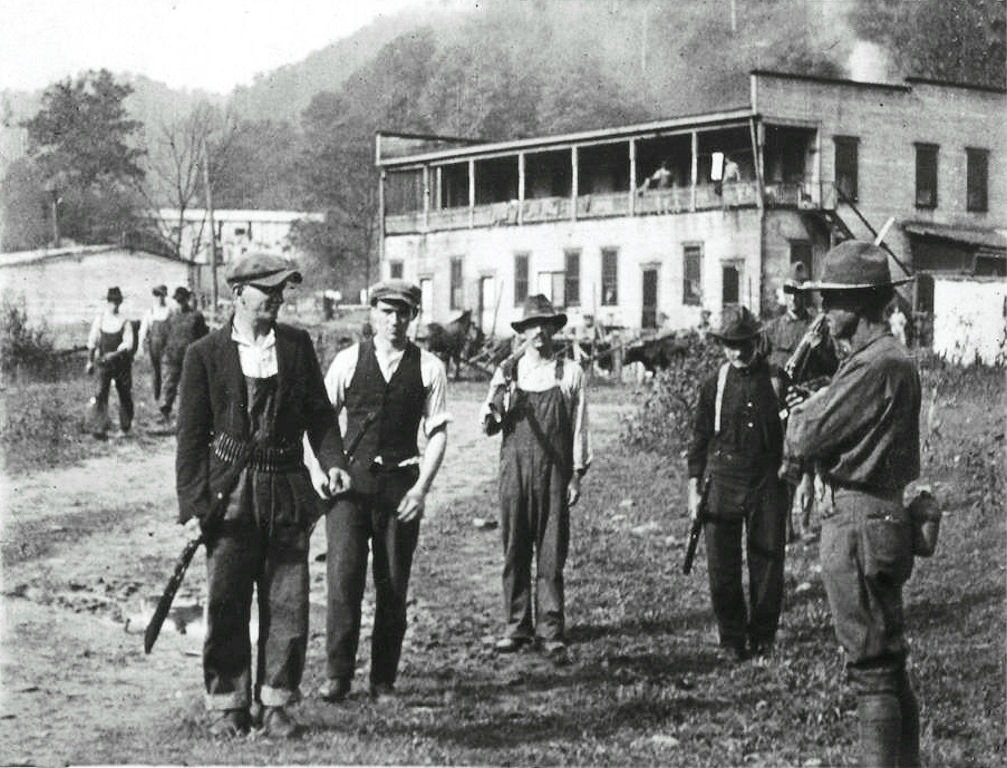
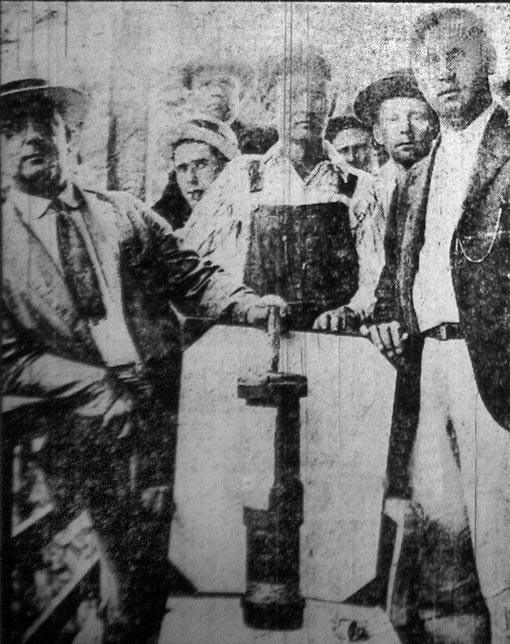
Today in Labor History August 25, 1921, the Battle of Blair Mountain began in Logan County, West Virginia. It was the largest armed insurrection since the Civil War, and the largest labor uprising in U.S. history. 10,000-15,000 coal miners battled 3,000 cops, private cops and vigilantes, who were backed by the coal bosses. Up to 100 miners died in the fighting, along with 10-30 Baldwin-Felts detectives and three national guards. Nearly 1,000 people were arrested. One million rounds were fired. And the government bombed striking coal miners by air, using homemade bombs and poison gas left over from World War I. This was the second time the government had used planes to bomb its own citizens within the U.S. (the first was against African American during the Tulsa pogrom, earlier that same year). The Battle of Matewan had occurred just a year before. Baldwin-Felt private police tried to arrest Sheriff Sid Hatfield, who supported the miners, using a bogus arrest warrant. Unbeknownst to the detectives, armed miners had surrounded them. No one knows who shot first, but when the smoke had cleared, there were seven dead detectives, including Albert and Lee Felts, and four dead townspeople, including the mayor. On August 1, 1921, surviving members of Baldwin-Felts assassinated Hatfield in broad daylight, on the steps of Welch County courthouse, as his wife watched in horror. As news of his death spread, miners began arming themselves and threatened to march to the anti-union stronghold of Logan County to overthrow Sheriff Dan Chaffin, the coal company tyrant who murdered miners with impunity. Fearing a bloodbath, Mother Jones tried to dissuade them from marching. Many accused her of losing her nerve. The march led to all-out war, as the authorities sent in police, private cops, and deputized vigilantes to battle the miners. You can read my full article on the battle and its historical roots here: #workingclass #LaborHistory #BlairMountain #mining #coal #westvirginia #matewan #police #vigilantes #racism #tulsa #motherjones image
image
image
Direct Action Gets the Goods! image
image
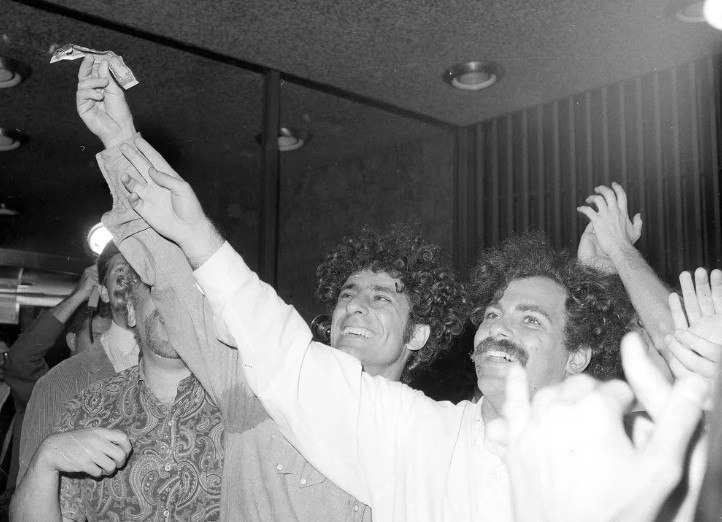
Today in Labor History August 24, 1967: Led by Abbie Hoffman, the Youth International Party (Yippies) temporarily disrupted trading at the New York Stock Exchange by throwing dollar bills from the viewing gallery, causing trading to cease as brokers scramble to grab them. Hoffman organized the action with LGBTQ activist Jim Fouratt. War Resisters League organizer, Marty Jezer, assumed they’d have to look straight to get in, so he got a haircut and donned a suit and tie. The Yippies, including Hoffman, tried to get in wearing tie dyes and long hair. When security refused them entry and said they don’t let demonstrators in, Hoffman replied β€œWe’re not demonstrators. We’re Jews.” And the guard let them in, not wanting to be accused of antisemitism. #workingclass #LaborHistory #yippies #abbiehoffman #stockexchange #lgbtq #protest #guerillatheater #directaction #money image
Today in Labor History August 24, 1952: Linton Kwesi Johnson was born. LKJ is a Jamaican dub poet and activist, based in the UK since 1963. In 2002 he became the second living poet, and the only black poet, to be published in the Penguin Modern Classics series. In 1963 he and his father came to live in Brixton, London, joining his mother, who had immigrated there shortly before Jamaican independence in 1962. While a youth, LKJ joined the British Black Panther Movement, helped to organize a poetry workshop within the movement, and developed his work with Rasta Love, a group of poets and drummers. Most of his music and poetry is political, addressing issues of racism, police brutality, and immigration in the UK, as well as capitalism #workingclass #LaborHistory #jamaica #uk #lintonkwesijohnson #poet #poetry #dub #blackpanthers #brixton #reggae #activism #racism
image