image
Today in Labor History October 2, 1968: The Tlatelolco Massacre occurred in Mexico City. 15,000 students were demonstrating at the Plaza of Three Cultures against the army’s occupation of the University. The army, with 5,000 soldiers and 200 tanks, ambushed the students, opened fire, and killed nearly 300. They also arrested thousands. This occurred ten days before the opening of the Olympics, the same Olympics where Tommy Smith and John Carlos raised their gloved-fists in a Black Power salute. The U.S. contributed to the massacre by providing the Mexican military with radios, weapons, ammunition and riot control training. Furthermore, the CIA provided the Mexican military with daily reports on student activities in the weeks leading up to the massacre. Chilean film maker Alejandro Jodorosky portrayed the massacre in his film “The Holy Mountain” (1973). Chilean author Roberto Bolano referenced it in his 1999 novel, “The Savage Detectives.” #workingclass #LaborHistory #tlatelolco #massacre #mexico #students #olympics #cia #imperialism #robertobolano #racism #protest #film #fiction #historicalfiction #novel #books #film #author #writer #BlackMastadon @npub1wceq...lzu8 https://kolektiva.social/system/media_attachments/files/113/238/630/818/770/195/original/419aa0cbb878be85.jfif
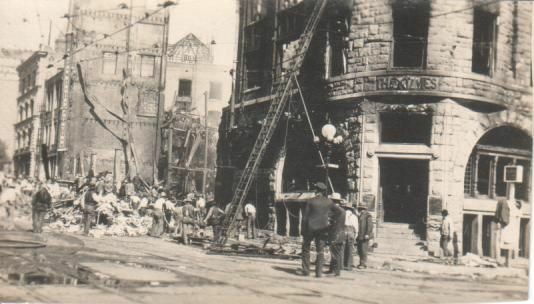
Today in Labor History October 1, 1910: Twenty-one people were killed when the Los Angeles Times building was dynamited during a labor strike. Anarchists were immediately blamed. The Iron Workers Union had been engaged in a brutal and protracted battle with U.S. Steel and the American Bridge Company, which was busting their union with spies, informants, scabs and agents provocateur. Los Angeles Times publisher Harrison Otis, who was viciously anti-union, provided propaganda for the bosses. By early 1910, the owners had driven nearly all the unions from their plants, except for the Iron Workers union, which had instigated a bombing campaign starting in 1906. In April 1911, private detective William Burns and Chicago police sergeant William Reed kidnapped union organizer James McNamara and held him hostage for a week prior to illegally extraditing him to Los Angeles for the bombings. Burns later arrested his brother John, but denied him access to an attorney. Both McNamaras had been arrested based on the confession of a third man who had likely been tortured. And both were likely innocent of the bombings. Eugene Debs accused Otis, himself, of the Times bombing. James McNamara spent the rest of his life in San Quentin, dying there in 1941. John served 15 years and then went on to serve as an organizer for the Iron Workers. Roberta Tracy’s wonderful historical novel, Zig Zag Woman (2024), takes place in Los Angeles at the time of the bombing. You can read my review of “Zig Zag Woman” here: #workingclass #LaborHistory #anarchism #strike #union #laTimes #propaganda #prison #torture #policebrutality #police #unionbusting #bombing #eugenedebs #jamesmcnamara #books #fiction #historicalfiction #author #writer @npub1wceq...lzu8 Image is of the bombed-out Los Angeles Times building, 1910. image
Today in Labor History October 1, 1851: 10,000 New Yorkers busted up a police station in Syracuse to free William "Jerry" Henry, a craftsman who was fleeing slavery in the south. He had been arrested by a US Marshall during the anti-slavery Liberty Party's state convention. Citizens of the city stormed the sheriff's office, freed Henry and helped him escape to Canada via the Underground Railroad. There were a lot of abolitionists living in New York, especially in Syracuse, including Frederick Douglass and Harriet Tubman, and a large number of abolitionist Quakers and Unitarians. Consequently, Syracuse became known as the great central depot on the Underground Railroad. Jerry Rescue Day was celebrated every October 1 in Syracuse, until the start of the Civil War. The annual event included speeches, poetry, music, and organizing against slavery. They also collected funds to keep the Underground Railroad running in central New York. #workingclass #LaborHistory #slavery #abolition #UndergroundRailroad #frederickdouglass #harriettubman #police #blm #quaker #unitarian #newyork #BlackMastadon image
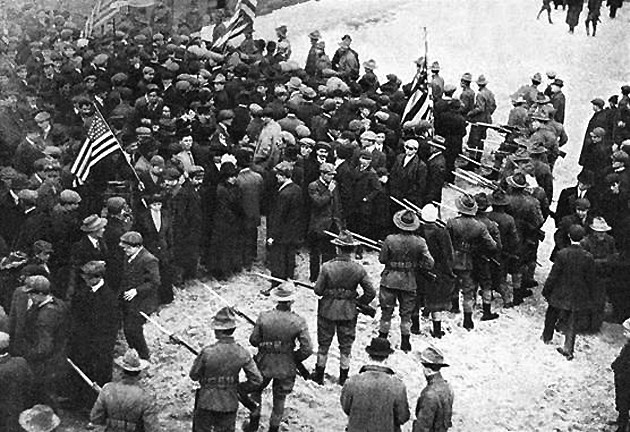
Today in Labor History September 30, 1912: The Lawrence, Massachusetts “Bread and Roses” textile strike was in full swing. On this date, 12,000 textile workers walked out of mills to protest the arrests of two leaders of the strike. Police clubbed strikers and arrested many, while the bosses fired 1,500. IWW co-founder Big Bill Haywood threatened another general strike to get the workers reinstated. Strike leaders Arturo Giovannitti and Joe Ettor were eventually acquitted 58 days later. During the strike, IWW organizers Bill Haywood and Elizabeth Gurley Flynn came up with the plan of sending hundreds of the strikers' hungry children to live with sympathetic families in New York, New Jersey, and Vermont, a move that drew widespread sympathy for the strikers. Nearly 300 workers were arrested during the strike; three were killed. After the strike was over, IWW co-founder and socialist candidate for president, Eugene Debs, said "The Victory at Lawrence was the most decisive and far-reaching ever won by organized labor." Several novels have been written against the backdrop of this famous strike: The Cry of the Street (1913), by Mabel Farnum; Fighting for Bread and Roses (2005), by Lynn A. Coleman; Bread and Roses, Too (2006), by Katherine Paterson #workingclass #LaborHistory #BreadAndRoses #union #strike #IWW #massachusetts #bigbillhaywood #generalstrike #police #policebrutality #fiction #novel #historicalfiction #books #author #writer @npub1wceq...lzu8 image
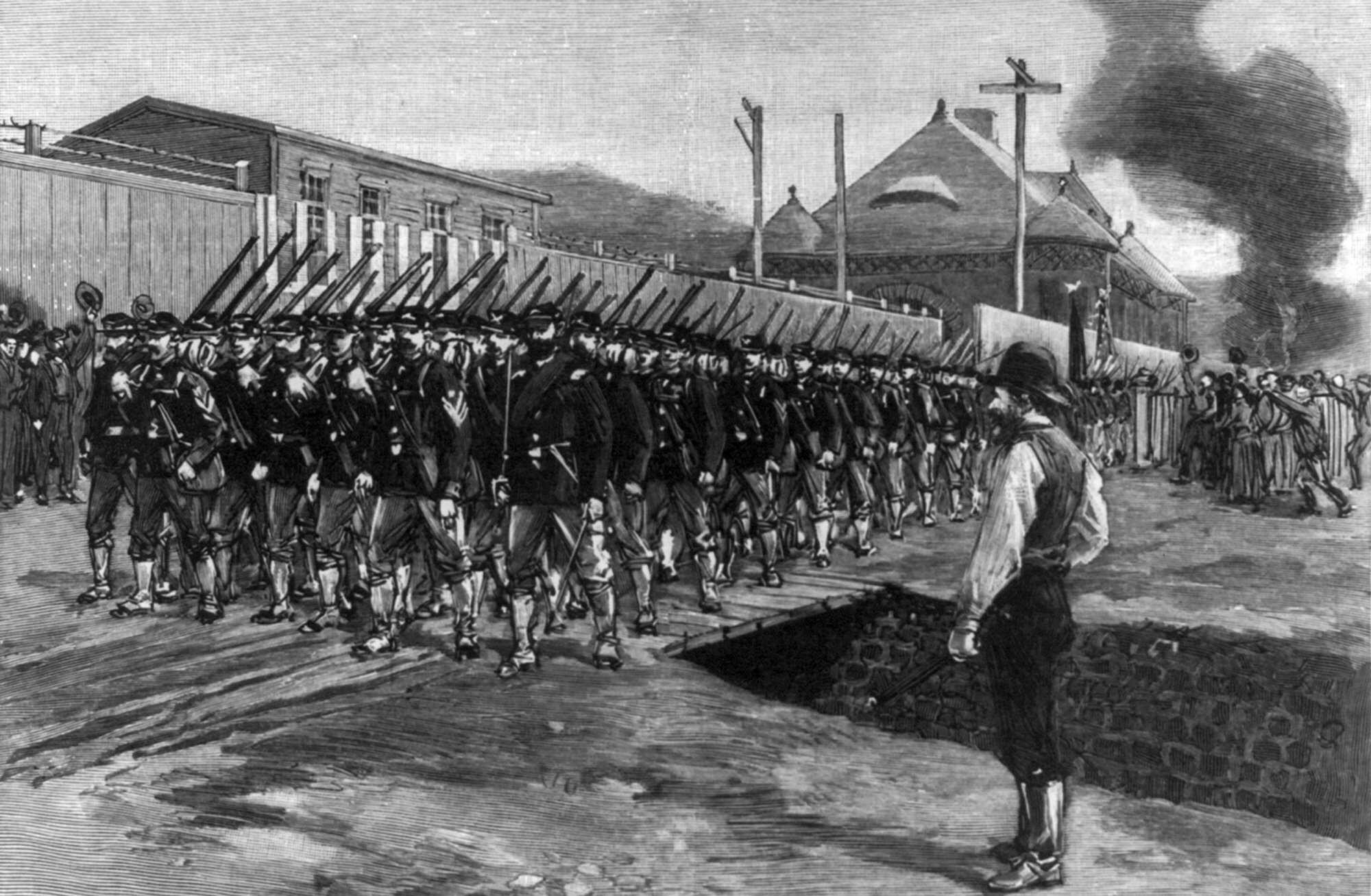
Today in Labor History September 30, 1892: In the wake of the Homestead Steel Strike, union leaders were prosecuted for the crime of treason for the first time in U.S. history. Henry C. Frick, chairman of the Carnegie Steel Company, convinced the chief justice of the Pennsylvania Supreme Court to issue warrants for the arrests of every member of the advisory board of the striking steel union for treason against the state. The 29 strike leaders were ultimately charged with plotting "to incite insurrection, rebellion & war against the Commonwealth of Pennsylvania." During the strike, Pinkerton detectives killed seven workers, who were protesting wage cuts of 18-26%. Alexander Berkman tried to assassinate Frick, but failed, and spent many years in prison. He wrote about his imprisonment, and about anarchism, in his “Prison Memoirs of an Anarchist,” published by Emma Goldman’s Mother Earth Press. Read my article about the Pinkertons here: #workingclass #LaborHistory #carnegie #homestead #steel #strike #union #pinkerton #anarchism #union #treason #rebellion #alexanderberkman #EmmaGoldman #prison #memoir #books #author #writer @npub1wceq...lzu8 image
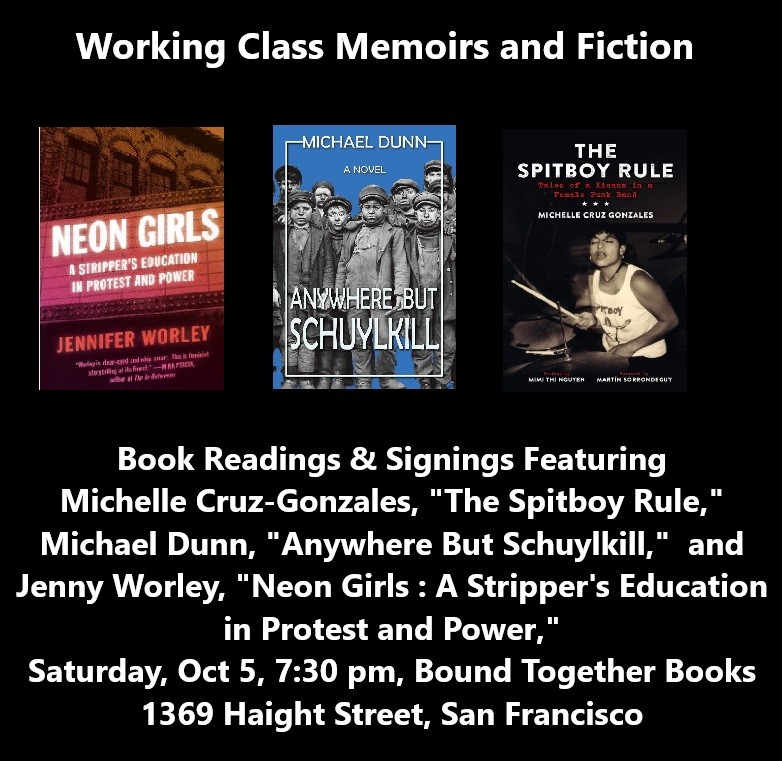
WORKING CLASS MEMOIR & FICTION Featuring book readings by: *Michelle Cruz-Gonzales, from the seminal feminist punk band Spitboy, reading from her memoir, "The Spitboy Rule," *Jenny Worley, union organizer at the Lusty Lady & SF City College, reading from her memoir "Neon Girls: A Stripper's Education in Protest and Power," *And me, Michael Dunn, reading from my historical novel, "Anywhere But Schuylkill." 7:30pm at Bound Together Anarchist Bookstore, Haight Street, San Francisco. Head over after Hardly Strictly Bluegrass. It’s only short walk or bike ride away. #books #memoir #fiction #historicalfiction #author #writer #feminism #union #workingclass #sexwork #punk #union image