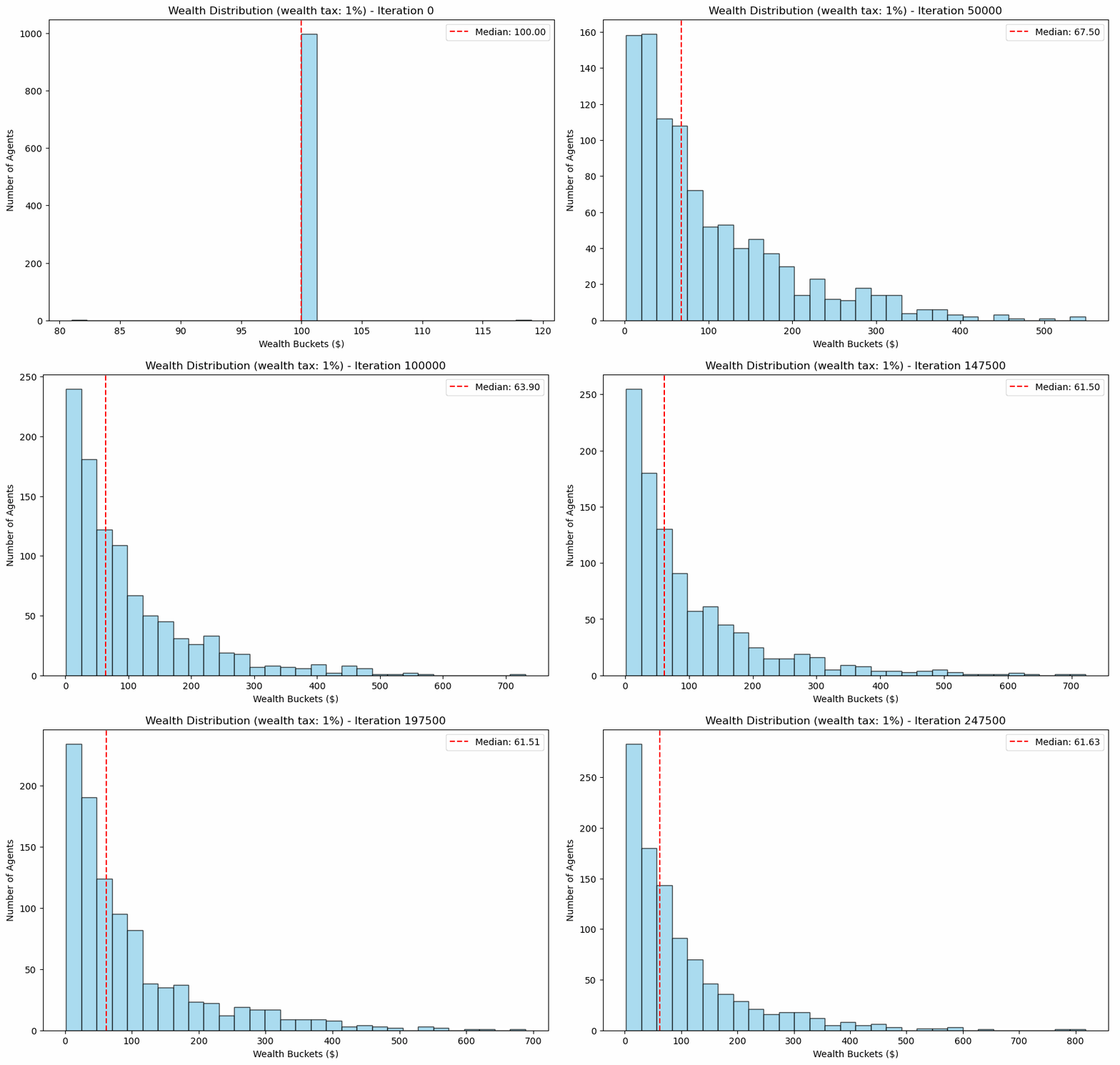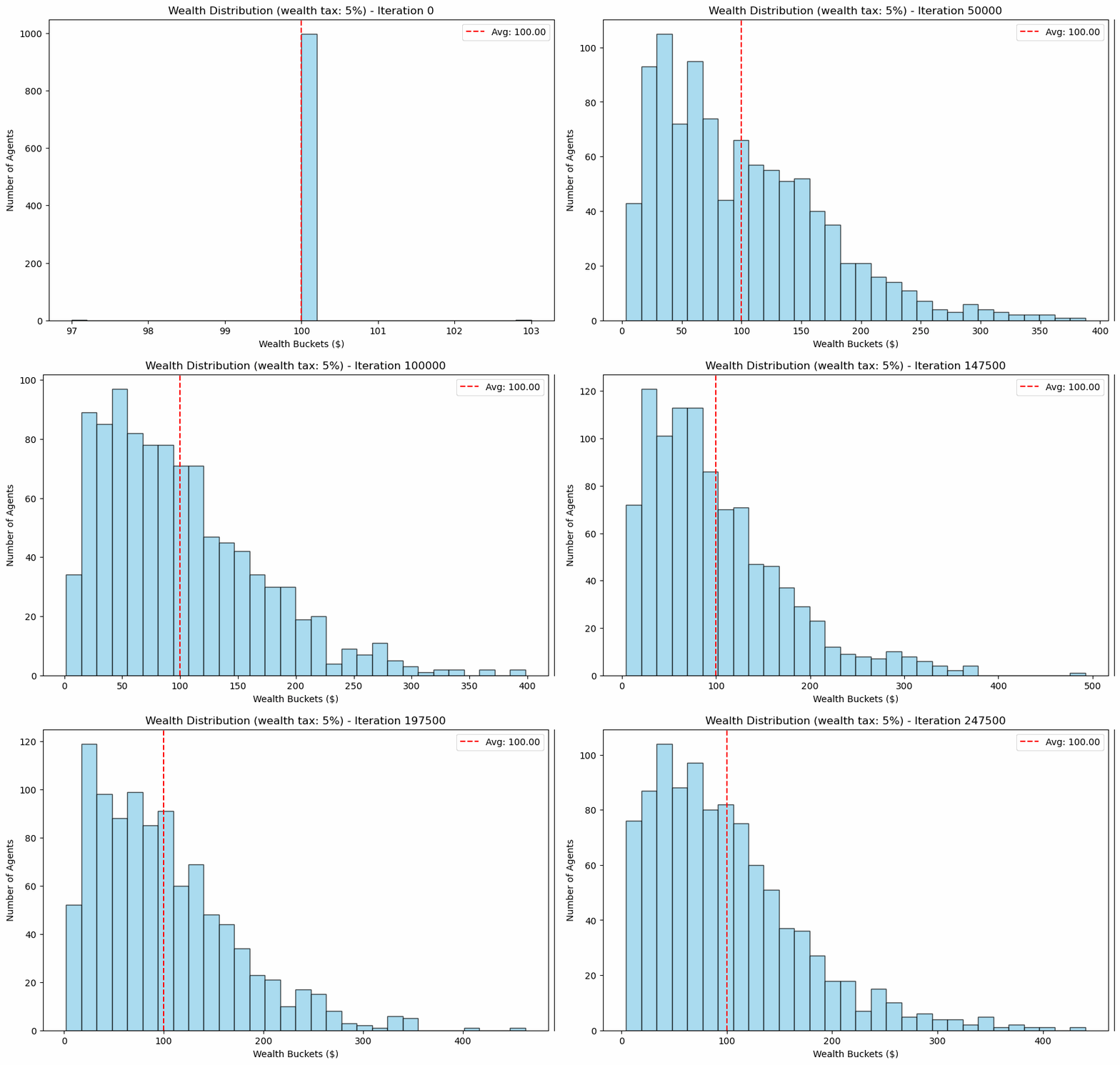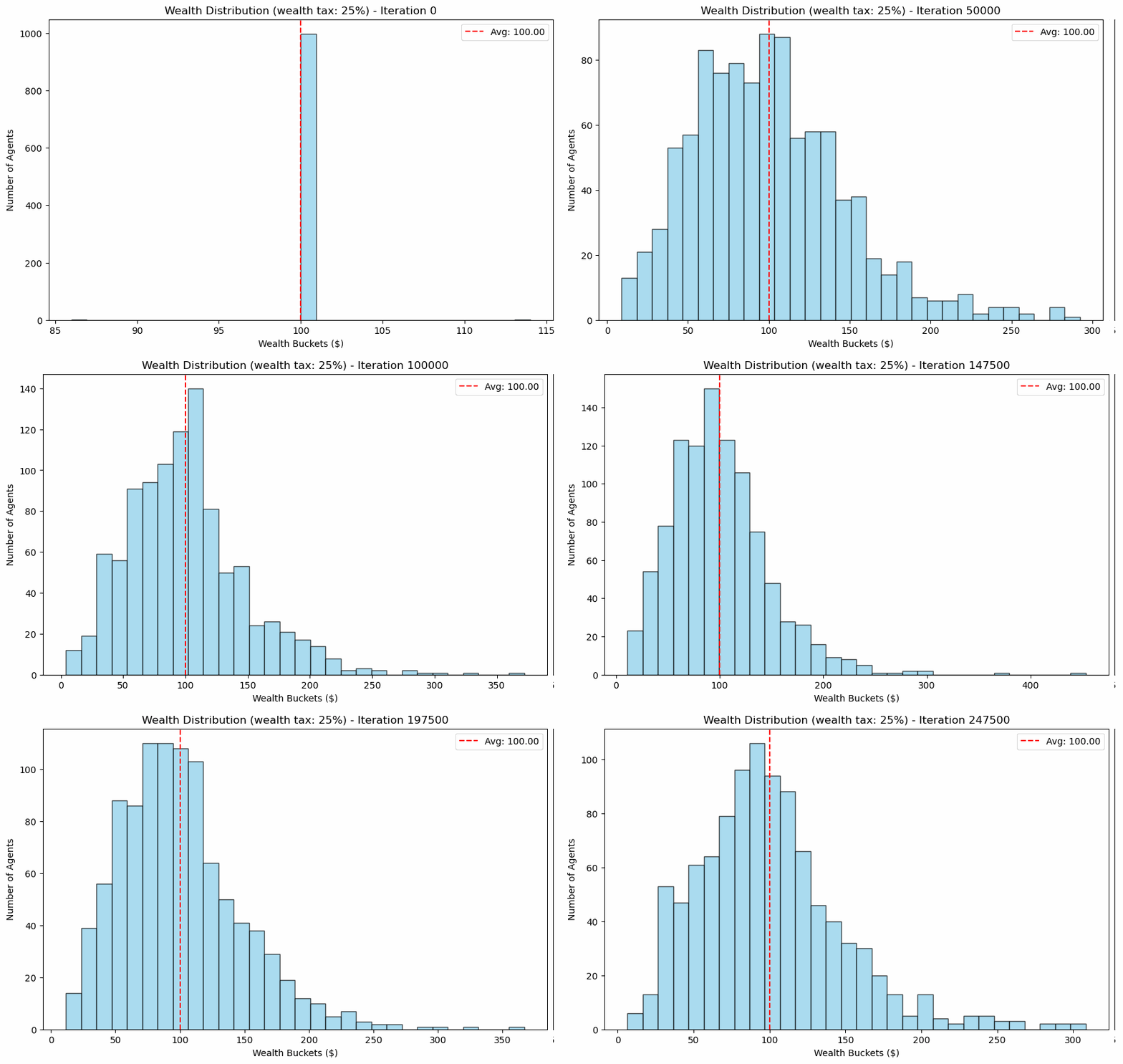
How wealth inequality naturally spreads in an unconstrained market The affine wealth model originally proposed by Bruce M. Boghosian in 2016 is an agent-based stochastic model to analyze #wealth distribution under different wealth tax regimes that has always fascinated me since I first read about it in an old issue of Scientific American. I like it because it takes political opinions and fluffy back-of-the-envelope economic models out of the equation and it replaces them with a quantitative model that analyzes how a market is likely to behave and how that ends up impacting the wealth owned by each agent in the simulation. In this notebook I’ve tried to provide a visual representation on top of the thick math of how these agent-based simulations run - where each pair of agents at turns transacts a fraction of their wealth with each other, a simple simultation of a free market. It’s appalling how quickly you see wealth concentrate when no wealth tax or other rebalancing acts are at play. The first graph is literally the most striking falsification of the “wealth naturally trickles down in a free market” hypothesis. And it’s also appalling how even a basic wealth tax can bring back fairness. And how easy it is to fine-tune it to nudge wealth distribution towards your goal. https://notebooks.manganiello.tech/fabio/wealth-inequality.ipynb
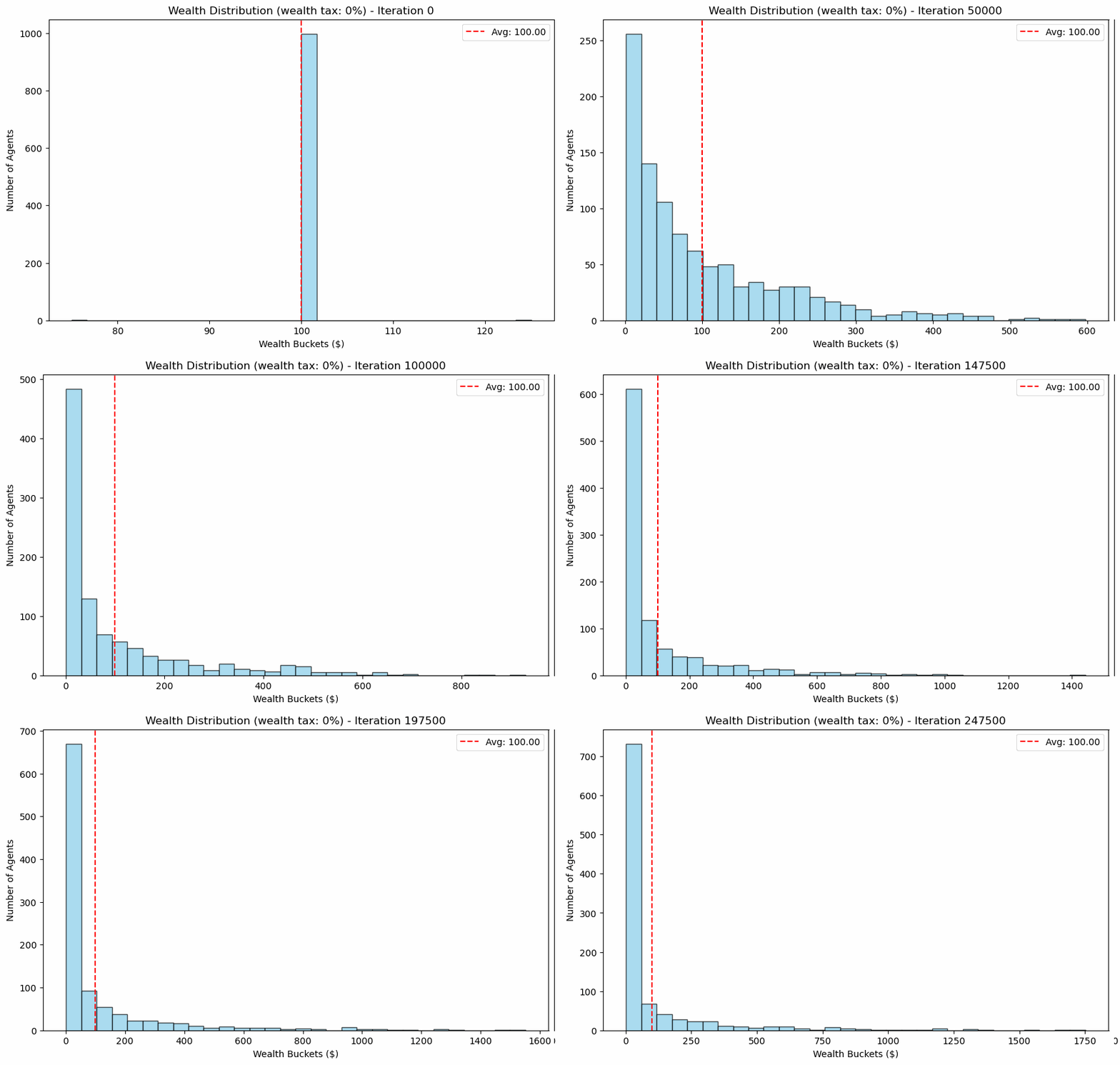
image image image image
The banality of evil image
In an effort towards being both fair towards our friends in #Gaza and reduce the notifications/FOMO burden on donors, I have released two new bots for #GazaVerified: @npub1ur6k...mnde boosts all the posts from gaza-verified accounts. If you want to follow the stories of the families that we’re supporting but you don’t want to individually follow >70 accounts, you can follow this bot. It’s hooked directly to the Gaza archive crawlers and it refreshes every 5 minutes. @npub10cpv...6srt posts twice a day a list of accounts that made <$200 in the past 7 days. You can follow this account to get an idea of where to focus the donation efforts. If you’re a volunteer who also hosts a copy of the Gaza Archive, and you also want to run your copies of the bots, you can add them to your instance by enabling the new environment variables. As usual, the source code is open. We’re in this together ❤️ @npub1qg48...augv @npub1n33c...fu06 @npub1uc0x...3krp @npub1pryq...223m
Take all the most abhorrent, sadistic, selfish and sociopathic features that come to your mind, squeeze them all inside of the same unholy obelisk of flesh, and you get Ben Gvir. Israel is a terrorist State, and Ben Gvir is the living incarnation of terrorism.
It looks like #Google hasn’t been completely deaf to the backlash against their proposed #Android app verification process. While still being firmly convinced that installing an APK outside of the Play Store from a developer that doesn’t have a registered account on the Play Store shouldn’t be allowed in the general case (I refuse to call it “sideloading” because I’ve been compiling software on my machines for more than two decades and nobody has ever called it “sideloading”), it’s going to at least provide a “power user” solution to override that default. Whether it’s an adb command, a hidden entry in the developer settings, an extra layer to flash on top of the OS, 10 confirmation popups or whatever extra friction they decide to come up with, is still open for debate. I wouldn’t call it a win because whatever change adds new friction to the process of installing whatever software I want on the hardware I purchased is a loss. But at least it’s something that power users are most likely to deal with - provided that they don’t further change the process down the road or gradually try to pull the rug under our feet. Students and junior Android developers can then hopefully simply be instructed to the new process so they can still build apps for educational purposes without having to register Google accounts. Anyway, this has still been a wake up call for me. We can’t keep relying on a company in such a terminal state of enshittification for our primary mobile devices. Primary-driver Linux phones are needed now .
I don’t want gifts for my birthday today. I already have any material thing that I may ever want. The biggest gift you can give is to pick 1-2 accounts from the Gaza campaigns dashboard who are struggling with flooded or damaged tents and are not receiving enough money, and donate to them what you’d use to buy me a present.
Italian far-right “war tourists” between 1992-1995 paid the equivalent of ~$80,000/100,000 to join Serbian snipers in Sarajevo for a weekend and shoot at civilians for fun. https://www.europesays.com/2567260/
Who would have ever said that I would have sided with #OpenAI on some issues? What the NYT is demanding is quite outrageous. In order to prove or falsify the hypothesis that the ChatGPT bot purposefully circumvented the NYT paywall in order to scrape articles, the NYT is demanding OpenAI to hand them the logs of 120M conversations. That’s 120M complete conversations, with all kind of of sensitive information and PII inside, handed out to a major news outlet just to verify a case of copyright violation. To be clear, most of these LLM bots are quite aggressive. I’ve had to block whole subnets on my servers because their scrapers were frying my CPU by scraping whole git blames from my Forgejo instance. With no throttling nor proper handling of 429 errors, without respecting the robots.txt, and without even setting proper user agents. And the gravity of the issue is compounded when these bots scrape copyrighted content. But the solution is to prompt regulation for AI bots and push for deals between AI companies and content creators. Not getting carte blanche to compromise the privacy of millions to verify your copyright claims.
Imagine being one of the most valuable companies on earth, making billions thanks to open-source software like #ffmpeg, without contributing financially to it, without contributing to its codebase, and even expecting those unpaid volunteers to fix bugs for you in a timely fashion as if they were your own employees. Imagine contributing to a huge piece of software like ffmpeg that works behind the scenes on literally any device that can either play, record or transform media, a project that has become a critical piece of our digital infrastructure, and doing so unpaid, uncredited and stressed out by companies that make billions thanks to your work. This is the current state of open-source today. A bunch of burned out, unpaid and uncredited volunteers building free stuff in their spare time that trillion-dollar freeriders feel entitled to use without contributing back. ffmpeg developers are right. Either #Google contributes back, or they won’t even look at their bugs anymore. And, in an ideal world where free software licenses weren’t written by good Samaritans, either trillion-dollar companies contribute back, or they shouldn’t be allowed to use free software for profit. 20 years ago I used to have discussions with fellow engineers whether open-source would have won over commercial software. Now I can firmly say that open-source won. There’s no doubt about it. Linux, Apache products, Python, ffmpeg, curl etc. power all of today’s technological stack. But it’s not the win that I expected. It’s the kind of win that happened because corporations realized that open-source is just a way for them to cut on internal engineering costs. https://thenewstack.io/ffmpeg-to-google-fund-us-or-stop-sending-bugs/