This week, Tether issued more USDT-Liquid due to rising demand, tripling the amount in circulation (~100M) to surpass the total USDT in circulation on Tezos, Polkadot, and others.
A few points on why @Liquid Network and other bitcoin L2s will continue to eat up liquidity from alts.
First, some context, Liquid has accomplished this with effectively:
- no speculative markets (governance token, NFTs, memecoins), the main driver of volume on alts.
- no comparable marketing budget, eg, Polkadot spent $37M alone in H1 2024 on promotion:  Instead, the Liquid ecosystem has prioritized the development of native features and infra for bitcoin capital markets (confidentiality, @Blockstream AMP, legal frameworks, etc) -- resulting in organic growth of securities issuances. (RWA TVL on Liquid recently hit >2.5B).
This is further validation of the effectiveness of bitcoin's design philosophy vs crypto, ie the prioritization of security and low-time preference.
The downside, however, is that alts can fill these niche, emerging needs faster and extract value from bitcoin in the short term.
Alternatively, with the new language Simplicity coming to Liquid mainnet next month (and potentially bitcoin in the future), the gap in developer UX and expressivity will be largely addressed as Simplicity competes directly with ETH's Solidity.
It will certainly take longer for the larger-cap crypto L1s to succumb, but we've already started to see cracks and a shift back to bitcoin. Eg:
Vitalik wanting to simplify ETH like bitcoin:
Instead, the Liquid ecosystem has prioritized the development of native features and infra for bitcoin capital markets (confidentiality, @Blockstream AMP, legal frameworks, etc) -- resulting in organic growth of securities issuances. (RWA TVL on Liquid recently hit >2.5B).
This is further validation of the effectiveness of bitcoin's design philosophy vs crypto, ie the prioritization of security and low-time preference.
The downside, however, is that alts can fill these niche, emerging needs faster and extract value from bitcoin in the short term.
Alternatively, with the new language Simplicity coming to Liquid mainnet next month (and potentially bitcoin in the future), the gap in developer UX and expressivity will be largely addressed as Simplicity competes directly with ETH's Solidity.
It will certainly take longer for the larger-cap crypto L1s to succumb, but we've already started to see cracks and a shift back to bitcoin. Eg:
Vitalik wanting to simplify ETH like bitcoin: 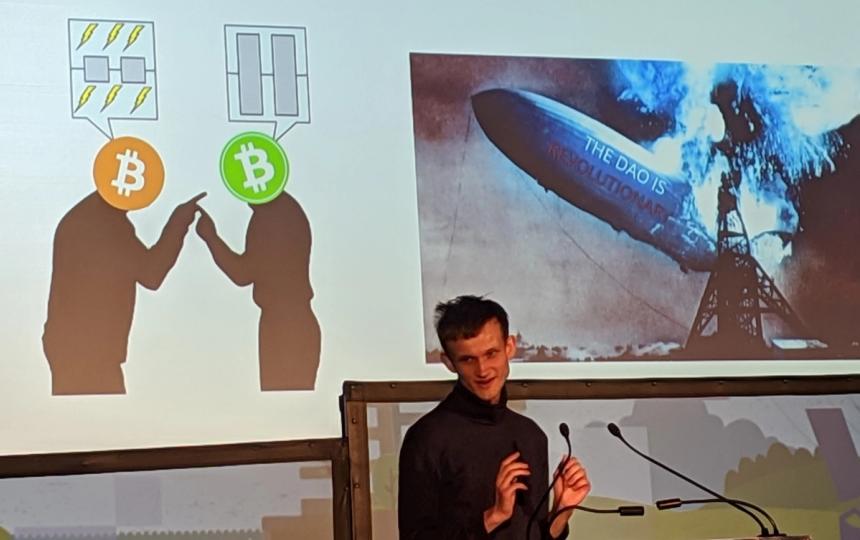 Hoksinson considering moving ADA treasury into BTC:
There's still a long way for Liquid to catch up, but as altcoin marketing budgets dry up and they continue to lose value relative to BTC, we will likely see this trend and convergence accelerate, possibly to the point where some re-denominate their governance tokens in BTC and market themselves as L2s.
The great thing is you can still front-run them all by buying bitcoin.
Hoksinson considering moving ADA treasury into BTC:
There's still a long way for Liquid to catch up, but as altcoin marketing budgets dry up and they continue to lose value relative to BTC, we will likely see this trend and convergence accelerate, possibly to the point where some re-denominate their governance tokens in BTC and market themselves as L2s.
The great thing is you can still front-run them all by buying bitcoin.


Polkadot Forum
Polkadot's Astonishing Marketing Spending
On June 29, Polkadot community members released the Polkadot Treasury’s operational report for the first half of 2024. The report revealed that t...
Ethereum Co-Founder Vitalik Buterin Wants to Make Ethereum Simpler Ahead of Pectra Upgrade
Buterin put out thoughts for a long-term roadmap that drastically reduces the complexity of Ethereum’s technology.
MSN