📝 Solved by CSS Scroll-Driven Animations: hide a header when scrolling down, show it again only when scrolling up again. By adding a long transition-delay to a CSS property under certain conditions (which you can do using a Style Query), you can persist its value. 🔗 Demo by @npub1xg9g...uter.
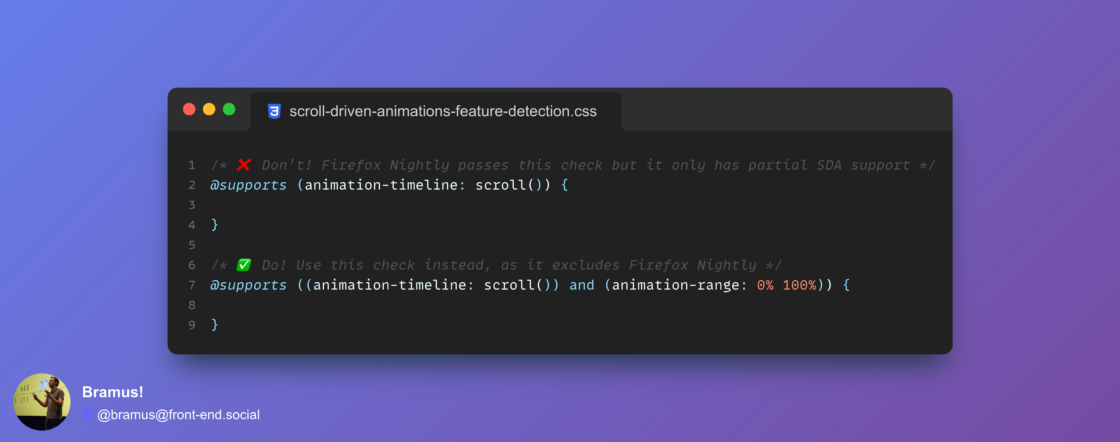
Feature detecting Scroll-Driven Animations with `@supports`: you want to check for `animation-range` too. The problem is that a check for simply `animation-timeline: scroll()` does not exclude Firefox Nightly, which only has a partial SDA implementation. Details: image
Something to add to your CSS reset from now on: ``` :root { interpolate-size: allow-keywords; } ``` It enables things like transitions from `height: 0` to `height: auto`.
A often-heard complaint about View Transitions is how it handles clip-path, border-radius, opacity, … The snapshots fade, while you’d want the clip-path to actually animate. Also, nested elements bleed out their container because the snapshots are a flat list instead of a nested tree.
Exciting release, as Safari now joins Chrome in supporting (Same-Document) View Transitions and Style Queries! 🎉 🔗 View Transitions: 🔗 Style Queries:
“Shake mouse pointer to locate” is such a good #macOS feature. I use it almost daily. “Where is that damn mouse again?!–Oh, it’s right there.”
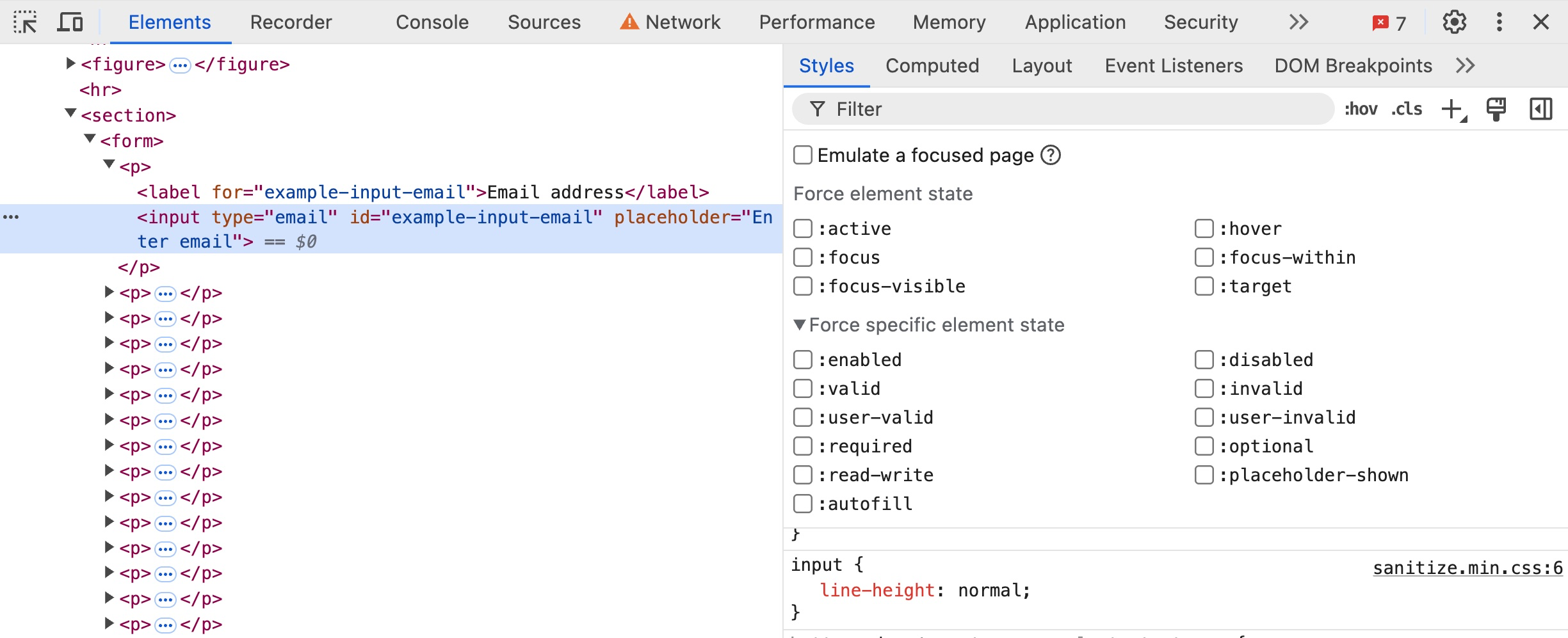
New in @ChromeDevTools (in Chrome Canary): You can now force more states – such as :active, :focus, … – onto elements. For example, when inspecting an <input> element you can now also force states such as :enabled, :valid, etc. image
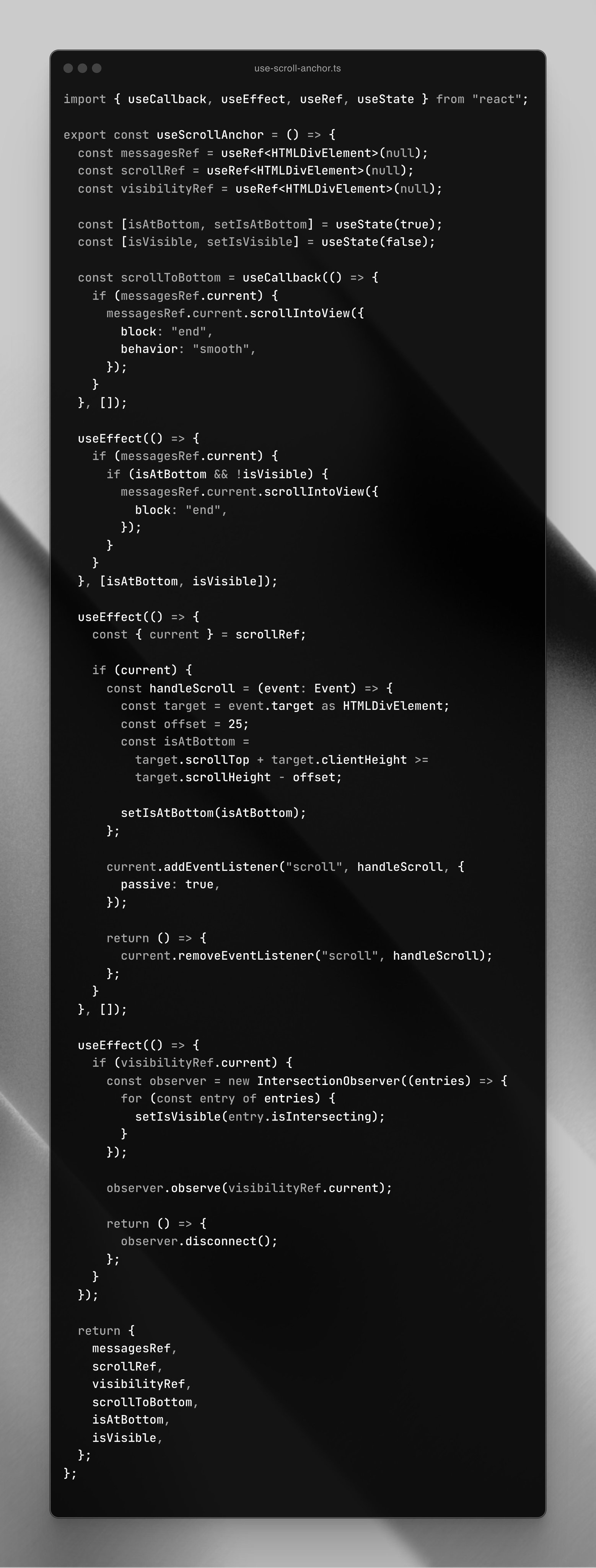
Today I saw this React hook (see photo) get shared on birdsite. It enables one to “automatically scroll down when new messages arrive in a chat”. While it might work, you could — and should — use this little bit of CSS instead: ``` .log { scroll-snap-type: y proximity; align-content: end; } .log::after { display: block; content: ""; scroll-snap-align: end; } ``` “… remains snapped to the bottom …unless the user has scrolled away from that edge” — image
👀 Apple/WebKit about to express support for cross-document View Transitions (and related features such pageswap, pagereveal, render blocking) + also View Transition Types. Get the rundown of these features here: (video included)
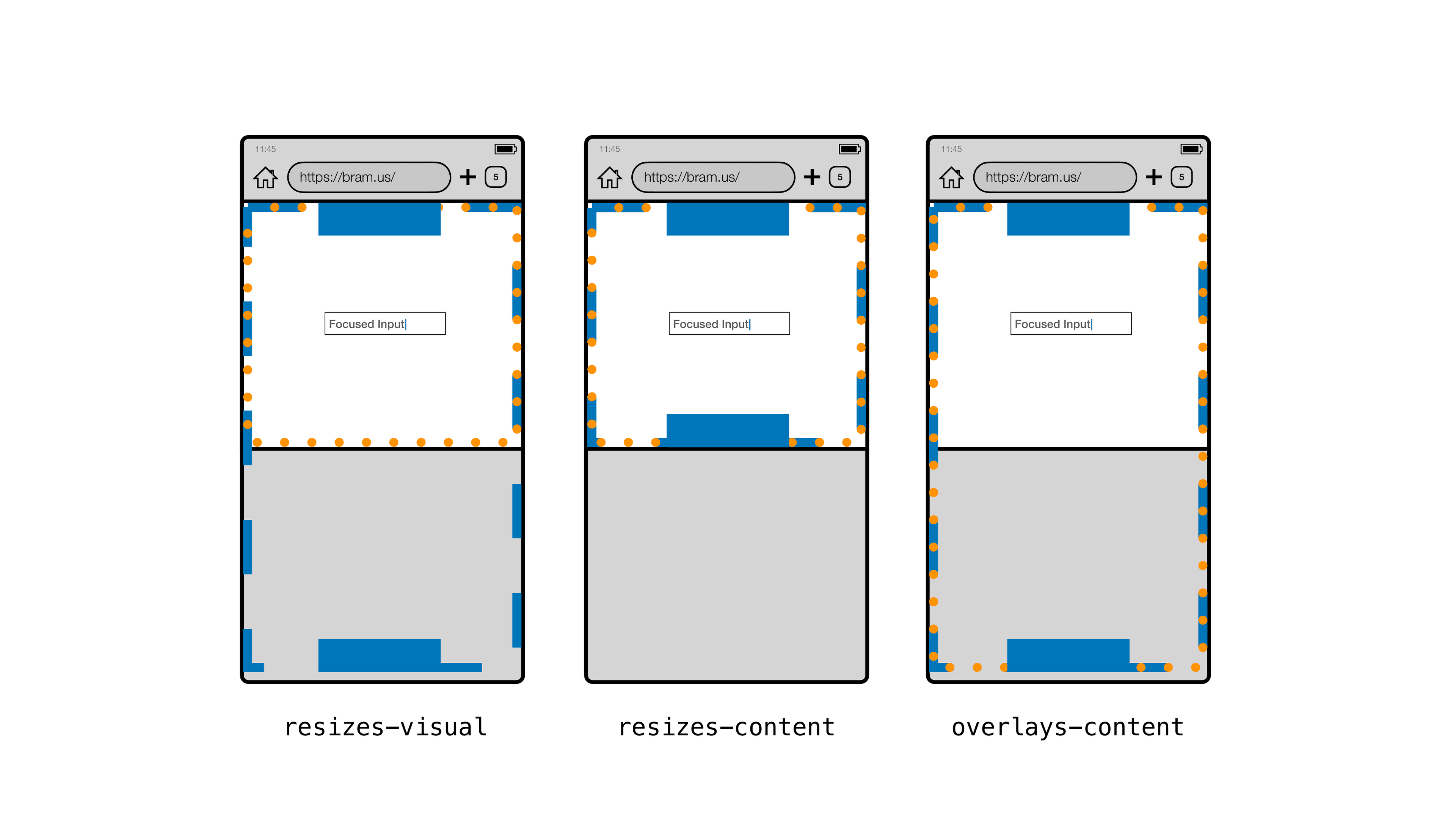
Oh nice, @npub1j49x...m4j6 now has support for the 'interactive-widget' meta viewport key, to control the viewport resize behaviour when showing a virtual keyboard. There are 3 values to choose from: resizes-visual, resizes-content, and overlays-content. You can use one of these values to prevent a `position: fixed` element from getting placed underneath the virtual keyboard. See for all details. Supported in Chrome from Chrome 108. No word from Safari on this. image