
Maybe I'm old-fashioned, but saying "anyone who opposes the digital euro" is effectively an enemy of the state does not exactly inspire confidence that the CBDC won't be abused. 


 Initial adoption was stuck at just 0.5 percent. The central bank lowered the requirements for access and introduced discounts in response, but people still preferred cash over the CBDC.
With adoption still struggling, Central Bank of Nigeria deputy governor Kingsley Obiora said that all the eNaira needs is a “a little push from the government.”
That's when the central bank suddenly announced it was taking cash out of circulation. After lines turned to protests and then riots, the central bank described the eNaira as a "success" after adoption went from 0.5% to 6%.
Initial adoption was stuck at just 0.5 percent. The central bank lowered the requirements for access and introduced discounts in response, but people still preferred cash over the CBDC.
With adoption still struggling, Central Bank of Nigeria deputy governor Kingsley Obiora said that all the eNaira needs is a “a little push from the government.”
That's when the central bank suddenly announced it was taking cash out of circulation. After lines turned to protests and then riots, the central bank described the eNaira as a "success" after adoption went from 0.5% to 6%. 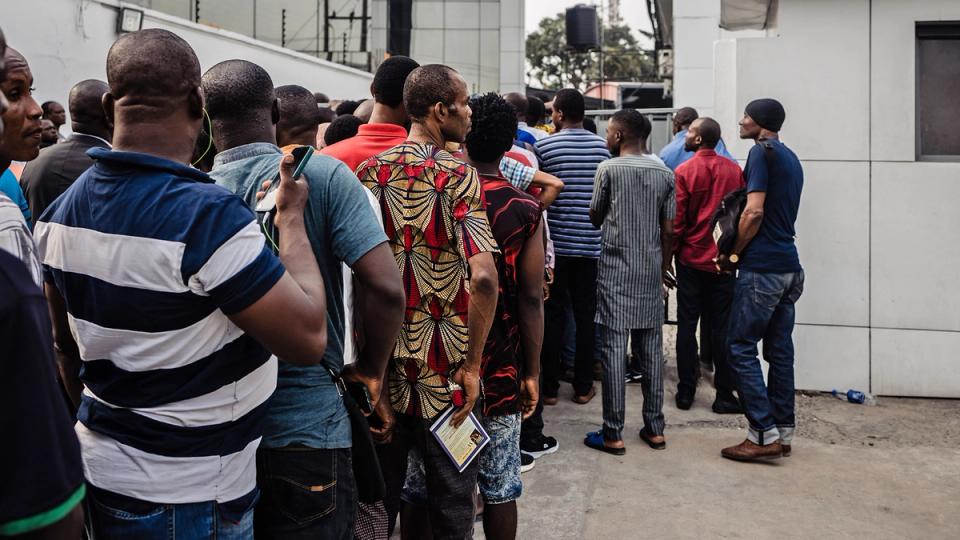


 The Banque Centrale de Tunisie had an early start in 2019 when rumors spread that it launched a CBDC, but the central bank quickly denied these claims. It did, however, launch a CBDC pilot in collaboration with the Banque de France in 2021 to test cross-border transactions.
 The Bank of Ghana also got its start in 2019. It ran a pilot in 2022 and planned to go live in 2023, but it delayed those plans due to the high inflation experienced at the time. The central bank continues to be active in the space, but the timeline is unclear.
 Tomorrow, I'll spotlight the only launched CBDC in Africa. However, if you can't wait... you can find out who it is in the @npub17xvf...c9as CBDC Tracker.