Just did a little sleuthing on the OP_RETURN > 83 bytes from @oomahq
's post (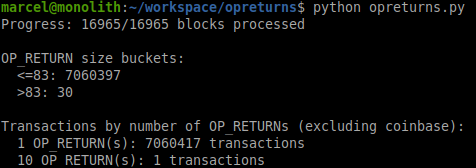 ).
There were 30 such transactions in the ~4 month period:
8 had reasonable fees (< 2x the median for the block)
11 had around double fees
7 had around triple fees
4 had 5x-8x fees
9 were mined by F2Pool (10-11%)
21 were mined by Mara (6-7%)
So in general, the OP_RETURN filter means the non-standard transactions were on average paying a good deal more than normal transactions to get into a block. And since only about 18% of the hashing power seems to mine them, they had to wait 5-6x longer to confirm.
If the point of filters is to make spamming cumbersome and costly, I'd say that they're doing their job. TX IDs in the first comment so you can look for yourself.
).
There were 30 such transactions in the ~4 month period:
8 had reasonable fees (< 2x the median for the block)
11 had around double fees
7 had around triple fees
4 had 5x-8x fees
9 were mined by F2Pool (10-11%)
21 were mined by Mara (6-7%)
So in general, the OP_RETURN filter means the non-standard transactions were on average paying a good deal more than normal transactions to get into a block. And since only about 18% of the hashing power seems to mine them, they had to wait 5-6x longer to confirm.
If the point of filters is to make spamming cumbersome and costly, I'd say that they're doing their job. TX IDs in the first comment so you can look for yourself.

X (formerly Twitter)
Risk-Averse Ghost of Unhosted Marcellus 👻 (@oomahq) on X
Seems like an ol' thread to debunk this nonsense is in order 🧵
Between blocks 877325 (01 Jan 2025) and 894289 (today) there's 30 non-std OP_RET...