Fiat world: seeking approval of authorities is the key to getting a rent-seeking job
Bitcoin world: making stuff people want is the key to making money
This is the difference in a nutshell.
I've been exploring FROST and it's pretty ideal for a t-of-n multisig for Nostr. Has anyone done anything like that? I would imagine this would be ideal for any sort of organization account that can change hands without changing the underlying secret.
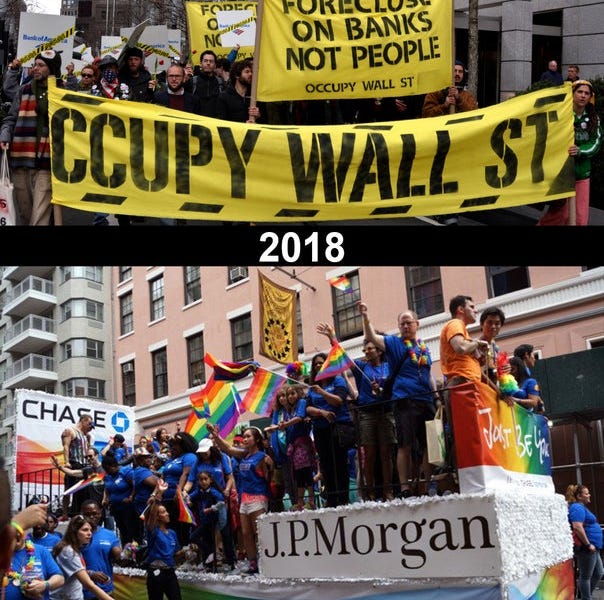
For free subscribers: Shinzo's Murder, Occupy's Legacy, eBay behaving badly, Capetown and more!
For paid subscribers: Cluster Mempool, Mercury Launch, FiatLink, ETF and more!
#Bitcoin Tech Talk #379
Bitcoin Tech Talk #379
Interesting Stuff

On Lincoln
----------------
Lincoln wasn't a good president. He wasn't even a mediocre president. He was a terrible president. He suspended individual rights. He massively expanded the government through money printing. He led millions of people to their deaths. All for power.
What we learn in school is that he was the great emancipator, ending slavery and winning a war that had to be won. That he was some man of genius and virtue, thrust upon the national stage at the right time to progress history.
Such is the result of the history being written by the winners. Similar hagiographies have been written about FDR and even Woodrow Wilson. But like the news, much of history is spun to manipulate us. Most of conventional history is fake and even a cursory study of what actually happened is enough to make you question how virtuous they were, and why they made the decisions they did. Almost always, you find that they were opportunistic cowards that did what would cost them least, even at the expense of the people they affected.
History is a tricky topic because the counterfactuals are always very speculative. But what we can judge is the values played out in actions taken, and in that sense, Lincoln was pretty terrible. He suspended habeas corpus, he cheated in border state elections to keep them in the union, and he massively, massively expanded the scope, power and size of government through inflationary theft.
It's hard to imagine what things were like before Lincoln, because before him, was a string of single-term Jacksonian, hard-money Democrat presidents. This was back when liberal meant being for personal liberty and that era of government before 1860 was insanely small, about 2% of the GDP. He would oversee an unprecedented expansion which would take the government to 20%.
Much of it, was, of course, because of the Civil War, and the popular narrative is that he needed to wage that war to end slavery. And yes, the issue was a major one in that era, but the elimination of slavery was more of a lucky by-product than an aim. His main goal, as he stated over and over again and as acted out in his policies, was to preserve the union, not to end slavery.
In preserving the union, he destroyed the idea that states had the right of secession, he weakened the idea of natural rights and he stole through inflation and sent many to their deaths. The centralizing of the federal government, the behemoth that we live with today began during his heyday.
The main thing that preserved his legacy was his assassination. Had a couple of battles gone the wrong way in 1863 and 1864, he wouldn't have been re-elected and he would have disappeared into the annals of history as a political amateur that lucked into the presidency in 1860 and screwed things up for 4 years. Instead, he was re-elected, assassinated and the horrific legacy of reconstruction was blamed on others. In short, he died at the right time.
There are those, of course, that will argue that Lincoln would have done things differently, and that he would have been more merciful to the south and rebuilt things as to spare them the suffering. But that's inconsistent with everything he did. Like most politicians he was a power grabber and he did what was politically expedient and not what was virtuous or right. He suspended habeas corpus (needing a reason to arrest and detain people)! He made generals do what would make him look good so he would get elected, not what would save the most lives or win the war the quickest. He created the greenback, which was a form of money printing to finance the war. And he spent an insane sum of other peoples' money through implicit and explicit taxes to "preserve the union."
Ending slavery, of course, was a big deal and in the annals of history, it's a dark mark in the history of the US that the institution survived so long. And yes, the Civil War did end it, but that wasn't the objective of the war itself.
Being Republican, he had a large Radical wing that he had to deal with and they wanted abolition, and later full voting rights for blacks. Because the south had seceded, they had the votes to pass the constitutional amendments, though only toward the end of the war when it was clear the north would win. That was a political expediency that ended up defining his legacy. But really, it's his biographers and historians of the winning side that have spun him to be a hero, when he was anything but.
The big flaw of Lincoln is that he created an unnecessary war that cost millions of lives and billions of dollars, one that set back the US by decades. Letting the south secede and revoking the Fugitive Slave Act would have ended the institution just as well, for much less cost. And this isn't idle speculation. Brazil had the second largest slave population in the 19th century that was whittled down quickly because the slaves had northern provinces where they could escape. The price of slaves dropped dramatically and soon, the institution itself was destroyed through economic means, not martial ones.
What's worse about Lincoln's legacy is that he set a precedent for federal power that brought forth the progressive era and eventually to Woodrow Wilson and FDR. The centralization of federal power began with him.
Lincoln wasn't a good president. But the history is written by the winners and they have made a secular saint out of him.
So the ETF disappointment was from the GBTC unwind which were the result of 3AC and others making leveraged bets. That makes a lot of sense to me. Still some paying for the sins of altcoins, I guess.
Never Let a Crisis Go to Waste
=========================
One of the most perplexing things about our news cycle these days is just how much of it seems urgent, all the time. X needs to be fixed now! Y will happen if we don't do X!
Sure, there's high time preference thinking involved. If X doesn't pass right now, then it may be years before it's considered again. But more than that, the perpetual crisis mode that we're engaged in makes for both an anxious and calloused citizenry.
Yet this persists, because crises allow for power capture. There are fewer questions and the urgency drowns out dissenting voices. Do you want grandma to die? Do you want Putin to destroy the world order? Do you want Al Qaeda to commit more terror attacks?
The crisis and urgency also build in a natural excuse for those in power. If they do make a mistake, which they often do, then they can always say "things were so urgent at the time and we had to do something." So seldom do they mention that it's an urgency they themselves created.
We've seen this with financial crises and even the recent pandemic. But far more potent is the threat of war. Most leaders end up doing horribly immoral things during war, even if they were committed, ethical people before. That's the nature of the beast, the lust to win trumps all.
Which is why the current year seems so ripe for abuse. There are many events that could easily devolve into crises, manufactured in one way or another by the powers that be. Economic and public health emergencies are, in that sense, the *best* we can hope for. Limited war and political revolution, about the average and world war the worst case scenario.
Yet there is good news. We don't have to let them take this power. We can slow the roll of government power accumulation. We can opt out of their authoritarian policies with protest. We can refuse to be manipulated by their propaganda. And perhaps we can avoid the inevitable suffering that comes from such power grabs.
Disappointing first day with the ETF. Maybe it was all hype.
On Spamcoin Revenue
===================
The narrative around ordinals is ever-changing, but one of the more persistent ones is about how it enables miners to have a better business. The main idea is that by subsidizing miners, the Bitcoin network is going to get stronger and more robust.
There are several problems with this argument, but let me focus on one particular aspect. The argument that spamcoins will strengthen mining companies is based on more fees. And indeed, that's true. But for it to really benefit mining companies, the revenue needs to be consistent and reliable. And the thing about these short term fee spikes is that they are anything but consistent and reliable.
Sure, you get some blocks where the fees are greater than the block reward, but that's the exception, and not the rule. They generally congregate around the hype of one thing or another. In the case of ordinals and BRC-20, they clearly spiked when Binance listed one of the tokens. It was a fickle altcoin market's coin of the month, and while it did spike fees, the fees came down a short while later.
Surprisingly, the dynamic is similar to what we've seen in energy markets with renewables like wind and solar. Like spamcoin revenue, they are both also unreliable and inconsistent, and they've added considerable variance to the business of energy. Rather than strengthening the grid, they've weakened it considerably, creating terrible mismatches of supply and demand, which inevitably result in blackouts or brownouts.
In the same way, spamcoin fee revenue has made the business of mining that much harder to predict. The revenue is not consistent or reliable, so to depend on that revenue is, from a business standpoint, a considerable risk. Any fee spike that's based on a random scammer's pump and dump is not easy to predict and leaving around extra mining capacity to take advantage of these spikes is not tenable. In other words, from a business standpoint, it makes little sense to modify a business trying to capture this intermittent, unpredictable revenue.
The thing that businesses need is consistent and predictable revenue because that's what allows them to plan and grow. A flash in the pan like spamcoins is not something that's really going to help with that. Consistent fee revenue, something that has a proven track record, is what mining businesses need to really take advantage and invest in capital goods. Indeed, when we say "fee market," that's what we mean, not these random spikes based on dishonest marketing and hype.
In the meantime, fee spikes like this are a nice little bonus, but they are more likely to create malinvestment. If a business makes that bet that spamcoin fee revenue will stay consistent for the next 4 years, they're likely to lose to a competitor that doesn't make this assumption.
We like to believe that a dollar earned is the same no matter where it comes from, but that's just not the case. If it's a dollar earned that you can't predict, it's unhelpful and perhaps even detrimental for planning. Spamcoins are in the long term not good for miners as they are so obviously hype-based. We need to dispense with unsophisticated narratives like this.
Bitcoiners are better than that.
Unnecessary drama to start the mainstream Bitcoin era.
It's going to be an interesting 15 years.
What happened with the SEC yesterday is a really good argument for Bitcoin.
Third party manipulation is so much easier when there's centralization.