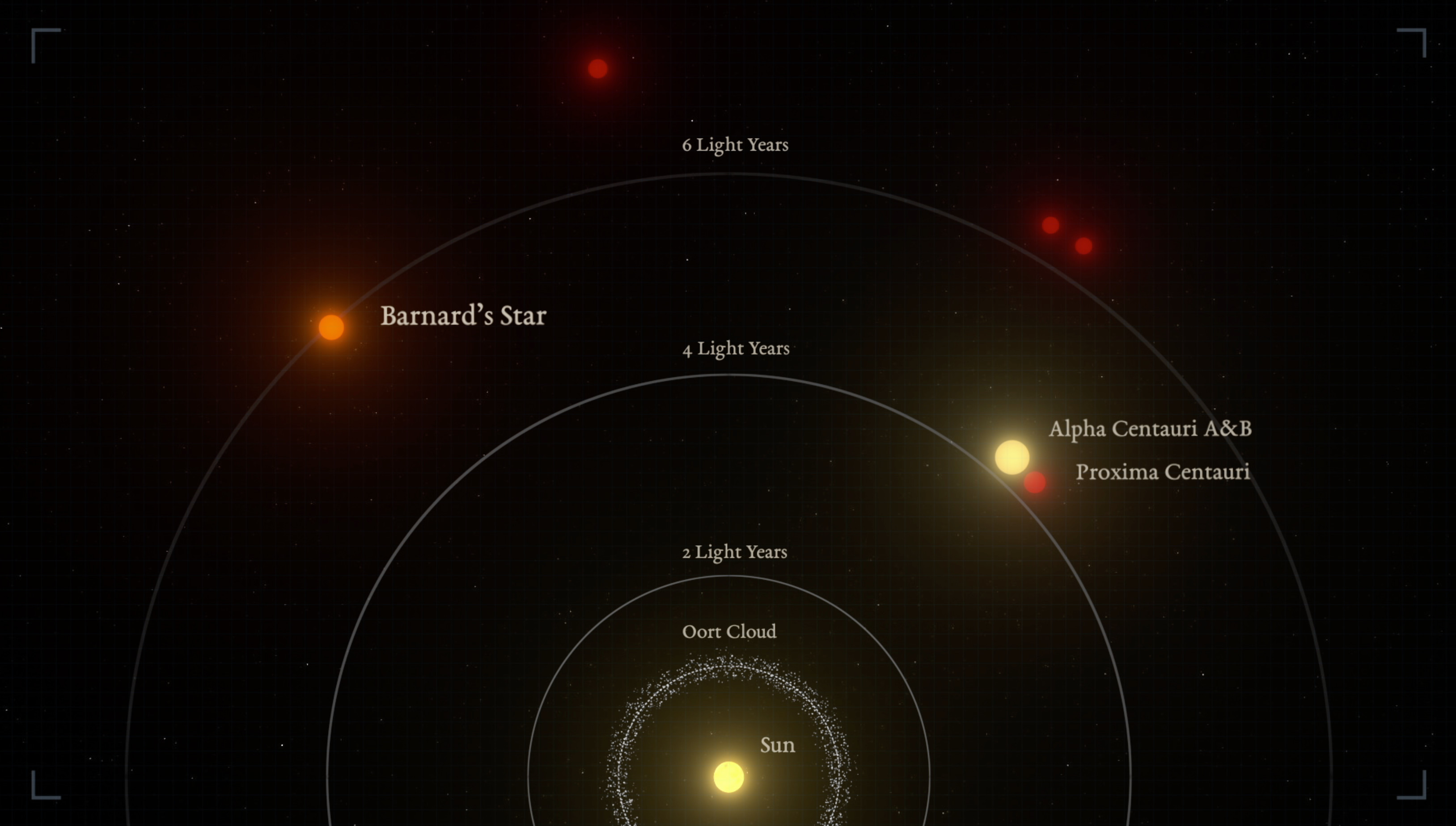
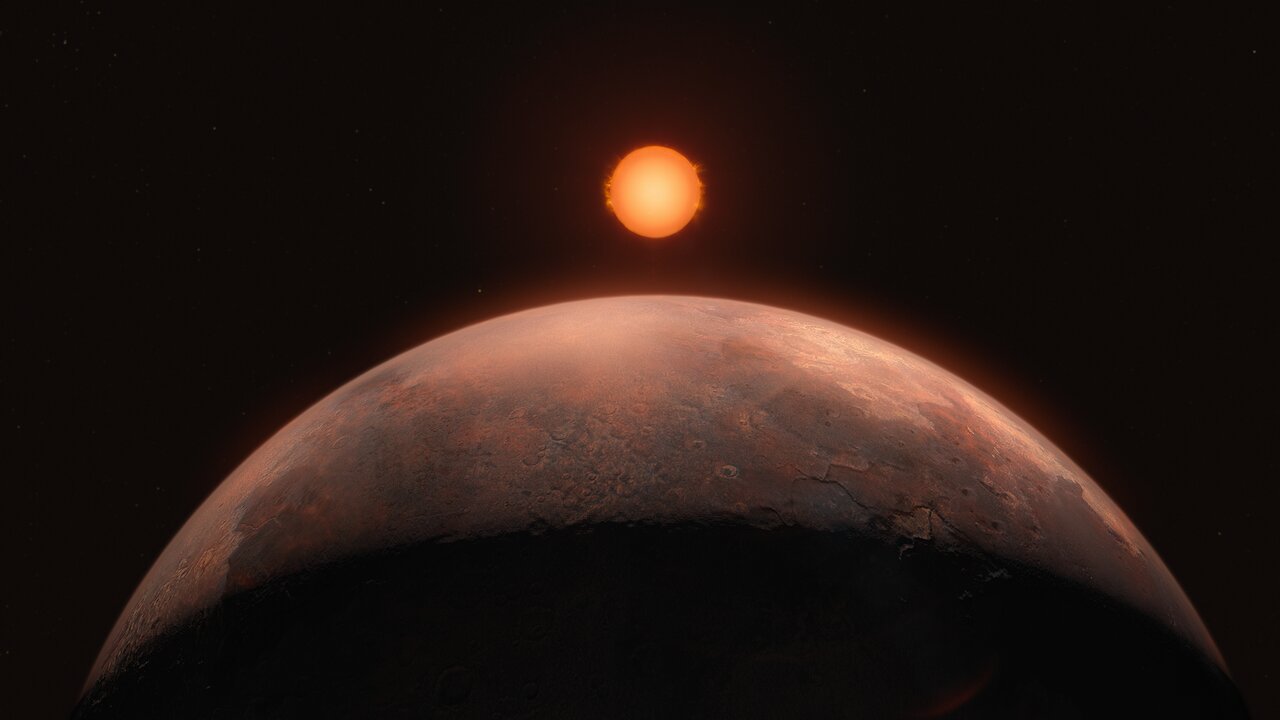
New results out of the European Southern Observatory’s Very Large Telescope. Astronomers found a planet orbiting Barnard’s Star, the second closest star system to the Earth. The planet Barnard b orbits its star every 3.15 days and has a mass about 0.37 times that of Earth. There are also hints of planets with 2.34, 4.12, and 6.74 day-orbits, although more observations are needed to confirm the existence of those planets. image
CERN has a "Which elementary particle are you?" particle physics personality test. I'm not sure if I should feel insulted by my results 🙃 https://scoollab.web.cern.ch/sites/default/files/Particle_v2/index.html image
WebbVR from @npub1memy...cmlc just launched the 5.0 update, which adds images and video for 25 new JWST discoveries. If you have a VR headset sitting around, it's worth checking out. image
What has #JWST learned about how stars form, from the cold-dusty molecular clouds where star formation begins to disks where planets form? What's next for JWST? Check out this new article on WebbTelescope.org. Also, there are pretty pictures, because star-forming regions are gorgeous. #astronomy #space #Astrodon image
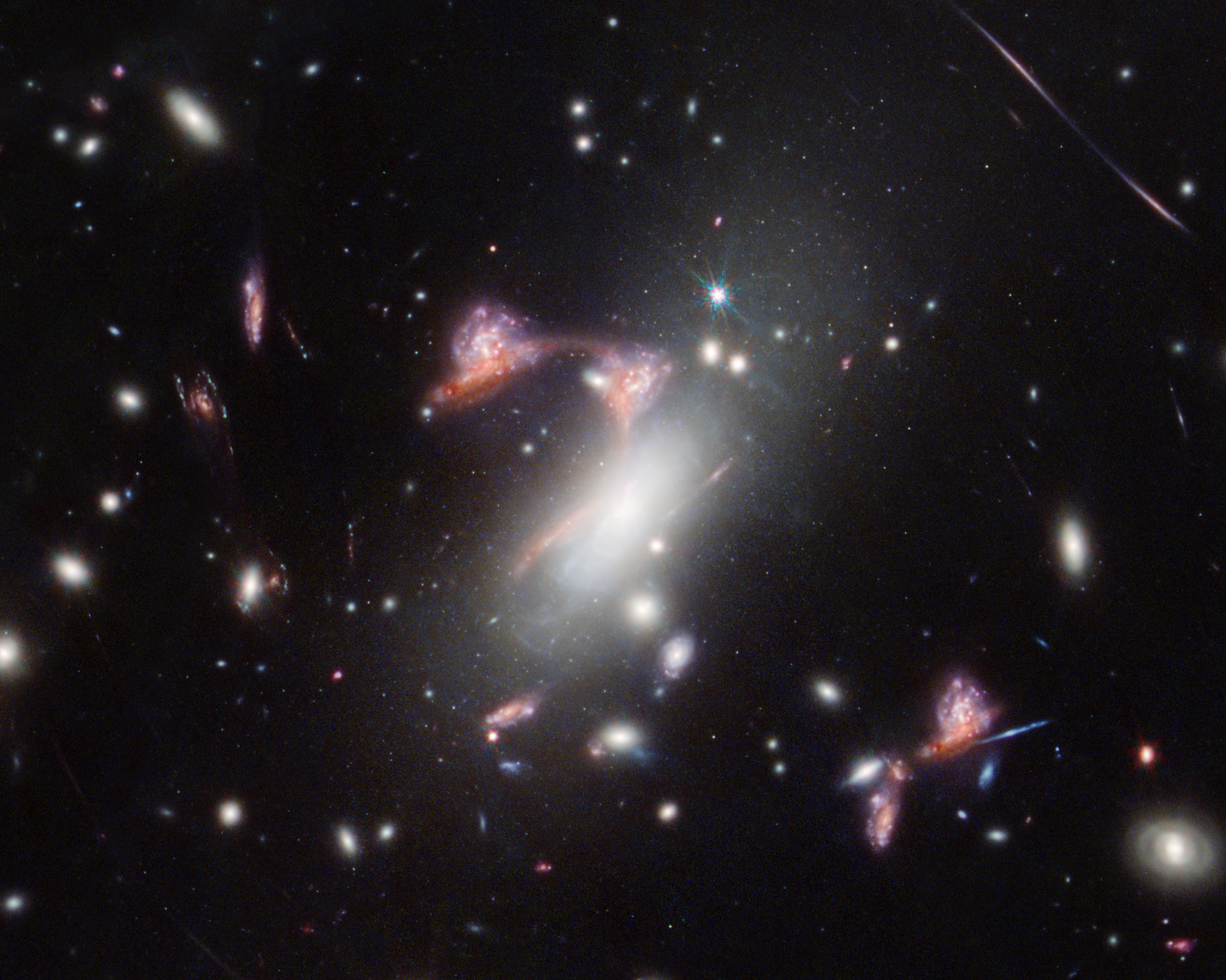
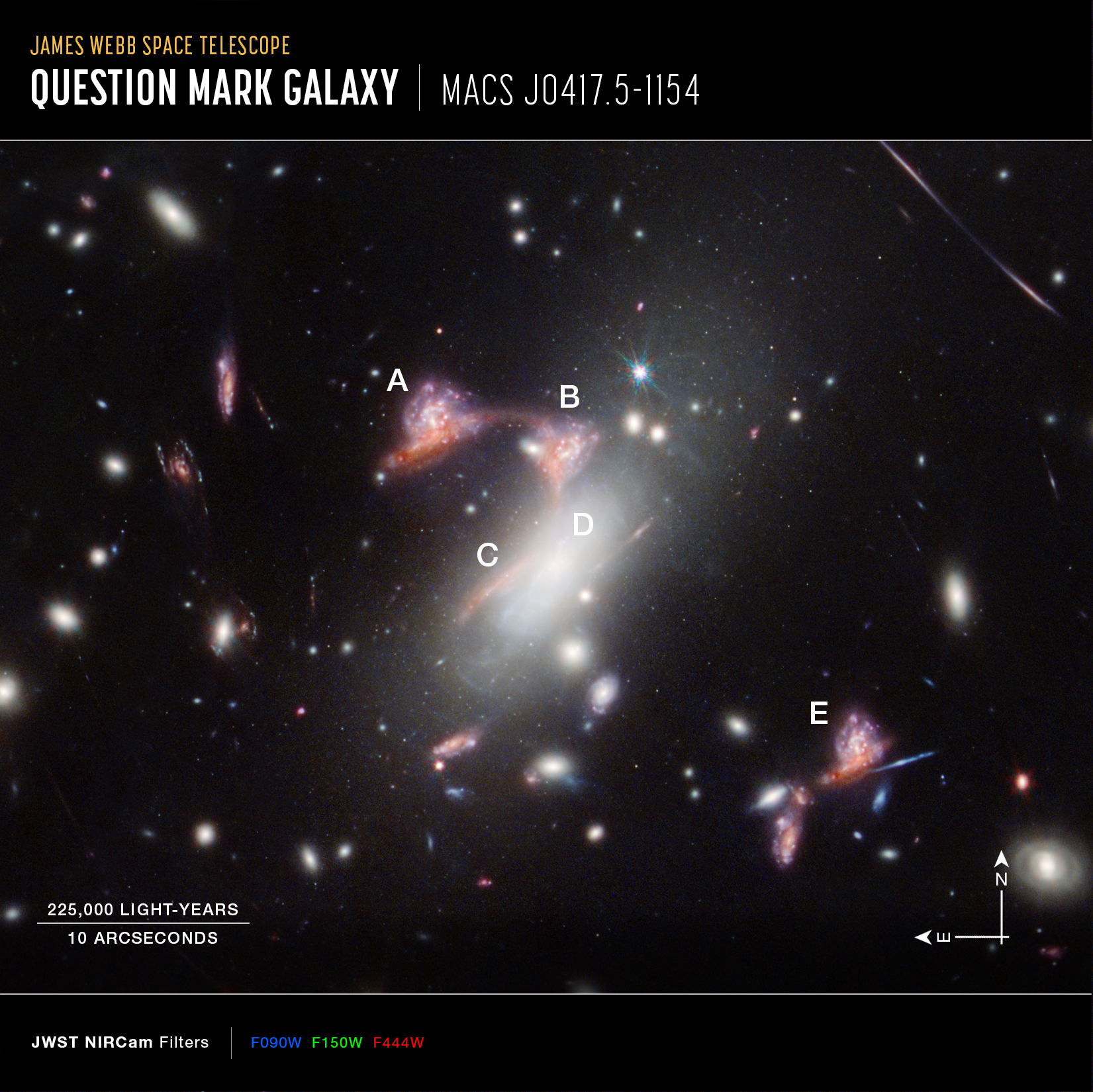
Apparently, the Universe has some questions. #JWST spotted an unusual configuration of a gravitational lens, a hyperbolic umbilic lens. The gravity of a foreground galaxy cluster magnifies and distorts the light from background galaxies. This cosmic question mark is made of five images of the same background galaxy pair, labeled A-E, an interacting red dusty galaxy and a face-on spiral galaxy. The foreground galaxy cluster is the white hazy ovals. #Space #Astronomy image