I would be glad to donate to the #Python project, but doing so requires me to divulge my name and contact information as per their 501(c)(3) charitable organisation status: "Contact information is required for tax reporting purposes and will be shared only with the US government." Considering the current status of the US government, I don't feel comfortable doing this. Are there some other ways to donate to Python project without getting the US government involved? - - @npub1vv84...6fhk
IRC is working just fine. As always. image
A lot of services that are supposedly running in EU are currently having significant issues due to AWS US-EAST-1 being impacted. But surely this is just some dependencies that are down and all our data is really stored in EU. Right? https://health.aws.amazon.com/health/status image
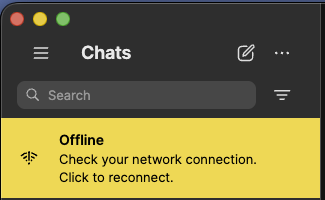
#Signalapp appears to have some issues. The desktop app appears "offline" and messages are not going through, EDIT: This likely is an outage resulting from AWS US-EAST-1 having some issues: https://health.aws.amazon.com/health/status Many services are impacted. See https://downdetector.com/ image
AlphaPhoenix's video about the home-built 2 billion fps camera is one of the coolest videos for a long time. The premise is so simple that anyone (even people without degrees) can follow and understand it. Educational and cool as heck! #alphaphoenix #science #physics
While the latest #ChatControl proposal didn't proceed to a vote, the proponents of the interception of all chat traffic will undoubtedly continue their efforts to get the law passed - like they have for years now. It will resurface shortly, disguised and modified but effectively pushing for the same end result: removal of end-to-end encryption. We must stay vigilant and continue to fight for our freedoms. #StopChatcontrol #privacy
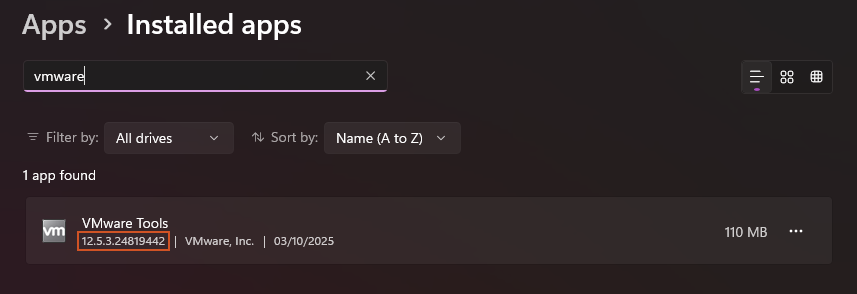
Broadcom has stopped delivering automated updates to #VMware Fusion and Workstation. All updates have to be downloaded and installed manually from the Broadcom Support Portal (as a side note: This portal is one of the worst corporate "support" websites I've seen in the last decade). This is terrible. It will lead to tens of thousands of VMware installations remaining vulnerable to trivially exploitable flaws, for example, local privilege escalation via CVE-2025-41244 BTW, Please note that to fix CVE-2025-41244 you must now manually download the correct VMware Tools package from the support portal, unpack the zip, mount the ISO image, and then execute the setup.exe from the mounted ISO image. There is currently no VMware releases that include the fixed VMware Tools, so if you create any new VMs you MUST install the update manually to each new VM. Did I already mention this is terrible? #enshittification #infosec #cybersecurity image
Aleksanteri Kivimรคki - the person who mercilessly extorted psychotherapy centre patients with the leaked patient data - has been released from prison. Generally, I feel that the Finnish justice system is doing a fairly good job, but in this case, I feel like this is just outright wrong. This person should have served full time and not be considered a first-time offender. #vastaamo #vastaamopsychotherapycenter
Many moons ago, a friend ran an SSH honeypot that had a unique feature: when the attacker gained "access" to the system, he could then send responses to the interactive commands the attackers executed over an IRC channel. One day, some attacker popped in, and he started to taunt them live. Often, the attackers were just throwing in some copypasta and weren't actually checking the responses. This one time, the attacker realised what was going on and was quite amused, and started to chat back, sending fake commands to see if he would get obvious human responses back (Note: that this was well before generative AI). This went on for some time, and some kind of a connection was formed. The attacker would come back to chat with my friend, logging in over SSH to this honeypot. Eventually, the attacker divulged other means to communicate with him. He told me he was a bored Romanian guy who ran a kind of academy for young hacking talent. They'd gain access to some box, install their SSH bruteforcer (random IPv4 addresses and fixed password lists), and rinse and repeat. Eventually, the attackers seemed to stop and disappear. My friend contacted them and asked what had happened: maybe they had been caught by authorities? No such luck. Apparently, they had discovered some addictive online game that was more interesting. Threat actor group defeated by Candy Crush.
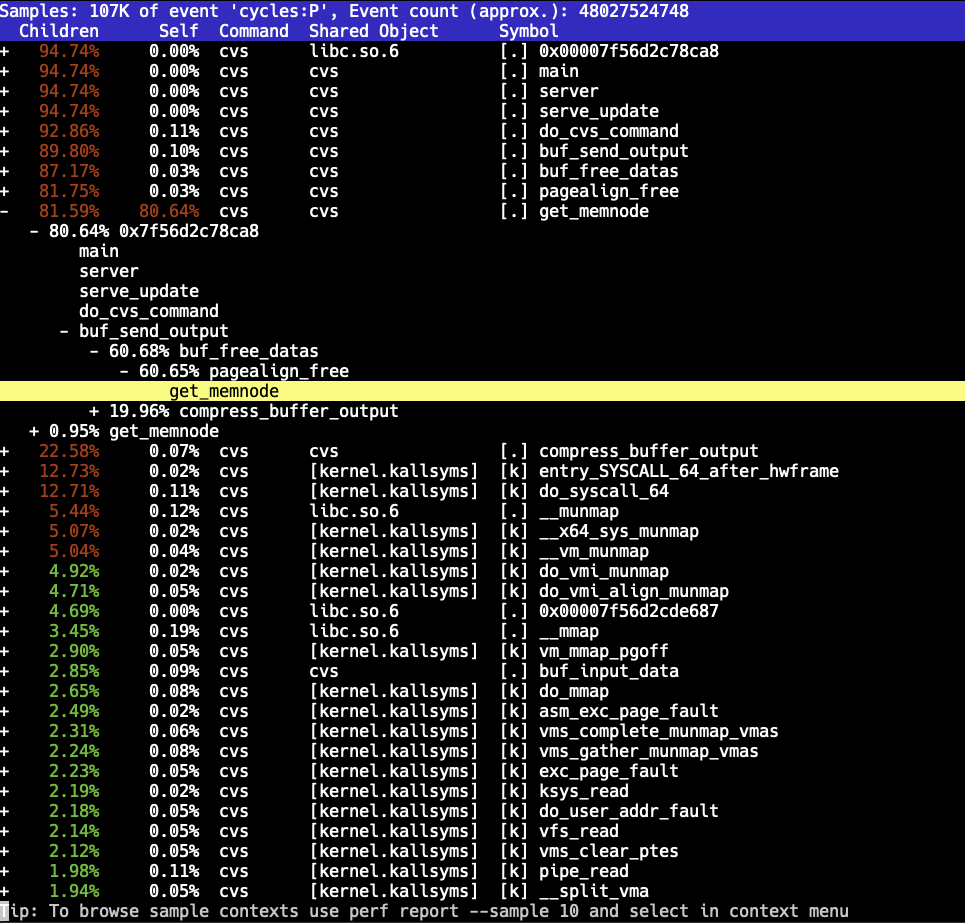
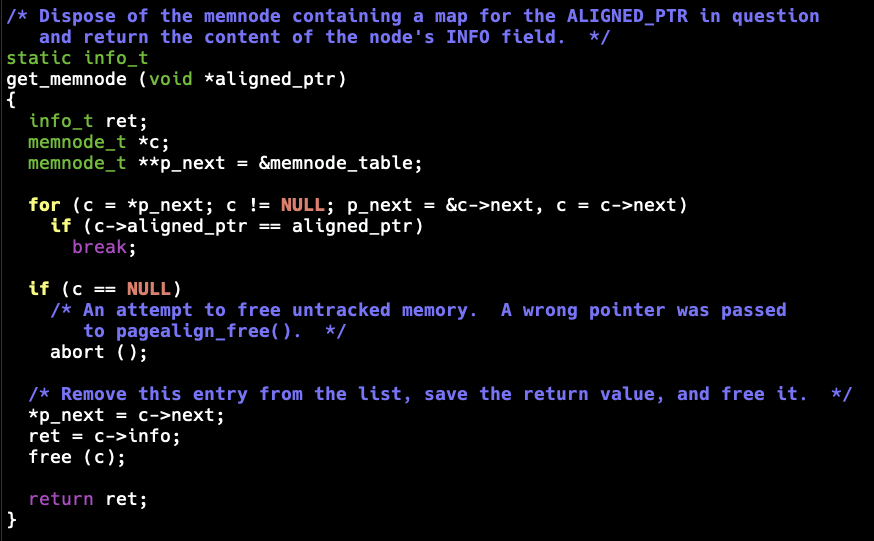
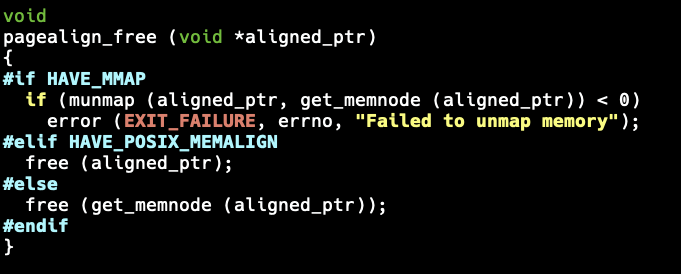
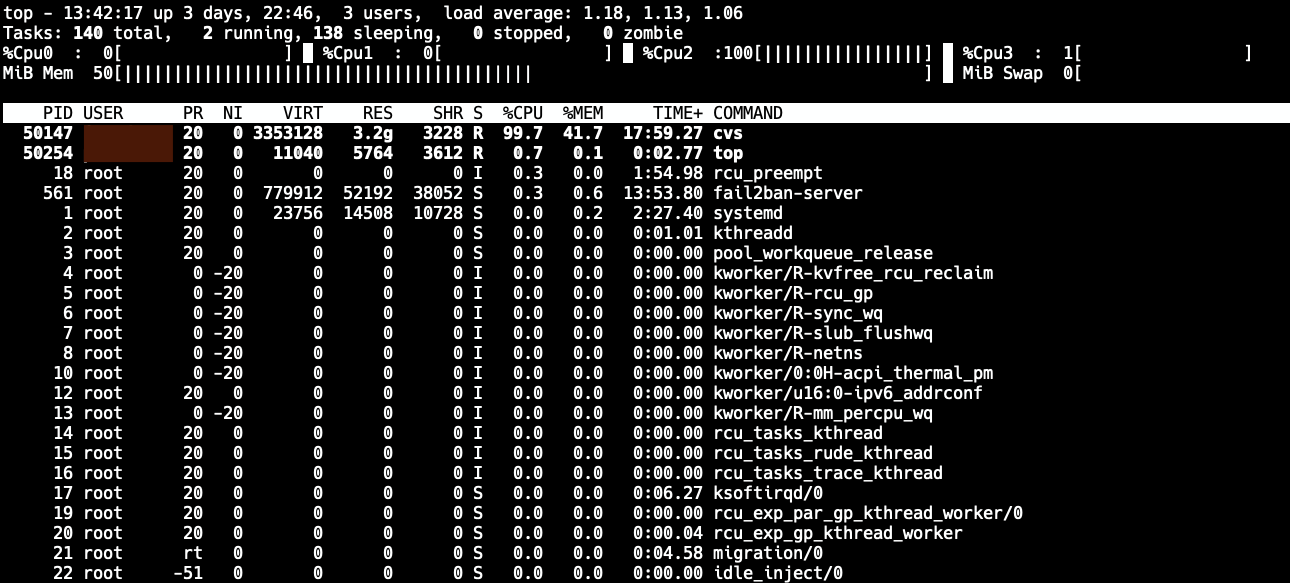
As it happens, we still use CVS in our operating system project (there are reasons for doing this, but migration to git would indeed make sense). While working on our project, we occasionally have to do a full checkout of the whole codebase, which is several gigabytes. Over time, this operation has gotten very, very, very slow - I mean "2+ hours to perform a checkout" slow. This was getting quite ridiculous. Even though it's CVS, it shouldn't crawl like this. A quick build of CVS with debug symbols and sampling the "cvs server" process with Linux perf showed something peculiar: The code was spending the majority of the time inside one function. So what is this get_memnode() function? Turns out this is a support function from Gnulib that enables page-aligned memory allocations. (NOTE: I have no clue why CVS thinks doing page-aligned allocations is beneficial here - but here we are.) The code in question has support for three different backend allocators: 1. mmap 2. posix_memalign 3. malloc Sounds nice, except that both 1 and 3 use a linked list to track the allocations. The get_memnode() function is called when deallocating memory to find out the original pointer to pass to the backend deallocation function: The node search code appears as: for (c = *p_next; c != NULL; p_next = &c->next, c = c->next) if (c->aligned_ptr == aligned_ptr) break; The get_memnode() function is called from pagealign_free(): #if HAVE_MMAP if (munmap (aligned_ptr, get_memnode (aligned_ptr)) < 0) error (EXIT_FAILURE, errno, "Failed to unmap memory"); #elif HAVE_POSIX_MEMALIGN free (aligned_ptr); #else free (get_memnode (aligned_ptr)); #endif This is an O(n) operation. CVS must be allocating a huge number of small allocations, which will result in it spending most of the CPU time in get_memnode() trying to find the node to remove from the list. Why should we care? This is "just CVS" after all. Well, Gnulib is used in a lot of projects, not just CVS. While pagealign_alloc() is likely not the most used functionality, it can still end up hurting performance in many places. The obvious easy fix is to prefer the posix_memalign method over the other options (I quickly made this happen for my personal CVS build by adding tactical #undef HAVE_MMAP). Even better, the list code should be replaced with something more sensible. In fact, there is no need to store the original pointer in a list; a better solution is to allocate enough memory and store the pointer before the calculated aligned pointer. This way, the original pointer can be fetched from the negative offset of the pointer passed to pagealign_free(). This way, it will be O(1). I tried to report this to the Gnulib project, but I have trouble reaching gnu.org services currently. I'll be sure to do that once things recover. #opensource #development #bugstories