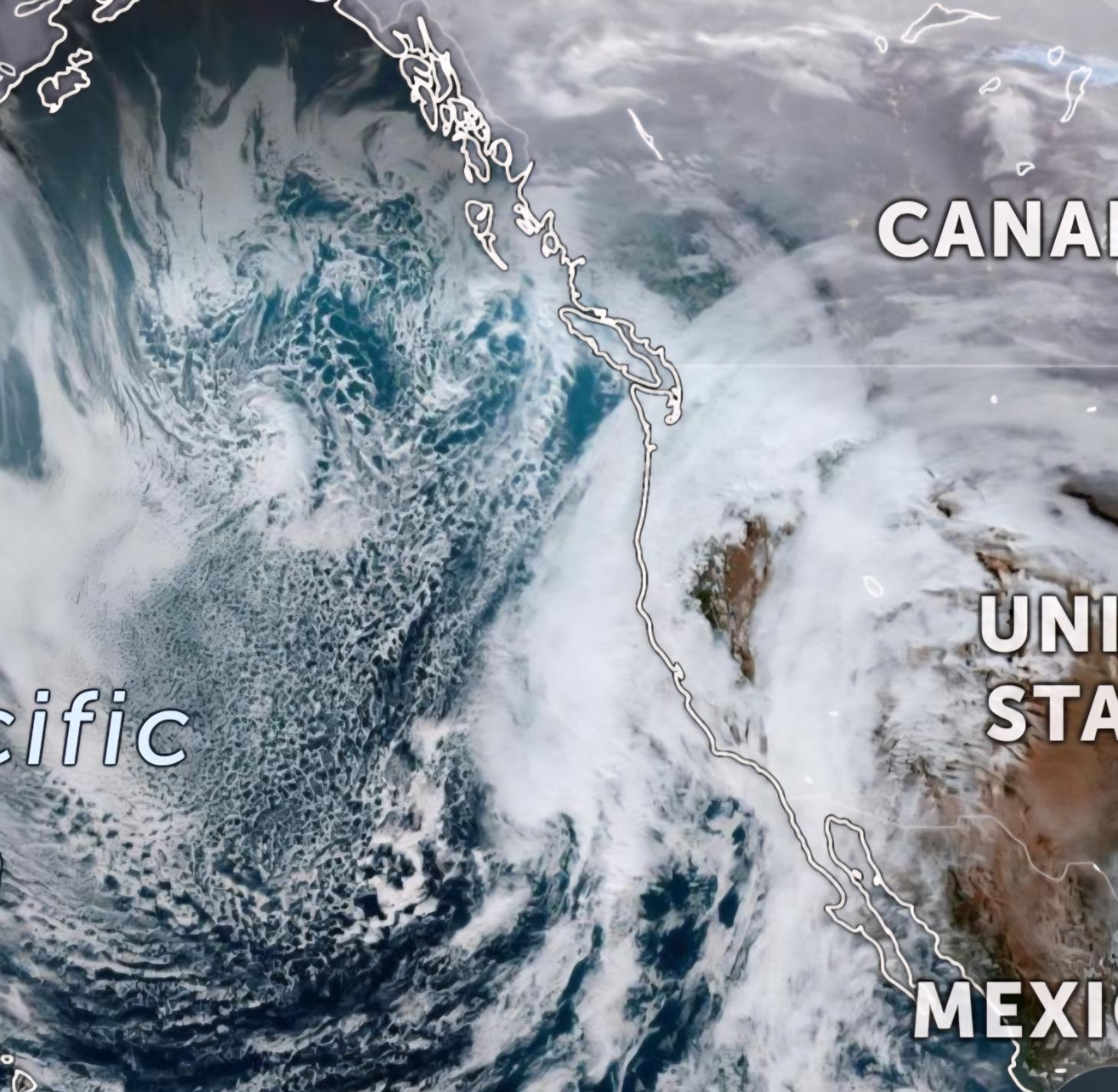
Ya know how we tend to see faces in things? Well, I was looking at the Zoom Earth radar for this storm, and that low pressure parked off the coast, and . . . Holy shit. 😾
J is attending a funeral today for a friend of hers, and she mentioned that she hoped her mutual friends would be there, even though it's an hour* away and it's so close to Christmas. (J was raised by her grandparents, and she lost her Papa long ago, a few weeks before Chistmas. After funeral expenses, they had nothing left for Christmas at all, so 10 year old J got nothing, while having to see her cousins got a huge number of gifts. No one thought to make sure she wasn't left out.)
*In the U.S. we express distances as units of time. This distance outside the U.S. would be expressed as 73 km.
It's crucial to support the people you know who feel crushed by a barrage of messages about holiday cheer. The smallest gesture can really help them feel acknowledged.
In the U.S. if you received your new medical insurance premium for 2026, how much did it go up? And are you covered through work, or did you buy thru the ACA?
If you'd rather keep it private, but want folks to know how much of a crisis this is, feel free to DM and I will add it as an anonymous reply.
We get our insurance through J's work, and ours went up by $114 per month.
I'm also curious if your premium stayed the same.
Is there something weird that you like the taste or smell of? I like the taste of Vitamin C tablets. Maybe you like the taste of a licked battery, or the smell of Durian fruit. Could be anything.
Getting the other car serviced today, and this is what they had on the TV in the waiting room: no sound just breathtakingly beautiful ocean images. We all looked up, and abandoned looking at our phones or reading our books, and just sat there, mesmerized. I've never felt more calm. Highly recommend.
OCEANSHUTTER | OceanShutter
https://www.oceanshutter.com/
I'm trying to understand how to anticipate space weather events. Please correct me if I have any if this wrong:
So, the sun spot region AR4294, an area of multiple and large sun spots, is rotating towards facing the earth. But, just because a sun spot is large doesn't mean it necessarily has magnetic complexity? And there's a way to calculate some probability and potential for various classes of flares, but no way to predict if we will have CMEs?
Can we predict anything past three days out? And is the angle of the flare as it hits earth's magnetic field also determinative of how intense the visual effects (auroras) will be? Is the class of flare the only metric we use to determine the viewing area for auroras?