Chapter 6: Designing for Innovation
6. The ZeroMQ Community
Chapter 6 - The ZeroMQ Community # People sometimes ask me what’s so special about ZeroMQ. My standard answer is that ZeroMQ is arguably the...
In the dominant theory of innovation, brilliant individuals reflect on large problem sets and then carefully and precisely create a solution. Sometimes they will have “eureka” moments where they “get” brilliantly simple answers to whole large problem sets. The inventor, and the process of invention are rare, precious, and can command a monopoly. History is full of such heroic individuals. We owe them our modern world.
So, when we trust the solitary experts, they make classic mistakes. They focus on ideas, not problems. They focus on the wrong problems. They make misjudgments about the value of solving problems. They don’t use their own work.
Can we turn the above theory into a reusable process? In late 2011, I started documenting C4 and similar contracts, and using them both in ZeroMQ and in closed source projects. The underlying process is something I call “Simplicity Oriented Design”, or SOD. This is a reproducible way of developing simple and elegant products. It organizes people into flexible supply chains that are able to navigate a problem landscape rapidly and cheaply. They do this by building, testing, and keeping or discarding minimal plausible solutions, called “patches”. Living products consist of long series of patches, applied one atop the other.
To best understand how we ended up with SOD, let’s look at the alternatives.
## Trash-Oriented Design
The most popular design process in large businesses seems to be _Trash-Oriented Design_, or TOD. TOD feeds off the belief that all we need to make money are great ideas. It’s tenacious nonsense, but a powerful crutch for people who lack imagination. The theory goes that ideas are rare, so the trick is to capture them. It’s like non-musicians being awed by a guitar player, not realizing that great talent is so cheap it literally plays on the streets for coins.
## Complexity-Oriented Design
Really good engineering teams and small firms can usually build decent products. But the vast majority of products still end up being too complex and less successful than they might be. This is because specialist teams, even the best, often stubbornly apply a process I call _Complexity-Oriented Design_, or COD.
## Simplicity Oriented Design
Finally, we come to the rare but precious _Simplicity Oriented Design_, or SOD. This process starts with a realization: we do not know what we have to make until after we start making it. Coming up with ideas or large-scale designs isn’t just wasteful, it’s a direct hindrance to designing the truly accurate solutions. The really juicy problems are hidden like far valleys, and any activity except active scouting creates a fog that hides those distant valleys. You need to keep mobile, pack light, and move fast.

Stacker News
Chapter 6: Designing for Innovation \ stacker news ~Design
In the dominant theory of innovation, brilliant individuals reflect on large problem sets and then carefully and precisely create a solution. Somet...
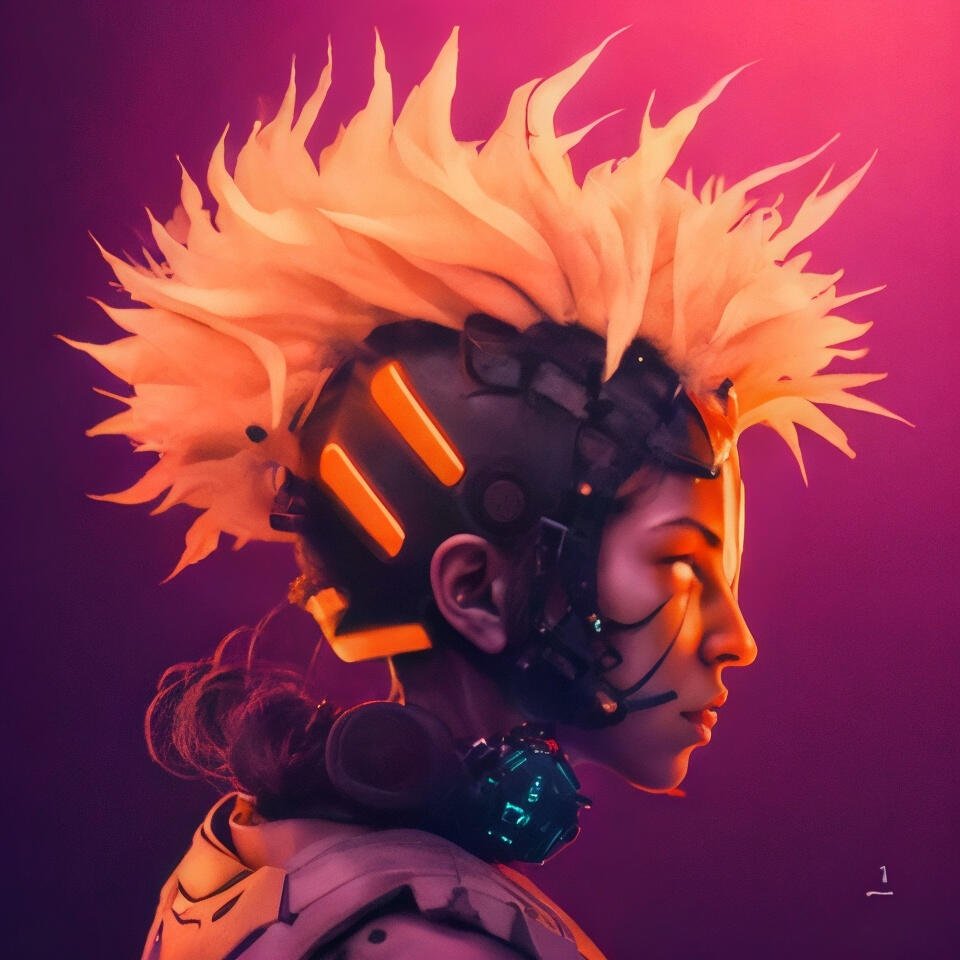

 "The essence of style is a simple way of saying something complex" — Giorgio Armani
And you? What #creative #ideas have you been rambling on to showcase your #style? How are you simplifying your ideas?
This post is part of a series. It is meant to be a place for anyone to discuss a #WIP #projects, or an #idea worth to #build. Regardless of your #project being personal, professional, physical, digital, or even simply an #idea to brainstorm together.
If you have any creative projects or ideas that you have been working on or want to eventually work on... This is a place for discussing those, gather initial feedback and feel more energetic on bringing it to the next level.
₿e #Creative, have #Fun, share it at
"The essence of style is a simple way of saying something complex" — Giorgio Armani
And you? What #creative #ideas have you been rambling on to showcase your #style? How are you simplifying your ideas?
This post is part of a series. It is meant to be a place for anyone to discuss a #WIP #projects, or an #idea worth to #build. Regardless of your #project being personal, professional, physical, digital, or even simply an #idea to brainstorm together.
If you have any creative projects or ideas that you have been working on or want to eventually work on... This is a place for discussing those, gather initial feedback and feel more energetic on bringing it to the next level.
₿e #Creative, have #Fun, share it at