A fascinating listen into the power of Public Relations, and how it became another term for propaganda. Awareness should be the school curriculum. "In this episode we'll meet the godfathers of American PR, Ivy Lee and Edward Bernays, and explore the origins and evolution of industry-funded experts who shaped everything from the breakfast table to our understanding of the economy and science." Listen at
My Short Overview Video of the Ships at Sea Simulation Game Experience the thrill of navigating a wide range of ships. In single- and multiplayer modes, immerse yourself in tasks such as service, cargo transport, and commercial fishing as you explore the breathtaking open world of Norway's Islands and its stunning scenery. The ocean is within your reach! The game is still in early access (so you can expect some minor glitches and for features to still be rolling out) but it is playing perfectly well for me on Manjaro Linux with Steam's Proton compatibility layer. In this video, I show what I'm loving about the game so far, and why I find it so relaxing to play. This is not a detailed how-to or walkthrough of the game, but if you are curious about it and wondering whether to buy it, my video may give a better feel for what you can expect to see. Watch #technology #gaming #simulation #ships
Bluesky is rolling out age verification in the UK - No Way I Trust any Social Network with my ID I don't live in the UK, but my point just is that I would never upload my government ID to any social network. I don't even like having to upload it to government sites, as they have a tendency to get hacked. Seeing I do have unlimited virtual banking cards, I suppose I could upload a payment card, and just freeze that card. But again, there is no way I'm uploading any image of my physical bank card to any social media site. And I can imagine that this is where the trend will, go for all the larger networks. I doubt this will ever make it to networks like Mastodon, Nostr, and the countless other decentralised sites anyway (and who have zero revenue to fine anyway). For the many who end up being harassed online, I'd expect they will be only too happy to not do age verification, as it will mean maybe having more guardrails in place against online harassment. My point being, that younger users are absolutely NOT the only users who need protection and privacy online. This is a rather short-sighted view of social networks as it really only tackles the Big Tech social networks, and ignores everything else. It is also ignoring the fact that actually most adults also don't want online harassment. Users should choose their platforms wisely according to their needs, and if parents think platforms are not suitable for their kids, then they should be enforcing that or making their kids aware of the dangers. As this stands right now, there is zero friction at all to kids just choosing any of the other alternative platforms out there that are way worse when it comes to any protections. Even younger users should just not be on adult social networks at all. It is only parents who can judge how ready their kids are, and what sort of devices to give them to use. But yes, these laws will just go ahead regardless, and hopefully all the ostriches remember to pull their heads out of the sand, to just breathe once in a while. For the rest of us, we have lost and lost of options, so luckily no-one is ever locked into one single social network. See #technology #ageverification #socialnetworks
Jack Dorsey made an open source peer-to-peer encrypted Bluetooth messaging app called Bitchat “Twitter co-founder and Block Head Jack Dorsey launched a new peer-to-peer messaging app over the weekend called Bitchat that runs entirely over Bluetooth. Bitchat relies on Bluetooth Low Energy mesh networks to send encrypted communications directly to nearby devices without requiring internet or cellular service.” Don't be too concerned about the Bluetooth range as this app sets up mesh connections across multiple peers, much like how Meshtastic and Reticulum radio works. So, hopping across two or more peers will quickly extend this reach. Bitchat is working over Bluetooth LE and the claims are that distance between peers could be as much as 300m. Certainly, for line of sight such distances should be easy to achieve. The plan in future seems to be to include Wi-Fi Direct as another connectivity option. I'm wondering if this could evolve in future to work something like the Reticulum network, across all sorts of protocols. As with Nostr and other similar projects, Bitchat requires no account creation, no servers, no e-mail or mobile phone registrations, and also it has password protected channels, and even a panic mode that will clear all data in the logo is triple-tapped. Right now, it is working on iOS devices through Apple Testflight, and an Android client is still expected to be released in the near future. As this type of app is normally easier to released for Android, I'm wondering if it was not primarily intended right now to protect the privacy of protesters inside the USA. See and the GitHub site at #technology #privacy #opensource #P2P
I'm enjoying playing Ships at Sea on Steam Games I did a short summary with quite a few photos at my blog at #technology #gaming #ships #simulation
CoMaps is a fully open source navigation app that works offline and doesn’t track users “Born out of governance concerns in Organic Maps, CoMaps has been created with a goal of restoring transparency, community control, and privacy-focused navigation. It’s a fully open source navigation app that works offline and doesn’t track users. A few weeks after the project began, CoMaps has officially launched with apps for both Android and iOS.” It will look similar to Organic Maps but some key differences (apart from the governance) are that remappable left button, and some choices to reduce display clutter. I noticed too, there is an optional (off by default) choice to use Google detected Wi-Fi hotspots for assisting in location. See #technology #navigation #opensource
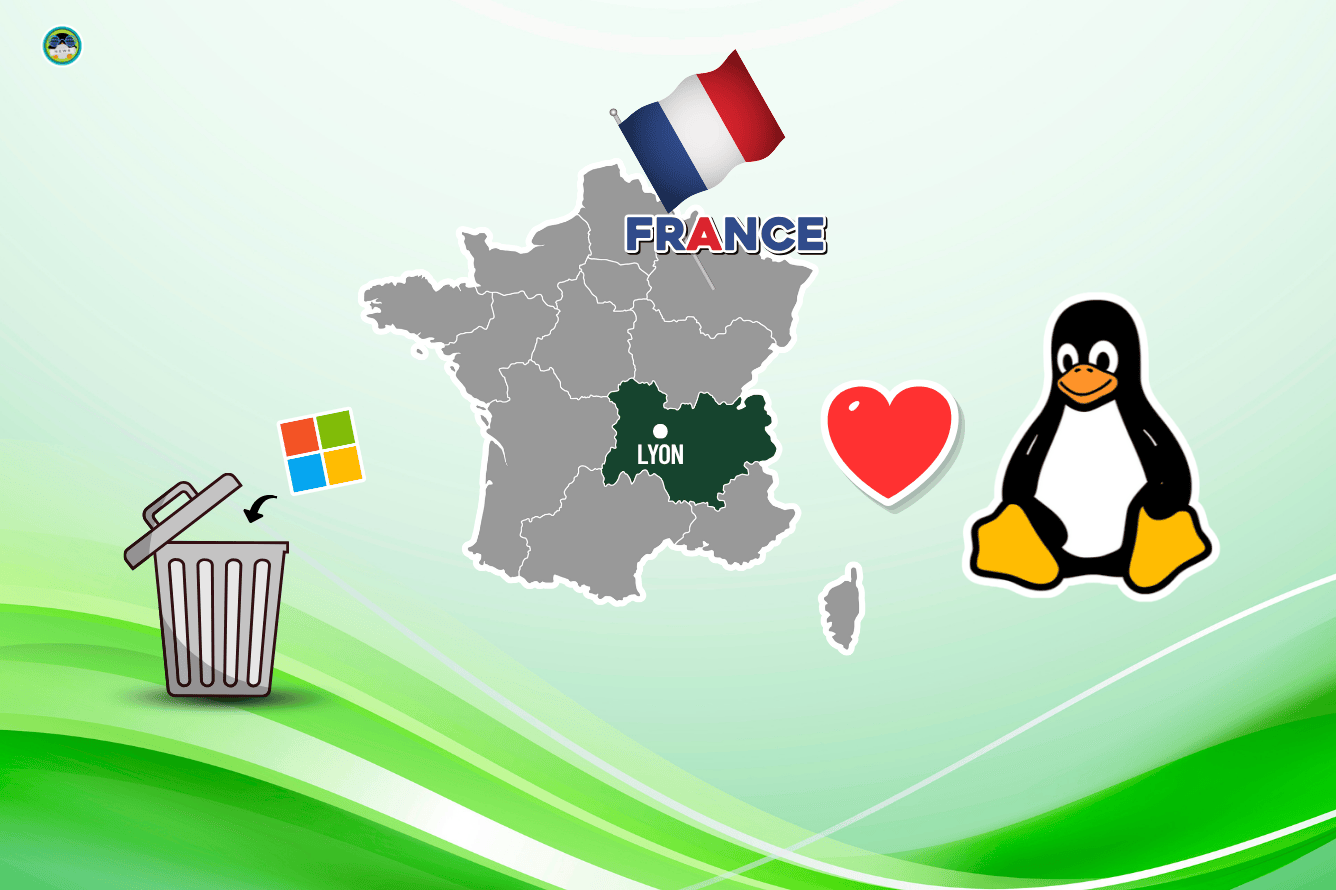
French City of Lyon Kicks Out Microsoft “European countries have been growing increasingly wary of relying on Microsoft for critical government and public sector services. Concerns about data privacy, digital sovereignty, and potential governmental surveillance have led many to question the viability of depending on an American tech giant for sensitive infrastructure.” The point is, this is actually quite possible to do. Whether an organisation invests in its own people, or employs local companies to assist, it can be done. It is the marketing machine of Microsoft that convinces executives that Microsoft is so easy, that pays to certify installers and consultants, etc. The same can be done by governments, just like the UK government established their PRINCE project methodology, which all consultants and training companies were certified against. The same also goes for document formats. There is no reason to be stuck on .docx after so many governments committed to actually using ODF instead. Governments are not helpless, and can set standards to be complied with, and industry will conform if they want contacts. The big benefit for everyone involved is, anyone can freely download fully compliant ODF suites, and they do really work much the same as Microsoft Office does. I know this personally as I was part of a project to ready our own government to transition away from Microsoft in 2007. Yes, that never happened, but the reasons had nothing to do with the technology not working, or workers not being able to use Zimbra mail or LibreOffice. It was all politics and backroom manoeuvring around the IT staff. Such a change though does take guts and drive to implement, and the willingness of someone to stand up to the so-called “norm” of Microsoft. The world not only needs digital sovereignty, it also needs more competition and choices. Such choices do rest on having proper open standards for the formats of data being stored and processed. Vendor lock-in should be a major red flag for any government. See #technology #opensource #France #government
South Korea Brought High-Rise Fire Escape Solutions To The Masses “When a fire breaks out in a high-rise building, conventional wisdom is that stairwells are the only way out. Lifts are verboten in such scenarios, while sheer height typically prevents any other viable route of egress from tall modern buildings. If the stairs are impassable, or you can’t reach them, you’re in dire peril. In South Korea, though, there’s another option for escape. The answer involves strapping on a harness and descending down ropes hanging off the side of the building, just like in an action movie. It might sound terrifying, but these descending lifeline devices have become a common part of fire safety infrastructure across the country.” Interesting that the design works in both directions, so as one person descends, the other side is going up ready for the next person to descend. It is limited to 15 stories high, but it is real food for thought for skyscraper designers regarding better planning for evacuation of taller buildings. The fact is, things do go wrong, and what happens to the people up on 30 plus floors? Many skyscrapers also have sealed windows. It's a bit like planning for the ideal scenarios, and we hope nothing else ever happens. See #technology #escape #fire
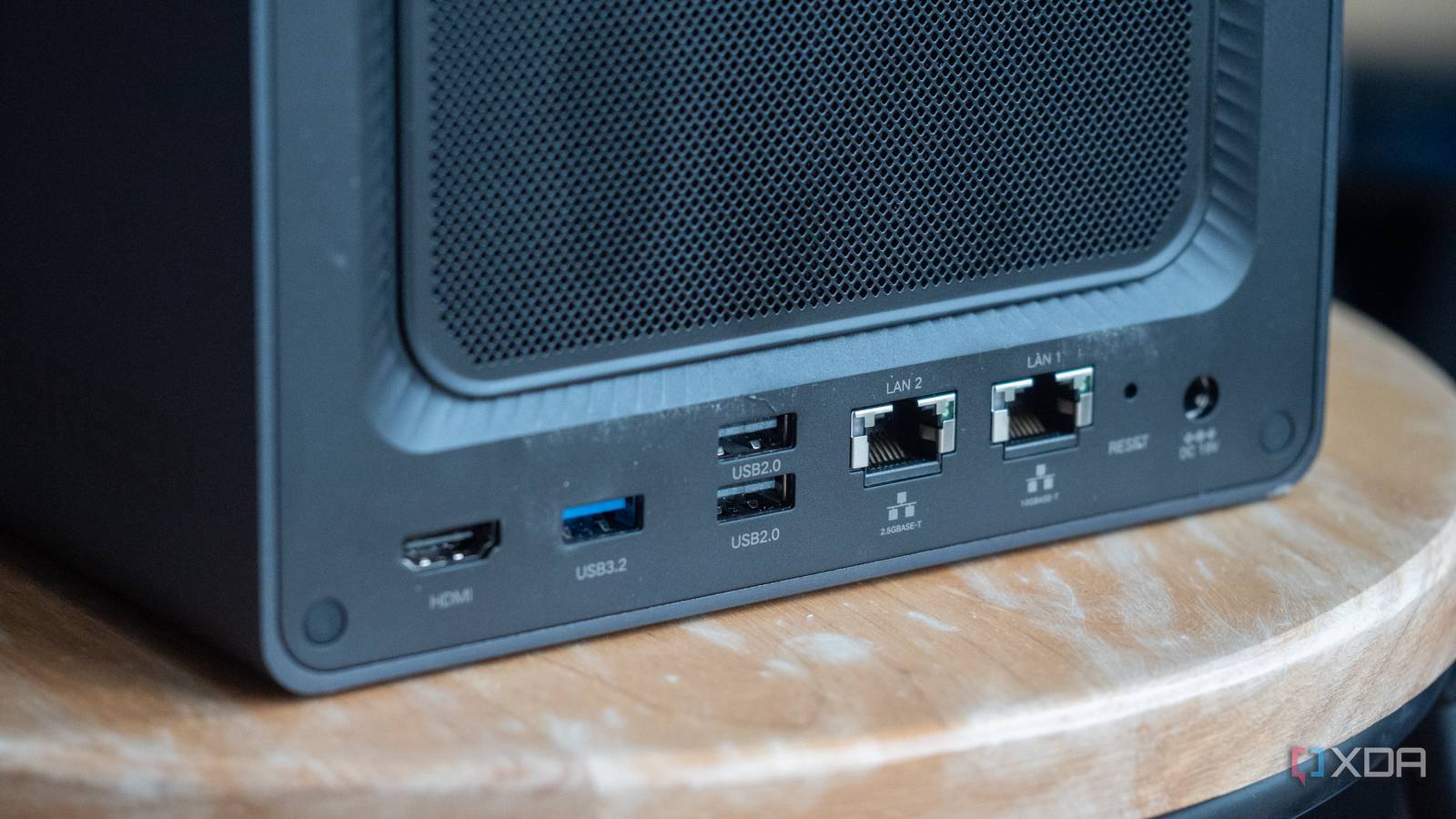
I replaced my ISP router with OPNsense months ago, and I don't regret it at all OPNsense can also be fairly simple to set up if you go with the basics (like most home routers offer). But the great thing is you can also deep dive into it and setup separated VLANs and masses of tweaks and rules. What you need to know, though, is that you will need to run it on a separate piece of hardware (just like you'd have bought a router device) and ideally you'd want at least 4 Ethernet ports on it. The minimum is really two ports (a WAN port and a LAN port). My OPNsense device is a Protectli with 4 ports. One is a WAN port, and I have reserved another for a LAN port, and I have the remaining two ports connected as a LAGG interface to my main switch (so it has dual links for load balancing and redundancy). But again, you don't to do this either if you want to keep it simple. What I still want to explore with mine, is using the Haproxy plugin to do my reverse proxying directly on the OPNsense device, instead of in a container on my server. This will mean that some traffic destined for my OpenWebRx device can flow directly from the router through the main switch and to the OpenWebRx device (instead of via the server and then back through the main switch). OPNsense (and PFsense) does mean total control in your hands, and also ongoing updates and patches for many many years... See #technology #opensource #security #routers