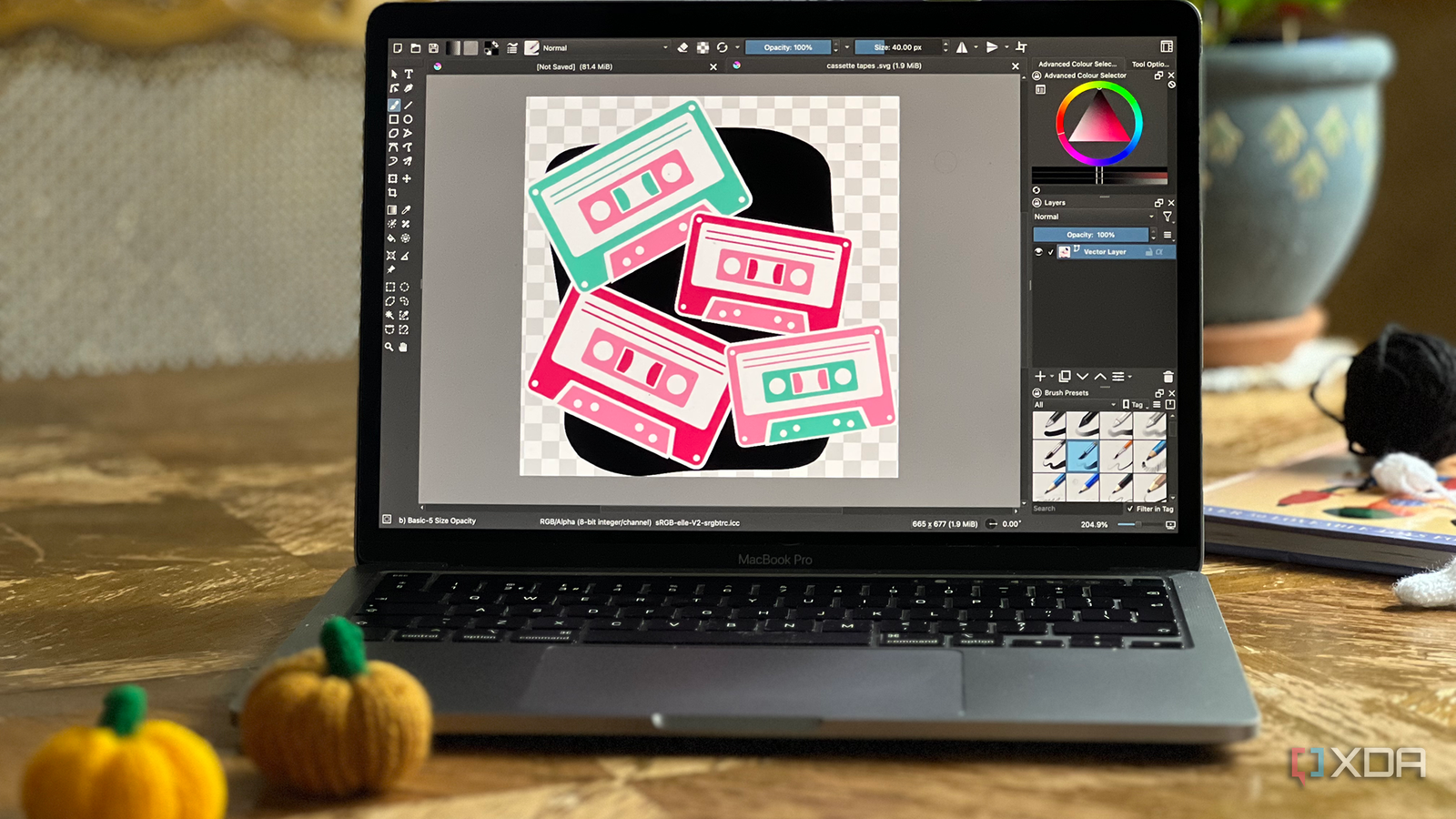
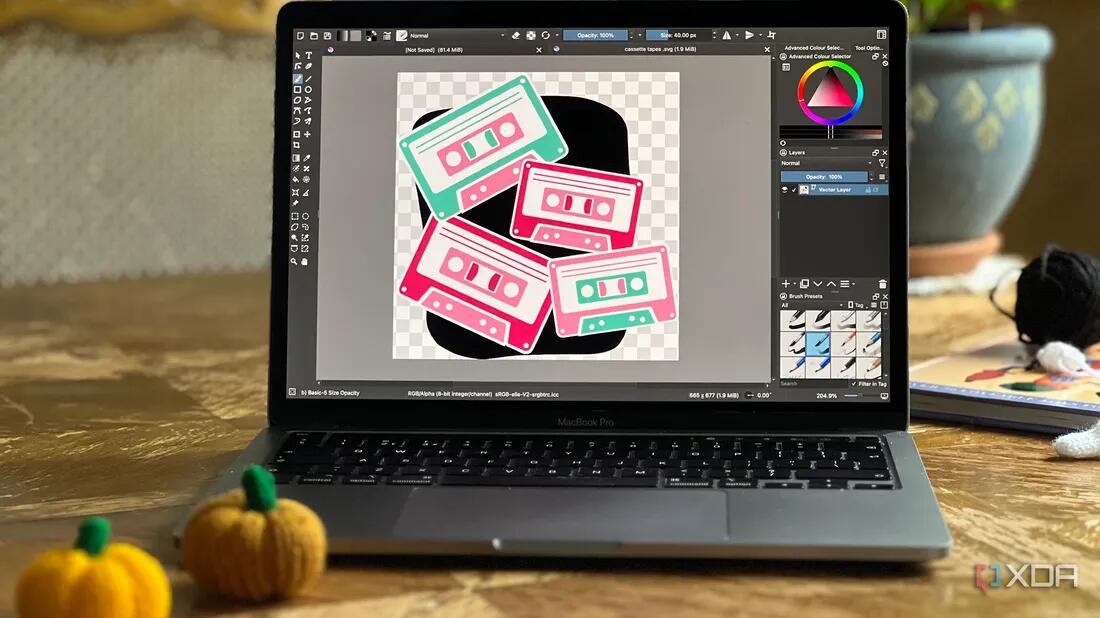
7 hidden features in Krita to boost your creative workflow Krita is a fantastic open-source tool for creative image manipulation. While Krita is one of many alternatives to Photoshop, it stands alone as a go-to creative tool for many digital artists and illustrators, even for digital illustration from tablets too. Krita has many obvious tools and features, like layers, brushes, shapes, and selection tools, but it also provides many hidden features you should use to boost your creative workflow further. Krita’s wealth of tools competes against the best paid-for software — like Photoshop, Affinity, or Procreate — for digital art and illustration. It’s good to learn the full metrics of the software you choose to use, especially pesky hidden tools, that are most often overlooked. The linked article also helps give an idea of some useful things you can do with Krita. As I recall, it also has support built in for digital drawing tablets. See #technology #opensource #drawing image
The streams repository is a self-hosted Fediverse server that offers more of a Facebook alternative type experience The name refers to the code repository, so there is no actual branding for this service. Hence, “the streams repository”. It isn't a product. It's just a collection of code which implements a Fediverse server that does some really cool stuff. There is no flagship instance. There is no mascot. In fact, all brand information has been removed. You are free to release it under your own brand. Whatever you decide to call your instance of the software is the only brand you'll see. The software is in the public domain to the extent permissible by law. There is no license. It began in 2010 as a decentralised Facebook alternative called Mistpark. It has gone through a number of twists and turns in its long journey of providing federated communications. The Fediverse servers Friendica and Hubzilla are early branches of this repository. If you look for the streams repository in a list of popular Fediverse servers, you won't find it. They're not big on tracking and other spyware. Nobody knows how many instances there are or how many Monthly Active Users there are. The default settings tend to favour personal and private use on relatively modest hardware for close friends and family. They also provide what they believe is the most harassment-free experience for marginalised people and communities available today in the Fediverse — “out of the box”. The idea therefore is for users to host this service for themselves and/or family and friends. It will interconnect with Hubzilla, Friendica, Fediverse (yes, including Mastodon), and some other services. What is like Facebook? Well, it is long form posts (not short-form like Mastodon, Twitter and BlueSky), and it supports markdown, html, and bbcode. Posts can also be edited after posting. You can also upload photos with some basic arrangement into folders/albums. It has WebDAV access for cloud storage too. Events are also catered for: Calendar and attendance; with automatic timezone adjusted birthday notifications for friends using this feature. These are many of the basics that the original Facebook had when it started out. What you won't see is lots of algorithms, any adverts, not Facebook Marketplace, etc. It appears to be a bit more refined than Hubzilla and Friendica. Interestingly, it has also inherited Hubzilla's excellent nomadic identity: Clone your online identity and content to multiple sites using the Nomad protocol and mirror any changes in near real-time. Then, if your chosen site goes down (either temporarily or permanently) or you get booted off of it for some reason, your online life doesn't have to come to an end or force you to start over. All your friends and all your content are available on any of your cloned instances — at any time. I've taken some of the above content from Mike Macgirvin's own blog post about streams. The key thing here though is there is no big flagship instance to sign-up at to use this service. There may be some folks hosting such servers and allowing public registration (link below has a link to some such instances), but otherwise you or a friend need to host it yourselves. Anyone on Mastodon would be able to follow your posts on streams, so using this is in place of registering an account on Mastodon or any other Fediverse server. I see also there is a Docker installation as well! This is interesting as I was struggling to get a Docker install of Hubzilla to work. I may give this a spin myself, actually. See #technology #decentralised #selfhosting #OpenSource #socialnetworks image
Microsoft patch to Linux kernel is disabled — Maybe this explains the numerous Windows vulnerabilities Intel and AMD engineers have stepped in at the eleventh to deal with a code contribution from a Microsoft developer that could have broken Linux 6.13 on some systems. So this patch never went live. Microsoft is notable for dubious quality control standards regarding releases of its flagship operating system, Windows. That one of its engineers should drop some dodgy code into the Linux kernel is not hugely surprising, and the unfortunate individual is not the first and will not be the last to do so, regardless of their employer. Yes, it is not just Microsoft which has caused these problems for the Linux kernel, but one has to wonder about the ongoing vulnerabilities that Windows OS has had over its many decades of existence. One could say Windows is a horrifically complex collection of code, but I think the same can be said for Linux too (with patches being submitted by many devs all around the world, and the Linux kernel driving so many different types of hardware, more than Windows itself). I suppose the difference in expectations comes from the remuneration of the devs. I'd expect that Microsoft pays their devs in hard cash to do their jobs, whilst Linux devs do it mostly for love. See #technology #Microsoft image
Be Careful What You Wish For — What is RedNote, the Chinese social media app that US TikTokers are flocking to? As Supreme Court justices ponder the future of TikTok in the United States, a growing number of American social media users have responded by moving to an unlikely alternative: Xiaohongshu, a hugely popular social media app in China. The app, which means “Little Red Book,” often shortened by US users to RedNote, surged to the top position on Apple’s US App Store on Tuesday. Founded in 2013, Xiaohongshu is one of China’s biggest social media platforms with 300 million users, according to research firm Qian Gua. Described as China’s answer to Instagram, the app has become especially popular for sharing tips on travel, makeup and fashion. But while it has cornered the Chinese market, it hasn’t gained much prominence beyond the Chinese-speaking world. Until now. If this migration is true, it is not going to make some people happy in the USA. I don't think the intention of banning TikTok, was for users to move to a platform that is not even hosted in the USA at all. I think I tried to join RedNote once but seem to recall it may have been invite only. That said, RedNote is not actually a direct TikTok alternative, as it seems to be more of an Instagram alternative (like the decentralised Pixelfed). In fact, Loops maybe be more of an alternative TikTok (a decentralised one at that), but it is not quite ready for prime time yet. Although existing users on RedNote seem to be very welcoming to the new refugees, there may be a clash down the line still, as the Chinese culture is more one for being respectful, and not brandishing politics around. Still, like with amateur radio, it is often an eye-opener when ordinary people from different countries can chat and socialise together, to get a better understanding of what they have in common, and what is different. The censorship Czars, though, may well find that when you slap down one company/social network, there is more than another ready to pop up and take its place (remember Huawei and Xiaomi/OPPO/HONOR/etc). My country will still have TikTok, so I'll just be watching this as this all unfolds. See https://edition.cnn.com/2025/01/14/tech/rednote-china-popularity-us-tiktok-ban-intl-hnk/index.html #technology #ban #censorship #socialnetworks image
Why I Switched to Firefox and Never Looked Back Yes, Firefox is actually a pretty solid browser and has none of the drama that surrounds what Google does next to Chrome. After reading the linked article, I've also switched back to it in place of the one Brave Beta browser I've been using (due to a weirdly irritating right-click action on Brave Beta specifically). One or two things to note: * Firefox now does have a built-in vertical tabs option (needs to be activated in about:config settings) so it is not necessary to have to use the Tree Style Tabs extension. * I do like the built-in screenshot tool, too. * When doing a search in the Omnibar, you can quickly also pick which search engine to use. Firefox lets you pick how you want to run a search each time. * Firefox is already renown for it network settings allowing proxies to easily be used, for bypassing ISP blocking or to use I2P. * It's not a Chromium based browser, so it is good to also support competition in the market. See  #technolgy #browsers #Firefox image
German router maker is reminded that open source licences are legally enforceable The GNU General Public License (GPL) and its "Lesser" version (LGPL) are widely known and used. Still, every so often, a networking hardware maker has to get sued to make sure everyone knows how it works. "The favourable result of this lawsuit exemplifies the power of copyleft—granting users the freedom to modify, repair, and secure the software on their own devices," the SFC said in a press release. "Companies like AVM receive these immense benefits themselves. This lawsuit reminded AVM that downstream users must receive those very same rights under copyleft." Just because something is free of cost, does not mean it is free of licensing conditions. Cisco has also found this out in the last. It's really sad when companies profit off the use of open source, but then don't want to give back themselves. See #technology #opensource image
Remembering Usenet - The OG Social Network that Existed Even Before the World Wide Web Before Reddit, before GitHub, and even before the World Wide Web went online, there was Usenet. This decentralized network of discussion groups was a main line of communication of the early internet - ideas were exchanged, debates raged, research conducted, and friendships formed. Usenet is one of the oldest computer network communications systems still in widespread use. It went online in 1980, at the University of North Carolina at Chapel Hill and Duke University. Linux was officially announced on a Usenet newsgroup. Usenet's use may have declined over the years, but it is still quite active. It is good to see that although the masses may often only know about Reddit, Facebook, etc, there are many of the older social networks still running, with thousands of daily users. Another such example is IRC (I post to my own IRC group daily). Despite new social networks there is still plenty of space and use on the older networks. Not everyone just flocks to the newer, flashy websites. I suppose it also means that the users on Usenet and IRC are also likely to have a slightly different focus on how they communicate. I also doubt you'll find many Gen Z etc users on those older networks. Whilst the original Usenet is paid access, If you want to 'lurk' on Usenet groups you can also try out the free Eternal September service. I use a client app called Pan to read Usenet groups. See #technology #usenet #retro #socialnetworks image
Bike Index — Over $28,937,727 Worth of Bikes Recovered Globally Through Crowdsourcing It's simple. Submit your name, bike manufacturer, serial number, and component information to enter your bike into the most widely used bike registry on the planet. If your bike goes missing, mark it as lost or stolen to notify the entire Bike Index community and its partners. A user or partner encounters your bike, uses Bike Index to identify it, and contacts you. With the help of the Bike Index community and its partners, you have the information necessary to recover your lost or stolen bike at no cost to you. It is great when technology can be harnessed to protect someone's investments. This is a perfect way of harnessing the power of crowd collaboration. See #technology #stolen #bikes #crowdsourcing image
Penpot is the web-based open-source design tool that bridges the gap between designers and developers Penpot expresses designs natively as CSS, SVG and HTML. Developers feel right at home in the interface. The whole team enjoys one seamless workflow. No more handoffs. Create rich interactions to mimic the product behaviour. Share them to stakeholders, present proposals to your team and start user testing with your designs, all in one place. Penpot provides features that allow designers, developers and stakeholders to collaborate, sharing the same space in real-time. With free and open source software, too (and using open standards), no-one gets left out in the cold by having to buy the same package someone else is using. Penpot is the only design & prototype platform that is deployment agnostic. You can use it or deploy it anywhere. It reminds me many years ago of the narrow-mindedness of government, where they could splash taxpayer money on buying expensive MS Word, and sending out all their letters and plans in doc format. No matter that all the private citizens receiving these did not actually have MS Word (were they expected to all go out and buy it?). Yes, later on there was better compatibility with LibreOffice and docx, but it still amazes me that there is so little effort made to use proper open standards or free software that everyone has easy access to. See #technology #design #opensource #openstandards image
Warning for people buying electronics in South Africa South Africa’s electrical and electronic goods market is awash with products that are fake, counterfeit, and don’t comply with local safety standards and other regulations. Aside from non-compliant and illegal consumer electronics, CBI-electric engineering executive Andrew Dickson revealed last year that South Africa was seeing an influx of counterfeit electrical goods from the Middle East, Eastern Europe, and Asia. These include knock-off circuit breakers, light switches, and other common electrical items people install in their homes. The biggest problem really with many of these goods are, they don't carry the necessary regulatory standards approvals. These standards are actually quite important as they relate to safety (especially fire and electrical insulation against shocks) as well as radio interference. There are countless frequencies of radio transmission in every house, and it is important that these stay within their approved frequencies and power levels, otherwise they generate noise and interference for other devices. These disturbances can often reach as far as neighbouring homes. Sometimes it is just annoying hums on speakers, but it can both block and trigger other devices nearby, like opening a garage door. Radio communications are also sensitive to noise and these often happens on harmonics, so noise on one frequency is picked up on a number of other frequencies. It can interfere with not only your own WiFi but also emergency radios etc. This is why all radio equipment is approved for use in a country. The importer is usually responsible to ensure compliance (whether with a local standard, or with a locally accepted international standard). So if you import your own electronics, you'd want to be sure they are compliant. Apart from facing a R20,000 ICASA fine, there may also be medical or insurance liabilities if such devices cause damage to property or human life. It's true that many smaller devices may not have the potential to cause such problems, but certainly inverters of many types do (including electric fences), and I've also seen a robot vacuum cleaner causing a lot of disturbance. See https://mybroadband.co.za/news/gadgets/577606-warning-for-people-buying-electronics-in-south-africa.html #technical #radio #interference #standards image