Working with MP4 H264 in DaVinci Resolve on Linux DaVinci Resolve for Linux free edition does not import or export any H.264 or H.265 codec files (whether in a MP4, HKV, or MOV container) nor does it work with AAC at all (The $299 Studio version only handles the H.264 and H.265 video codecs but not the AAC audio codec). This is said to be a Linux licensing issue, so will not be receiving support on the free version of DaVinci Resolve. I explain in this video how two batch files will help convert any MP4 from cameras or other sources into ready to import straight into DaVinci Resolve on Linux. The second batch files transcodes the massive Quicktime file that DaVinci Resolve renders, into a smaller, universally compatible, and easier to MP4 file to share or upload to YouTube. The video ends off by explaining how to otherwise import the DaVinci Resolve woking project into a Windows version of DaVinci Resolve, to render it using the free Windows edition which will render to H.264 or H.265. Watch #technology #DaVinciResolve #HowTo #Linux image
Yes, You Can Get the Epic Games Store on Your Linux PC. Here's How The Linux gaming community has grown rapidly over the past few years, thanks to open-source game development and compatibility layers. With all these games, Epic games are also making headlines in the Linux community. It's now easier than ever to run Epic games on Linux. Yes, you can play Epic Games titles on Linux, but it requires a workaround since the Epic Games Store doesn't officially support Linux. Instead of the official Epic Games launcher, you can use alternative tools like the Heroic Games Launcher to access Epic Games on Linux. Another option is Lutris, a game management platform for Linux, which uses programs like Wine that allow you to run Windows games on a Linux system (including the Epic Games launcher). Steam Games does a pretty good job of running many Windows games quite seamlessly using the one-click compatibility software, but it is great to also have all these alternatives as well. I started using Steam Games mainly when I was still dual booting between Windows and Linux, and did not want to pay twice for the same game (I imagine cloud logins makes this mostly redundant nowadays). See #technology #gaming #linux image
12 Best Free and Open Source Steganography Tools Steganography is the art and science of concealing messages in other messages in such a way that no one, apart from the sender and intended recipient, suspects the existence of the message. It’s a form of security through obscurity. Steganography is often used with cryptography. Plainly visible encrypted messages, no matter how unbreakable they are, arouse interest. This weakness is avoided with steganography. In most cases, no-one would even know there was a hidden message, so such means are not usually subjected to attempts to crack them. See #technology #privacy #steganography #opensource image
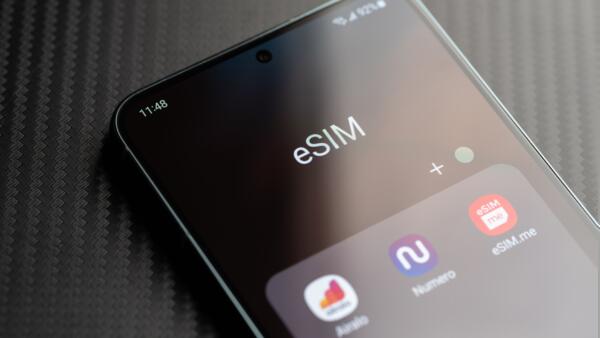
Adapter adds eSIM to any Android smartphone Most Android phones, that contain eSIMs, are pretty expensive. Fortunately, several companies have developed eSIM adapters that can be plugged into regular physical SIM card slots and add eSIM technology to your phone. Among the newest providers is JMP, whose adapter was recently tested by Android Authority. The adapter’s shape is identical to a regular physical SIM card, which lets you insert it into nearly any device with a SIM card tray or slot, including Android smartphones, tablets, and mobile Wi-Fi routers. The only feature your smartphone must support to use the JMP eSIM adapter is the Open Mobile API (OMAPI), which is required for interfacing with the eSIM chip. Almost every smartphone with Android 9 Pie or later comes with the feature, but there are a few exceptions — like the Nothing Phone 2a. The downside is the cost of the adapter at $39.99 (about R716) and shipping to SA $35 (about R626) but I suppose that is cheaper than a higher end phone, and offers the versatility of an eSIM. Interestingly, too, JMP has open-sourced its software as well. The linked article also mentions two other alternatives to consider. See https://mybroadband.co.za/news/cellular/561542-adapter-adds-esim-to-any-android-smartphone.html #technology #eSIM #opensource image
You can develop native apps for Android using Python Python’s simplicity and readability make it an attractive choice for developers looking to quickly develop and deploy applications. Although Java and Kotlin are the traditional languages for Android development, Python offers a streamlined alternative that leverages Python’s rich ecosystem of libraries and frameworks. Using Python on Android can accelerate development and enable the integration of advanced functionalities like data analysis and machine learning. Five different options are covered in the linked article: 1. Kivy 2. BeeWare 3. Chaquopy 4. PySide for Android 5. Pydroid 3 And interestingly, you can use Buildozer for Kivy, Briefcase for BeeWare, or PyQtDeploy for PySide to package your Python app into an APK as well. That makes the app distribution and installation identical to any other Android app. See #technology #Python #Android image
Car guards going cashless in South Africa can often double their income Digital payment solution Street Wallet is helping car guards across South Africa to increase and sometimes even double their daily income in an increasingly cashless society, the Sunday Times reports. Street Wallet offers customers multiple ways of paying, including Scan to Pay using a quick response (QR) code, Apple Pay, Samsung Pay, SnapScan, and Zapper. Andre Ilunga, a car guard in the Camps Bay area in Cape Town, told the Times that everything has changed for him since he started using the app. Because most people did not tip him due to a lack of cash, he now makes nearly double what he would typically have made in a day. So true, I often don't have cash, or have a negligible amount as it costs money to draw cash, and I must make a special stop somewhere to get cash. Just about everything today accepts a card or online payment. I probably only draw some cash about three times a year, and that usually goes for card guards over a period of time. Even domestic workers today, and garden services, accept EFT or other payments. We've had more than one domestic worker in our suburb get robbed of their cash at month end. It's not really safe to carry cash, and cash is actually pretty filthy to handle (hygienically-wise). I suppose some will comment that is why cash gets laundered The app being mentioned in the article does not require the car guard to even have a bank account - they get a digital voucher that can be exchanged for cash at a bank (one hopes that they can receive their funds electronically too though as an option). But what is of extreme concern, are some of the stats given in the linked article about how few people actually have access to the Internet from their homes, and in rural areas it is almost non-existent. This is a major stumbling block to a digital economy. At R85 per gigabyte, mobile data prices in 2022 were three times as high as in North Africa and double the price in Western Europe, according to the report. See https://mybroadband.co.za/news/banking/561682-car-guards-going-cashless.html #technology #SouthAfrica #cashless #digitaleconomy image

Redis has reason to be worried as Valkey 8 fork moves beyond its parent program In March 2024, Redis announced that it was dumping the open source BSD 3-clause license for its Redis in-memory key-value database for a “source-available” Redis Source Available License (RSALv2) and Server Side Public License (SSPLv1). That made both developers and users unhappy. So, as open-source people do, community members immediately forked the code into Valkey with the support of the Linux Foundation. The release has garnered support from major tech companies like AWS, Google Cloud, and Oracle, indicating strong industry backing for this open-source initiative. Valkey has been one of the quickest moving forks for open source. On top of this, the new fork seems to have already surpassed the original in terms of new features and performance. It goes to show that open source forks can actually be a very good thing. See #technology #opensource image
The mystery of the rogue HP calculator: 12C or not 12C? That is the question For most of us, a calculator might have been superseded by Excel or an app on a phone, yet there remains a die-hard contingent with a passion for the push-button marvels. So the shocking discovery of an apparently rogue HP-12C has sent tremors through the calculator aficionado world. The HP-12C [PDF] is a remarkably long-lived financial calculator from Hewlett-Packard (HP). It first appeared in 1981 and has continued in production ever since, with just the odd tweak here and there to its hardware. Murray wrote a lengthy blog post on the topic and put together a battery of TVM tests designed to stretch the TVM solver and found to his, and others, surprise, that not all HP-12C units were equal. Dubbing the unit the "rogue edition," Murray demonstrated some worrying bugs and differences in the "rogue" hardware, which was shipped from Brazil, versus another unit. So his test may be useful to others to do a check on their HP to ensure it is 100% accurate. Maybe even a rogue version is found to be accurate, so it won't be proof that a calculator is an original HP. See #technology #retro #calculators image
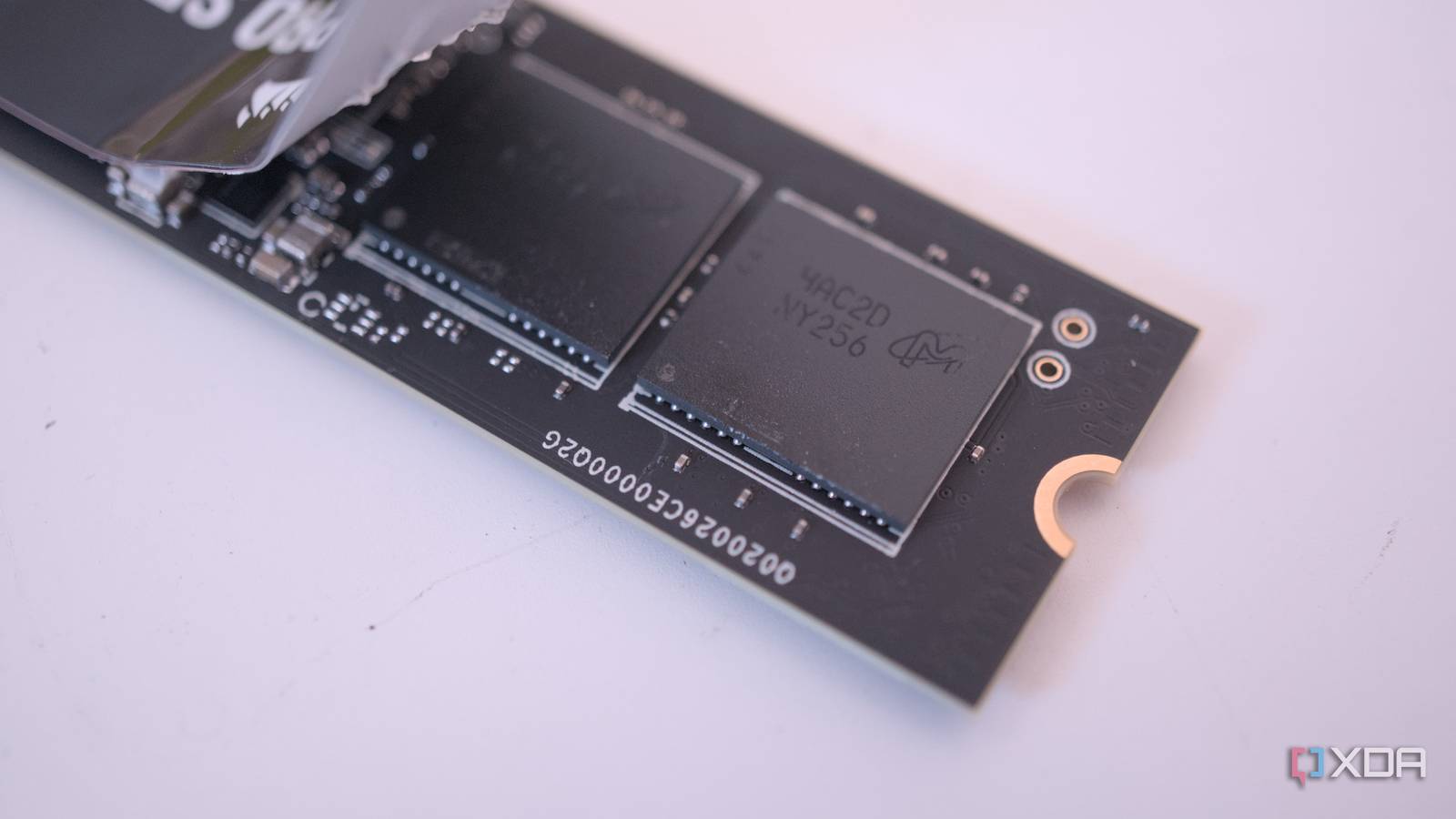
Will your SSD lose data without power? Don't store it for long periods There are some concerns about even the best SSDs losing data if kept without power, and people may question their feasibility for long-term storage. There's some truth to this, as SSDs use flash storage to store data, and are more susceptible to power-related issues than HDDs. Normally, the SSD you use on your PC would stay powered down for, say, a few hours, days, or weeks, at the most. Even if your PC is turned off for months, your SSD will still work as intended when you turn your system on the next time. The real problem begins if your SSD is devoid of power for longer periods, say, well over a year or so. Definitely worth powering up your SSDs art least every 6 months or so, to be safer. See #technology #SSD image
Kelsey Hightower: If governments rely on FOSS, they should fund it Acclaimed engineer Kelsey Hightower, who stopped coding for money in 2023, remains an influential figure in the world of software, and he's proposing something that might stir up the open source community. Funding open source is an ongoing hot topic. During a chat at Civo's recent Navigate event, Hightower joked with us how companies were happy to spend big on cloud subscriptions but tended to skimp when it came to paying a comparatively token amount for open source. Open source developers, however, require reimbersement, and Hightower has some interesting ideas on how that could be accomplished. "I think we have all got a little complacent," he tells The Register. It's true that much of the open source that is used by governments, are often essential, otherwise they'd be paying an arm and a leg for some commercial cloud subscription. It's important, not only to ensure getting some support, but to also ensure that the software is kept up to date and continues to receive support into the future. Some governments do actually contribute already if I think of some examples from France, Germany, and the EU itself. FOSS software being used is not just the glossy front-ends that users see, it is often the essential plumbing holding the wide area networks together, or keeping the storage and databases going. In many cases, I'm pretty sure that CEOs are not even aware of how much open source software is used in their organisations. See #technology #FOSS #opensource #government image