Thank You EU: WhatsApp working on cross-platform interoperability with other messengers
The European Union has recently reached an agreement on a significant competition reform known as the Digital Markets Act (DMA), which will impose strict rules on large tech companies that will have to offer users the ability to communicate with each other using different apps. WhatsApp has a 6-month period to align the app with the new European regulations to provide its interoperability service in the European Union. At the moment, it remains unclear whether this feature will also eventually extend to countries beyond the European Union.
Interoperability will allow other people to contact users on WhatsApp even if they don’t have a WhatsApp account. For example, someone from the Signal app could send a message to a WhatsApp user, even without a WhatsApp account. Third-party chat support is under development and it will be available in a future update of the app.
I, like quite a few others, completely deleted their WhatsApp accounts after the Cambridge Analytica scandal, and the then new Terms of Service that WhatsApp forced down on its users, allowing metadata to be passed upstream to Meta. As we all saw already, Meta could not be trusted at all with any metadata (the data relating to the usage of the app, locations, friends, and lots more behaviour data). Even now, I only recreated a Facebook account after getting the Beeper app, which would allow me to do Facebook Messaging without installing the Facebook app on my phone at all.
So, yes, I do have a few friends still stuck on WhatsApp, and who do not seem to realise they can also install other messenger apps like Signal, Telegram, etc. An interoperability will allow me to stay on Telegram and Signal, whilst being able to message some friends on WhatsApp (is this not really what Beeper also sort of offers, except that WhatsApp still requires the WhatsApp app to be installed, which is not an option for me at all).
I therefore welcome what the EU is trying to achieve. Just like e-mail can work between different e-mail domains, so should messaging. I realise there may be challenges, or limitations, to E2EE, but maybe this is why we need a standard too for this interoperability. Maybe if Matrix is used as the connecting medium, the chat message can be still E2EE between the parties using that Matrix room. Beeper is using Matrix as their interconnectivity (completely transparently to the user), and any Beeper-to-Beeper messages are fully E2EE. What they've done with Signal is to establish to separate E2EE channels from each client to the personal Matrix room in the middle, so yes it does break the full E2EE, but it may be acceptable for this purpose, if done in this way.
Ideally some new (or existing) protocol standard could be agreed on, and if that is supported in-app by WhatsApp and any of the other messaging services, it will be possible to do full E2EE messaging between end clients.
Why does this matter? Well, it is about that tracking and metadata. So, if I trust Telegram or Signal more than WhatsApp, then my metadata stops by my client, and that data does not travel over to WhatsApp, just the message and the friend contact who is already on WhatsApp. Like Beeper, my app will insulate me from WhatsApp.
The other big benefit will be that you use the app that you are most comfortable with, and do not have to install 7 other apps to communicate with everyone everywhere else (if their apps participate in the interoperability).
Users that want to stay on WhatsApp, can stay there. But yes, from a consumer point of view, they could now more easily move away from WhatsApp. That means WhatsApp must complete a bit harder to make their service really worthwhile to use (I doubt they'll change their privacy stance!).
See

WABetaInfo
WhatsApp beta for Android 2.23.19.8: what's new? | WABetaInfo
Discover what's new in the WhatsApp beta for Android 2.23.19.8 update: WhatsApp is working on a chat interoperability feature!
#technology #WhatsApp #interoperability #EU
 Whether you want to automatically sync your photos or audio recordings from your phone directly to your desktop PC, or to sync your notes between all your devices, free and open source Syncthing will help you do this securely, privately, and reliably. I'll show how I'm doing this, and how I'm also keeping older versions of changes my notes so that I can restore them if needed (a bit like a basic backup).
Unlike many backup or sync applications, Syncthing will sync any number of folders directly between your devices, so no server is required. This can be done without even knowing the IP addresses of the devices. It can also sync over the Internet to a friend, if you want to share backup space with each other - you can set your own encryption password for each folder to keep your data private.
Watch
#technology #opensource #Syncthing #filesync
Whether you want to automatically sync your photos or audio recordings from your phone directly to your desktop PC, or to sync your notes between all your devices, free and open source Syncthing will help you do this securely, privately, and reliably. I'll show how I'm doing this, and how I'm also keeping older versions of changes my notes so that I can restore them if needed (a bit like a basic backup).
Unlike many backup or sync applications, Syncthing will sync any number of folders directly between your devices, so no server is required. This can be done without even knowing the IP addresses of the devices. It can also sync over the Internet to a friend, if you want to share backup space with each other - you can set your own encryption password for each folder to keep your data private.
Watch
#technology #opensource #Syncthing #filesync
 A bit like Telegram has a Telegram X for highlighting new beta features (no neither have anything at all to do with the X network), so has Element now "ignited" their Element X messenger. It will eventually become the main Element app.
The reason it is different, is that it uses the new Matrix API called Sliding Sync, and they are not joking when they say it is 6,000 times faster than the classic Element app. That slick speed is immediately noticeable. They have also integrated Matrix's own voice and video chat (or will be later on in X) instead of using Jitsi meetings as an external service.
The other thing is that the UI is much improved too. This is all with the aim of making Element X become a preferred instant messenger for everyone. Yes, there is Signal and other E2EE messengers, but have you noticed you still require a phone number and / or e-mail to register with Signal? Element has been re-developed natively using Rust for both Android and iOS, so updating it will be easier in future.
Matrix, as a service, is starting to become really interesting. Apart from the one big server most of us know, it is also a service that is self-hosted by many organisations, individuals, as well as governments to ensure maximum privacy as well as control. This allows those organisations to fully verify who connects, and to enforce E2EE in rooms and chats.
But where Matrix really differentiates itself, is its ability to do numerous types of bridges, and to interconnect with WhatsApp, XMPP, IRC, Telegram, and many more services. This is why Beeper uses Matrix to power their services.
So with this move to Element X, Matrix is clearly being strongly positioned for the future, and it is also clear that Matrix was not satisfied with just incremental adoption and advances in their technology.
Just note that although the iOS and Android apps are available now in the official stores, the Android APK install file can also be obtained directly from the linked GitHub project location under Releases.
See
A bit like Telegram has a Telegram X for highlighting new beta features (no neither have anything at all to do with the X network), so has Element now "ignited" their Element X messenger. It will eventually become the main Element app.
The reason it is different, is that it uses the new Matrix API called Sliding Sync, and they are not joking when they say it is 6,000 times faster than the classic Element app. That slick speed is immediately noticeable. They have also integrated Matrix's own voice and video chat (or will be later on in X) instead of using Jitsi meetings as an external service.
The other thing is that the UI is much improved too. This is all with the aim of making Element X become a preferred instant messenger for everyone. Yes, there is Signal and other E2EE messengers, but have you noticed you still require a phone number and / or e-mail to register with Signal? Element has been re-developed natively using Rust for both Android and iOS, so updating it will be easier in future.
Matrix, as a service, is starting to become really interesting. Apart from the one big server most of us know, it is also a service that is self-hosted by many organisations, individuals, as well as governments to ensure maximum privacy as well as control. This allows those organisations to fully verify who connects, and to enforce E2EE in rooms and chats.
But where Matrix really differentiates itself, is its ability to do numerous types of bridges, and to interconnect with WhatsApp, XMPP, IRC, Telegram, and many more services. This is why Beeper uses Matrix to power their services.
So with this move to Element X, Matrix is clearly being strongly positioned for the future, and it is also clear that Matrix was not satisfied with just incremental adoption and advances in their technology.
Just note that although the iOS and Android apps are available now in the official stores, the Android APK install file can also be obtained directly from the linked GitHub project location under Releases.
See 
 Unlike other measurement devices that use the time between a mouse button input and the monitor’s display of a bullet or shooting event, this one looks at mouse movement and the change in the scene instead. This makes it much more versatile than other methods since it’s independent of specific actions, and can be used in any game without any specific events needed to perform the measurement. A phototransistor is placed on the monitor’s top edge, and the Arduino-based device sends mouse commands to the computer while measuring the time between those commands and the shift in the image on the monitor.
It works differently:
* Unlike other common HW latency meters, this device doesn't measure a "click-to-photon" latency, but rather an "aim-to-photon" latency.
* The device presents itself to the PC as a mouse, and sends a mouse movement (not a click!) message.
* Once the message is sent, the device measures the time until the image on screen changes.
Advantages over other latency metering devices:
* You don't need bullets to measure latency, so you never run out of ammo - you can (quickly) make as many measurements as you wish. As a result, the device can work autonomously to collect unlimited number of measurement samples, reaching a much higher accuracy.
* The measurement doesn't rely on the muzzle flash animation, which (depending on developer) may be rendered with a delay, producing incorrect results.
* You can measure latency in games that don't shoot guns (e.g. shoot arrows or explore)
* You don't need to place the device in the middle of the screen every time. It is unobtrusive enough that you don't even have to take it off.
* The device requires only one connected wire for operation.
* The device can even estimate the effective framerate - something the other devices cannot do.
* And of course, last but not least - the device is open source, cheap, and easy to make!
Seen at
Unlike other measurement devices that use the time between a mouse button input and the monitor’s display of a bullet or shooting event, this one looks at mouse movement and the change in the scene instead. This makes it much more versatile than other methods since it’s independent of specific actions, and can be used in any game without any specific events needed to perform the measurement. A phototransistor is placed on the monitor’s top edge, and the Arduino-based device sends mouse commands to the computer while measuring the time between those commands and the shift in the image on the monitor.
It works differently:
* Unlike other common HW latency meters, this device doesn't measure a "click-to-photon" latency, but rather an "aim-to-photon" latency.
* The device presents itself to the PC as a mouse, and sends a mouse movement (not a click!) message.
* Once the message is sent, the device measures the time until the image on screen changes.
Advantages over other latency metering devices:
* You don't need bullets to measure latency, so you never run out of ammo - you can (quickly) make as many measurements as you wish. As a result, the device can work autonomously to collect unlimited number of measurement samples, reaching a much higher accuracy.
* The measurement doesn't rely on the muzzle flash animation, which (depending on developer) may be rendered with a delay, producing incorrect results.
* You can measure latency in games that don't shoot guns (e.g. shoot arrows or explore)
* You don't need to place the device in the middle of the screen every time. It is unobtrusive enough that you don't even have to take it off.
* The device requires only one connected wire for operation.
* The device can even estimate the effective framerate - something the other devices cannot do.
* And of course, last but not least - the device is open source, cheap, and easy to make!
Seen at 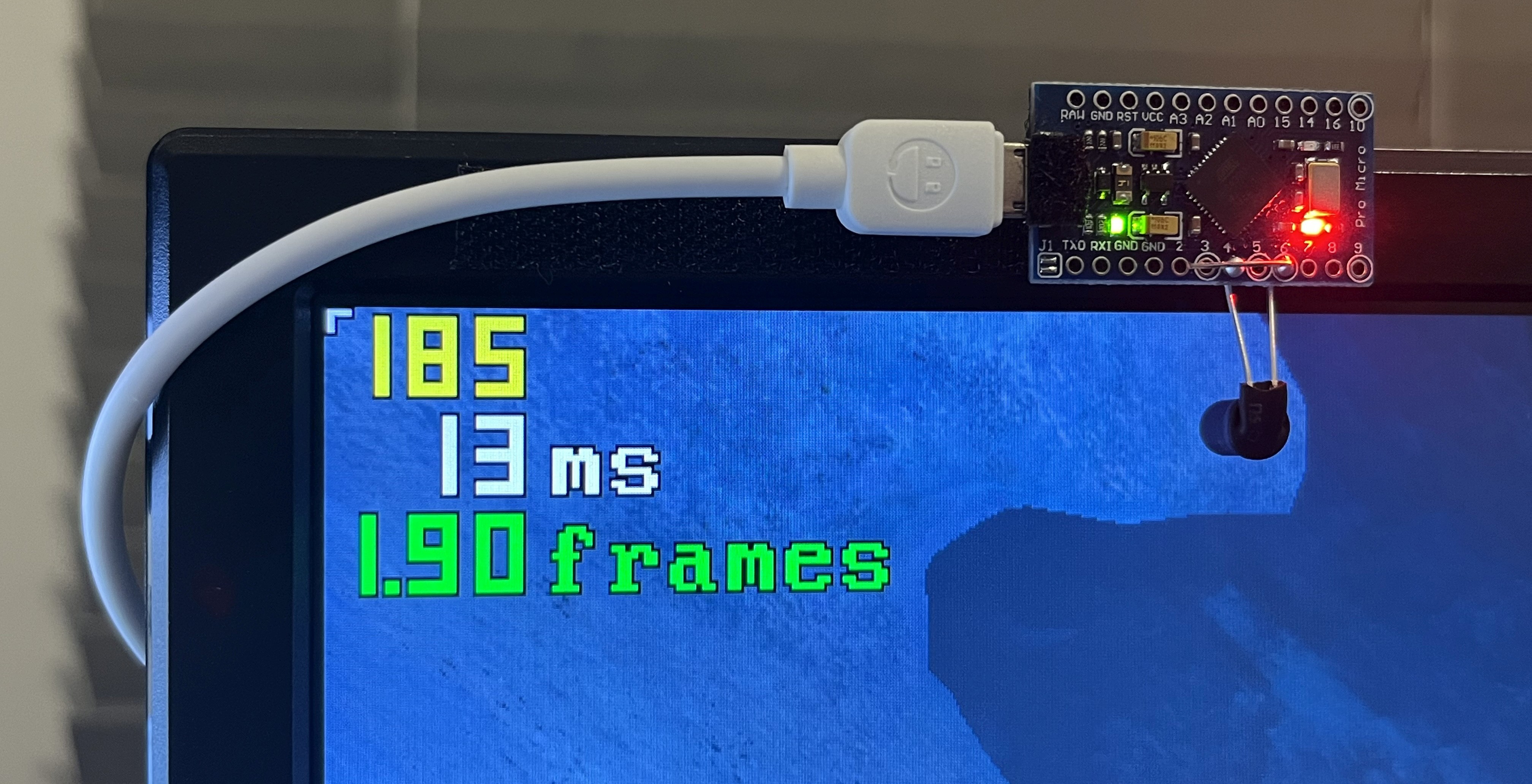
 Have you ever found yourself pondering the age of your Linux system? Perhaps you’ve inherited a computer or are curious about when you first set up your trusty Linux machine.
In the linked article, they show you a straightforward and efficient method to uncover the installation date of your Linux system using just a single command, as well as a few other options too.
One of the most universal methods is to use: `stat / | awk '/Birth: /{print $2 " " substr($3,1,5)}'` or you could even just type `stat /`.
My system is Manjaro Linux, so it has been rolling along for a while I see, from 16 June 2017. I realise too why it was that date specifically, as it was the start of a long weekend in South Africa, so I'd probably allowed myself a clear 3 days to set it all up before going back to work again after the weekend.
Since 2017 I had changed my main boot drive to a SSD drive, so I must have just cloned the Linux drive to the SSD (not being Windows this would just work without complaining about hardware changes).
See
Have you ever found yourself pondering the age of your Linux system? Perhaps you’ve inherited a computer or are curious about when you first set up your trusty Linux machine.
In the linked article, they show you a straightforward and efficient method to uncover the installation date of your Linux system using just a single command, as well as a few other options too.
One of the most universal methods is to use: `stat / | awk '/Birth: /{print $2 " " substr($3,1,5)}'` or you could even just type `stat /`.
My system is Manjaro Linux, so it has been rolling along for a while I see, from 16 June 2017. I realise too why it was that date specifically, as it was the start of a long weekend in South Africa, so I'd probably allowed myself a clear 3 days to set it all up before going back to work again after the weekend.
Since 2017 I had changed my main boot drive to a SSD drive, so I must have just cloned the Linux drive to the SSD (not being Windows this would just work without complaining about hardware changes).
See 
 I was on many of these networks, but something I see fairly common across many of them, is they were acquired or shut down by other large social networks.
I suppose if you are a big social network, you have the clout and money to buy out the competition more easily. The irony of it is that many of the big social networks themselves appear to have a vacuum inside them, where the number of user accounts is not the same as the daily active users. It's rumoured that Facebook may already have more dead user accounts, than for the living. Big social networks have a lot of infrastructure and staff to support, which gets paid by advertiser revenue, so I suppose they need to keep showing the numbers and posting the adverts, and don't worry too much if the users are not actually actively using the platform.
The thing is with social networks, for users it is about the social part, so they want to see posts from friends and about things that interest them. The network effect holds many back from joining new networks. But it should also be remembered that when Google, Facebook, etc started up their networks, they were actually open networks, often using protocols like XMPP to connect with friends even outside that network.
I hope that we go back to more interoperable social networks, so that users can switch networks or servers, without losing their friends. Maybe that will also allow smaller networks to coexist next to larger social networks, and provide more variety and choice for users.
See
I was on many of these networks, but something I see fairly common across many of them, is they were acquired or shut down by other large social networks.
I suppose if you are a big social network, you have the clout and money to buy out the competition more easily. The irony of it is that many of the big social networks themselves appear to have a vacuum inside them, where the number of user accounts is not the same as the daily active users. It's rumoured that Facebook may already have more dead user accounts, than for the living. Big social networks have a lot of infrastructure and staff to support, which gets paid by advertiser revenue, so I suppose they need to keep showing the numbers and posting the adverts, and don't worry too much if the users are not actually actively using the platform.
The thing is with social networks, for users it is about the social part, so they want to see posts from friends and about things that interest them. The network effect holds many back from joining new networks. But it should also be remembered that when Google, Facebook, etc started up their networks, they were actually open networks, often using protocols like XMPP to connect with friends even outside that network.
I hope that we go back to more interoperable social networks, so that users can switch networks or servers, without losing their friends. Maybe that will also allow smaller networks to coexist next to larger social networks, and provide more variety and choice for users.
See 
 Many are looking for alternatives to Google Photos, and this comparison table does an excellent job of comparing the most obvious features side by side. Make sure to expand the table for a complete view.
I'm still using Piwigo as it did an automated import of all my photos from Flickr, and although it is packed with features, many of its plugins are no longer supported. It works well still for me, but I've been thinking about alternatives.
Immich was one that looked really slick, and the closest I've seen to Google Photos, but one big weakness is there is no easy ability to import my existing Piwigo photos (over 10,000 of them). And it does not yet have any editing functionality.
But looking at this table shows me that in fact that Nextcloud Memories seems to tick all the boxes, including some edit functionality, and the ability to point to existing photo folders. Memories is based on Nexcloud's own Photos app but has some slight improvements. Its appearance is maybe just not as slick as Immich, but it seems very responsive otherwise.
All, but one, apps have demo sites that you can log into and have a good look at.
See
Many are looking for alternatives to Google Photos, and this comparison table does an excellent job of comparing the most obvious features side by side. Make sure to expand the table for a complete view.
I'm still using Piwigo as it did an automated import of all my photos from Flickr, and although it is packed with features, many of its plugins are no longer supported. It works well still for me, but I've been thinking about alternatives.
Immich was one that looked really slick, and the closest I've seen to Google Photos, but one big weakness is there is no easy ability to import my existing Piwigo photos (over 10,000 of them). And it does not yet have any editing functionality.
But looking at this table shows me that in fact that Nextcloud Memories seems to tick all the boxes, including some edit functionality, and the ability to point to existing photo folders. Memories is based on Nexcloud's own Photos app but has some slight improvements. Its appearance is maybe just not as slick as Immich, but it seems very responsive otherwise.
All, but one, apps have demo sites that you can log into and have a good look at.
See  noise-suppression-for-voice is a noise suppression plugin based on RNNoise, a noise suppression library based on a recurrent neural network (RNN). A RNN is a class of artificial neural networks where connections between nodes can create a cycle, allowing output from some nodes to affect subsequent input to the same nodes. RNNs are particularly effective for background noise removal because they can learn patterns across time, which is essential for understanding audio.
noise-suppression-for-voice isn’t only useful for gamers who are live-streaming and recording. It can be used to suppress noise in a wide range of applications.
Yes, there is also NoiseTorch and EasyEffects, which both have a nice GUI interface, and are also based on RNNoise, but both have fewer settings for denoising. But seeing noise-suppression-for-voice is selected as an audio input device when required, you can choose when you want to actually use it.
Their GitHub project does also give this warning which should be heeded: Do NOT use any other sample rates, use ONLY 48000 Hz, make sure your audio source is 48000 Hz and force it to be 48000 Hz if it is not. They also recommend using the microphone as mono, and not as a stereo source.
See
noise-suppression-for-voice is a noise suppression plugin based on RNNoise, a noise suppression library based on a recurrent neural network (RNN). A RNN is a class of artificial neural networks where connections between nodes can create a cycle, allowing output from some nodes to affect subsequent input to the same nodes. RNNs are particularly effective for background noise removal because they can learn patterns across time, which is essential for understanding audio.
noise-suppression-for-voice isn’t only useful for gamers who are live-streaming and recording. It can be used to suppress noise in a wide range of applications.
Yes, there is also NoiseTorch and EasyEffects, which both have a nice GUI interface, and are also based on RNNoise, but both have fewer settings for denoising. But seeing noise-suppression-for-voice is selected as an audio input device when required, you can choose when you want to actually use it.
Their GitHub project does also give this warning which should be heeded: Do NOT use any other sample rates, use ONLY 48000 Hz, make sure your audio source is 48000 Hz and force it to be 48000 Hz if it is not. They also recommend using the microphone as mono, and not as a stereo source.
See