Studys shows 95% of wearables were contaminated with various forms of bacteria: Metal still better than plastic or rubber
 As smartphones became mainstream over the past decade, multiple research papers popped up, documenting how extremely filthy they can get. Fresh research from the University of Arizona said that smartphones can be 10 times dirtier than a toilet seat. Another paper published in Nature claimed that microbial infection is so bad that robust public health and biosecurity protocols are needed to minimize the risks.
But over the years, another class of personal devices has become a part of our daily lives — health wearables such as smartwatches and fitness bands. Researchers at Charles E. Schmidt College of Science of Florida Atlantic University studied various types of wearable straps and discovered that nearly 95% of them were contaminated with various forms of bacteria.
Among the different types of band materials, rubber- and plastic-based materials were found to harbour the highest degree of contamination, while metal-based bands with gold and silver metal showed the lowest bacterial activity. The research paper — published in the Advances in Infectious Diseases journal — notes that depending on the gender and a person’s occupation, the bacterial load can vary.
And I suppose this can make sense as wearables are usually even more exposed on one's wrist vs a phone that is often carried in the pocket. We also saw during the Covid-19 pandemic that brass transferred way less virus than other materials (brass is a copper alloy, and copper has antimicrobial properties).
The team tested three kinds of cleaners — Lysol Disinfectant Spray, 70% Ethanol, and apple cider vinegar. Notably, the Lysol and ethanol solutions took only 30 seconds of exposure to dramatically reduce the bacteria count, while apple cider vinegar needed 2 minutes to get the job done.
The linked article does also give some additional guidelines on cleaning, but it is important not to forget cleaning wearables, and again it seems the same lessons from the Covid-19 epidemic apply, namely that 80%+ concentration of alcohol should work well.
See
As smartphones became mainstream over the past decade, multiple research papers popped up, documenting how extremely filthy they can get. Fresh research from the University of Arizona said that smartphones can be 10 times dirtier than a toilet seat. Another paper published in Nature claimed that microbial infection is so bad that robust public health and biosecurity protocols are needed to minimize the risks.
But over the years, another class of personal devices has become a part of our daily lives — health wearables such as smartwatches and fitness bands. Researchers at Charles E. Schmidt College of Science of Florida Atlantic University studied various types of wearable straps and discovered that nearly 95% of them were contaminated with various forms of bacteria.
Among the different types of band materials, rubber- and plastic-based materials were found to harbour the highest degree of contamination, while metal-based bands with gold and silver metal showed the lowest bacterial activity. The research paper — published in the Advances in Infectious Diseases journal — notes that depending on the gender and a person’s occupation, the bacterial load can vary.
And I suppose this can make sense as wearables are usually even more exposed on one's wrist vs a phone that is often carried in the pocket. We also saw during the Covid-19 pandemic that brass transferred way less virus than other materials (brass is a copper alloy, and copper has antimicrobial properties).
The team tested three kinds of cleaners — Lysol Disinfectant Spray, 70% Ethanol, and apple cider vinegar. Notably, the Lysol and ethanol solutions took only 30 seconds of exposure to dramatically reduce the bacteria count, while apple cider vinegar needed 2 minutes to get the job done.
The linked article does also give some additional guidelines on cleaning, but it is important not to forget cleaning wearables, and again it seems the same lessons from the Covid-19 epidemic apply, namely that 80%+ concentration of alcohol should work well.
See  #technology #wearables #hygiene
As smartphones became mainstream over the past decade, multiple research papers popped up, documenting how extremely filthy they can get. Fresh research from the University of Arizona said that smartphones can be 10 times dirtier than a toilet seat. Another paper published in Nature claimed that microbial infection is so bad that robust public health and biosecurity protocols are needed to minimize the risks.
But over the years, another class of personal devices has become a part of our daily lives — health wearables such as smartwatches and fitness bands. Researchers at Charles E. Schmidt College of Science of Florida Atlantic University studied various types of wearable straps and discovered that nearly 95% of them were contaminated with various forms of bacteria.
Among the different types of band materials, rubber- and plastic-based materials were found to harbour the highest degree of contamination, while metal-based bands with gold and silver metal showed the lowest bacterial activity. The research paper — published in the Advances in Infectious Diseases journal — notes that depending on the gender and a person’s occupation, the bacterial load can vary.
And I suppose this can make sense as wearables are usually even more exposed on one's wrist vs a phone that is often carried in the pocket. We also saw during the Covid-19 pandemic that brass transferred way less virus than other materials (brass is a copper alloy, and copper has antimicrobial properties).
The team tested three kinds of cleaners — Lysol Disinfectant Spray, 70% Ethanol, and apple cider vinegar. Notably, the Lysol and ethanol solutions took only 30 seconds of exposure to dramatically reduce the bacteria count, while apple cider vinegar needed 2 minutes to get the job done.
The linked article does also give some additional guidelines on cleaning, but it is important not to forget cleaning wearables, and again it seems the same lessons from the Covid-19 epidemic apply, namely that 80%+ concentration of alcohol should work well.
See Digital Trends
Here’s why scientists really want you to clean your smartwatch
When's the last time you cleaned your smartwatch band? It's probably been a while, right? Here's why scientists want you to change t...
 They provide a platform for expert and beginner farmers and gardeners to share their knowledge in the form of Growing Guides - structured, community generated, single-author documents that describe how to grow a Crop based on specific environmental conditions and growing practices. Compatibility Scoring between Users and Guides allows high quality and relevant information to be discovered quickly.
The concept of OpenFarm originated in September of 2013 in the FarmBot Whitepaper by Rory Aronson. The idea was to build a centralized, structured, and open dataset that described how to grow plants based on specific environmental conditions and growing practices. This database would be the knowledge for FarmBot to function, and it was necessary to build from the ground up because nothing like it existed.
They are a global service that aims to break down borders through the open sharing of knowledge, increase participation in the food system, and help everyone become a better farmer or gardener.
They believe that the open sharing of knowledge - especially that for growing food and taking care of our environment - can significantly raise our quality of life and reduce our negative impact on the earth. As a project with openness at their core, they’re striving towards organizational and financial transparency; accessibility of our data and source code; and openness to all ideas, people, and perspectives. Their source code is on GitHun under the MIT license.
See
They provide a platform for expert and beginner farmers and gardeners to share their knowledge in the form of Growing Guides - structured, community generated, single-author documents that describe how to grow a Crop based on specific environmental conditions and growing practices. Compatibility Scoring between Users and Guides allows high quality and relevant information to be discovered quickly.
The concept of OpenFarm originated in September of 2013 in the FarmBot Whitepaper by Rory Aronson. The idea was to build a centralized, structured, and open dataset that described how to grow plants based on specific environmental conditions and growing practices. This database would be the knowledge for FarmBot to function, and it was necessary to build from the ground up because nothing like it existed.
They are a global service that aims to break down borders through the open sharing of knowledge, increase participation in the food system, and help everyone become a better farmer or gardener.
They believe that the open sharing of knowledge - especially that for growing food and taking care of our environment - can significantly raise our quality of life and reduce our negative impact on the earth. As a project with openness at their core, they’re striving towards organizational and financial transparency; accessibility of our data and source code; and openness to all ideas, people, and perspectives. Their source code is on GitHun under the MIT license.
See  Tech giants such as Apple, Samsung and Huawei have long focused on the wrist. It’s not the most comfortable option for everyone, and it can be challenging to maintain precise tracking through the wrist. Ensuring that your smartwatch fits snugly to obtain accurate data is crucial. A smart ring can be the great solution, however, provided you have the right size.
A finger has access to arteries, which a smartwatch could not reach, Mohit Kumar, founder and CEO of Ultrahuman, which counts iSeed, Steadview, Nexus Venture Partners and Blume among its key investors, told TechCrunch.
“If you go to any medical grade pulse oximetry devices, you put it on your finger. You don’t put it on your wrist. That’s primarily because this is a much better source of data,” he said.
Khatri of Noise agreed with Kumar and said the data available through a finger is way higher than a device can get from a smartwatch. Launching smart rings from BoAt and Noise is expected to bring competition to this nascent space.
The products are not yet launched, but the R&D and work commenced over a year back. Another positive sign is that it is unlikely that the data will sit behind a subscription pay wall (as Oura's latest ring has). I've been pretty impressed with my Oura ring, but it was very costly, and they did send me a replacement ring just after the warranty expired as the battery was suddenly giving out. So I may be keen to test one of these new Indian rings out when they are available. So I'll be watching this space closely.
More competition in the market, especially from India, is going to be good for consumers.
See
Tech giants such as Apple, Samsung and Huawei have long focused on the wrist. It’s not the most comfortable option for everyone, and it can be challenging to maintain precise tracking through the wrist. Ensuring that your smartwatch fits snugly to obtain accurate data is crucial. A smart ring can be the great solution, however, provided you have the right size.
A finger has access to arteries, which a smartwatch could not reach, Mohit Kumar, founder and CEO of Ultrahuman, which counts iSeed, Steadview, Nexus Venture Partners and Blume among its key investors, told TechCrunch.
“If you go to any medical grade pulse oximetry devices, you put it on your finger. You don’t put it on your wrist. That’s primarily because this is a much better source of data,” he said.
Khatri of Noise agreed with Kumar and said the data available through a finger is way higher than a device can get from a smartwatch. Launching smart rings from BoAt and Noise is expected to bring competition to this nascent space.
The products are not yet launched, but the R&D and work commenced over a year back. Another positive sign is that it is unlikely that the data will sit behind a subscription pay wall (as Oura's latest ring has). I've been pretty impressed with my Oura ring, but it was very costly, and they did send me a replacement ring just after the warranty expired as the battery was suddenly giving out. So I may be keen to test one of these new Indian rings out when they are available. So I'll be watching this space closely.
More competition in the market, especially from India, is going to be good for consumers.
See 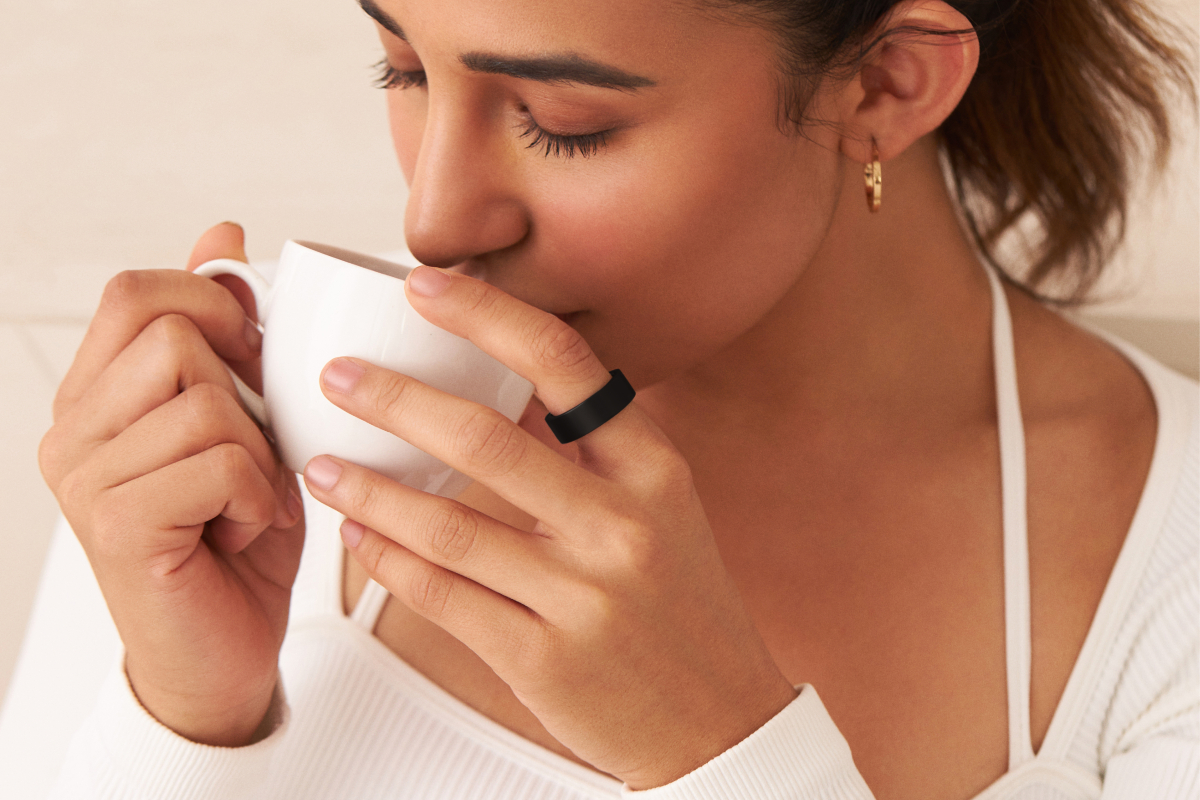
 Self-hosting your data and services with Network Attached Storage (NAS) is a great way to free yourself from the spiralling costs and tangled web of subscription fees. Whether you’re simply looking to back up your photos or stream 4K movies on your travels, there’s a wide range of products to pick from, but not quite so many to suit all budgets.
If you’ve been tempted by one of the best NAS systems but are put off by the expense or lack of gradual upgrade paths, building a cheap DIY NAS could be a better alternative for you.
I have a mini-PC running OpenMediaVault at home, with two external notebook drives (they power off USB power). OpenMediaVault runs a daily backup which copies data from the primary drive over to the second drive. It's not fancy, but it offers a couple of home-hosted services that I run inside the house, as well as a Nginx Proxy Manager service that securely manages any external connections from the Internet.
The only downside is that the combination of LAN network, mini-PC power, and externally connected drives via USB, means that it has been too sluggish for me to do proper desktop backups over the LAN to it. Maybe I must try tuning it again, but this is a potential bottleneck if you wanted to back up hundreds of gigabytes of data. Still, it is highly functional, and I find it very worthwhile running. All my self-hosted services are running in Docker containers under OpenMediaVault.
So, as the article says about some options, you can go extremely budget, or if you pay a bit more, you get more functionality and speed. Off-the-shelf NAS hardware is a great way to get started, especially if you’re limited on time. But hopefully, this guide will convince you that a self-built PC or Mini-PC/DAS setup is a great way to take control of the setup yourself. Plus, it’ll cost you significantly less and net you a lot more hardware than a Synology or QNAP.
See
Self-hosting your data and services with Network Attached Storage (NAS) is a great way to free yourself from the spiralling costs and tangled web of subscription fees. Whether you’re simply looking to back up your photos or stream 4K movies on your travels, there’s a wide range of products to pick from, but not quite so many to suit all budgets.
If you’ve been tempted by one of the best NAS systems but are put off by the expense or lack of gradual upgrade paths, building a cheap DIY NAS could be a better alternative for you.
I have a mini-PC running OpenMediaVault at home, with two external notebook drives (they power off USB power). OpenMediaVault runs a daily backup which copies data from the primary drive over to the second drive. It's not fancy, but it offers a couple of home-hosted services that I run inside the house, as well as a Nginx Proxy Manager service that securely manages any external connections from the Internet.
The only downside is that the combination of LAN network, mini-PC power, and externally connected drives via USB, means that it has been too sluggish for me to do proper desktop backups over the LAN to it. Maybe I must try tuning it again, but this is a potential bottleneck if you wanted to back up hundreds of gigabytes of data. Still, it is highly functional, and I find it very worthwhile running. All my self-hosted services are running in Docker containers under OpenMediaVault.
So, as the article says about some options, you can go extremely budget, or if you pay a bit more, you get more functionality and speed. Off-the-shelf NAS hardware is a great way to get started, especially if you’re limited on time. But hopefully, this guide will convince you that a self-built PC or Mini-PC/DAS setup is a great way to take control of the setup yourself. Plus, it’ll cost you significantly less and net you a lot more hardware than a Synology or QNAP.
See 
 A new study published by a number of British researchers reveals a hypothetical cyberattack in which a hacker could leverage recorded audio of a person typing to steal their personal data. The attack uses a home-made deep-learning-based algorithm that can acoustically analyze keystroke noises and automatically decode what that person is typing. The research showed that typing could be accurately de-coded in this fashion 95 percent of the time.
So yes if you're recording videos for YouTube, are in a Zoom call, etc and are busy typing your password in, just blurring the video is no longer sufficient. It's true too, that sound penetrates though walls, and does not need any direct line of sight either. I suppose you could start to randomly hit the shift key, while typing in passwords, to try throw off any analysis. Also using a password manager to auto-fill fields will eliminate this.
See
A new study published by a number of British researchers reveals a hypothetical cyberattack in which a hacker could leverage recorded audio of a person typing to steal their personal data. The attack uses a home-made deep-learning-based algorithm that can acoustically analyze keystroke noises and automatically decode what that person is typing. The research showed that typing could be accurately de-coded in this fashion 95 percent of the time.
So yes if you're recording videos for YouTube, are in a Zoom call, etc and are busy typing your password in, just blurring the video is no longer sufficient. It's true too, that sound penetrates though walls, and does not need any direct line of sight either. I suppose you could start to randomly hit the shift key, while typing in passwords, to try throw off any analysis. Also using a password manager to auto-fill fields will eliminate this.
See 
 Zoom's March 31st terms and conditions Clause 10.4 change stating user conversations could be used in any way they wished, without an opt-out, had ruffled some feathers. It has again been updated to now state they won't use customer content to train their AI without your consent. Still, it has got many to reconsider their use of Zoom, and in fact there are many other excellent choices out there.
One of my favourites is Jitsi Meet. Not only is it open-source, and you can even self-host it yourself, but it is packed with many features you'd find in most other video conferencing platforms. There are gallery views, breakout rooms, virtual whiteboards, virtual backgrounds, screen sharing, recordings, polls, text chat, raise hands/GIPHY, moderation tools, live streaming, speaker time stats, etc.
What I especially like is the very easy one-link invites to others to join via their desktop or mobile web browser, and that it does not have that 40-minute limit that Zoom places on free meetings. For two weeks running now Zoom has cut off our weekly family meeting early, first it was 17 seconds and last week it was a full one minute early (despite what the meeting time clock showed).
Although it works very well in a browser, you can also install their desktop apps, or mobile apps for Android and iOS.
See
Zoom's March 31st terms and conditions Clause 10.4 change stating user conversations could be used in any way they wished, without an opt-out, had ruffled some feathers. It has again been updated to now state they won't use customer content to train their AI without your consent. Still, it has got many to reconsider their use of Zoom, and in fact there are many other excellent choices out there.
One of my favourites is Jitsi Meet. Not only is it open-source, and you can even self-host it yourself, but it is packed with many features you'd find in most other video conferencing platforms. There are gallery views, breakout rooms, virtual whiteboards, virtual backgrounds, screen sharing, recordings, polls, text chat, raise hands/GIPHY, moderation tools, live streaming, speaker time stats, etc.
What I especially like is the very easy one-link invites to others to join via their desktop or mobile web browser, and that it does not have that 40-minute limit that Zoom places on free meetings. For two weeks running now Zoom has cut off our weekly family meeting early, first it was 17 seconds and last week it was a full one minute early (despite what the meeting time clock showed).
Although it works very well in a browser, you can also install their desktop apps, or mobile apps for Android and iOS.
See 