🌊 SURF 'N TURF 🏝️
-THE BORACAY ISLAND LIFE-

Cranioplasty, the surgical repair of a bone defect in the skull, has a long and fascinating history.
One of the earliest and most remarkable examples of this procedure comes from ancient Peru around 400 CE. This historical cranioplasty not only showcases the advanced medical knowledge of pre-Columbian cultures but also highlights their skill in metallurgy and their understanding of human anatomy.
A prime specimen of this ancient medical feat is currently on display at the Gold Museum of Peru and Weapons of the World in Lima, drawing both scholars and enthusiasts to marvel at its ingenuity and craftsmanship.
The cranioplasty in question was discovered in an archaeological context that points to the Nazca culture, which flourished in what is now southern Peru from approximately 100 BCE to 800 CE. The Nazca are well-known for their contributions to art and culture, including the famous Nazca Lines, but this cranioplasty highlights their lesser-known advancements in medical practices.
The patient, whose identity remains unknown, underwent a surgical procedure to repair a significant defect in the skull. The defect could have been the result of trauma, a congenital condition, or a trepanation, a common surgical practice in ancient Peru where a part of the skull is intentionally removed. Trepanation was often performed to treat head injuries, neurological disorders, or for ritualistic purposes. The survival of the patient post-operation is evident from the well-healed bone around the inlay, indicating not only the success of the procedure but also the patient's recovery.
The Gold Inlay: A Masterpiece of Metallurgical and Medical Skill
What sets this cranioplasty apart is the use of a gold inlay to repair the skull. Gold was highly valued in ancient Peru, not just for its aesthetic qualities but also for its malleability and resistance to corrosion.
The choice of gold suggests a combination of medical necessity and cultural significance, possibly reflecting the patient's high social status.
The inlay itself is a testament to the advanced metallurgical skills of the time. Creating such an inlay would have required precise measurements and shaping to ensure a proper fit within the bone defect. The successful integration of the gold piece into the skull also indicates a sophisticated understanding of biocompatibility and the body's healing processes.
The exact surgical techniques used by ancient Peruvian practitioners remain a topic of study and speculation. However, it is likely that they employed sharp tools made from obsidian or metal to create clean edges around the bone defect. The meticulous placement of the gold inlay suggests the use of some form of adhesive or binding material, which could have been organic substances like plant resins.
Post-operative care would have been crucial for the patient's recovery. The absence of modern antibiotics means that infection was a significant risk. The survival and healing of the patient imply that ancient Peruvian healers had effective methods for preventing and treating infections, possibly using herbal medicines known for their antimicrobial properties.
The Nazca culture, along with other pre-Columbian civilizations, viewed the human body and its treatment in a holistic and often spiritual context. The use of gold in medical procedures might have had symbolic meanings related to life, health, and divine favor.
This cranioplasty thus reflects not only medical ingenuity but also the deep interweaving of medicine, religion, and societal values in ancient Peru.
Today, this remarkable cranioplasty is housed at the Gold Museum of Peru and Weapons of the World in Lima.
The museum, renowned for its extensive collection of pre-Columbian artifacts, offers visitors a glimpse into the rich cultural and historical heritage of ancient Peru. The cranioplasty is displayed alongside other significant artifacts, allowing visitors to appreciate the advanced technological and artistic achievements of the time.
The exhibit not only educates the public about ancient medical practices but also honors the ingenuity and resilience of the people who lived over 1,600 years ago. It stands as a powerful reminder of humanity's enduring quest to heal and innovate, transcending the boundaries of time and technology.
The early example of cranioplasty from Peru around 400 CE is a profound illustration of the advanced medical knowledge possessed by ancient civilizations. The successful use of a gold inlay to repair a skull defect underscores the intersection of medical practice and metallurgical skill, revealing a sophisticated understanding of both human anatomy and material science.
As showcased at the Gold Museum of Peru and Weapons of the World, this artifact continues to inspire awe and admiration, highlighting the remarkable achievements of our ancestors in the field of medicine.
Source: www.thearchaeologist.org/blog/the-mysterious...
(Jul 19, 2024)
"Pure signal, no noise"
Credits Goes to the respective
Author ✍️/ Photographer📸
🐇 🕳️

 BLUE “SPARTON” ART DECO RADIOS FROM THE 1930s
All models were designed by Walter Dorwin Teague.
Note: Model No. 3, the “Bluebird,” is part of the collection of The Metropolitan Museum of Art.
(Photos credit to the original photographers); collage by SJ
"Pure signal, no noise"
Credits Goes to the respective
Author ✍️/ Photographer📸
🐇 🕳️
BLUE “SPARTON” ART DECO RADIOS FROM THE 1930s
All models were designed by Walter Dorwin Teague.
Note: Model No. 3, the “Bluebird,” is part of the collection of The Metropolitan Museum of Art.
(Photos credit to the original photographers); collage by SJ
"Pure signal, no noise"
Credits Goes to the respective
Author ✍️/ Photographer📸
🐇 🕳️ OUR NEW PRODUCT FOR PRO VERSION BCD‼️
•AKUANA PRO BCD CARBON BACKPLATE•
₱19660
SOLD ONLY TO PROFFESIONAL✅
Camouflage✅
CARBON BACKPLATE✅
LIGHTWEIGHT✅
OUR NEW PRODUCT FOR PRO VERSION BCD‼️
•AKUANA PRO BCD CARBON BACKPLATE•
₱19660
SOLD ONLY TO PROFFESIONAL✅
Camouflage✅
CARBON BACKPLATE✅
LIGHTWEIGHT✅
 FEATURES:
One fits all sizes
* Hogarthian design. Streamlined and Minimalism
* Light weight * Patented slot weighting systems
* One pair of trim weightpockets
* SS belt buckle
* SS buckle tank clamp belt
* 5 stainless steel D ring * CNC processed aluminum backplate
FEATURES:
One fits all sizes
* Hogarthian design. Streamlined and Minimalism
* Light weight * Patented slot weighting systems
* One pair of trim weightpockets
* SS belt buckle
* SS buckle tank clamp belt
* 5 stainless steel D ring * CNC processed aluminum backplate
 * Recommended for training in warm water
* Customized color andembroidery
* Special version For AKUANA PRO
* Recommended for training in warm water
* Customized color andembroidery
* Special version For AKUANA PRO
 "It's a good day to dive". 🤿
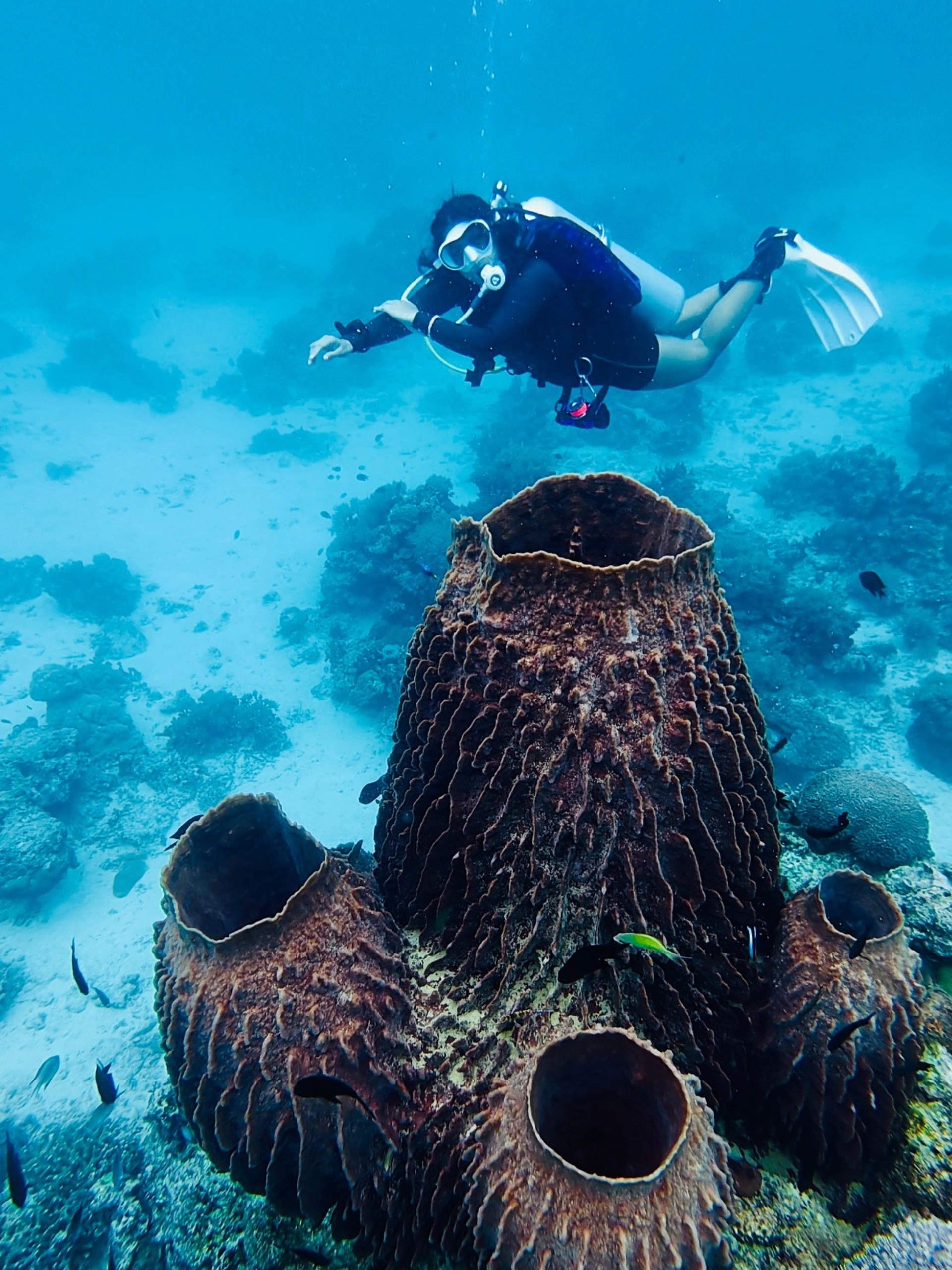
 Sometimes the scariest part of diving is facing what’s inside you 🤿


 "Pure signal, no noise"
Credits Goes to the respective
Author ✍️/ Photographer📸
🐇 🕳️
"Pure signal, no noise"
Credits Goes to the respective
Author ✍️/ Photographer📸
🐇 🕳️ Are aliens actually just the fascinating creatures underwater?
This photograph of Spirocodon saltatrix reveals the jellyfish’s translucent anatomy in striking detail.
This hydrozoan species, native to Japanese and Korean waters, begins life as a colony of specialized polyps, independent organisms that function collectively as one.
Its long, hair-like tentacles are lined with stinging cells, used to immobilize prey and deter predators.
📸 Hiroya Minakuchi/Minden Pictures
"Pure signal,no noise"
Credits Goes to the respective
Author ✍️/ Photographer📸
🐇 🕳️
#islands #scuba #marinelife
Are aliens actually just the fascinating creatures underwater?
This photograph of Spirocodon saltatrix reveals the jellyfish’s translucent anatomy in striking detail.
This hydrozoan species, native to Japanese and Korean waters, begins life as a colony of specialized polyps, independent organisms that function collectively as one.
Its long, hair-like tentacles are lined with stinging cells, used to immobilize prey and deter predators.
📸 Hiroya Minakuchi/Minden Pictures
"Pure signal,no noise"
Credits Goes to the respective
Author ✍️/ Photographer📸
🐇 🕳️
#islands #scuba #marinelife
 On this day in 1963, The Beatles single “She Loves You” went to #1 on the UK Singles Chart (December 4)
It went all the way to #1 in the US, the UK, Canada, Sweden, New Zealand, Denmark and Norway, #2 in Ireland, #3 in Australia, #4 in Italy, and #7 in Germany.
It remains the band's best-selling single in the United Kingdom and the top-selling single of the 1960s in the UK by any artist.
Paul McCartney recalls them playing the finished song on acoustic guitars to his father Jim at home immediately after the song was completed: "We went into the living room and said 'Dad, listen to this. What do you think?
And he said 'That's very nice son, but there's enough of these Americanisms around.
Couldn't you sing 'She loves you, yes, yes, yes!'
At which point we collapsed in a heap and said 'No, Dad, you don't quite get it!'"
In November 2004, Rolling Stone ranked "She Loves You" #64 on their list of the 500 Greatest Songs of All Time…
#beatles, #thebeatles, #thefabfour, #fabfour, #johnlennon, #paulmccartnes, #georgeharrison, #ringostarr, #60smusic, #60srock, #thisdayinrock, #rockhistory, #rockmusic, #dailyrockhistory, #thisdayinmusic, #onthisday
"Pure signal,no noise"
Credits Goes to the respective
Author ✍️/ Photographer📸
🐇 🕳️
On this day in 1963, The Beatles single “She Loves You” went to #1 on the UK Singles Chart (December 4)
It went all the way to #1 in the US, the UK, Canada, Sweden, New Zealand, Denmark and Norway, #2 in Ireland, #3 in Australia, #4 in Italy, and #7 in Germany.
It remains the band's best-selling single in the United Kingdom and the top-selling single of the 1960s in the UK by any artist.
Paul McCartney recalls them playing the finished song on acoustic guitars to his father Jim at home immediately after the song was completed: "We went into the living room and said 'Dad, listen to this. What do you think?
And he said 'That's very nice son, but there's enough of these Americanisms around.
Couldn't you sing 'She loves you, yes, yes, yes!'
At which point we collapsed in a heap and said 'No, Dad, you don't quite get it!'"
In November 2004, Rolling Stone ranked "She Loves You" #64 on their list of the 500 Greatest Songs of All Time…
#beatles, #thebeatles, #thefabfour, #fabfour, #johnlennon, #paulmccartnes, #georgeharrison, #ringostarr, #60smusic, #60srock, #thisdayinrock, #rockhistory, #rockmusic, #dailyrockhistory, #thisdayinmusic, #onthisday
"Pure signal,no noise"
Credits Goes to the respective
Author ✍️/ Photographer📸
🐇 🕳️ Looking for a meaningful read this holiday season? ❄️📕
THE DOORS UNHINGED: JIM MORRISON’S LEGACY GOES ON TRIAL dives deep into the battle over artistic integrity, the “greed gene,” and what happens when principles are put to the test.
John Densmore’s bestselling paperback is a powerful look at the fight to protect The Doors’ legacy.
Purchase the book here:
Looking for a meaningful read this holiday season? ❄️📕
THE DOORS UNHINGED: JIM MORRISON’S LEGACY GOES ON TRIAL dives deep into the battle over artistic integrity, the “greed gene,” and what happens when principles are put to the test.
John Densmore’s bestselling paperback is a powerful look at the fight to protect The Doors’ legacy.
Purchase the book here: 