
Título da obra em latim
MEDULLA S. THOMAE AQUITATIS PER OMNES ANNI LITURGICI DIES DISTRBUITA, SEU MEDITATIONES EX OPERIBUS S. THOMAE DEPROMPTAE
Recopilação e ordenação de
FR. Z. MÉZARD O. P.
OBSERVAÇÃO
Todos os títulos com asterisco contêm material que hoje
não mais se atribui a Santo Tomás de Aquino
 32. Sábado depois do IV domingo da Quaresma: O modo mais conveniente para a liberação do gênero humano
Sábado depois do IV Domingo da Quaresma
Tanto um meio é mais conveniente para conseguir um fim, quanto mais ele faz concorrerem elementos conducentes ao fim. Ora, o ser o homem liberado pela paixão de Cristo foi causa de concorrerem muitos elementos conducentes à salvação do mesmo, além da liberação do pecado.
1. Assim, primeiro, desse modo o homem conhece quanto Deus o ama; o que o excita a amá-lo mais, e nisso consiste a perfeição da salvação humana. Donde o dizer o Apóstolo: "Deus faz brilhar a sua caridade em nós, porque ainda quando éramos pecadores, morreu Cristo por nós" (Rm 5, 8).
2. Segundo, porque por esse meio nos deu o exemplo da obediência, da humildade, da constância, da justiça e das demais virtudes, reveladas na paixão de Cristo e que são necessárias à salvação humana. Por isso diz a Escritura (1 Pd 2, 21): "Cristo padeceu por nós, deixando-vos exemplo para que sigais as suas pisadas".
3. Terceiro, porque Cristo, com sua paixão, não somente liberou o homem do pecado, mas ainda lhe mereceu a graça justificante e a glória da beatitude.
4. Quarto, porque, assim, uma necessidade maior impôs ao homem conservar-se imune do pecado, segundo aquilo do Apóstolo (1 Cor 6, 20): "Porque vós fostes comprado por um grande preço; glorificai, pois, e trazei a Deus no vosso corpo".
5. Quinto, porque contribuiu para maior dignidade do homem, de modo que assim como fora vencido e enganado pelo diabo, assim também fosse ele mesmo quem vencesse o diabo; e assim como o homem mereceu a morte, assim também, morrendo, a vencesse a ela, conforme o dizer do Apóstolo (1 Cor 15, 57): "Graças a Deus, que nos deu a vitória, por Jesus Cristo".
Por isso foi mais conveniente que, pela paixão de Cristo fossemos liberados, do que pela só vontade de Deus.
IIIa q. XLVI, a. 3
(P. D. Mézard, O. P., Meditationes ex Operibus S. Thomae.)
#God #Deus #Isten #Gott #Jesus #Católico #Catholic #Katholik #katholisch #Katolikus #catholique #Faith #Fé #foi #信仰 #Latin #Latim #Gospel #Evangelho #Evangélium #évangile #Dieu #福音 #日本 #カトリック #Bible #Biblestr #Nostr #Grownostr
View quoted note →
32. Sábado depois do IV domingo da Quaresma: O modo mais conveniente para a liberação do gênero humano
Sábado depois do IV Domingo da Quaresma
Tanto um meio é mais conveniente para conseguir um fim, quanto mais ele faz concorrerem elementos conducentes ao fim. Ora, o ser o homem liberado pela paixão de Cristo foi causa de concorrerem muitos elementos conducentes à salvação do mesmo, além da liberação do pecado.
1. Assim, primeiro, desse modo o homem conhece quanto Deus o ama; o que o excita a amá-lo mais, e nisso consiste a perfeição da salvação humana. Donde o dizer o Apóstolo: "Deus faz brilhar a sua caridade em nós, porque ainda quando éramos pecadores, morreu Cristo por nós" (Rm 5, 8).
2. Segundo, porque por esse meio nos deu o exemplo da obediência, da humildade, da constância, da justiça e das demais virtudes, reveladas na paixão de Cristo e que são necessárias à salvação humana. Por isso diz a Escritura (1 Pd 2, 21): "Cristo padeceu por nós, deixando-vos exemplo para que sigais as suas pisadas".
3. Terceiro, porque Cristo, com sua paixão, não somente liberou o homem do pecado, mas ainda lhe mereceu a graça justificante e a glória da beatitude.
4. Quarto, porque, assim, uma necessidade maior impôs ao homem conservar-se imune do pecado, segundo aquilo do Apóstolo (1 Cor 6, 20): "Porque vós fostes comprado por um grande preço; glorificai, pois, e trazei a Deus no vosso corpo".
5. Quinto, porque contribuiu para maior dignidade do homem, de modo que assim como fora vencido e enganado pelo diabo, assim também fosse ele mesmo quem vencesse o diabo; e assim como o homem mereceu a morte, assim também, morrendo, a vencesse a ela, conforme o dizer do Apóstolo (1 Cor 15, 57): "Graças a Deus, que nos deu a vitória, por Jesus Cristo".
Por isso foi mais conveniente que, pela paixão de Cristo fossemos liberados, do que pela só vontade de Deus.
IIIa q. XLVI, a. 3
(P. D. Mézard, O. P., Meditationes ex Operibus S. Thomae.)
#God #Deus #Isten #Gott #Jesus #Católico #Catholic #Katholik #katholisch #Katolikus #catholique #Faith #Fé #foi #信仰 #Latin #Latim #Gospel #Evangelho #Evangélium #évangile #Dieu #福音 #日本 #カトリック #Bible #Biblestr #Nostr #Grownostr
View quoted note →
32. Sábado depois do IV domingo da Quaresma: O modo mais conveniente para a liberação do gênero humano
Sábado depois do IV Domingo da Quaresma
Tanto um meio é mais conveniente para conseguir um fim, quanto mais ele faz concorrerem elementos conducentes ao fim. Ora, o ser o homem liberado pela paixão de Cristo foi causa de concorrerem muitos elementos conducentes à salvação do mesmo, além da liberação do pecado.
1. Assim, primeiro, desse modo o homem conhece quanto Deus o ama; o que o excita a amá-lo mais, e nisso consiste a perfeição da salvação humana. Donde o dizer o Apóstolo: "Deus faz brilhar a sua caridade em nós, porque ainda quando éramos pecadores, morreu Cristo por nós" (Rm 5, 8).
2. Segundo, porque por esse meio nos deu o exemplo da obediência, da humildade, da constância, da justiça e das demais virtudes, reveladas na paixão de Cristo e que são necessárias à salvação humana. Por isso diz a Escritura (1 Pd 2, 21): "Cristo padeceu por nós, deixando-vos exemplo para que sigais as suas pisadas".
3. Terceiro, porque Cristo, com sua paixão, não somente liberou o homem do pecado, mas ainda lhe mereceu a graça justificante e a glória da beatitude.
4. Quarto, porque, assim, uma necessidade maior impôs ao homem conservar-se imune do pecado, segundo aquilo do Apóstolo (1 Cor 6, 20): "Porque vós fostes comprado por um grande preço; glorificai, pois, e trazei a Deus no vosso corpo".
5. Quinto, porque contribuiu para maior dignidade do homem, de modo que assim como fora vencido e enganado pelo diabo, assim também fosse ele mesmo quem vencesse o diabo; e assim como o homem mereceu a morte, assim também, morrendo, a vencesse a ela, conforme o dizer do Apóstolo (1 Cor 15, 57): "Graças a Deus, que nos deu a vitória, por Jesus Cristo".
Por isso foi mais conveniente que, pela paixão de Cristo fossemos liberados, do que pela só vontade de Deus.
IIIa q. XLVI, a. 3
(P. D. Mézard, O. P., Meditationes ex Operibus S. Thomae.)
#God #Deus #Isten #Gott #Jesus #Católico #Catholic #Katholik #katholisch #Katolikus #catholique #Faith #Fé #foi #信仰 #Latin #Latim #Gospel #Evangelho #Evangélium #évangile #Dieu #福音 #日本 #カトリック #Bible #Biblestr #Nostr #Grownostr
View quoted note →
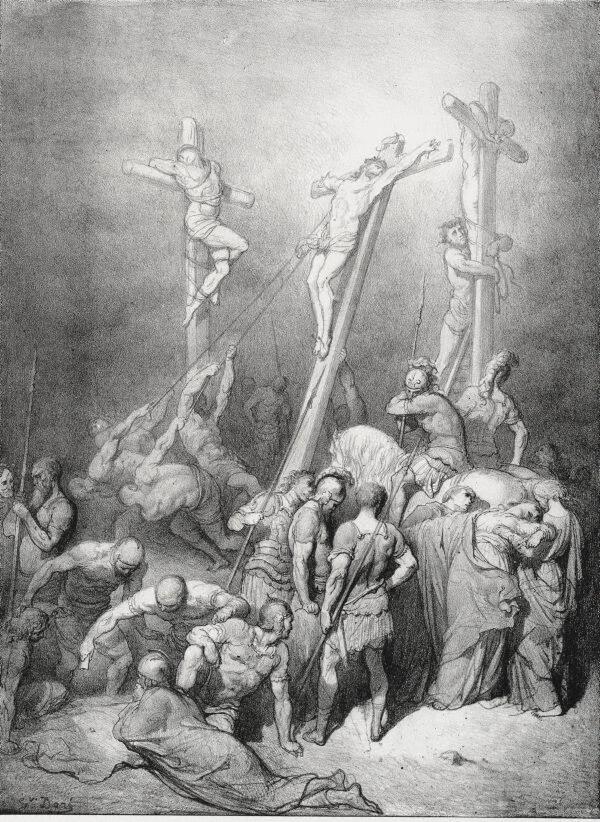 31. Friday after the IV Sunday of Lent: The Most Precious Blood of Our Lord
Friday of the IV week of Lent
I. — By the blood of Christ, the New Testament was sealed. "This cup is the new testament in my blood" (1 Corinthians 11:25).
Testament is understood in two ways:
— The word "testament" is commonly used to mean some covenant. Thus, God made covenants with humanity twice. The first time, promising temporal goods and delivering us from temporal evils; and this covenant is called the Old Testament. The second time, promising spiritual goods and delivering us from contrary evils; and this covenant is called the New Testament. All this according to the Scriptures: "Behold, the days are coming, says the Lord, when I will make a new covenant with the house of Israel and the house of Judah, not like the covenant that I made with their fathers when I took them by the hand to bring them out of the land of Egypt (...) Behold, the covenant that I will make with the house of Israel after those days, says the Lord: I will put my law within them, and I will write it on their hearts; and I will be their God, and they shall be my people" (Jeremiah 31:33).
The ancients used to mix the blood of a victim to seal a covenant; Moses took blood and sprinkled it on the people, saying: This is the blood of the covenant that the Lord has made with you. Thus, therefore, the old testament or covenant was sealed in the blood of bulls; the New Testament or covenant, in the blood of Christ, shed in His Passion.
— The word "testament" is also used, in a stricter sense, to signify the disposition of an inheritance. Now, the testament, in this sense, is received only by death; for, as Saint Paul says: "For where a will is involved, the death of the one who made it must be established" (Hebrews 9:17). God had initially disposed for an eternal inheritance, but in the figure of temporal goods; which constitutes the Old Testament. But then, He made a New Testament, by which He expressly promised the eternal inheritance; and this Testament was sealed by the blood of the death of Christ. And that is why the Lord said: "This cup is the New Testament in my blood, which will be shed for you" (Luke 22:20); as if to say: through the contents of this cup, the New Testament is celebrated, confirmed by the blood of Christ.
In I Corinthians, XI
II. — There are other uses of the blood of Christ.
1. It purifies us from our sins and impurities: "He loved us and washed us from our sins in his blood" (Revelation 1:5).
2. It guarantees our redemption. "You ransomed us for God with your blood" (Revelation 5:9).
3. It makes peace for us with God and the angels. "And through him to reconcile to himself all things, whether on earth or in heaven, making peace by the blood of his cross" (Colossians 1:20).
4. It refreshes and intoxicates those who take it. "Drink from it, all of you" (Matthew 26:28). And, in another part, "He made him ride on the heights of the earth... and he drank the finest wine" (Deuteronomy 32:14).
5. It opened the gates of heaven. "Therefore, brothers, since we have confidence to enter the holy places by the blood of Jesus" (Hebrews 10:19), that is, the continuous prayer directed to God for our benefit; for the blood cries out for us each day, as Saint Paul says: "But you have come to Mount Zion and to the city of the living God... and to the sprinkled blood that speaks a better word than the blood of Abel" (Hebrews 12:24). The blood of Abel cried out for vengeance, the blood of Christ, for forgiveness.
6. It freed the saints from hell, according to what is written: "As for you also, because of the blood of your covenant, I will set your prisoners free from the waterless pit" (Zechariah 9:11).
Serm. in Dom. de Passione
(P. D. Mézard, O. P., Meditationes ex Operibus S. Thomae.)
#God #Deus #Isten #Gott #Jesus #Católico #Catholic #Katholik #katholisch #Katolikus #catholique #Faith #Fé #foi #信仰 #Latin #Latim #Gospel #Evangelho #Evangélium #évangile #Dieu #福音 #日本 #カトリック #Bible #Biblestr #Nostr #Grownostr
31. Friday after the IV Sunday of Lent: The Most Precious Blood of Our Lord
Friday of the IV week of Lent
I. — By the blood of Christ, the New Testament was sealed. "This cup is the new testament in my blood" (1 Corinthians 11:25).
Testament is understood in two ways:
— The word "testament" is commonly used to mean some covenant. Thus, God made covenants with humanity twice. The first time, promising temporal goods and delivering us from temporal evils; and this covenant is called the Old Testament. The second time, promising spiritual goods and delivering us from contrary evils; and this covenant is called the New Testament. All this according to the Scriptures: "Behold, the days are coming, says the Lord, when I will make a new covenant with the house of Israel and the house of Judah, not like the covenant that I made with their fathers when I took them by the hand to bring them out of the land of Egypt (...) Behold, the covenant that I will make with the house of Israel after those days, says the Lord: I will put my law within them, and I will write it on their hearts; and I will be their God, and they shall be my people" (Jeremiah 31:33).
The ancients used to mix the blood of a victim to seal a covenant; Moses took blood and sprinkled it on the people, saying: This is the blood of the covenant that the Lord has made with you. Thus, therefore, the old testament or covenant was sealed in the blood of bulls; the New Testament or covenant, in the blood of Christ, shed in His Passion.
— The word "testament" is also used, in a stricter sense, to signify the disposition of an inheritance. Now, the testament, in this sense, is received only by death; for, as Saint Paul says: "For where a will is involved, the death of the one who made it must be established" (Hebrews 9:17). God had initially disposed for an eternal inheritance, but in the figure of temporal goods; which constitutes the Old Testament. But then, He made a New Testament, by which He expressly promised the eternal inheritance; and this Testament was sealed by the blood of the death of Christ. And that is why the Lord said: "This cup is the New Testament in my blood, which will be shed for you" (Luke 22:20); as if to say: through the contents of this cup, the New Testament is celebrated, confirmed by the blood of Christ.
In I Corinthians, XI
II. — There are other uses of the blood of Christ.
1. It purifies us from our sins and impurities: "He loved us and washed us from our sins in his blood" (Revelation 1:5).
2. It guarantees our redemption. "You ransomed us for God with your blood" (Revelation 5:9).
3. It makes peace for us with God and the angels. "And through him to reconcile to himself all things, whether on earth or in heaven, making peace by the blood of his cross" (Colossians 1:20).
4. It refreshes and intoxicates those who take it. "Drink from it, all of you" (Matthew 26:28). And, in another part, "He made him ride on the heights of the earth... and he drank the finest wine" (Deuteronomy 32:14).
5. It opened the gates of heaven. "Therefore, brothers, since we have confidence to enter the holy places by the blood of Jesus" (Hebrews 10:19), that is, the continuous prayer directed to God for our benefit; for the blood cries out for us each day, as Saint Paul says: "But you have come to Mount Zion and to the city of the living God... and to the sprinkled blood that speaks a better word than the blood of Abel" (Hebrews 12:24). The blood of Abel cried out for vengeance, the blood of Christ, for forgiveness.
6. It freed the saints from hell, according to what is written: "As for you also, because of the blood of your covenant, I will set your prisoners free from the waterless pit" (Zechariah 9:11).
Serm. in Dom. de Passione
(P. D. Mézard, O. P., Meditationes ex Operibus S. Thomae.)
#God #Deus #Isten #Gott #Jesus #Católico #Catholic #Katholik #katholisch #Katolikus #catholique #Faith #Fé #foi #信仰 #Latin #Latim #Gospel #Evangelho #Evangélium #évangile #Dieu #福音 #日本 #カトリック #Bible #Biblestr #Nostr #Grownostr