“Angelus Sung In Latin” • With Printable PDF Score (1 Page) “Sing the Angelus” (Plainchant) Jeff Ostrowski · January 26, 2017 YNN DEAHL is an Environmental Engineer with whom I was blessed to sing Gregorian chant about sixteen years ago. He gave me a plainsong setting of the ANGELUS (attributed to Dom Charpentier, OSB) which I habitually taught to my high school students—and they loved it. Tutorial how to sing the Angelus PDF Booklet • THE ANGELUS (Dom Charpentier, OSB) https://www.ccwatershed.org/pdfs/6213-dom-charpentier-osb-angelus-plainsong-latin/download/ #God #Deus #Isten #Gott #Jesus #Católico #Catholic #Katholik #katholisch #Katolikus #catholique #Faith #Fé #foi #信仰 #Latin #Latim #Gospel #Evangelho #Evangélium #évangile #Dieu #福音 #日本 #カトリック #Bible #Biblestr #Nostr #Grownostr
MYSTERIA GLORIAE (Mistérios Gloriosos) - Terço em Latim com o Papa Bento XVI - LEGENDAS EM LATIM #God #Deus #Isten #Gott #Jesus #Católico #Catholic #Katholik #katholisch #Katolikus #catholique #Faith #Fé #foi #信仰 #Latin #Latim #Gospel #Evangelho #Evangélium #évangile #Dieu #福音 #日本 #カトリック #Bible #Biblestr #Nostr #Grownostr
@Farfallica https://hero.happytavern.co
@Mimi Faça o seu https://hero.happytavern.co
Title of the work in Latin MEDULLA S. THOMAE AQUITATIS PER OMNES ANNI LITURGICI DIES DISTRBUITA, SEU MEDITATIONES EX OPERIBUS S. THOMAE DEPROMPTAE Compilation and arrangement by FR. Z. MÉZARD O. P. NOTE All titles with an asterisk contain material that is no longer attributed to Saint Thomas Aquinas. image 24. Friday after the III Sunday of Lent: By the Passion we were freed from the penalty of sin. Friday of the third week of Lent "He took up our infirmities and carried our sorrows" (Isaiah 53:4) By the Passion of Christ, we were freed from the charge of the penalty in two ways: 1. First, directly; that is, because the Passion of Christ was a sufficient and superabundant satisfaction for the sins of all humankind; therefore, given the sufficient satisfaction, the charge of the penalty is removed. 2. In another way, indirectly; that is, insofar as the Passion of Christ is the cause of the remission of sin, in which the charge of the penalty is grounded. However, the condemned are not freed from the penalty, for the Passion of Christ only produces its effect on those to whom it is applied through faith, charity, and the sacraments of faith. Therefore, those condemned to hell, who are not united to the Passion of Christ in the manner we have just mentioned, cannot receive its effect. And although we have been freed from the penalty of sin, it is nonetheless necessary to impose on the penitents a satisfying penalty; for to benefit from the effect of the Passion of Christ, we must be configured to Christ. Now, we are sacramentally configured to Him in baptism, according to what the Apostle says (Romans 6:4): We were buried with Him to die to sin through baptism. Therefore, no satisfying penalty is imposed on the baptized, as they are entirely freed by Christ's satisfaction. But since Christ died once for our sins, as Scripture says (1 Peter 3:18), man cannot be configured a second time to the death of Christ through the sacrament of baptism. And for this reason, those who sin after baptism must be in some way likened to Christ, suffering some penalty or suffering that they endure in their person. But this penalty is sufficient, albeit much less than what is deserved for sin, due to the cooperation of Christ's satisfaction. However, if death, which is the penalty of sin, still persists, it is because the satisfaction of Christ only has effect in us as long as we have been incorporated into Christ, as members to the head. For it is necessary that the members be in accordance with the head. Thus, just as Christ first had grace in the soul with the passibility of the body, and reached the glory of immortality through the Passion, so also we, who are His members, are freed by His Passion from the charge of any penalty. But for this, we must first receive in our souls the Spirit of adoption as children, by which we adhere to the inheritance of the glory of immortality, while we still have a passible and mortal body. But after being likened to the sufferings and death of Christ, we will reach the immortal glory according to what the Apostle says (Romans 8:17): If we are children, we are also heirs; heirs truly of God and co-heirs with Christ, if indeed we suffer with Him so that we may also be glorified with Him. IIIa q. XLIX a. 3 (P. D. Mézard, O. P., Meditationes ex Operibus S. Thomae.) #God #Deus #Isten #Gott #Jesus #Católico #Catholic #Katholik #katholisch #Katolikus #catholique #Faith #Fé #foi #信仰 #Latin #Latim #Gospel #Evangelho #Evangélium #évangile #Dieu #福音 #日本 #カトリック #Bible #Biblestr #Nostr #Grownostr View quoted note →
Título da obra em latim MEDULLA S. THOMAE AQUITATIS PER OMNES ANNI LITURGICI DIES DISTRBUITA, SEU MEDITATIONES EX OPERIBUS S. THOMAE DEPROMPTAE Recopilação e ordenação de FR. Z. MÉZARD O. P. OBSERVAÇÃO Todos os títulos com asterisco contêm material que hoje não mais se atribui a Santo Tomás de Aquino image 24. Sexta-feira depois do III domingo da Quaresma: Pela Paixão fomos liberados da pena do pecado. Sexta-feira da terceira semana da Quaresma «Ele foi o que tomou sobre si as nossas fraquezas e ele mesmo carregou com as nossas dores» (Is 53, 4) Pela Paixão de Cristo fomos liberados do reato da pena de dois modos: 1. Primeiro diretamente; i. é, porque a Paixão de Cristo foi uma satisfação suficiente e superabundante pelos pecados de todo o gênero humano; ora, dada a satisfação suficiente, eliminado fica o reato da pena. 2. De outro modo, indiretamente; i. é, enquanto a Paixão de Cristo é a causa da remissão do pecado, no qual se funda o reato da pena. Os condenados, contudo, não estão liberados da pena, pois a Paixão de Cristo somente produz o seu efeito naqueles a quem se aplica pela fé, pela caridade e pelos sacramentos da fé. Ora, os condenados ao inferno, que não estão unidos à Paixão de Cristo ao modo que acabamos de referir, não lhe podem colher o efeito. E apesar de termos sido liberados da pena do pecado, é preciso, no entanto, impor aos penitentes uma pena satisfatória; pois, para se beneficiar do efeito da Paixão de Cristo, é preciso estarmos configurados ao Cristo. Ora, configuramo-nos sacramentalmente a Ele no batismo, segundo aquilo do Apóstolo (Rm 6, 4): Fomos sepultados com ele para morrer ao pecado pelo batismo. Por isso aos batizados não se lhes impõe nenhuma pena satisfatória, por estarem totalmente liberados pela satisfação de Cristo. Mas porque Cristo uma só vez morreu pelos nossos pecados, no dizer da Escritura (1 Pd 3, 18), não pode o homem uma segunda vez se configurar à morte de Cristo pelo sacramento do batismo. E por isso, os que depois do batismo pecam hão de assemelhar-se com Cristo, padecente por alguma penalidade ou sofrimento, que suportem na sua pessoa. Mas essa penalidade basta, apesar de muito menor que a merecida pelo pecado, por causa da cooperação da satisfação de Cristo. Mas, se a morte, que é pena do pecado, ainda subsiste, é porque a satisfação do Cristo só tem efeito em nós enquanto fomos incorporados ao Cristo, como os membros à cabeça. Pois é preciso que os membros estejam em conformidade com a cabeça. Por onde, assim como Cristo teve primeiro a graça na alma com a passibilidade do corpo, e chegou pela Paixão à glória da imortalidade, assim também nós, que somos os seus membros, somos pela sua Paixão liberados do reato de qualquer pena. Mas, para isso, devemos primeiro receber na alma o Espírito de adoção de filhos, pelo qual adimos a herança da glória da imortalidade, enquanto ainda temos um corpo passível e mortal. Mas depois assemelhados aos sofrimentos e à morte de Cristo, chegaremos à glória imortal segundo aquilo do Apóstolo (Rm 8, 17): Se somos filhos somos também herdeiros; herdeiros verdadeiramente de Deus e co-herdeiros de Cristo, se é que todavia nós padecemos com ele para que sejamos também com ele glorificados. IIIa q. XLIX a. 3 (P. D. Mézard, O. P., Meditationes ex Operibus S. Thomae.) #God #Deus #Isten #Gott #Jesus #Católico #Catholic #Katholik #katholisch #Katolikus #catholique #Faith #Fé #foi #信仰 #Latin #Latim #Gospel #Evangelho #Evangélium #évangile #Dieu #福音 #日本 #カトリック #Bible #Biblestr #Nostr #Grownostr View quoted note →

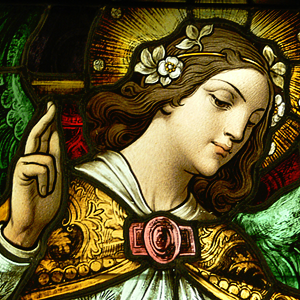
🇧🇷 Podcast A Bíblia em Um Ano (com Pe. Mike Schmitz) 🇧🇷 Dublado e Legendado Dia 87: Deus Mantém Suas Promessas - A Bíblia em um Ano (com Pe. Mike Schmitz) #God #Deus #Isten #Gott #Jesus #Católico #Catholic #Katholik #katholisch #Katolikus #catholique #Faith #Fé #foi #信仰 #Latin #Latim #Gospel #Evangelho #Evangélium #évangile #Dieu #福音 #日本 #カトリック #Bible #Biblestr #Nostr #Grownostr
🇧🇷 Podcast A Bíblia em Um Ano (com Pe. Mike Schmitz) 🇧🇷 Dublado e Legendado Dia 86: A Presença Real de Deus - A Bíblia em um Ano (com Pe. Mike Schmitz) #God #Deus #Isten #Gott #Jesus #Católico #Catholic #Katholik #katholisch #Katolikus #catholique #Faith #Fé #foi #信仰 #Latin #Latim #Gospel #Evangelho #Evangélium #évangile #Dieu #福音 #日本 #カトリック #Bible #Biblestr #Nostr #Grownostr