🇧🇷 Podcast A Bíblia em Um Ano (com Pe. Mike Schmitz) 🇧🇷 Dublado e Legendado Dia 82: O Vale de Acor - A Bíblia em um Ano (com Pe. Mike Schmitz) #God #Deus #Isten #Gott #Jesus #Católico #Catholic #Katholik #katholisch #Katolikus #catholique #Faith #Fé #foi #信仰 #Latin #Latim #Gospel #Evangelho #Evangélium #évangile #Dieu #福音 #日本 #カトリック #Bible #Biblestr #Nostr #Grownostr
Tota pulchra es Maria #God #Deus #Isten #Gott #Jesus #Católico #Catholic #Katholik #katholisch #Katolikus #catholique #Faith #Fé #foi #信仰 #Latin #Latim #Gospel #Evangelho #Evangélium #évangile #Dieu #福音 #日本 #カトリック #Bible #Biblestr #Nostr #Grownostr
«Ave Regina cælorum» en tono simple (oración incl.) – Antífona mariana para Cuaresma #God #Deus #Isten #Gott #Jesus #Católico #Catholic #Katholik #katholisch #Katolikus #catholique #Faith #Fé #foi #信仰 #Latin #Latim #Gospel #Evangelho #Evangélium #évangile #Dieu #福音 #日本 #カトリック #Bible #Biblestr #Nostr #Grownostr
“Sing the Angelus” (Plainchant) Jeff Ostrowski · January 26, 2017 YNN DEAHL is an Environmental Engineer with whom I was blessed to sing Gregorian chant about sixteen years ago. He gave me a plainsong setting of the ANGELUS (attributed to Dom Charpentier, OSB) which I habitually taught to my high school students—and they loved it. Tutorial how to sing the Angelus PDF Booklet • THE ANGELUS (Dom Charpentier, OSB) https://www.ccwatershed.org/pdfs/6213-dom-charpentier-osb-angelus-plainsong-latin/download/ #God #Deus #Isten #Gott #Jesus #Católico #Catholic #Katholik #katholisch #Katolikus #catholique #Faith #Fé #foi #信仰 #Latin #Latim #Gospel #Evangelho #Evangélium #évangile #Dieu #福音 #日本 #カトリック #Bible #Biblestr #Nostr #Grownostr
MYSTERIA GLORIAE (Mistérios Gloriosos) - Terço em Latim com o Papa Bento XVI - LEGENDAS EM LATIM #God #Deus #Isten #Gott #Jesus #Católico #Catholic #Katholik #katholisch #Katolikus #catholique #Faith #Fé #foi #信仰 #Latin #Latim #Gospel #Evangelho #Evangélium #évangile #Dieu #福音 #日本 #カトリック #Bible #Biblestr #Nostr #Grownostr
Title of the work in Latin MEDULLA S. THOMAE AQUITATIS PER OMNES ANNI LITURGICI DIES DISTRBUITA, SEU MEDITATIONES EX OPERIBUS S. THOMAE DEPROMPTAE Compilation and arrangement by FR. Z. MÉZARD O. P. NOTE All titles with an asterisk contain material that is no longer attributed to Saint Thomas Aquinas. image 18. Saturday after the II Sunday of Lent: The Passion of Christ Worked Our Salvation as Redemption Saturday of the II Week of Lent Scripture says: "Not with corruptible things, like silver or gold, were you redeemed from your aimless conduct received by tradition from your fathers, but with the precious blood of Christ, as of a lamb without blemish and without spot" (1 Peter 1:18). In another place: "Christ has redeemed us from the curse of the law, having become a curse for us" (Galatians 3:13). And what is said of the Apostle "having become a curse for us" means that He suffered for us on the wood. Therefore, by His Passion, He redeemed us. By sin, man was enslaved in two ways: 1. First, by the servitude of sin; for "whoever commits sin is a slave of sin" (John 8:34) and "whoever is defeated is enslaved by the one who has defeated him" (2 Peter 2:19). Now, since the devil defeated man by inducing him to sin, man was made a slave of the devil. 2. Second, regarding the liability to punishment by which man was bound, according to the justice of God. And this is also a form of slavery; for it is typical of the slave to suffer what he does not want, contrary to the free man, who can dispose of himself as he wishes. Thus, since the Passion of Christ is a sufficient and superabundant satisfaction for sin and for the liability of the human race, His Passion was like a price by which we were delivered from both forms of slavery. Thus, the satisfaction by which we make satisfaction for ourselves or for others is considered a price by which we are redeemed from sin and penalty, according to Scripture: "Redeem your sins by almsgiving" (Daniel 4:24). Now, Christ made satisfaction, not by giving money or in any similar way, but by giving Himself — the greatest good — for us. Therefore, it is said that the Passion of Christ is our redemption. Man, by sinning, incurred an obligation both to God and to the devil: — For, by guilt, he offended God and subjected himself to the devil, by his consent. And thus, because of the guilt, he did not become a servant of God; rather, by turning away from His service, he fell into the slavery of the devil, by God's just permission, due to the offense committed against Him. — But, regarding the penalty, man primarily incurred an obligation to God, as the supreme judge; and to the devil, as his executioner, according to the Gospel (Matthew 5:25): "Lest your adversary deliver you to the judge, and the judge hand you over to the officer," that is, to the cruel angel of punishment, as Chrysostom interprets. Therefore, although the devil unjustly held, to the extent of his power, the man deceived by his fraud under his yoke, both regarding guilt and regarding penalty, nonetheless, it was just that man should suffer this, by God's permission with respect to guilt, and by the order of the same God with respect to penalty. Thus, with regard to God, justice demanded that man be redeemed; but not with respect to the devil. III q. XLVIII, a. IV. (P. D. Mézard, O. P., Meditationes ex Operibus S. Thomae.) #God #Deus #Isten #Gott #Jesus #Católico #Catholic #Katholik #katholisch #Katolikus #catholique #Faith #Fé #foi #信仰 #Latin #Latim #Gospel #Evangelho #Evangélium #évangile #Dieu #福音 #日本 #カトリック #Bible #Biblestr #Nostr #Grownostr View quoted note →
Título da obra em latim MEDULLA S. THOMAE AQUITATIS PER OMNES ANNI LITURGICI DIES DISTRBUITA, SEU MEDITATIONES EX OPERIBUS S. THOMAE DEPROMPTAE Recopilação e ordenação de FR. Z. MÉZARD O. P. OBSERVAÇÃO Todos os títulos com asterisco contêm material que hoje não mais se atribui a Santo Tomás de Aquino image 18. Sábado depois do II domingo da Quaresma: A Paixão de Cristo obrou nossa salvação a modo de Redenção. Sábado da II Semana da Quaresma Diz a Escritura: «Não por ouro nem por prata, que são coisas corruptíveis, haveis sido resgatados da vossa vã existência, que recebestes de vossos pais; mas pelo precioso sangue de Cristo, como de um cordeiro imaculado e sem contaminação alguma.» (1 Pd 1, 18). Noutro lugar: «Cristo nos remiu da maldição da lei, feito ele mesmo maldição por nós» (Gl 3, 13). E dito do Apóstolo «feito maldição por nós» significa que sofreu por nós no madeiro. Logo, pela sua Paixão nos remiu. Pelo pecado o homem estava escravizado de dois modos: 1. Primeiro, pela servidão do pecado; pois, «todo o que comete pecado é escravo do pecado» (Jo 8, 344) e «todo o que é vencido é escravo daquele que venceu» (2 Pd 2, 19). Ora, como o diabo venceu ao homem, induzindo-o ao pecado, o homem foi feito escravo do diabo. 2. Segundo, quanto ao reato da pena pela qual o homem estava ligado, segundo a justiça de Deus. E esta também é uma escravidão; pois é próprio do escravo sofrer o que não quer, ao contrário do homem livre, que pode dispor de si mesmo como quer. Por onde, sendo a Paixão de Cristo uma satisfação suficiente e superabundante pelo pecado e pelo reato do gênero humano, a sua Paixão foi um como preço, pelo qual fomos livrados de uma e outra escravidão. Assim, a satisfação pela qual satisfazemos por nós ou por outrem é considerada um preço pelo qual nos remimos do pecado e da pena, segundo a Escritura: «Redime os teus pecados com a esmola» (Dn 4, 24). Ora, Cristo satisfez, não certo dando dinheiro nem por qualquer forma semelhante, mas dando-se a ele próprio — bem máximo — por nós. Por isso é que se diz ser a Paixão de Cristo nossa redenção. *** O homem, pecando, contraiu uma obrigação tanto para com Deus como para o diabo: — Pois, pela culpa, ofendeu a Deus e sujeitou-se ao diabo, pelo seu consentimento. E assim, em razão da culpa, não se tornou servo de Deus; mas antes, afastando-se do seu serviço, incorreu na escravidão do diabo, por justa permissão de Deus, por causa da ofensa contra ele cometida. — Mas, quanto à pena, o homem contraiu principalmente uma obrigação para com Deus, como supremo juiz; e para com o diabo, como seu algoz, segundo aquilo do Evangelho (Mt 5, 25): «Para que te não suceda que o teu adversário te entregue ao juiz e que o juiz te entregue ao seu ministro», i. é, ao anjo cruel da pena, como interpreta Crisóstomo. Embora, pois, o diabo retivesse, injustamente e na medida do seu poder, sob o seu jugo o homem enganado pela sua fraude, tanto quanto à culpa como quanto à pena, contudo, era justo que isso o homem o sofresse, por permissão de Deus, quanto à culpa, e pela ordem do mesmo Deus, quanto à pena. Por onde, relativamente a Deus, a justiça exigia fosse o homem redimido; não porém relativamente ao diabo. III q. XLVIII, a. IV. (P. D. Mézard, O. P., Meditationes ex Operibus S. Thomae.) #God #Deus #Isten #Gott #Jesus #Católico #Catholic #Katholik #katholisch #Katolikus #catholique #Faith #Fé #foi #信仰 #Latin #Latim #Gospel #Evangelho #Evangélium #évangile #Dieu #福音 #日本 #カトリック #Bible #Biblestr #Nostr #Grownostr View quoted note →

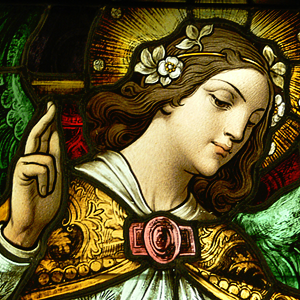
Tota pulchra es Maria #God #Deus #Isten #Gott #Jesus #Católico #Catholic #Katholik #katholisch #Katolikus #catholique #Faith #Fé #foi #信仰 #Latin #Latim #Gospel #Evangelho #Evangélium #évangile #Dieu #福音 #日本 #カトリック #Bible #Biblestr #Nostr #Grownostr