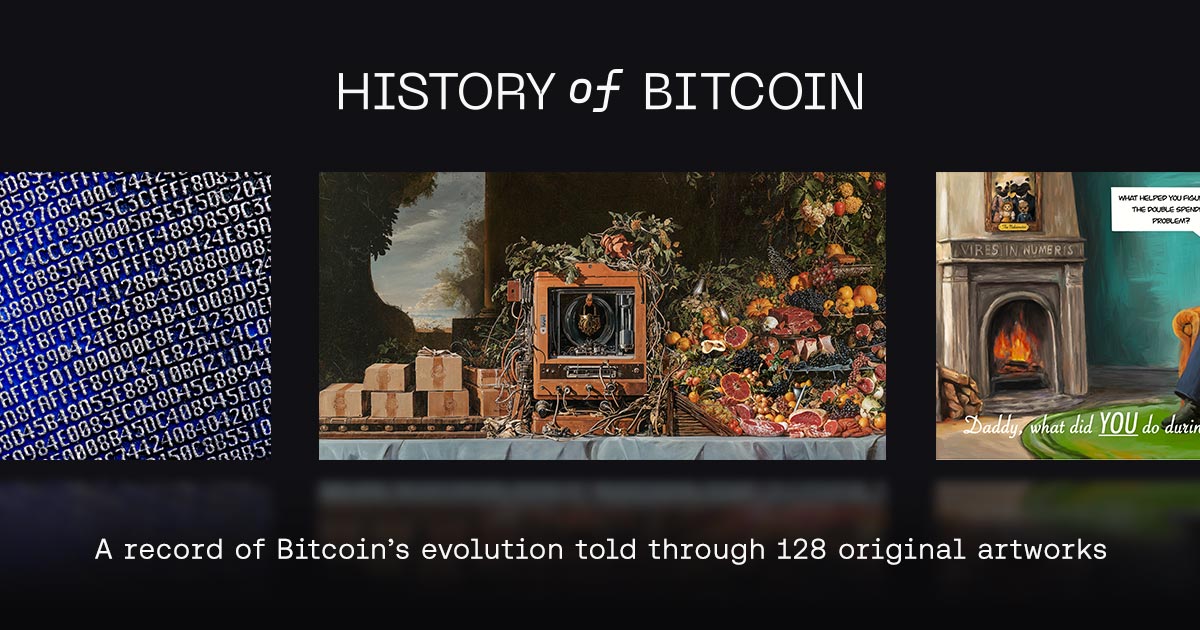
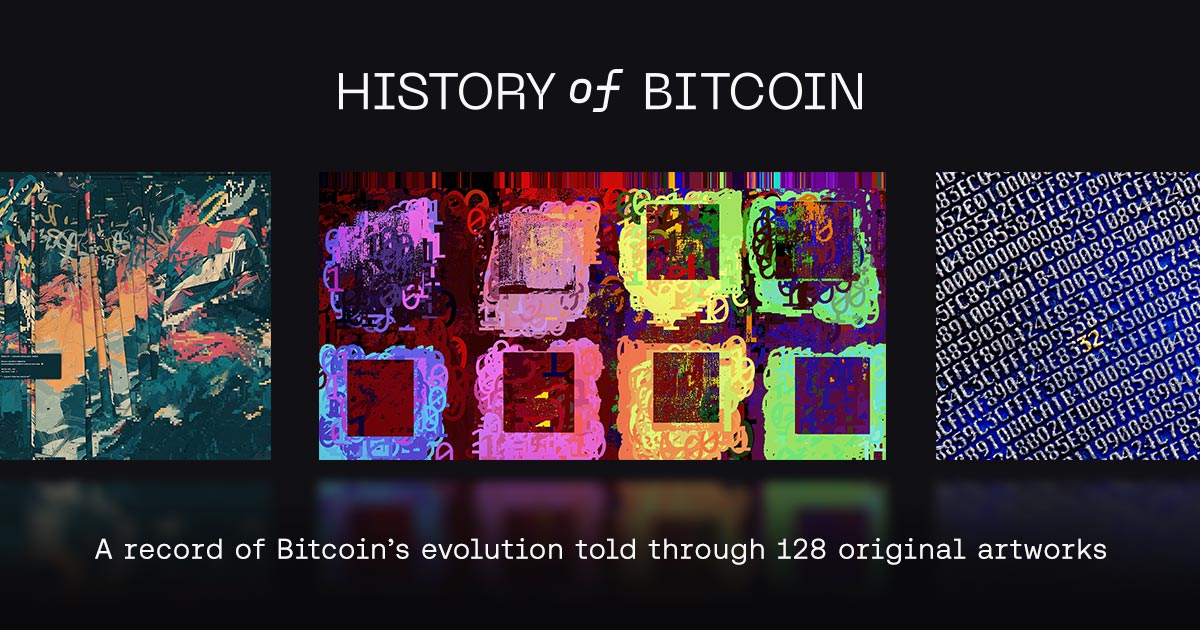
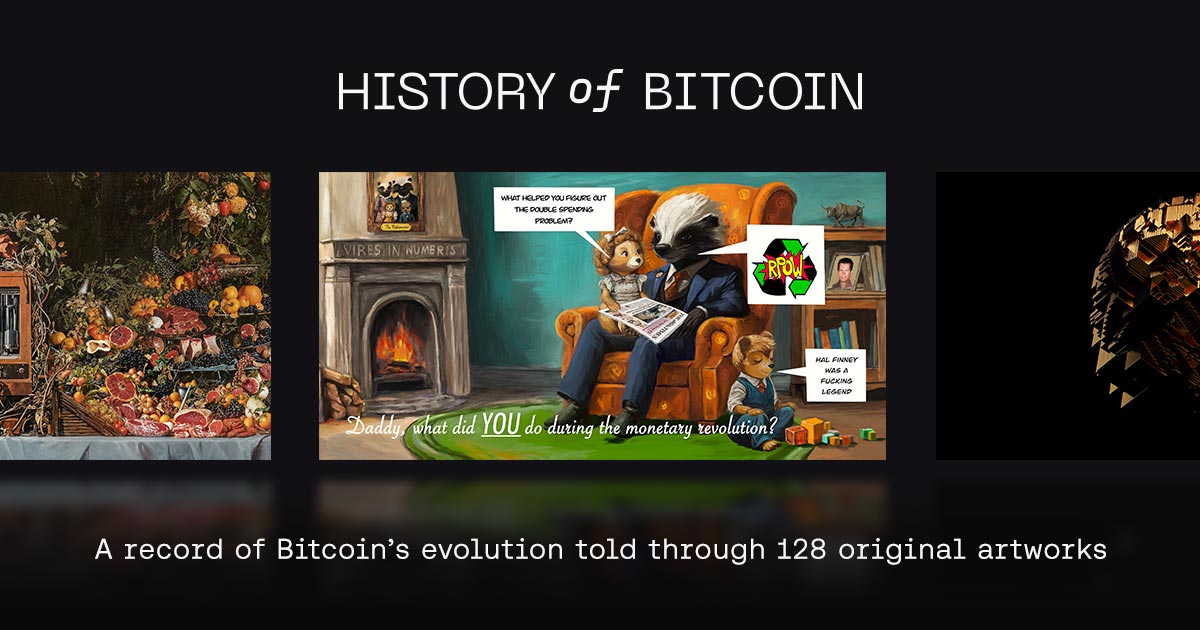
Red candles come and go. History says relax. Long before #Bitcoin existed, #HalFinney was keeping the #Cypherpunk dream alive. Even in the early 2000s, when many had lost hope that electronic cash would ever work, Finney refused to give up. Hal wasn’t just an early #Bitcoiner, he was one of the most committed Cypherpunks. A video game developer from California and an early contributor to PGP, he reviewed almost every e-cash proposal the mailing list produced. In 2004, he launched his own system: Reusable Proof of Work (#RPOW). Like #Hashcash and #BitGold, RPOW used proof of work to create new value. Users would connect to a server operated by Finney, solve a PoW challenge, and receive an RPOW token. The server kept a database of issued tokens to prevent double spending. To spend RPOW, you simply sent your token to someone else. They would then forward it to the RPOW server, which validated it and issued them a new one. In this way, proof of work became reusable. Privacy was built in. All connections to the server went through Tor, so Hal never knew who his users were. To guarantee honesty, Finney relied on open-source software and a new technique called “remote attestation.” The RPOW code ran on a special IBM chip that could cryptographically prove it was running the correct software, ensuring that no one, not even Hal, could secretly mint tokens. Unlike Bit Gold, RPOW was actually implemented and ran in the real world. But it had one major flaw: as computers became faster, generating new RPOW tokens became easier. Over time, the currency would inflate. There was no economic incentive to hold or accept it. Without that, RPOW never gained traction. Finney had solved electronic cash on a technical level, but the economics weren’t right. Bitcoin would later fix that by aligning incentives with proof of work. We honour this chapter in “The History of Bitcoin by Smashtoshi” with the artwork: “REUSABLE WORK” by Yonat Vaks (@yonatvaks on X). It appears in the History of Bitcoin Collector’s Book and on our interactive timeline. Read the full article by Aaron van Wirdum:
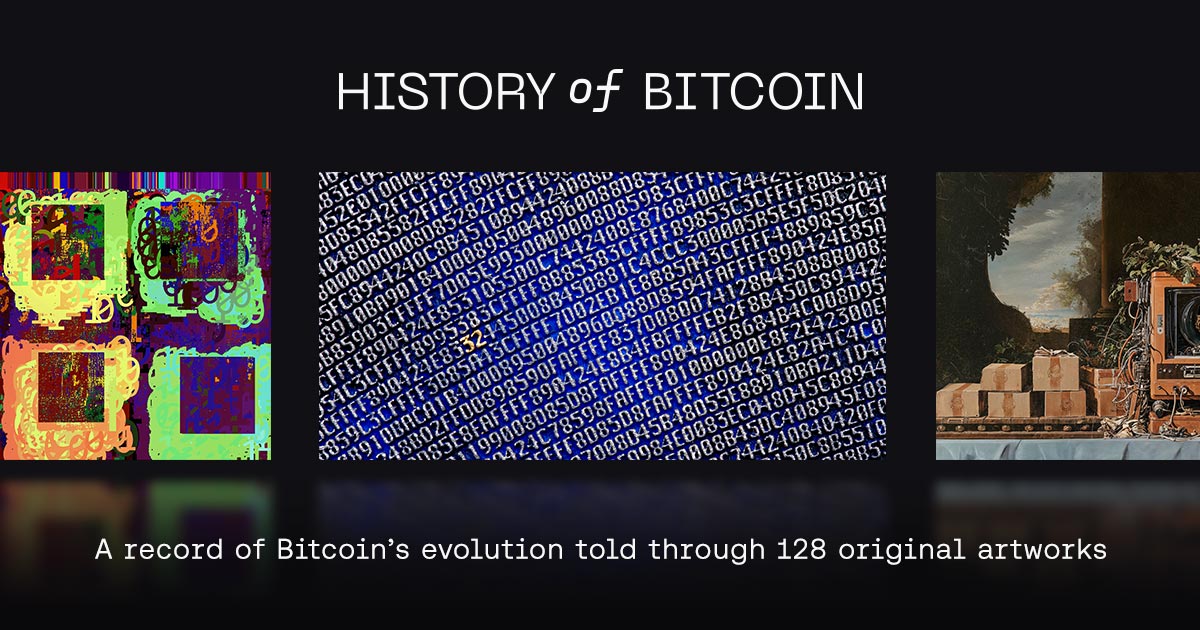
How did an intelligence agency end up publishing the algorithm that #Satoshi used to secure #Bitcoin? This is the story of SHA-256. If the #Cypherpunks had a mortal enemy, it was the #NSA. On one side you had people like Tim May, Eric Hughes, and John Gilmore – fighting for a future where #cryptography protects ordinary people. On the other side you had the NSA – an agency specialising in surveillance, data collection, and monitoring global communications. For decades, it tried to control the spread of strong cryptography. But here’s the twist: The NSA also created one of the most important tools that Cypherpunk projects – and later Bitcoin – would rely on. The agency designed the SHA family of cryptographic hash functions, the foundations that would eventually power systems like Hashcash and, ultimately, Bitcoin. A hash takes any data and transforms it into a fixed string of numbers. Change even a single comma in a book and the resulting hash is completely different. Crucially, hashing only works one way. You can go from data → hash, but not from hash → data. That makes it perfect for security and integrity checks. The NSA released SHA-0 in 1993, replaced it with SHA-1 after flaws were discovered, and then moved again when researchers found “collisions” – different inputs that produced the same hash. Their solution was the SHA-2 family, published in 2001 under a royalty-free licence. That included SHA-256 – the workhorse that went on to secure modern internet protocols and, later, Bitcoin’s Proof-of-Work. SHA-256 is unpredictable. There is no shortcut. The only way to find a “valid” hash is trial and error – swapping in new numbers until one fits. That property made it ideal for proof-of-work systems like Hashcash, and later for Satoshi’s Bitcoin mining. So even as Cypherpunks were fighting for digital privacy against agencies like the NSA, they still borrowed NSA-designed tools. Electronic cash was not built in isolation. It was built on top of primitives created by the very adversary privacy advocates were trying to resist. We’ve captured this chapter in “The History of Bitcoin by Smashtoshi” with the artwork: “MAKING A HASH OF IT” by Hannes Hummel (@hanneshummel on X). It appears in the History of Bitcoin Collector’s Book and on our interactive timeline. You can read the full article by Aaron van Wirdum here: image
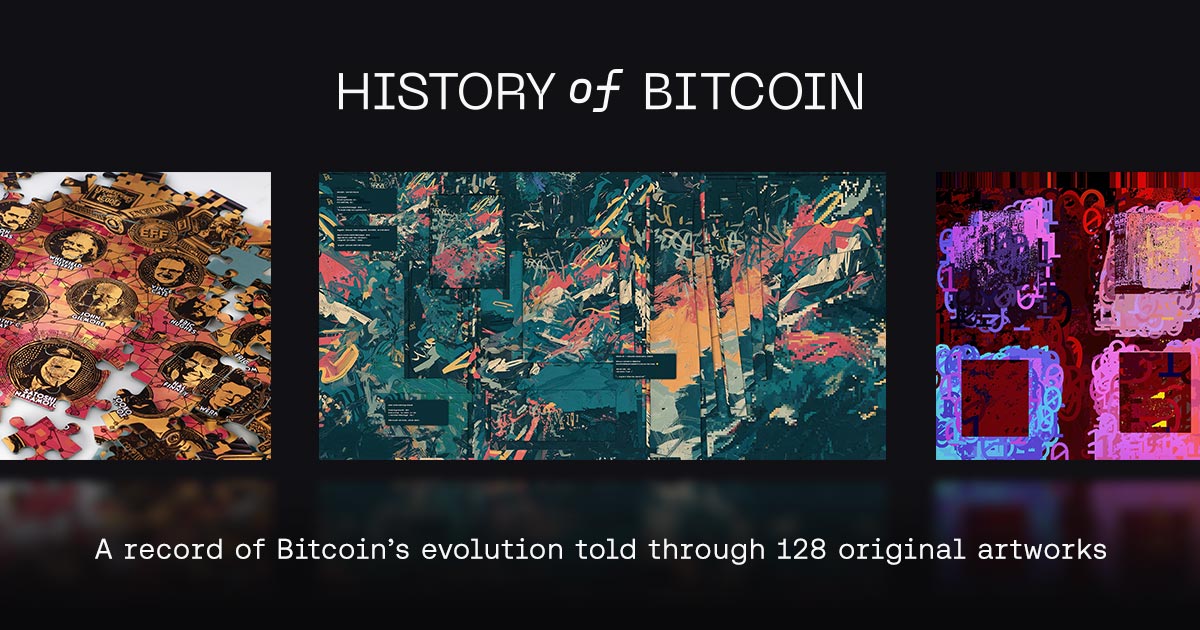
Before #Bitcoin, another peer-to-peer revolution quietly rewired the internet: #BitTorrent. #BramCohen realised that splitting a big file into many tiny pieces was the most efficient way to move it online. Instead of one server sending everything, uploads became a cooperative effort: many peers, one task. There’s a nice irony here. Two of the most successful peer-to-peer networks in history – BitTorrent and Bitcoin – were both launched by solo developers who designed systems that only become unstoppable once everyone else joins. Their first clients reflected that. Bram’s original BitTorrent client, written in Python, was functional but not friendly. #Satoshi’s Bitcoin 0.1 client bootstrapped over #IRC and had plenty of hard-coded quirks. Rough edges. Strong ideas. And yet, by 2004, more than 20 million people had downloaded BitTorrent. Media companies tried to crush it. The protocol survived. The swarm reorganised. The playbook was written. BitTorrent proved that millions of strangers can form an ad-hoc network to reliably perform a task without any central coordinator. Bitcoin uses the same model – but for money. Where BitTorrent moves files and pieces, Bitcoin moves transactions and blocks. Each Bitcoin node joins a mesh the way a BitTorrent client joins a swarm. There is no central switch to flip. Turn off one node, and others route around it. Bram Cohen would later put it simply: “Bitcoin is like BitTorrent for money.” We’ve captured this chapter in “The History of Bitcoin by Smashtoshi” with artwork by Robert Alice (@robertalice_21 on X), an artist whose work maps #blockchains and their histories into museum-grade objects and installations. The piece appears in the History of Bitcoin Collector’s Book and on our interactive timeline. You can explore the full story here:
Before #Bitcoin, there was #Hashcash. In 1997, @Adam Back came up with a clever idea to fight email spam: make sending email cost a little bit of computation. Hashcash worked by taking email metadata plus a random number, running it through a hash function, and trying to produce a hash that started with a certain number of zeroes. Most attempts failed. You had to keep trying new random numbers until you found a valid hash. For normal users, that extra work was small. For spammers sending millions of emails, it became very expensive. Hashcash effectively added a “postage fee” in the form of computation. This was one of the first real-world uses of what we now call #proofofwork. Hashcash itself wasn’t a currency – each proof was tied to a single email and couldn’t be reused as money. But it showed something important: you can link real-world scarcity (computing power and energy) to digital information. That idea – digital scarcity backed by proof of work – became a key building block for later electronic cash experiments, including Bitcoin. We captured this moment in The History of Bitcoin by Smashtoshi with the artwork: “PROOF OF WORK” by ROBNESS (ROBNESSOFFICIAL). It appears in the Collector’s Book and on our interactive timeline. Read the full article by Aaron van Wirdum:
Before #Bitcoin, there was #Ecash. David Chaum’s #Digicash, built on blind signatures, was one of the first serious attempts at true digital cash. At one point, there were even rumours that Microsoft and Visa were seriously interested, and several Cypherpunks went to work at Digicash to help push the tech forward. But Ecash never really went mainstream. Usage stayed low. Some said there wasn’t enough demand for digital cash yet. Others felt Chaum didn’t have the business skills to scale it into the wider financial world. By 1997, after leadership changes and a move to Silicon Valley, Digicash filed for bankruptcy. Still, its impact was huge. It proved to a whole generation of hackers, cryptographers, and privacy activists that digital cash was technically possible. The idea worked – it just needed a different architecture and a different moment in time. Bitcoin would eventually be both. We captured this moment in The History of Bitcoin by Smashtoshi with the artwork: “SEEING THE VALUE OF BLIND SIGNATURES” by Jack Kaido (thisjackkaido). It appears in the Collector’s Book and on our interactive timeline. Read the full article by Aaron van Wirdum: