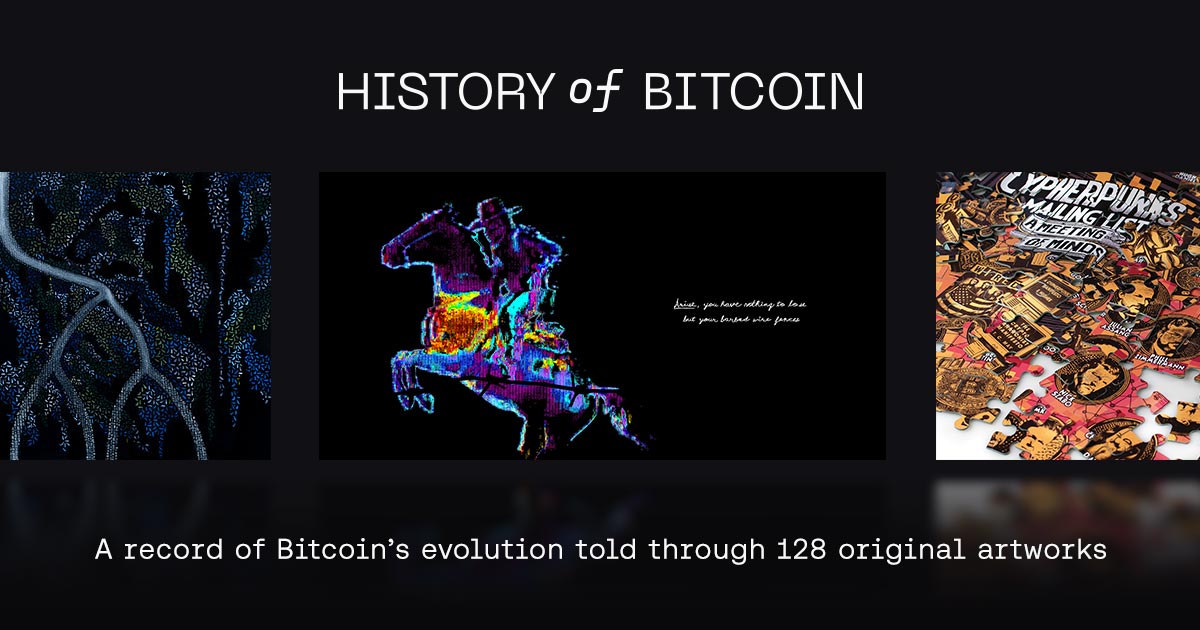
Before #Bitcoin, there were #Cypherpunks. A small group of hackers, cryptographers, and privacy activists came together around a simple mission: implement cryptographic protocols in software. They met around San Francisco and launched a mailing list that quickly became legendary – about 2,000 subscribers and around 2,000 emails a month. It turned into the main public forum to discuss the future of the internet and the Cypherpunk mission. As Eric Hughes wrote in A Cypherpunk’s Manifesto: “Cypherpunks write code.” And they did: anonymous remailers to hide email metadata PGP, giving people private communication online for the first time early experiments with electronic cash – digital money for anonymous use on the internet Some of the Cypherpunks whose work shaped this era: Nick Szabo, Adam Back, Igor Chudov, John Gilmore, Perry Metzger, Marc Andreessen, Vipul Ved Prakash and many more. We captured this moment in The History of Bitcoin by Smashtoshi with the artwork: “CYPHERPUNK: A MEETING OF MINDS” by Cypherpunk Now. It appears in the Collector’s Book and on our interactive timeline. Read the full article by Aaron van Wirdum:
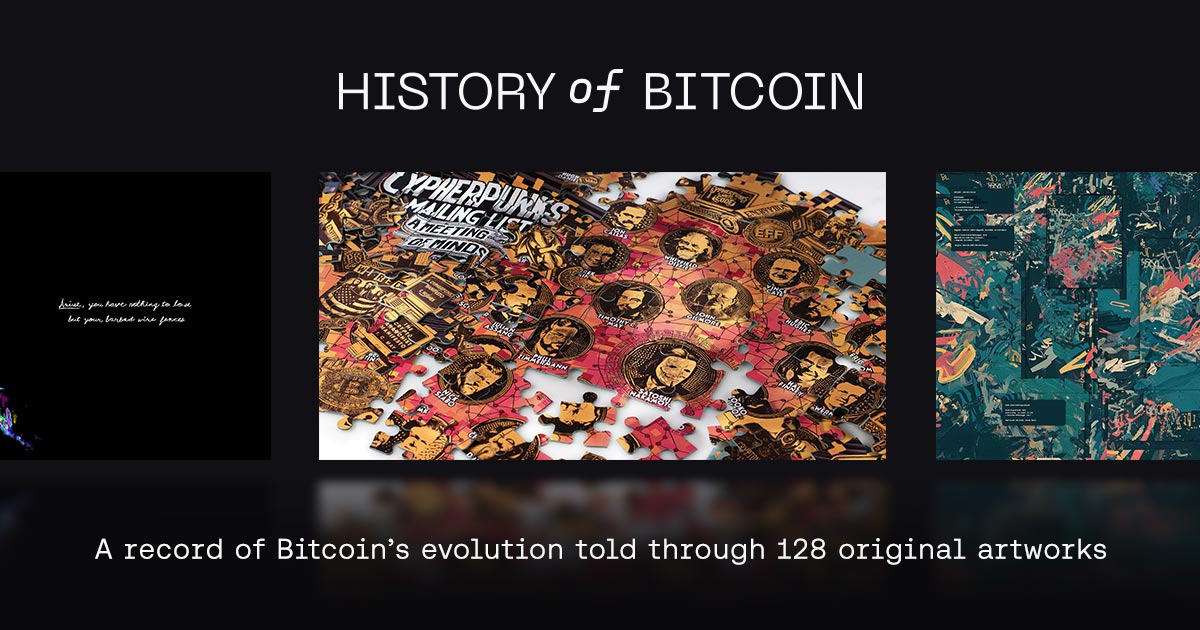
Before #Bitcoin, there was crypto anarchy. Tim May watched his friend Phil Salin build AMIX – an early online marketplace for information. Salin imagined people buying guides, reports, software, expert advice. May thought bigger. The most valuable information wouldn’t be public reports, but secrets. Trade secrets. Classified documents. Information people would pay serious money for. He imagined “BlackNets”: encrypted markets where people operated under pseudonyms, traded information, and paid with electronic cash. Governments would try to kill it – but code running worldwide would be very hard to stop. May saw two futures: 1️⃣ A surveilled internet – every message, site and transaction logged. 2️⃣ A #cryptographic internet – strong crypto everywhere, individuals using electronic cash, reputation and proofs instead of trusting the state. That second path, he believed, would lead to crypto anarchy. In 1988 he wrote The Crypto Anarchist Manifesto and handed it out at Crypto ’88. A quiet beginning to the revolution Bitcoin would later ignite. We’ve captured this moment in The History of Bitcoin by Smashtoshi with the artwork “MAKING A MANIFESTO” by @nicedayJules overon X, featured in the Collector’s Book and our interactive timeline. Read the full article by Aaron van Wirdum here: 🔗 #Art #BitcoinArt #Zap ⚡️
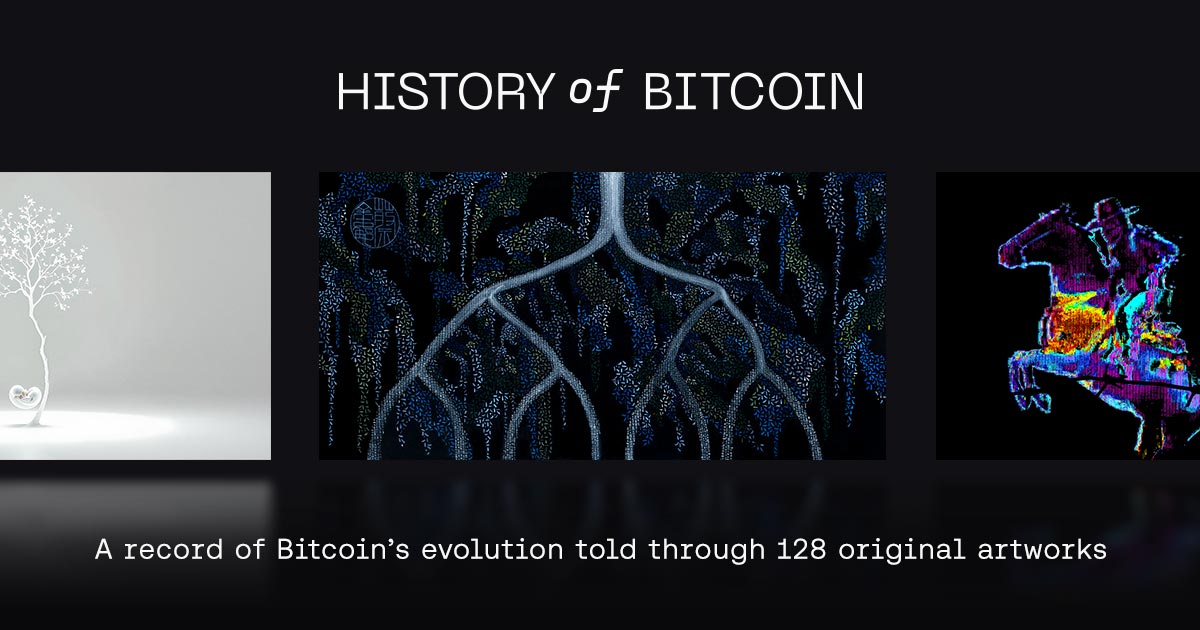
Bitcoin didn’t start in 2009. You can trace its story back to 1979, when Ralph Merkle designed a #cryptographic data structure that would become one of #Bitcoin’s core building blocks: the #MerkleTree. Merkle first documented the idea in his thesis and patent. It wasn’t until CRYPTO ’87, an academic conference on advances in cryptology, that the work began to get broader recognition. From idea to spotlight took almost a decade. By the mid-1990s, Merkle trees were in production. One of the best examples: Surety, a company that hashed client documents into a Merkle tree and published the root hash in the New York Times classifieds each week, anchoring data integrity in full public view. Years later, when #SatoshiNakamoto needed a way to structure Bitcoin blocks that was both efficient and tamper-evident, he chose Merkle trees. In the #BitcoinWhitepaper, all transactions in a block are hashed into a Merkle tree, with only the Merkle root included in the block header. This keeps blocks compact and makes verification straightforward. Satoshi also noted that old blocks could be compacted by pruning spent transactions. Combined with Merkle proofs, this design choice enabled light clients to verify transactions without downloading full blocks, critical for Bitcoin’s scalability and global accessibility. Ralph Merkle likely imagined many applications for his invention, but he couldn’t have foreseen that his “tree” would help secure a trillion-dollar network. By extracting strong security guarantees from simple hashing, he gave Bitcoin a scalable root of trust. The artwork “Merkle Trees and the Roots of Trust” by Gina Choy pays tribute to this chapter of Bitcoin’s history. It appears in the History of Bitcoin Collector’s Book and on our interactive timeline. 📖 We’re telling Bitcoin’s origin story one building block at a time. Follow History of Bitcoin / Smashtoshi for more chapters from the early days of cryptography, cypherpunks and digital money. 🔗 View the full article here #BitcoinArt #Art #BitcoinTimeline #Zap ⚡️