Heading to BTC Prague? Catch me on the ‘Bitcoin Mining Benefits: Why it Matters’ panel. Saturday 21 June at 1pm on the Expo Stage. @BTC Prague
I’ll be @The Bitcoin Conference hosting a panel on Bitcoin mining origin stories. 27 May | 3:00 to 3:30 pm | Mining Stage Three industry leaders share how challenges, lessons, & innovation have shaped their approaches to mining, sustainability, scale, and strategy. Hopefully see you there. image
I’ll be hosting this panel at @The Bitcoin Conference. Mining as a Backbone for an Abundant Future 29 May | 3:00 to 3:30 pm | Mining Stage We’ll discuss everything from AI convergence, waste recovery, and how Proof-of-Work could unlock global energy abundance. @Daniel Batten @Troy Cross @Beau Winn image
Most people don’t find Bitcoin through marketing. They hear it from a friend, fall down a rabbit hole, or get wrecked on something else first. So, how do you market Bitcoin to the masses? 27 May | 12:30 to 1:00 pm | Genesis Stage I’ll be in Vegas for Bitcoin 2025, hosting this panel. This one’s about community, clarity, and cutting through the noise. image
KYC doesn’t just put your data at risk; it puts people at risk. Hackers recently demanded $20 million in Bitcoin from Coinbase, threatening to leak sensitive customer data. While no passwords or private keys were accessed, the attackers obtained full names, addresses, contact details, partial Social Security and bank account numbers, and identity documents. This is the kind of data that can be weaponised for identity theft, fraud, or worse. This is exactly the kind of risk I raised on the compliance panel at the Financial Times Digital Assets Summit last week. While KYC and compliance frameworks are presented as security features, they often do the opposite. They create massive, centralised honeypots of personal data that can and do get breached, sold, or exploited. We’ve seen what can happen when that data gets into the wrong hands. Earlier this year, David Balland, the co-founder of Ledger, was kidnapped along with his wife. His captors cut off one of his fingers and sent it to a business associate to demand crypto ransom. He was rescued by French special forces, but the message was clear: real-world consequences are now linked to digital identity exposure. We need better solutions that don’t force users to sacrifice privacy and safety for access. Compliance shouldn’t come at the cost of security.
Bitcoin was born as freedom money. Decentralised, borderless, and immune to state control. But is that ideal being flipped on its head? Are a growing number of institutional players backed by governments inflating Bitcoin’s value not as a currency of the people but as a Strategic Reserve Asset to prop up the very system it was built to escape? Is the goal to create artificial demand for U.S. dollars and treasuries through stablecoins backed by U.S. debt? Stablecoins are lifelines for many, but what is the real cost? Will certain stablecoins become some of the largest holders of U.S. treasuries, indirectly funding U.S. policy while serving as the gateway to Bitcoin? By linking Bitcoin to stablecoins and those stablecoins to U.S. treasuries...has a pipeline been created to inflate Bitcoin, attract capital, prop up dollar demand, and sell more debt? Is it ironic that the asset created to resist fiat is now being used to save it? On the day Trump was inaugurated, I published this article. Centralisation is a threat. Are we paying close enough attention? https://www.forbes.com/sites/digital-assets/2025/01/20/is-trumps-strategic-bitcoin-reserve-a-threat-to-freedom/ image
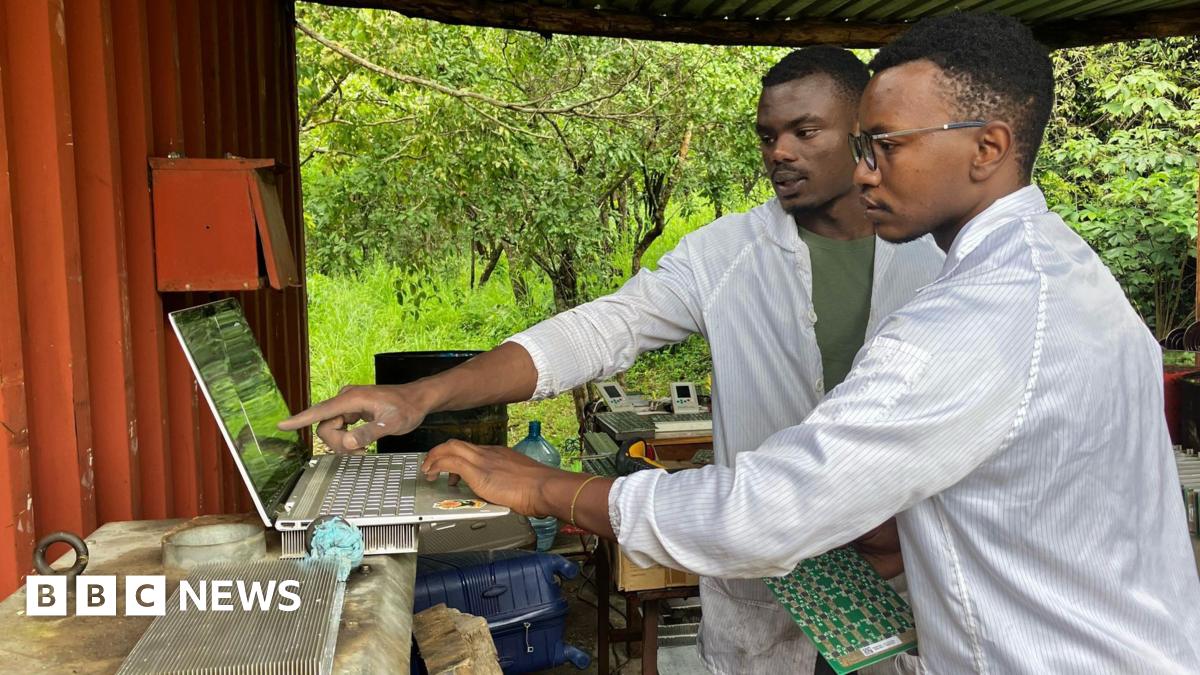
A rare, well-researched positive article on Bitcoin by the BBC and it’s a good one. It covers: - Real-world impact in rural Africa - Wasted renewable energy put to use - Economic boost via electricity access - Profitable and sustainable model by Gridless - Ambitious plans to expand clean energy powered by Bitcoin More of this, please BBC.
UK regulators are driving bitcoin businesses away while other countries capitalise on the opportunity. The FCA’s blanket cryptoasset policy is crushing innovation, stifling growth, pushing companies offshore, and making the UK increasingly hostile to bitcoin businesses. Companies are scaling back or leaving the UK due to restrictive and unclear regulations. Meanwhile, the US, UAE, and Singapore are actively attracting bitcoin investment. Bitcoin is not a meme coin. It is the future of finance. If this continues, the UK will lose its financial edge and risk global irrelevance as investment moves elsewhere. My latest Forbes piece. @MUSQET @fnew https://www.forbes.com/sites/digital-assets/2025/03/18/uk-financial-conduct-authority-drives-out-business-and-hurts-consumers/ image
The BBC’s FOI exemption is deeply troubling, shielding serious scandals from scrutiny. This was the first response I received from the BBC when I tried to hold them accountable for their misinformation and disinformation. I raised concerns about this exception with the Information Commissioner’s Office (ICO), and they said the BBC exemption stands; see their response below. The BBC has inflicted notable harm by consistently promoting incorrect and misleading narratives about Bitcoin. This perpetuates negative public perceptions and overshadows its potential as a transformative technology. By framing Bitcoin in a way that often lacks clarity or relies on outdated stereotypes, such as associating it primarily with criminal activity or environmental concerns, the BBC has skewed public understanding and stifled informed discourse. The BBC’s influence as a trusted news outlet amplifies the damage: its narratives have historically shaped opinions that deter adoption, investment, and innovation in a technology that could revolutionise financial inclusion, decentralised systems, and economic sovereignty. This is particularly harmful given Bitcoin’s surged value, reaching a record high of around $109,000, and when global leaders are increasingly recognising its strategic importance, such as the US establishing a Strategic Bitcoin Reserve. By obscuring Bitcoin's potential to empower individuals and challenge traditional financial systems, the BBC has delayed societal benefits and reinforced a status quo favouring established institutions over technological progress and freedom. People deserve transparency. The exemption should be scrapped, but then again, so should the BBC.
Orwell’s 1984 warned us about this. Surveillance is everywhere, privacy is being destroyed, and CBDCs are the final boss. The £2 coin quoting ‘Big Brother is Watching You’—is this a tribute, or are they laughing at us? image