[RAMBLE] offers privacy-respecting user forums similar to Reddit You may have seen many Reddit alternatives popping up on the Fediverse over the last few years, and some of them are pretty busy. I've done posts over the years on BeeHaw and similar sites there. And although they are decentralised servers, they are still IPv4 (clearnet) servers that can be blocked. [RAMBLE] is a similar type of social site that is accessible on clearnet, I2P, Tor and Yggdrasil. Interestingly though, you can ONLY log in on I2P though if you want to post, comment, or vote. Why the I2P network? The I2P (Invisible Internet Project) network excels in providing strong anonymity and privacy through its decentralised, encrypted overlay on the regular internet, ideal for peer-to-peer communication without revealing user identities or locations. By users being forced to use the I2P network to actually log in, their privacy and anonymity is better protected by default, and of course, it is also not easy to actually locate and block the [RAMBLE] site itself. So is [RAMBLE] then all criminal and dark web? Actually, no, it is not. It is about protecting privacy and preventing freedoms of speech censorship. It's rules actually prohibit buying or selling anything illegal, prohibit explicit sexual images including those of minors, no calls for violence, no hate speech (e.g. racism, bigotry, discrimination against other groups, etc), no trolling or harassment of other users. It has no age verification requirement. You can access it at: * Clearnet (read only): * Yggdrasil (read only): [200:b846:2eaa:4ed5:260c:a883:4df4:f79f] * Tor (read only): http://rambleeeqrhty6s5jgefdfdtc6tfgg4jj6svr4jpgk4wjtg3qshwbaad.onion * I2P (log in): http://ramble.i2p #technology #socialnetworks #alternativesto #privacy image
How Tor Can Help You Be More Anonymous on the Internet Whilst a Tor browser can access normal HTTPS websites, it can also access onion websites and the dark web (where there is no age verification required). The linked article is quite comprehensive in that it also mentions some downsides like slower speed, and some exposure on both sides of the link (entering and exiting the Tor network) namely your ISP seeing the Tor protocol being used, and the Tor exit node. But importantly the article gives some suggestions on improving privacy, and also highlighting that the Tor network can be used for perfectly legitimate sites on the dark web — many being news sites, e-mail, Twitter, Facebook, etc. In some countries, VPNs and Tor are used to gain access to news and e-mail that may otherwise be blocked. So Tor also bypasses censorship attempts by governments. Some browsers like Brave browser will actually fire up their own private window with Tor, so no need to install the Tor browser itself. See #technology #Tor #privacy #darkweb
5 Docker Compose tricks that made my home server more reliable This was an interesting article. I did not know about the limiting of restarts up to a defined number of failures. That is pretty useful to prevent a container continuously restating, and then sometimes showing as green for running. The other intriguing one was using curl for health checks. Just note you must use the internal container port as it is running inside the container. If curl is not present in your container, the wget command can be used instead. The syntax for both, that I found worked, were: `test: ["CMD-SHELL", "curl -f http://localhost:8080 || exit 1"] ` and `test: ["CMD-SHELL", "wget -q --spider http://localhost:8080 || exit 1"] ` so I hope that helps others. Another trick, where some containers only respond when using the container IP address (which changes) is to use something like this for the IP and port: `http://$(hostname -i):8080`. I had one stubborn container, a MQTT one, that refused to respond to any querying, so I used this instead `test: ["CMD-SHELL", "pgrep mosquitto || exit 1"] ` which checks if the process is running inside the container. See #technology #docker #containers #selfhosting
5 open-source projects that secretly power your favourite apps "You've heard that the world's infrastructure runs on Linux, and how important Free and Open Source (FOSS) software is to just about all the technology we enjoy every day, but there are some (to bring out the old cliché) unsung heroes of FOSS without which your stuff just wouldn't work—and you should at least know their names." It is true, too, that most open source projects are built using other open source projects, but these are a few of those that sit in the background powering many popular projects. I love the article's comment about Electron. I suppose it is the same as for Flatpaks, AppImages and Snaps. They make things possible across distros. See #technology #opensource
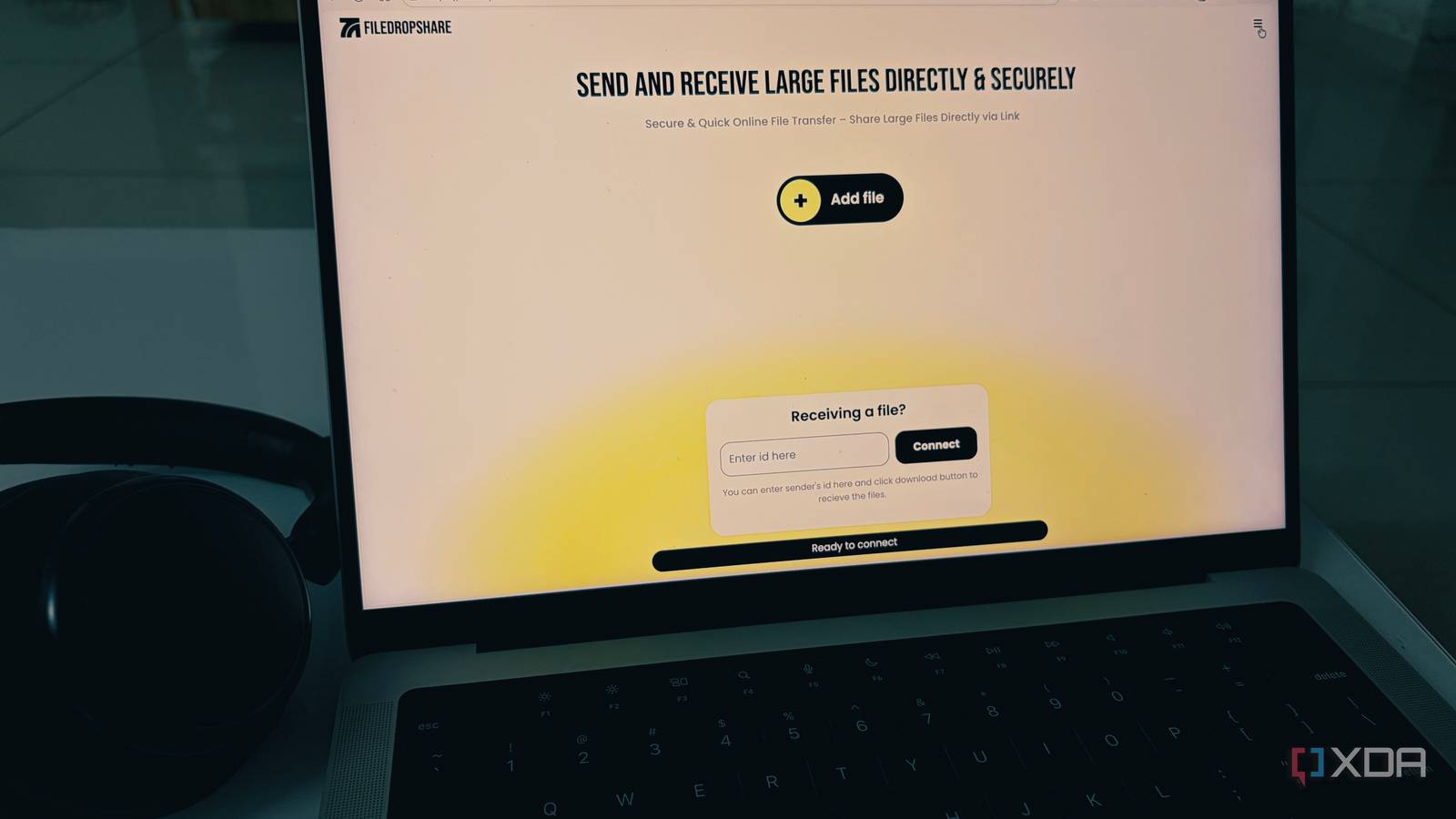
Filedropshare uses WebRTC for local peer-to-peer (P2P) file transfers without the cloud This is not the first service to do this, as Pairdrop does something similar. It should not be confused though with Localsend, as Localsend requires the apps to be installed on each device it works with. Syncthing too is something different, and apart from apps being installed, Synthing also requires configuration for the ongoing syncing of files. All Filedropshare requires is a browser. The central site does the WebRTC signalling to establish contact, but the filers are not actually uploaded to that site. If Fieldropshare makes you a bit nervous (not having any published open source software) then Pairdrop may be a better option as it is open source at and . You can also self-host and instance of Pairdrop if you wish to. See #technology #filetransfer #privacy
Progressive Web Apps (PWA) are better to use for major social network services than their mobile apps Yes, you do lose a few things like instant notifications and some performance, but the benefits are no app in the background that tracks your location the whole time, sometimes storing masses of data on your phone, and also sometimes chewing data in the background too. But if you are trying to break free from doomscrolling, then using a PWA instead may be just what you needed. PWA uses your browser but saves the icon on the homescreen, so it starts up pretty well much like a mobile app, and all the usual browser buttons and other menus are hidden, so it is quite a clean experience. Importantly, a PWA is sandboxed by your browser, so now that social network service can't see your photos, texts, or other apps unless you give it explicit permission. See #technology #privacy #socialnetworks
The Astrion smart remote is a game-changer for Home Assistant users "Every once in a while, some piece of smart home tech launches that's genuinely different to those that came before it, and one that I came across at this year's Maker Faire in Shenzhen is the Astrion remote by Sanytron. Astrion is a dedicated universal remote built specifically with Home Assistant users in mind. Sanytron is a Chinese company that specialises in human–machine interaction hardware for smart homes and custom install systems, and the Astrion is a remote designed to look like a regular TV remote." Yep it's not that cheap at $145 but for those that make use of the functions it supports, it could be pretty useful. See #technology #homeassistant #selfhosting
Why I Ditched My Smartwatch for a Retro-Styled Casio Watch This video takes you through my decision-making process and reasons for ditching my Samsung Galaxy Watch 7 (and other smartwatches) for a modern, retro-styled Casio ABL-100WE watch. The video starts with the straw that broke the camel's back, and concludes with two other possibilities I'll weigh up early in 2026. Watch #technology #smartwatches #retro #Casio #gadget
By now, we should know you CANNOT believe all you see on social media “Elon Musk’s social media echo chamber X-formerly-Twitter introduced a new feature over the weekend that shows the location where its users have been tweeting from — a move that has exposed an embarrassing problem for the social network: that many of its most politically inflammatory users are actually foreign scammers cashing in on gullible and outrage-hungry Americans. As the New York Times reports, it didn’t take long for online sleuths to notice that accounts that post MAGA ragebait weren’t actually tweeting from the United States; instead, they’re based in Eastern Europe, Thailand, Nigeria, Bangladesh, and other parts of the world, often linked to online scams and schemes.” Especially if there is an algorithm to be gamed, and one based on outrage or inflaming emotions, then be very wary of actually believing what you see are genuine people. If they're not AI driven bots, they're going to be people click baiting to get viral responses. The behaviour today makes old-fashioned trolling look positively tame by comparison. I think that for many people, a sense of apathy has set in when using social media. Certainly on the centralised algorithm driven services, it has been many years since I saw any real-life friends or family actually posting anything. There is hope though in the many decentralised, and better moderated, social media network platforms. They don't have algorithms to game (apart from chronological ordering of posts) and they don't have ads paid for by views, so there is little to drive that sort of behaviour. Of course there is always the geopolitical angle, with efforts to try to undermine or railroad elections in countries, but again, it is difficult to get a viral foothold without an algorithm driving views. Users are generally just seeing posts from those who they follow. And on clicks and views, especially on Twitter, as those views are what generates revenue for them from advertisers, it also appears that those may have also been faked from back in the old Twitter days. This according to something mentioned on the Revolution.Social podcast this last week. Before Elon Musk even came along, Twitter saw that faking these numbers could increase their revenue! After Elon Musk took over? Well, we don't know for sure, and maybe he is running it all by the book. So, we should just remember that on profit-driven social networks which have paid advertising, and where ragebaiting and trolling can easily go viral, not everything you see is going to be true, and maybe there is an attempt to just push your emotional buttons. If you remember this, your visits to some social media platforms may be a lot less stress inducing. See #technology #socialnetworks #ragebaiting
Finamp - an open source Jellyfin music client for mobile devices Finamp is really beautifully designed and dedicated music player that connects to your existing Jellyfin music library. There are a number of improvement sin the beta version already, so I'd recommend you aim to use the beta version. Yes, it still has a few improvements needed, such as Android Auto compatibility (coming in the beta release) as well as a self-populating favourites playlist (is planned). It is available for iOS, and Android from both Google Play and F-Droid. Just note there is no beat release via F-Droid. I actually use Obtanium to pull the APK updates straight from GitHub. See #technology #music #Jellyfin #opensource