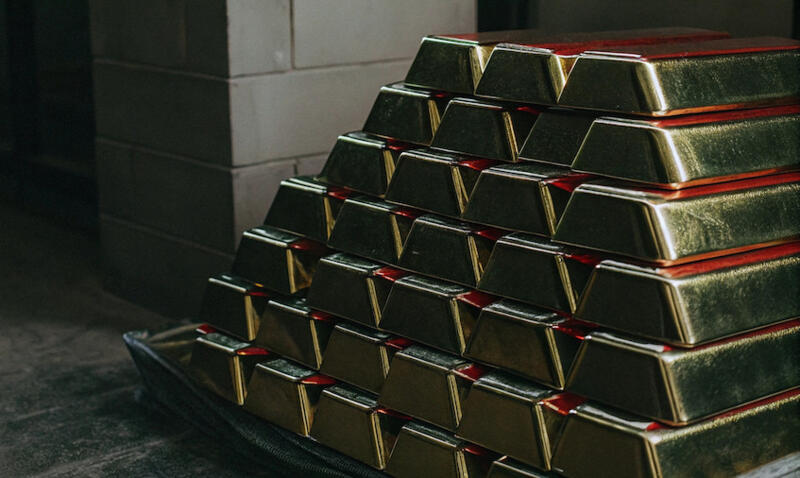
For decades, central banks have wielded paper derivatives contracts to suppress the price of gold, a practice that traces back to the Clinton era. At the time, gold had surged to nearly $1,900 per ounce, signaling inflationary pressures on the horizon and offering investors a refuge from currency debasement. Clinton, wary of destabilizing the bond market, set the stage for this manipulation. Today, estimates suggest there are 100 to 300 paper claims for every ounce of physical gold in existence—a precarious imbalance. If investors demand delivery, bullion dealers won’t have enough to fulfill orders. The result? A squeeze on physical gold that could propel its price tenfold or more, as those holding paper contracts scramble to buy real gold from a shrinking supply to cover obligations. These contracts, typically cash-settled financial instruments, can technically be redeemed "in-kind" for physical gold, though few expect that call to come—until now. Signs of a gold run are emerging, hinting at banks turning on each other in a high-stakes game of musical chairs. Banking, at its core, is a fragile system: every fractionally reserved bank in the U.S. is insolvent by design, unable to survive a full withdrawal of deposits. Why? Because fractional reserve banking relies on double-entry accounting and public ignorance to mask its essence—a legalized counterfeiting scheme. Banks create loans from thin air, collecting interest on money that costs them nothing to produce. Modern banknotes echo this relic of deception. The dollar, once defined as $35 per ounce of gold, lost its backing in 1971 under Nixon’s “temporary emergency measures”—a move that became permanent. Now, it’s a debt-based currency, repackaged as an asset, propped up by the vague promise of the “full faith and credit of the U.S. government.” It’s all credit, no substance—just trust holding it together. Lifting the gold peg unshackled central banks, granting them the power to print limitless currency, unbound by physical constraints. Paper derivatives became their tool to short gold, stifling its price and stripping investors of a hedge against rampant money printing. As new currency floods the system, scarce assets—gold, housing, food—rise in value, inflating prices faster than wages can keep pace. Relative to gold’s original $35 peg, the dollar has shed 98-99% of its purchasing power, with gold now at roughly $2,700 per ounce. Against consumer goods, per the CPI, it’s down about 87% since 1971. Meanwhile, central banks globally float their fiat currencies, competitively debasing them to prop up debtors and stabilize the system. Currency too strong? Print more, erode its value, and save the borrowers at the expense of savers. Then came Bitcoin. Unlike gold or paper promises, Bitcoin can be claimed in full via self-custody in ten minutes, bypassing the games of banks and derivatives. Over the past five years, the dollar has lost about 90% of its purchasing power against it, reflecting Bitcoin’s meteoric rise. This isn’t a glitch—it’s the system working as intended, favoring banks, governments, and the ultra-wealthy. Gold’s suppression, the dollar’s decline, and Bitcoin’s ascent lay bare the mechanics of a trust-based economy teetering on the edge.
In a system where banks and governments can print money at will, funding their monopoly on violence, we’re all just debt slaves on a tax plantation. They churn out paper promises—fiat currency backed by nothing but faith—while we toil to pass them around, pretending they hold value. Through endless money printing and debasement, they erode our purchasing power, siphon wealth to the top, and quietly collapse civilization. Inflation isn’t an accident; it’s the slow bleed of a rigged game where we’re the pawn. #bitcoin fixes this
The Feds Don’t Deserve #Bitcoin—States Do Forget a federal Bitcoin stockpile— Washington’s a black hole of control, sucking up power and spitting out debt. $35 trillion deep, with interest payments ballooning past $1 trillion a year, the feds can’t even save themselves, let alone innovate. Instead, incentivize states to buy and hold #Bitcoin. Picture this: Texas stacks sats, Florida follows, Wyoming doubles down. Matching grants—say, $500M per state—for passing Bitcoin treasury bills. Decentralization on steroids. Why? Debt markets are cracking—yields spiking, buyers fleeing. Entitlements? Unfundable. The federal beast starves as its borrowing binge collapses. States with BTC reserves don’t just survive; they thrive—resilient, independent, unshackled from DC’s sinking ship. Shrinking the feds becomes practical when states aren’t begging for handouts. This isn’t charity; it’s strategy. Power flows back to the people, one block at a time. #Bitcoin isn’t here to prop up bureaucrats—it’s here to rewrite the map. Which state moves first? Drop your pick below. image
The Feds Don’t Deserve Bitcoin—States Do Forget a federal Bitcoin stockpile— Washington’s a black hole of control, sucking up power and spitting out debt. $35 trillion deep, with interest payments ballooning past $1 trillion a year, the feds can’t even save themselves, let alone innovate. Instead, incentivize states to buy and hold #Bitcoin. Picture this: Texas stacks sats, Florida follows, Wyoming doubles down. Matching grants—say, $500M per state—for passing Bitcoin treasury bills. Decentralization on steroids. Why? Debt markets are cracking—yields spiking, buyers fleeing. Entitlements? Unfundable. The federal beast starves as its borrowing binge collapses. States with BTC reserves don’t just survive; they thrive—resilient, independent, unshackled from DC’s sinking ship. Shrinking the feds becomes practical when states aren’t begging for handouts. This isn’t charity; it’s strategy. Power flows back to the people, one block at a time. #Bitcoin isn’t here to prop up bureaucrats—it’s here to rewrite the map. Which state moves first? Drop your pick below. image
#Bitcoin is not a negotiation. We are building the future without permission. We aren't coming to the legacy financial system and saying please, please embrace our Bitcoin. We are warning of What is yet to come. We are highlighting what has happened in the past throughout history. We are urging others to take action and learn about the dangers of the inevitable end of any fiat currency. While we invite anyone to embrace Bitcoin, it is not for everyone. Bitcoin is an ego test. It is an intelligence test. It is an evolutionary challenge, and those who can most rapidly adapt to new information will be the benefactors of this new paradigm of human civilization. The current banking system is levered about 20 to 1. For every dollar you think you have in a bank, they have about $0.05 of your money somewhere. This isn't a joke. This isn't a speculative investment. This is 40 years of development in digital cash systems culminating in the most advanced form of monetary technology the world has ever seen. This is the largest global computer in existence. This is the most powerful Network that has ever been created. This is the most secure financial instrument in the world. And it is a free market forcing function on the global economy- 24 hours a day, 365 days a year. This is a global insurrection. The more the bankers print to fund their insolvency, the higher the valuation of Bitcoin will become. The more the government runs huge deficits to fund its reckless spending, the higher the relative value of Bitcoin will be pushed. This isn't a game. This is humanity's last stand. This is how we free ourselves from the chains of the banking cartels that currently control the flow of value and commodities around the world. This is our Revolution. And it's not a negotiation. Study Bitcoin. We are also Satoshi. #nostr
image From the Governor of the Czech Central Bank: "Bitcoin, however is a different story. It should not be lumped together with other crypto assets. We central bankers should study it and explore the technology it is built on. Studying bitcoin won’t harm us—on the contrary, it will strengthen us." It's a good time to read "The Bitcoin Standard by @Saifedean Ammous . Even central bankers are realizing that "#crypto" is a degenerate distraction from #Bitcoin... and that Bitcoin is uniquely suited to be a mathematically sound base settlement and collateral layer of the global economy. What a time to be alive. #nostr
The trajectory we're on has been unsustainable for a long time. The Federal Reserve's policy of printing money to stimulate the economy has created what's known as the "everything bubble." When the banking system nearly collapsed in 2008, the natural market response would have been to let failing banks fail, leading to a severe but potentially corrective recession. However, due to political pressures and the Fed's ability to create money at will, they opted for an unprecedented monetary experiment. They tripled the money supply in just two years, flooding the system with cash, which commercial banks then used to further expand credit. By signaling that interest rates would remain at zero for an extended period, the Fed pushed banks into high-risk investments to generate returns. This forced money into speculative markets, inflating asset bubbles. Investment banks and hedge funds capitalized on this environment, buying up companies with borrowed money, often to flip them for quick profits, which diluted the currency's value over time. Meanwhile, the government took advantage of low interest rates to fund massive expenditures, like the Iraq War, which cost about $80,000 per household. Had this been funded through direct taxation or bond issuance with clear costs, public outcry would have been significant. Instead, the burden was shifted to future generations through inflation. This monetary policy has kept the economy from crashing by maintaining a constant flow of credit, but it's a precarious balance. Real estate, for example, has become overvalued as people use it not just for living but as an investment, with platforms like Airbnb further inflating prices. This has made homeownership a dual-income necessity, particularly challenging for single-parent families, normalizing a lifestyle where two incomes are needed just to afford a basic home. Home equity has become the primary savings vehicle, with massive debts becoming the norm, where people are essentially working to pay interest rather than building wealth. The geopolitical implications of U.S. monetary policy became evident when sanctions were imposed on Russian reserves during the Russia-Ukraine conflict, showing that even sovereign assets could be at risk. This move has led to a decline in foreign demand for U.S. Treasuries, as countries like Russia and China have been diversifying into gold. This signals a broader mistrust in U.S. debt as a safe haven. To address these issues and move towards a sound monetary system, a strategic approach could be: Revaluation of Gold Reserves: The Federal Reserve could revalue its gold certificates to current market prices, providing a significant one-time revenue boost to the Treasury without needing Congressional approval for tax increases. Strategic Bitcoin Reserve: Initial Acquisition: Use the revenue from gold revaluation to purchase Bitcoin through OTC markets, mitigating market impact. Tax Policy: Advocate for a phased reduction or temporary suspension of capital gains tax on Bitcoin to encourage its use as a currency, rather than an outright elimination which might face political resistance. This could be marketed as fostering innovation in financial technology. At a minimum remove capital gains on transactions smaller than $200 So that Bitcoin can be used as a medium of exchange and we can increase financial innovation within our borders. Allow citizens to pay taxes using Bitcoin, providing a revenue stream of Bitcoin denominated value to the government, Voluntarily. Gold-Backed Bonds: Issue bonds with a small portion of the principal or interest payable in gold, appealing to investors looking for inflation protection. Use the proceeds to incrementally buy Bitcoin, showcasing a commitment to digital currencies while maintaining a link to traditional value. State-Level Adoption: Encourage states to invest in Bitcoin, providing a testing ground for federal policy. This could be incentivized through federal grants or matching funds for states that take steps towards Bitcoin as a reserve asset, thus building political support from the ground up. Sustainable Bitcoin Mining Grants: Issue grants to businesses interested in Bitcoin mining who can demonstrate they are using sustainable energy sources. This initiative would not only promote Bitcoin adoption but also drive innovation in sustainable energy, particularly in areas like methane mitigation. Companies could receive subsidies or tax credits for using surplus renewable energy or for capturing and utilizing methane from sources like landfills or agricultural waste, turning environmental challenges into economic opportunities. This approach could have profound global effects, countering the strategic gold accumulation by nations like China and Russia, and potentially positioning the U.S. as a leader in both the digital economy and sustainable energy technologies. By integrating Bitcoin into the national reserve, we could promote economic equality, enhance personal financial sovereignty, and reduce the effectiveness of capital controls by authoritarian regimes. Bitcoin's growth follows a clear mathematical pattern known as a "power law", suggesting its rise is not just probable but inevitable. The U.S. can either lead this transition with smart, phased policies or risk economic instability as the traditional system faces its unsustainable debt levels. By focusing on these steps, I believe we can move towards a system where currency is backed by energy and trust, not just by the ability to print money. #bitcoin #nostr #currency #markets
GN #nostr see you tomorrow #fren image
The left wants to "Play the game" The right wants to "Win the game" To study Bitcoin is to realize the game is already over. The music already stopped. Get a chair. #Bitcoin Tl/dr Bitcoin is the chair. image
Facebook censored my story. I requested a review on the grounds that it didn't violate their policy and it was to bring awareness to an important issue. I'm curious to see what "based zuck" has to say. #nostr #federalreserve image