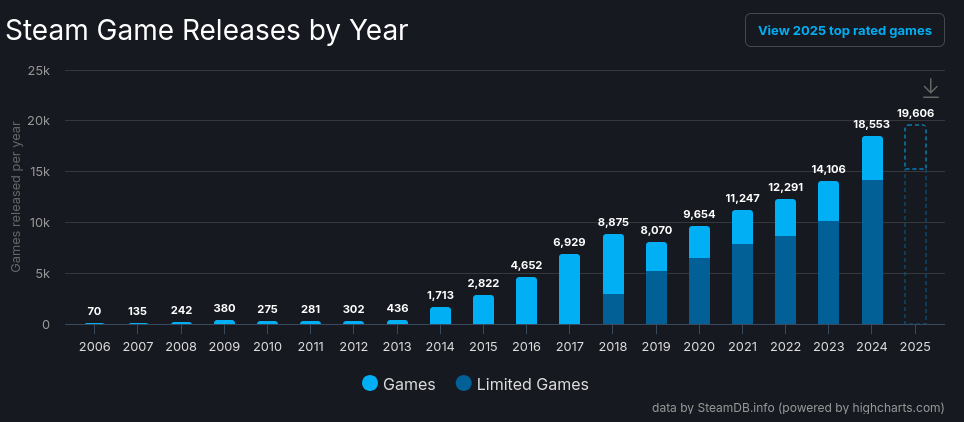
Steam currently sits at 19,606 game releases in 2025. Will it break 20,000 this year? Yes. There are 11 days left. Steam needs 394 more releases by December 31. That works out to 36 games per day. On December 19, Steam shipped 62 games. As of this Saturday morning, 13 are already live. The pace is there. The math is simple. Steam is on track to pass 20,000 releases in a single calendar year for the first time. image
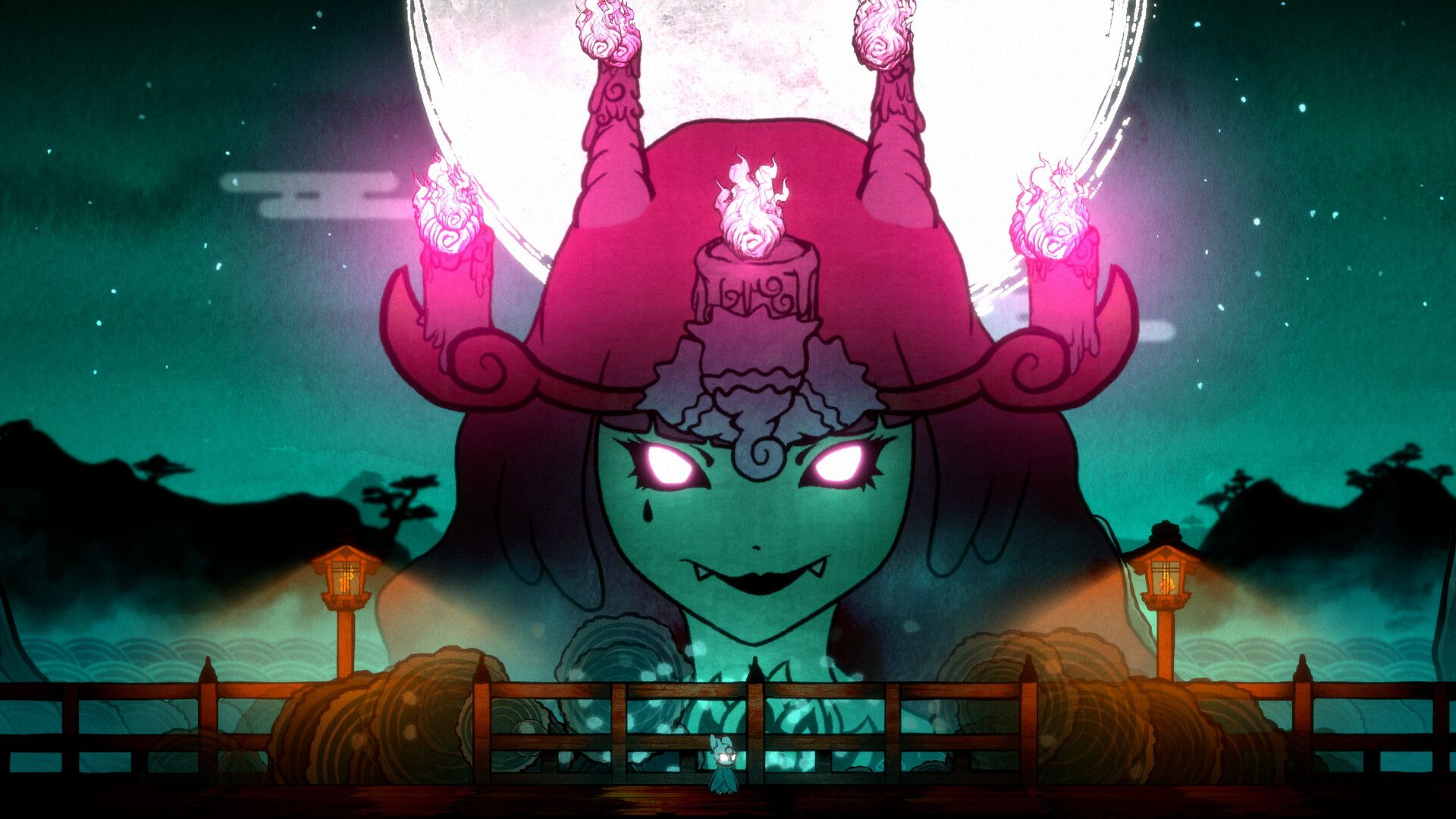
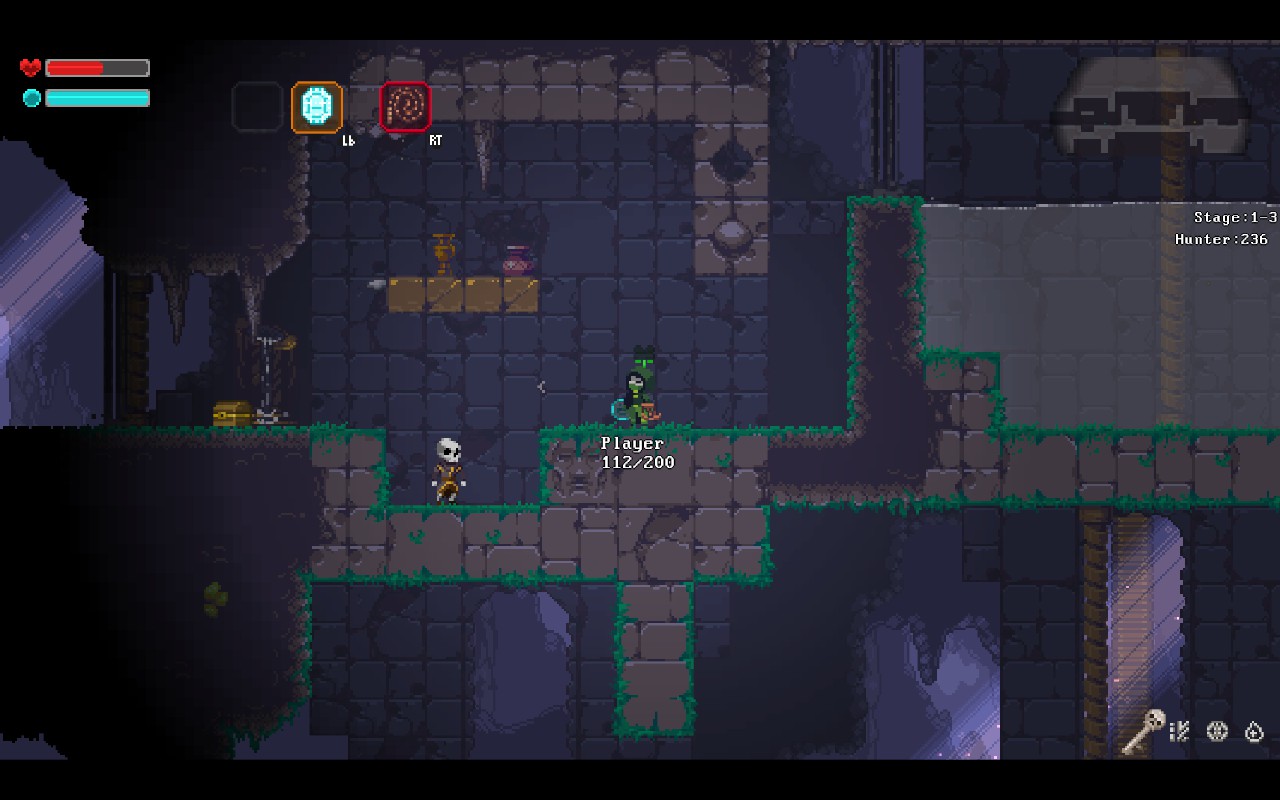
Spelunky is one of my favourite games of all time. So when I finally played Aura of Worlds, I paid attention. It sits in the same lineage as Spelunky, but it is not content to be a tribute act. Yes, it is a roguelite platformer. You still descend into hostile spaces, fight enemies, steal everything that is not nailed down, and die constantly. The difference is how much freedom the game gives you while doing it. Movement is faster and more expressive. Abilities like dashing, grappling, blasting, and grabbing objects turn every room into a small physics problem rather than a binary test of reflexes. The weapons and tools matter more than raw execution. You can improvise. You can make bad situations survivable. The difficulty is still real, but it is less punitive and more conversational. When you die, it usually feels earned. The boss fights are the standout. They are epic, readable, and aggressively fair. You die quickly, but almost every death comes with a clear post-mortem. You know exactly how you could have won. Visually, it looks great. Pixel art, but not trapped in 8-bit or 16-bit nostalgia. Detailed sprites, dense environments, and effects that sell motion and danger without visual noise. It feels modern without chasing trends. If you love Spelunky but want something looser, more expressive, and more forgiving without going soft, Aura of Worlds is the answer. image
Successful Jitsi test. Passed with flying colours. I feel this will be extremely useful for steering committee meetings and AGMs for the upcoming Federated Video Co-op Initiative.
We’re live now. The Jitsi test for the Federated Video Initiative is running. This is a technical test for Steering Committee and AGM meetings, and an open space to discuss incorporation, funding, governance, or ask questions.
Jitsi test starting in 10 minutes. If you are interested in the Federated Video Co-op Initiative, you are welcome to join. For the next 30 minutes, we will be discussing the co-op and answering questions while testing the feasibility of using Jitsi for Steering Committee and AGM meetings.
Everyone knows Donkey Kong. Fewer people remember that it kicked off a lawsuit where Nintendo was sued by Universal Studios for allegedly infringing King Kong. That case is deranged enough to justify its own write-up. What interests me more is the officially licensed King Kong game released in 1982 for the Atari 2600—one year after Donkey Kong was released. It is, functionally, a Donkey Kong clone. Nintendo didn’t try to stop it. Probably because the lawsuit was still unresolved and losing would have created injunction risk and licensing chaos. Awkward. But Nintendo unequivocally won after Universal’s claimed rights collapsed under its own prior legal positions. The court didn’t just dismiss the case. It called out Universal for bad-faith bullying of Nintendo’s licensees. The King Kong cartridge itself was part of that paper trail. Thereafter, the licensed King Kong game immediately stopped mattering. I’ve played it. Compared to Donkey Kong on the same hardware, it looks awful. The controls are worse. Movement feels like you’re steering a damp sponge. Still, it’s not unplayable. The climbing works. The jumping mostly works. I had fun with it. Part of that is because Tigervision tried harder than people remember. This was their first cartridge release. The game shipped with eight variations, including speed changes, two-player modes, and “magic bombs” that could fling you up a level if you timed things right. It’s still a clone, but it’s not a completely lazy one. King Kong didn’t vanish from games after that. In 2005, there were multiple tie-ins for Peter Jackson's King Kong movie, and some of them were genuinely solid. Then in 2023, we got Skull Island: Rise of Kong, which answered the question: what if a modern King Kong game shipped with no shame at all? Meanwhile, Donkey Kong just kept climbing. After years taking the backseat to Mario, Donkey Kong Country dragged him back into relevance. This year, Donkey Kong Bananza is getting Game of the Year nominations. That trajectory is earned. King Kong still pulls box office numbers. However, Donkey Kong is now getting movies too. King Kong shows up because he always has. Donkey Kong shows up because he's part of the shared Mario cinematic universe. And now King Kong’s 100th anniversary is coming up. He’s already in the public domain in his earliest form, which makes him suddenly very attractive to game developers. Expect a lot of Donkey Kong–style platformers starring a very familiar ape, all carefully staying on the safe side of the line. History doesn’t repeat. It reskins.
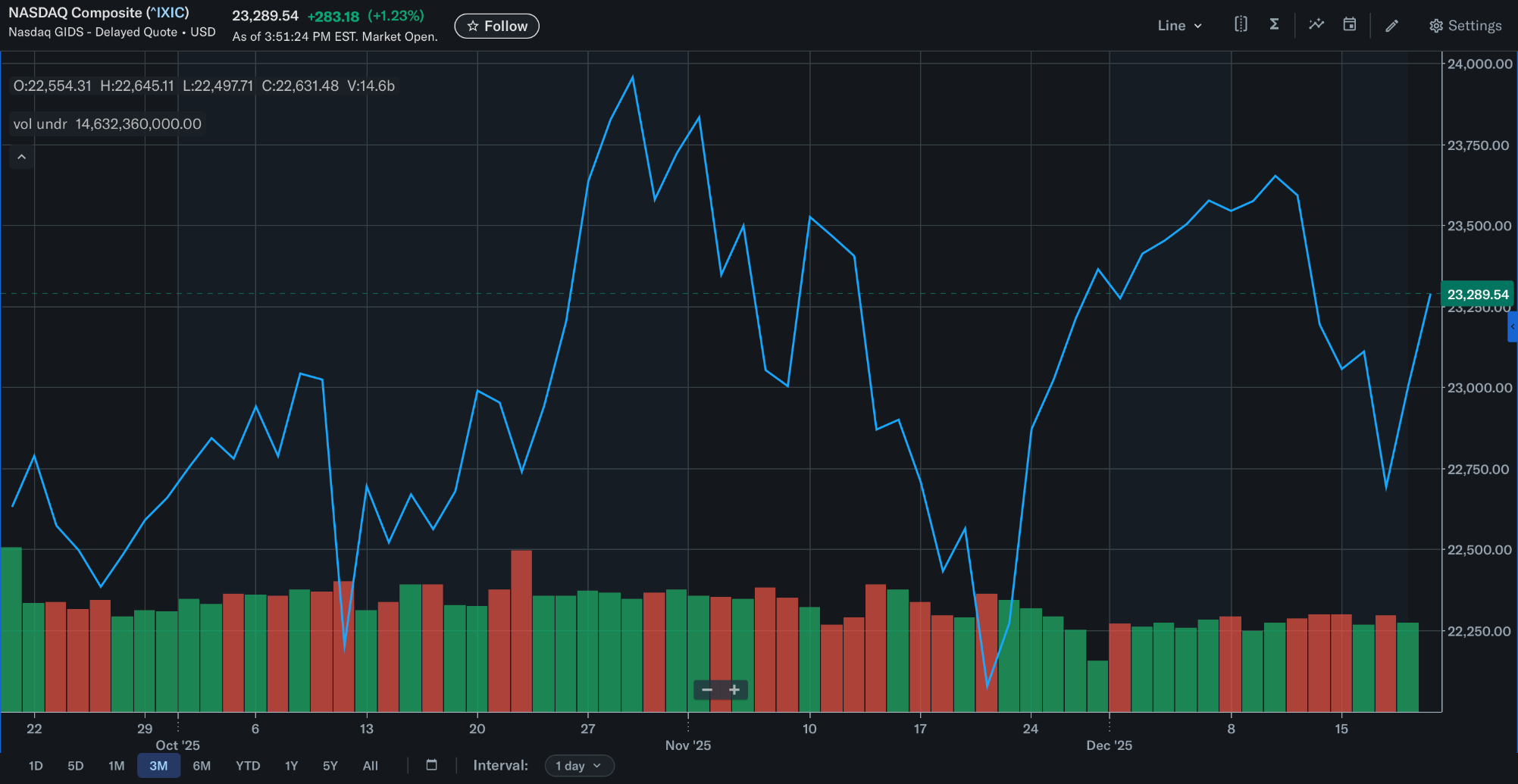
Contrary to the prevailing narrative, the stock market is actually pretty dull right now. There hasn’t been much movement. The NASDAQ Composite hit an all-time high of 24,019.99 on October 29. Today’s high sits at 23,296.05. Despite the constant doom-and-gloom headlines, we’re only about 700 points off that peak. And honestly, I wish it were more interesting. image
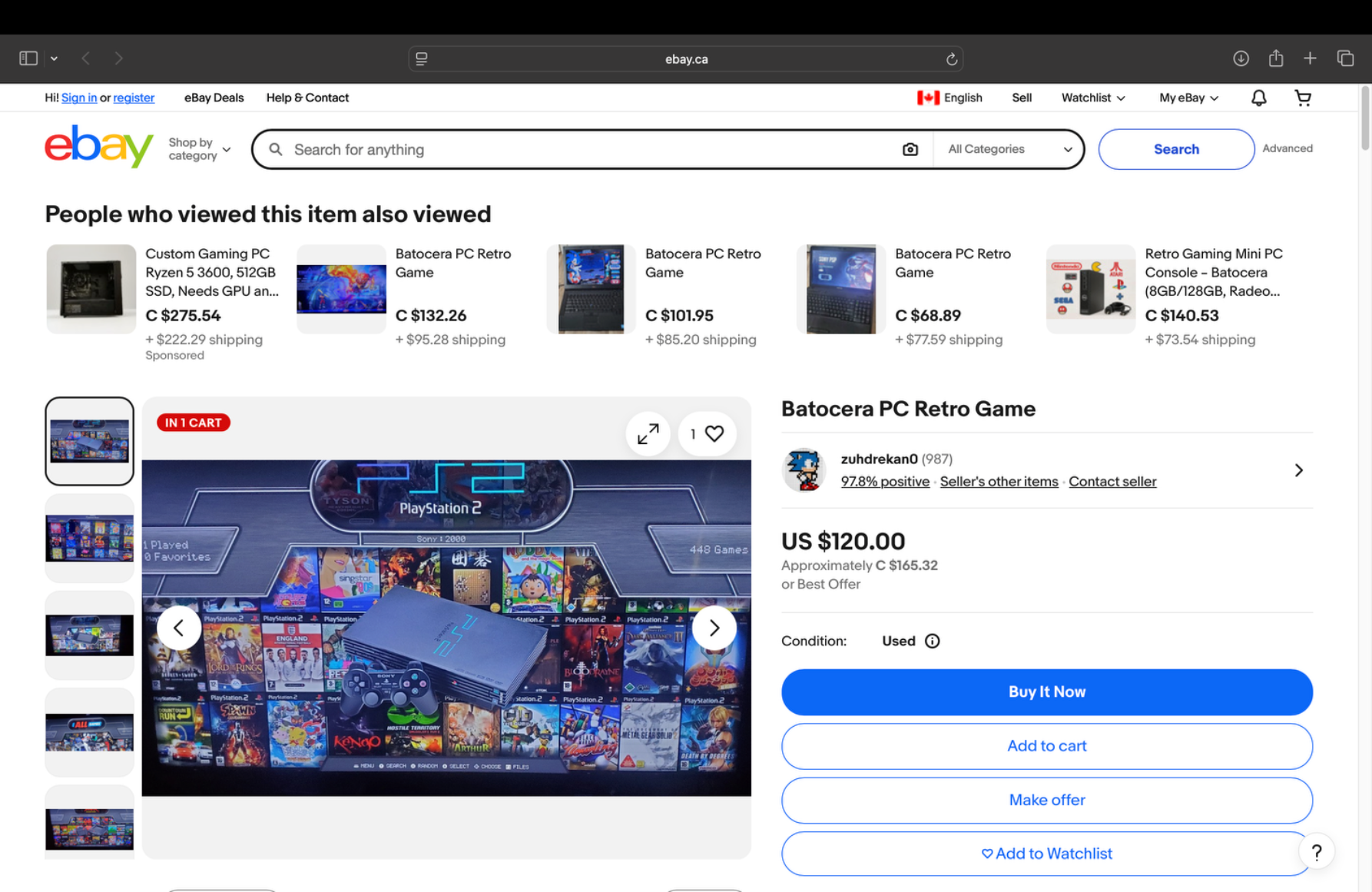
A lot of eBay sellers are now pushing refurbished gaming PCs with Linux preinstalled. The usual suspects are Batocera, Bazzite, or Nobara. Why? Because Microsoft pulled the plug on Windows 10, and Windows 11 is… let’s say *not* a compelling gaming upgrade. Linux runs *most* PC games just fine now, and in plenty of cases it actually performs better. Awkward. It’s going to get more interesting once the Steam Machine shows up. A whole bunch of people are going to have the same realization at the same time: “Wait. I don’t actually need Windows. And I definitely don’t want to throw away my old PC. I’ll just put Linux on it.” Others will look at the Steam Machine price and think, “Or… I could just build this myself.” And then there’s the refurbished route, which is already happening. eBay is absolutely full of mini-PCs for under $200. Slap Linux on it, call it a ‘console’, and suddenly that dusty office computer has a second life. image
Just measured my height. I’m 175cm. That means I’ve been wrong for years. I’ve been telling people I’m 5'6". I’m not. I’m just under 5'9". Off by roughly 3 inches. You always hear about men inflating their height. I did the opposite. I genuinely believed I was shorter and repeated it without thinking. Maybe I measured wrong years ago. Maybe I was slouching. Doesn’t matter. The correction is not trivial. It also means my BMI is lower than I thought. Meaningfully lower. That changes the math.
It’s been a strange year for gaming. On one hand, I’ve spent more money than ever. Not because prices went up, but because there’s been a flood of genuinely good work. When something is good, I buy it. That’s my tiny protest against slop. 2025 is the first year in a long time where the signal beat the noise. More actual art. Less nickel-and-dime nonsense. Indies weren't the also-rans, they ran the table. The Video Game Awards noticed, with indies dominating the major categories. That wasn’t an act of charity. Indies were so good, wins were inevitable. The other side of the ledger is uglier. Big money has been quietly backing out of games. For example, Ziff Davis bought Humble Bundle in 2017. Spun up Humble Games, a publishing arm. Then effectively shut it down in 2024, laying off the entire team and leaving developers hanging. Clean hands. Messy floor. That story repeats everywhere. Microsoft bought Bethesda and Activision, then closed multiple studios. Embracer bought half of Europe, then remembered math exists. Square Enix burned hundreds of millions chasing blockbuster hits that failed to land. Thousands of developers lost their jobs. At the time, I said the same thing I’ve said for years. Games are not franchises. They’re not IP. They’re the people who make them. Those people didn’t vanish. They didn’t wait politely for AAA to come back. They went solo. They formed tiny studios. They built new IP because they had no choice and nothing left to lose. Now we’re playing the results. It’s still choppy. Publishers are still folding. But the creative center of gravity has already moved. Big budgets are shrinking. Big ideas are not. Turns out, talent was never the safe bet. It was the only one.