
On a global level, women do 76.2% of all of the care work which is not remunerated, dedicating 3.2 times more time to these tasks than men, according to the International Labour Organisation (ILO). As an exercise, let’s ask ourselves: Who is researching, looking for, finding, choosing and closing the deal on a specialist, pediatrician or therapist to cover the range of needs at different stages of childhood? Who skips work when a child gets sick and can’t go to school? And why is it like this?
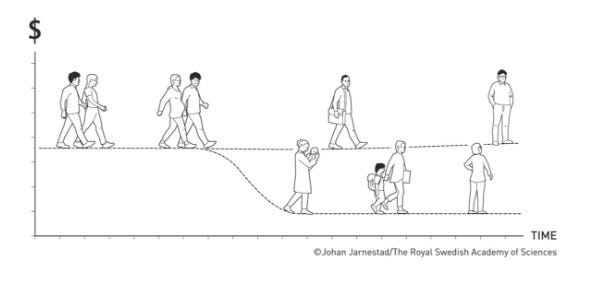
A good start is asking ourselves several questions: Why does one of us do the job better than the other? Do I have a natural talent for cleaning bathrooms? Why doesn’t the other one want to learn how to do that? And what’s behind it? A lack of trust? Reproducing co-dependency conditions? A rush of territorial control? If what I do — remunerated work or knowing everything about my children — gives me a determined role and space in a relationship, what happens if I let it go? Can I become expendable, or less desirable?
As a father, I go back to the role of son for a while and discover things about my parents. Their music, habits and upbringing. Is it harder now to be a parent than it was before? #fatherhood
How does it feel to live without a smartphone? ‘Almost spiritual’ Do you agree?
Nimona 🙃 #saturday #kids image
😍🧡🐣 image
It’s hard to strike a balance between how hard it is to be a father versus the joy and wholesomeness of having children. The yin and yang to paternity always fall short: either you whinge too much, or you’re too much of a romanticist. How do you avoid the binaries which are so definitive of this era - that you don’t have to be A or B, but rather A and B (and C, and all of the alphabet together). How to achieve stability and harmony between the opposing, different, complementary and interconnected forces that coexist in #parenthood?
Frequent Moves During Childhood Increases Risk of Depression, Study Finds–Here's What Parents Can Do. Do you agree?
The human brain can tackle one task at a time properly; switching tasks is another thing, though at the end you always end up doing one thing at a time. Think You're Multitasking? Think Again https://www.npr.org/2008/10/02/95256794/think-youre-multitasking-think-again
U.S. psychologist Joshua Ziesel described his effort to be more egalitarian by organizing his daughter's birthday. How hard could it be? It is basic arithmetic: if the man takes over more tasks, the other person will do less. Why? Because it is the just and equitable thing to do. What is the invisible work that we men have trouble seeing?