Indonesia passes controversial law expanding military’s role in governance
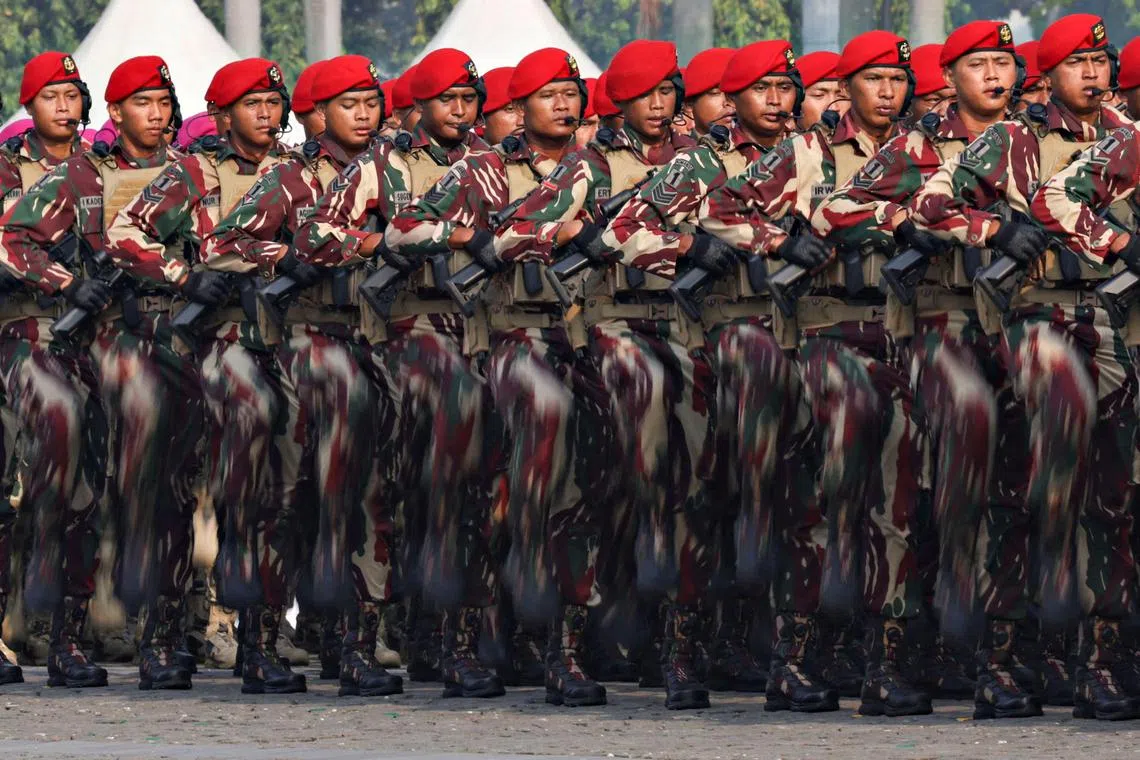
JAKARTA – Indonesia has passed a controversial law expanding the military’s role in governance, a move critics warn threatens democracy and revives the spectre of authoritarian rule under former president Suharto.
The revised Indonesian National Armed Forces (TNI) law of 2004 allows active military officers to take up key civilian positions without first retiring or resigning from service.
Previously, they could only serve in 10 government institutions, mainly those related to security and defence, including the State Intelligence Agency and the National Search and Rescue Agency.
The amendments increased this to 14 and included the Attorney-General’s Office and the National Counter-terrorism Agency.
The changes also extended the retirement age of officers, allowing enlisted and non-commissioned officers to serve until 55 years, and junior and senior commissioned officers until 58. The highest-ranking four-star generals can serve until they are 63, with a possible extension to 65, subject to a presidential decree.
The controversial revision was passed on March 20 during a plenary session of the House of Representatives, dominated by parties backing President Prabowo Subianto.
The move has revived memories of the TNI’s political dominance under Mr Suharto’s New Order regime, where military officers held key government positions under the “dwifungsi” or dual-function doctrine, allowing them to control governance and suppress opposition. This practice was abolished under the 1998 reforms.
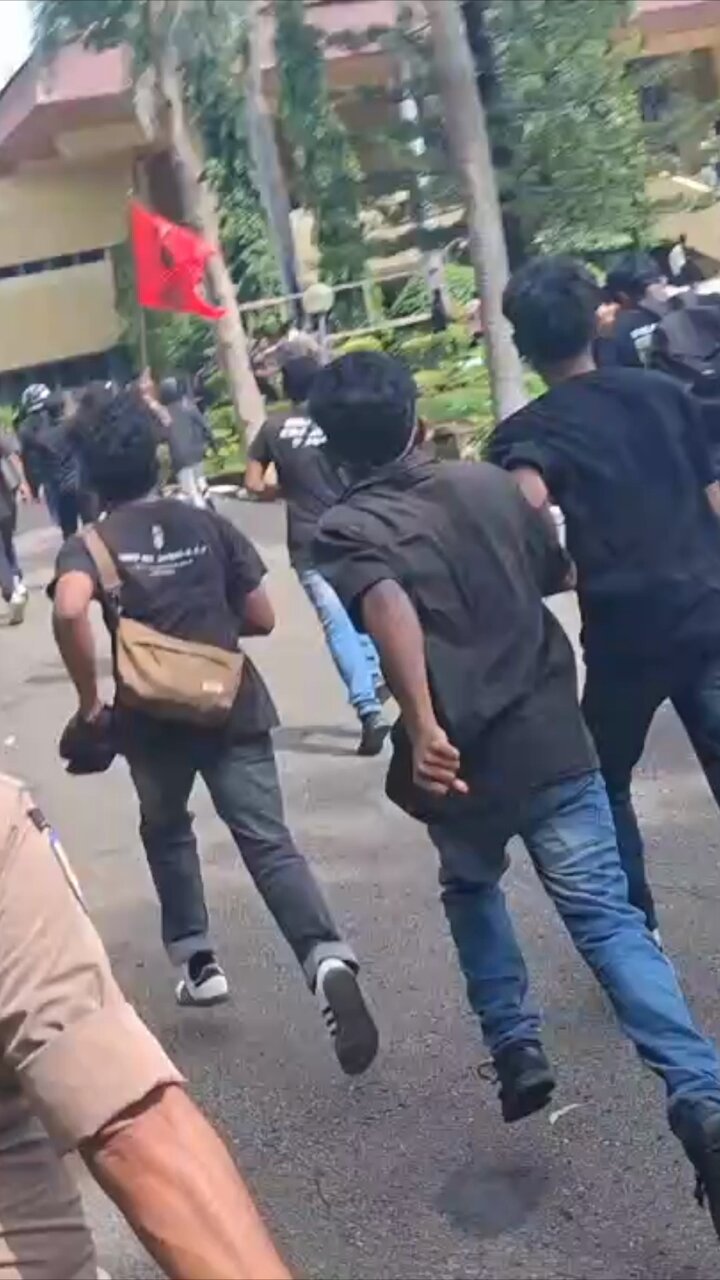
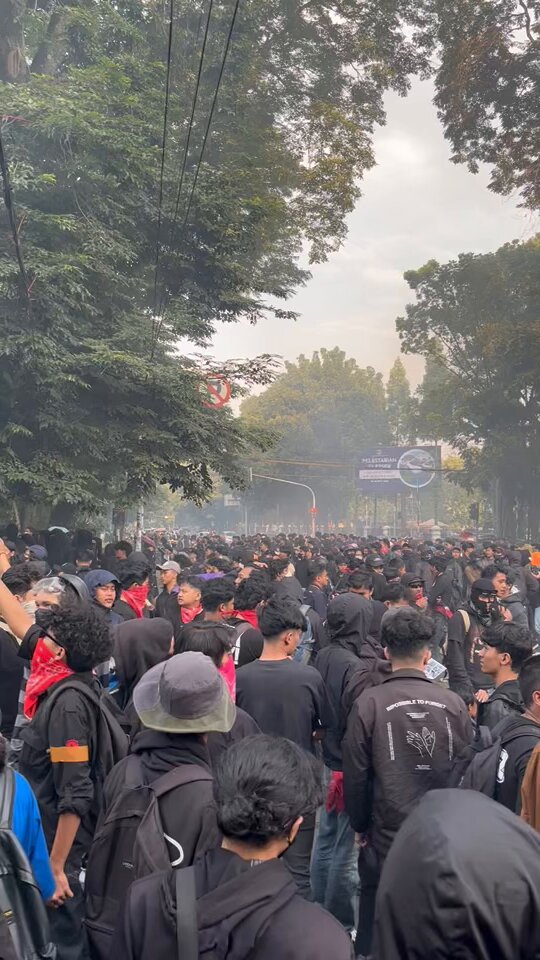
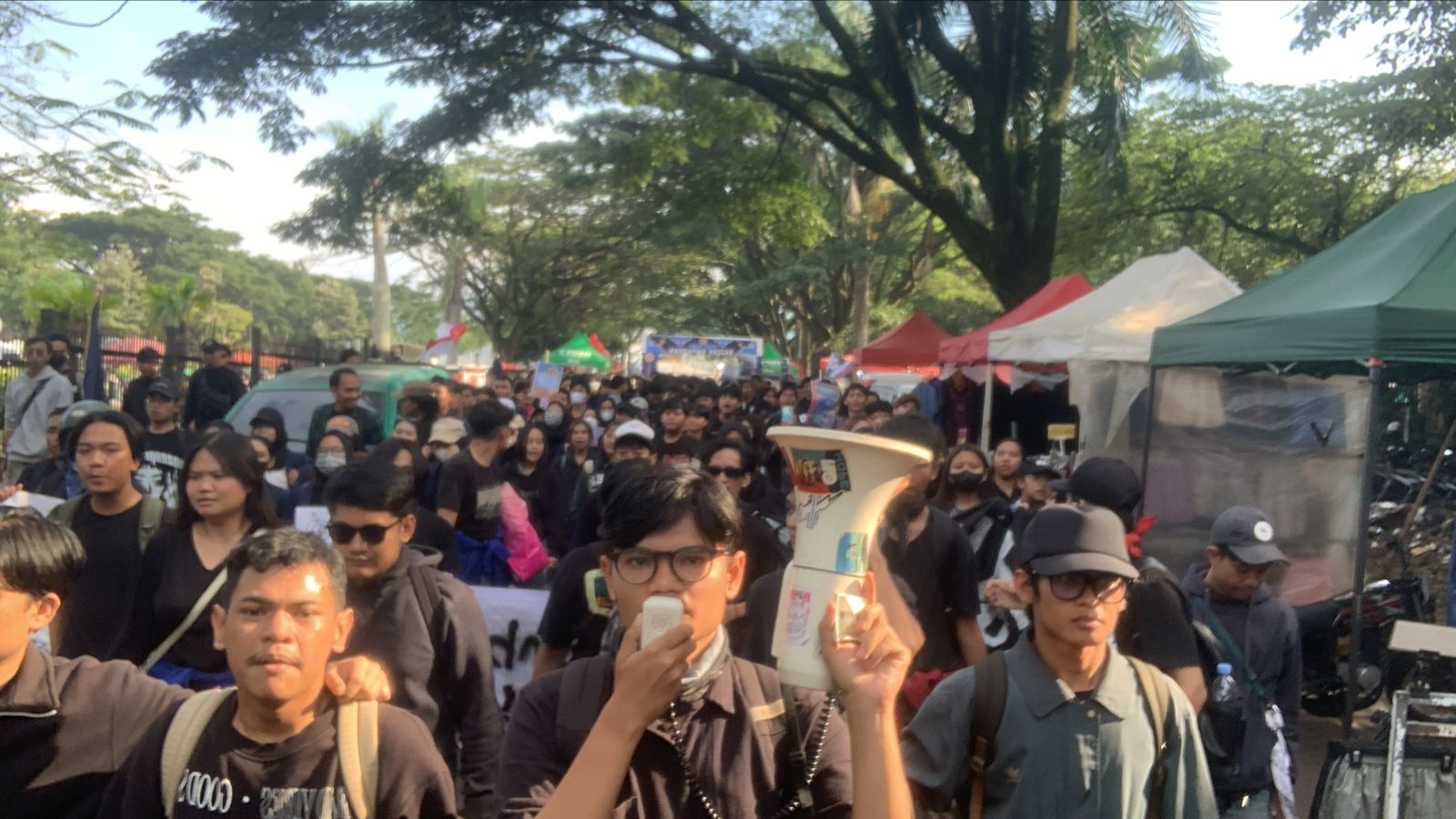
Since March 19, students and rights activists have protested in several Indonesian cities, including the capital Jakarta, urging Mr Prabowo to delay the law’s implementation and consult with civil society groups to address their concerns.
Carrying banners that read “TNI law will make us die” and “Reject TNI law, send TNI back to the barracks”, several hundred students along with rights activists gathered outside Parliament in central Jakarta on March 20. They tried to break the chains on the gate and climb onto it to hang a protest banner. Police dispersed protesters with water cannons as they threw stones and set tyres ablaze, demanding that lawmakers reverse the changes.
The Alliance of Student Executive Bodies, a student organisation representing various student associations from universities across Indonesia, posted on Instagram: “History has shown that military interference in civil affairs risks threatening democracy and civil supremacy. Let us not repeat the mistakes of the past.”
Mr Andreas Harsono, senior Indonesia researcher at Human Rights Watch, said in a statement on March 20: “President Prabowo appears intent on restoring the Indonesian military’s role in civilian affairs, which were long characterised by widespread abuses and impunity. The government’s rush to adopt these amendments undercuts its expressed commitment to human rights and accountability.”
The Bill, analysts say, was rushed through with little public debate, undermining transparency and democratic processes. Parliamentarians had fast-tracked deliberations, holding closed-door meetings with government officials at a five-star hotel in Jakarta just days before the vote.
Ms Diandra Megaputri Mengko, a defence analyst at the National Research and Innovation Agency, said allowing the military to occupy strategic civilian positions limits opportunities for civilians, as these roles are rarely returned to them.
She added that military decision-making follows a strict chain of command, in contrast to the open discussions of civilian bureaucracy. She also warned that if an active-duty officer holds a civilian position, dual loyalty could become an issue, potentially leading to governance conflicts.
She told The Straits Times: “If an officer’s institution holds a different view from the military, where will their loyalty lie – with the head of the institution or the military commander?
“For example, in a terrorism case, if the intelligence agency and the military disagree on identifying the culprits, an active-duty officer embedded in a civilian agency may feel conflicted. Whose directive will he follow?”
Mr Usman Hamid, executive director of Amnesty International Indonesia, in a statement on March 16, said: “Why was it not done in an open manner? Why did it seem rushed? We urge that the process of discussing the TNI Bill be conducted in accordance with the principles of good governance.”
Public trust in the military remains high, with surveys by Indikator Politik Indonesia and Litbang Kompas showing it is the most trusted institution in the country. But this reputation was built on the post-1998 reforms, which separated the military from the police and removed it from political and business affairs.
Since taking office in October 2024, Mr Prabowo, a former army general, has made several Cabinet appointments that breached the TNI law. This included the appointment of his personal assistant, Major Teddy Indra Wijaya – an active military officer – as Cabinet secretary, a position not listed among those permissible for active military personnel.
Other appointees included Major-General Novi Helmy, an aide to the armed forces general, as the head of the national food agency Bulog, Major-General Maryono as the head of internal supervision affairs at the Transportation Ministry, and Major-General Irham Waroihan to helm internal supervision affairs at the Agriculture Ministry.
#Indonesia #darkindonesia
The Straits Times
Indonesia passes controversial law expanding military’s role in governance
Critics warn the move threatens democracy and raises the spectre of former authoritarian rule. Read more at straitstimes.com. Read more at straitst...