Fresh out: Satoshi Scoop brings this week's Bitcoin bits 🍴 - Rust library for descriptor encoding cuts size by ~40% @npub1awj9...5xp2 - Fee estimation library Augur open-sourced, 20–30% more efficient than Bitcoin Core - The rich get richer: unintentional forks' impacts on Bitcoin mining fairness - How secure is your Bitcoin wallet's mnemonic seed phrase? - RGB releases consensus v0.12 - Cross-network de-anonymization via ADDR fingerprinting @danielabrozzoni - CLINK: Nostr-native standards for Lightning Network interactions - Fairgate breaks BitVM3 authenticity with minimal counterexamples - Babylon's 2025 roadmap: BTCFi via BitVM - StarkWare x Kakarot: ZK proofs on everyday devices @npub1wmwd...n7j4 - Rarimo launches wrapless BTC collateral protocol and bonus reads: - What would Stripe L1 look like? - Control as a spectrum: tailoring the right model Full scoop EN: https://yakihonne.com/naddr1qvzqqqr4gupzq046tm6pkgrtr4y73vd7wfqa06k4mkrmwdexrknycw7quf637gawqq24vttevft5veej09cx7wzetam8vuphfge5sucfejn CN: https://yakihonne.com/naddr1qvzqqqr4gupzq046tm6pkgrtr4y73vd7wfqa06k4mkrmwdexrknycw7quf637gawqq25khejf964gkzgx3p8jvzzwgcj6kr5fe6kj6xcfrg image
Spawned this write-up after deploying Spawn 😎 A light post on how multiprocessing & IPC are coming to CKB — explained simply. Not just cool, but actually useful. EN: https://yakihonne.com/naddr1qvzqqqr4gupzq046tm6pkgrtr4y73vd7wfqa06k4mkrmwdexrknycw7quf637gawqq2427pddaxhzn282ck52s2wwfghwwzs89skyvwsulr CN: https://yakihonne.com/naddr1qvzqqqr4gupzq046tm6pkgrtr4y73vd7wfqa06k4mkrmwdexrknycw7quf637gawqq2hs53sga9rghejdf6x6463f359x7jyx9axcmv4xd0 image
🧑‍🍳 What's cooking in this week's Satoshi Scoop? 🟠 Bitcoin & Scaling - New OP_CAT-based Winternitz post-quantum signature scheme saves 8,000 vbytes - Safely spending UTXOS using quantum-vulnerable signatures - Video | Bitcoin research prize 2024: The parallel invention of FROST & MuSig2 - Paper | Adaptive security proofs for FROST - Where did all the Bitcoin transaction fees go? - Three ways to rescue a stuck Bitcoin transaction - Embedded onion messaging is a bad design: should be an overlay layer - StarkWare launches STARK verifier for zKVM 3.0 @StarkWare - DFINITY enables Bitcoin smart contracts on internet computer - BOB launches BitVM bridge testnet for native Bitcoin DeFi - How BitVMX builds Bitcoin's off-chain computation Stack - How Citrea enables SNARK verification with BitVM2 @npub1w26x...pvz0 🤹 Beyond the chain - The rise of Bitcoin stocks and bonds: Signs of Bitcoin monetization @Lyn Alden - Inflation is multiple taxation @npub17u5d...t4tp Catch up here: EN: https://yakihonne.com/naddr1qvzqqqr4gupzq046tm6pkgrtr4y73vd7wfqa06k4mkrmwdexrknycw7quf637gawqq2nwd3cfd58sa69fsenqen9varhssjfddr9jw6kd5e CN: https://yakihonne.com/naddr1qvzqqqr4gupzq046tm6pkgrtr4y73vd7wfqa06k4mkrmwdexrknycw7quf637gawqq2k5hm52drxk5eeg4jnwenef3tnzwz223yrqfj2zvy image
Satoshi Scoop Weekly is here 🧂 CKB completed its Meepo hardfork. Big step forward for us. Meanwhile, Bitcoin scaling experiments keep rolling: BRC upgrade, BitVM variants, new bridges... - CKB unlocks multiple VM support and modular script interactions - BRC20 set for an upgrade: BRC2.0 coming to Bitcoin mainnet mid-August - Garbled circuits: The key and cost of BitVMX scalability - GOAT network uses Label Forward Propagation to overcome BitVM3 scalability limits - BitVM2 paper updated with mainnet-proven production implementation - Union Bridge: Trust-minimized BTC-Rootstock bridge via BitVMX @npub1yhu7...2vjw - From BitVM1 & 2 to BitVM3 and Garbled Circuits: David Tse on Bitcoin bottlenecks and off-chain optimization - Bitcoin mining environmental debate rekindled as DARI rebuts hot papers and calls for data-driven analysis - Podcast | Eli Ben-Sasson on the history of ZKPs and their role in Bitcoin Catch up here👇 EN: https://yakihonne.com/naddr1qvzqqqr4gupzq046tm6pkgrtr4y73vd7wfqa06k4mkrmwdexrknycw7quf637gawqq24xe2nxe35zens24nxcve32ejh53njvayyj39kyvx CN: https://yakihonne.com/naddr1qvzqqqr4gupzq046tm6pkgrtr4y73vd7wfqa06k4mkrmwdexrknycw7quf637gawqq2kx7rdf3rnxeze2f692wz3x9rxkjpkwefrxskz0ld image
✅ Meepo Hardfork completed at epoch 12293. Spawn syscall and CKB-VM v2 now live. https://explorer.nervos.org/hardfork If your node isn’t syncing blocks, please upgrade to the latest version. ⚙️ Upgrade:
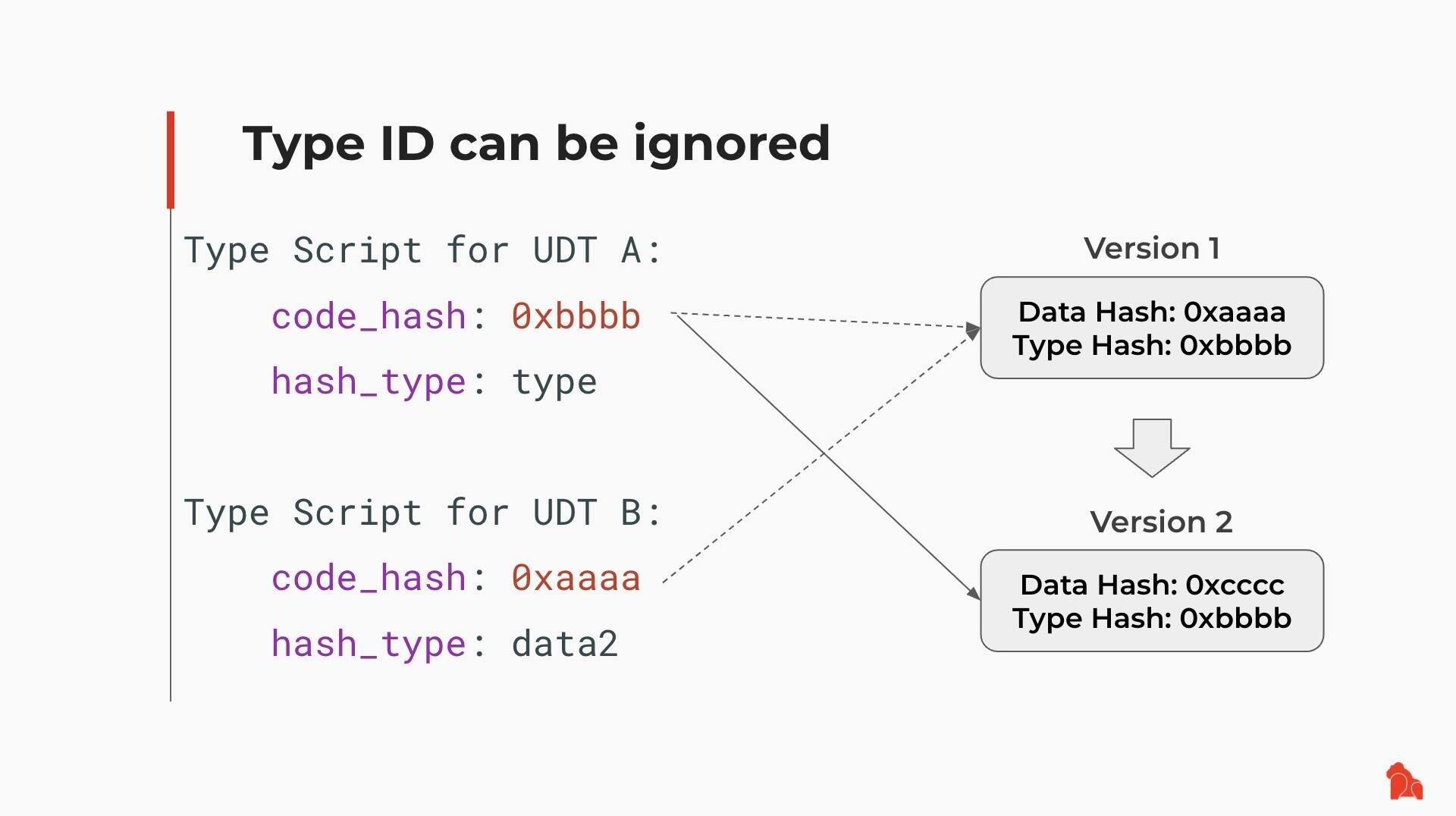
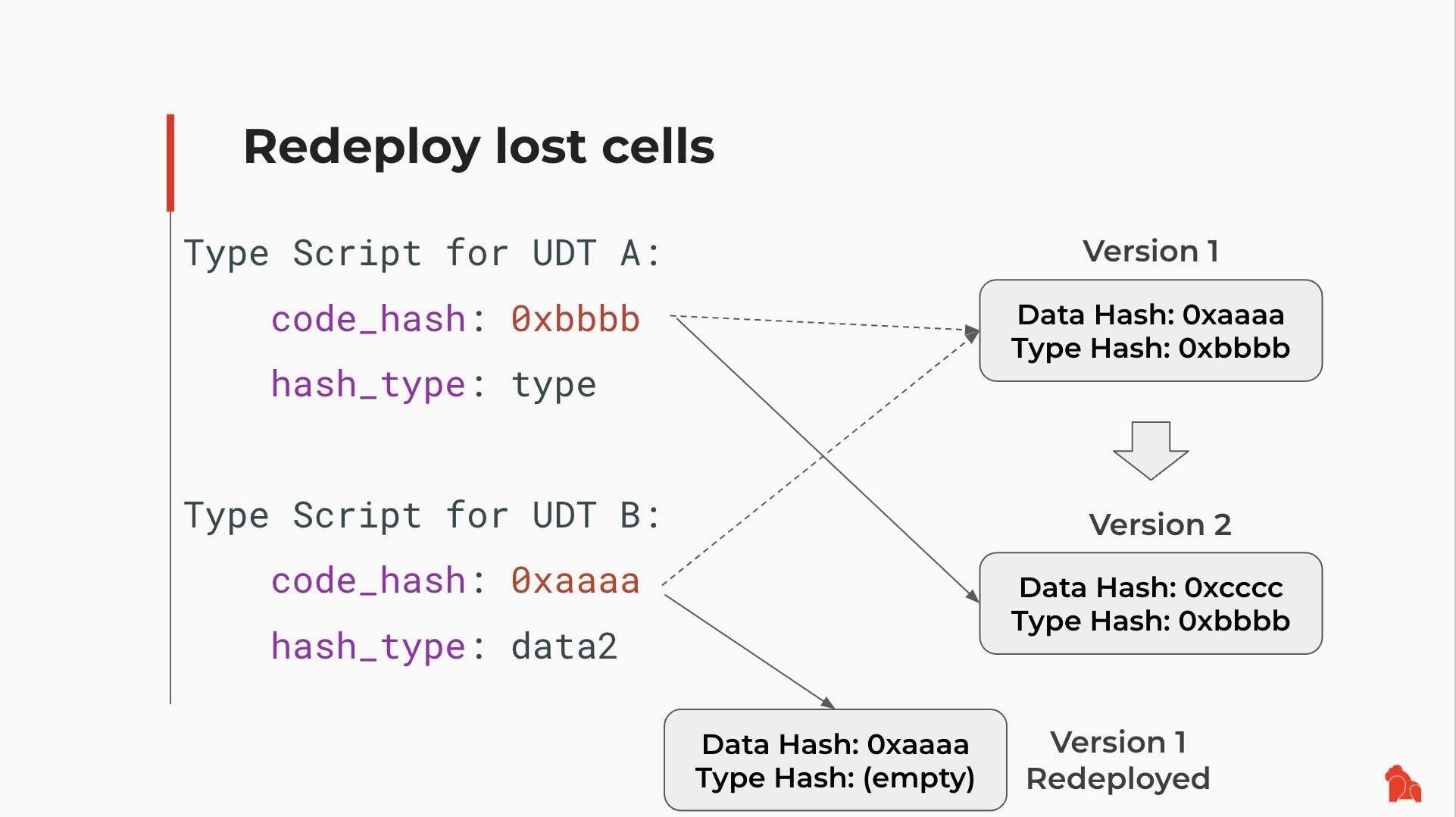
Fork Smarter, Not Harder: CKB's Forking Philosophy Explained 1/ In most blockchains, hardforks often imply discontinuity, where: 😕 Users risk losing access to assets. 🤨 Developers are forced to upgrade—like it or not. CKB takes a different approach: it decouples upgradeability from forced consensus. 🔐 Assets remain safe during upgrades. ⛓️ Users aren't forced to adopt new protocols. image Here's how it works: 2/ Protocol-Level Flexibility: Fork Without Split CKB is built on the UTXO Cell model, where each user's assets are stored in the discrete Cells—each with its own versioned Lock Script. After a hardfork, each Cell continues to use the VM version it was deployed with, where: - Existing Cells remain on the old VM version. - Users are not forced to upgrade the Scripts. - They opt in new features — if and when they want to. This is made possible by introducing multiple hash_type variants (type, data, data1, data2, ...), each pointing to a different version of the code. 🤝 Multiple versions of Scripts and VMs coexist on the same chain. ⛓️ Upgrades won't split the network. 🔐 Users keep full control over both the assets, and the rules that govern them as well. 3/ Why It Matters 💡 Most chains treat a hardfork as a reset — override old logic and force everyone to upgrade. CKB avoids this. Multiple versions run side by side on the same chain. This eliminates the tension between network evolution and asset preservation. 4/ Script-Level Upgrade Workflow: Type ID + Lock Script CKB provides Type ID + Lock Script model for managing script upgrades: 1️⃣ Initial Deployment: A Script developer deploys Scripts with upgrade plans in mind: Using Type ID to assign a stable identity but allows future updates. 2️⃣ Iterative Upgrade: Fix bugs, add new features, and change rules—the deployed code may undergo several upgrades using Type ID. 3️⃣ Code Freezing: At any point, one can freeze the code by modifying the Lock Script to be immutable. 5/ Script Developer & dApp Developer: Separate Roles CKB separates two responsibilities: - Script Developers: Deploy the Script and decide if it is upgradeable, via Type ID + Lock Script. - dApp Developers: Choose how to reference a Script in their applications—fixed or upgradable. Their options: 🔹Reference by type hash → Auto-follow the latest upgrades 🔹Reference by data / data1 / data2 hash → Stay fixed to the trusted version, ignoring the new one Either way, dApp devs don't need to fear upstream changes breaking their logic or being kicked out of the network. 6/ This separation enables: - Reusable Scripts across multiple dApps - Opt-in upgrades — no forced coordination - Long-term stability where needed, flexibility where desired 7/ Example: UDT Script Upgrade Suppose someone deployed a UDT (User-Defined Token) Script using Type ID and created two tokens: - UDT A uses type as hash_type - UDT B uses data2 as hash_type Later, the UDT Script is upgraded from Version 1 to Version 2: - UDT A automatically adopts Version 2 - UDT B keeps running on Version 1 image 8/ Even if Version 1 is no longer present in a live Cell, it's not lost. You can retrieve it from chain history, redeploy it, and use it again. Old logic remains accessible—by design. image 9/ A Better Forking Philosophy CKB doesn't follow the rigid "hard vs. soft forks" binary. Instead, it offers: ✅ User autonomy ✅ Developer control Assets stay protected. Scripts remain stable—or upgradeable. No one is forced to choose between safety and progress. It's a better way to fork. And it works. 10/ Reference Links Rethinking Forks: The Philosophy Behind CKB's Network Upgrade Design: Recommended Workflow for Script Upgrades: How CKB Turns User Defined Cryptos Into First-Class Assets: https://blog.cryptape.com/how-ckb-turns-user-defined-cryptos-into-first-class-assets CKB, Version Control and Blockchain Evolution: CKB VM Version Selection: 📃.md

Your fresh dose of updates from the Bitcoin ecosystem is ready! 🍊 Catch up now: https://blog.cryptape.com/satoshi-scoop-weekly-27-sep-2024 🧡 * Shielded CSV: Private and efficient client-side validation, enhancing Bitcoin privacy at 100 txs/s * Implementing private offline Lightning Network payments with BOLT12 * UTXOzkp: Proving Lightning channel presence on-chain without revealing specific UTXOs * Expanding DNS-based payment instruction resolution to identity and data verification via DNS TXT records * NOIST: A non-interactive, single-round t-of-n threshold signing protocol * New evidence of mining pool centralization: similar Block templates * Entering Bitcoin development from a Rust perspective * Is Babylon’s sustainable yield narrative valid? * What exactly constitutes client-side validation? 🤹 Other Stuff * The importance of decoupling product decision-makers from service, as seen from the Telegram founder’s arrest * Cracking the Onion: how German law enforcement is breaking Tor's anonymity * A list of privacy-friendly tools covering crypto, desktop, and mobile devices @`mynymbox` * Are real-world assets (RWAs) a safe haven for on-chain yields? * Mining heater: enjoy hot coffee while mining Bitcoin