SideSwap, a #Bitcoin wallet and DEX on the Liquid Network, aims to bring capital markets to Bitcoin. SideSwap allows you to: βœ… Peg in and out to/from the Liquid Network βœ… Hold Liquid assets βœ… Swap between Liquid assets and Liquid BTC Launched in 2021, it's open-source, available on desktop, iOS, and Android. As a non-custodial p2p DEX, it offers atomic swaps with low fees (0.1% trading fees, 0.6% swap spread). No KYC is needed except for security tokens trading. With confidentiality and interoperability benefits, it supports Jade hardware wallets by Blockstream @Blockstream and offers features like CSV transaction export. image Try SideSwap here:
MUSQET @MUSQET is building a unified payment terminal for both debit/credit card and #Bitcoin payments. Have you ever tried to pay with BTC, but the staff doesn't know how to use the app? Not a problem with MUSQET, because the staff will use it every day! image This unified device aims to streamline customer-merchant interactions. Businesses adopting MUSQET receive a dedicated self-custodial Lightning node from Voltage @npub15klk...4m73 , handling channels and liquidity. Transaction fees stand at 1%. Additionally, MUSQET offers a Bitcoin-only merchant app. Based in the UK, its target market is primarily UK businesses. Regulatory challenges may arise due to the combined Bitcoin and traditional card transactions. Merchants can retain BTC or in the future, also convert it to GBP through an exchange partner. Future features also include NFC payments with Bolt cards and rings @Bolt Card @npub10ran...zmsc, plus e-commerce capabilities.
BitStream, decentralized file hosting with #Bitcoin, introduced by Robin Linus from ZeroSync in late 2023! Explain it to me like I'm an 80 IQ PLEB! Ok, here we go! BitStream introduces decentralized file hosting powered by Bitcoin, allowing users to monetize excess bandwidth and storage. Users pay in bitcoin to access data without intermediaries, facilitated by verifiable encryption and atomic swaps. In simple terms: If I run a server and give you data, you pay me in bitcoin in exchange for using that data. A peer-to-peer exchange of data for digital gold. In BitStream, clients (users who download files) and servers (users who distribute files to the network) use optimistic fraud proofs to prove the validity of the files. The server encrypts the file. When the client is decrypting the file, it can raise a fraud proof to challenge the server in case something doesn't add up regarding the validity of the file. Files are split into fixed-sized chunks and then hashed into a Merkle tree (a data structure where blocks of data are hashed together). By breaking the files into hashed components, the system can quickly confirm the accuracy of the files. All this would happen outside the Bitcoin blockchain, which would only be used to address disputes (and to finally verify the whole process back on-chain.) In order to download files, a client needs to purchase decryption keys with BTC to decrypt the encrypted files that the server is hosting. The server locks some BTC in a Hashed Time Lock Contract (HTLC). This is its economic commitment to act honestly. If the server's file can't be decrypted properly with the client's decryption key, the server risks losing its bond in the HTLC. OP_CAT soft work could enable direct implementation on Bitcoin, but BitStream could already be built on e.g. Liquid Network, a Bitcoin sidechain. BitStream aligns client-server incentives, ensuring profitable scalability without over-engineered designs or complex token structures, utilizing Bitcoin's sound economic model for a balanced decentralized hosting network. Here's the white paper: πŸ“„.pdf image
#Bitcoin halvings will have less of an impact on the price, especially now after the approval of the ETFs. Currently, the inflation rate of BTC is 1.67%. After the halving of 2024, it will drop under 1% for the first time, to 0.83%. Fairly meagre drop in percentage points, compared to the drop from around 30% to 15% (2012 halving), around 10% to 4% (2016 halving), or even the latest halving of 2020 (from 4% to 1.8%). Sure, there will be a supply shock a few months after the halving, especially when individuals, companies, countries and central banks will realize what kind of scarce, pristine and neutral asset they are dealing with. But this supply shock will only act as a "boost" to the ETF, institutional and nation-state demand which are really running the market. It's the demand that will be running the show in 2024-25. image
@npub10pen...n34f is a non-profit supporting open-source #Bitcoin development. If you benefit from Bitcoin (number go up or better financial access), you should consider giving back to the development efforts. OpenSats addresses the free-rider problem where developers aren't directly paid for their contributions. The Bitcoin protocol itself only incentivizes mining and hashrate, but it doesn't have a system in place to reward developers. OpenSats aims to incentivize innovation by funding developers and ancillary projects. Donations can be made to various funds or specific projects vetted by a reputable board. Operational costs are covered separately. OpenSats uses @npub155m2...dcvg to receive BTC donations (both on-chain and Lightning), so no part of the donations is wasted to pay any middleman fees. Donations are tax-deductible in the US. You don't have to be a developer to apply. OpenSats also funds designers, code reviewers, researchers, educators etc. Automatic donations via @npub1wxl6...hcan's AutoZap are also possible. Supporting open-source Bitcoin development with even small contributions could significantly advance the Bitcoin ecosystem. What if every pleb in the world donated only $1 a month to open-source Bitcoin development? Maybe that way we could leap and bound closer to the Bitcoin standard and the Citadel? Have your HODL stack in cold storage and set up a small fraction for spending and donating to keep the Bitcoin ecosystem going and your Bitcoin bags pumping! Finally, a short clip from Kevin Rooke's podcast with OpenSats founder Ben Price @abitcoinperson where describes the reasons for creating OpenSats:
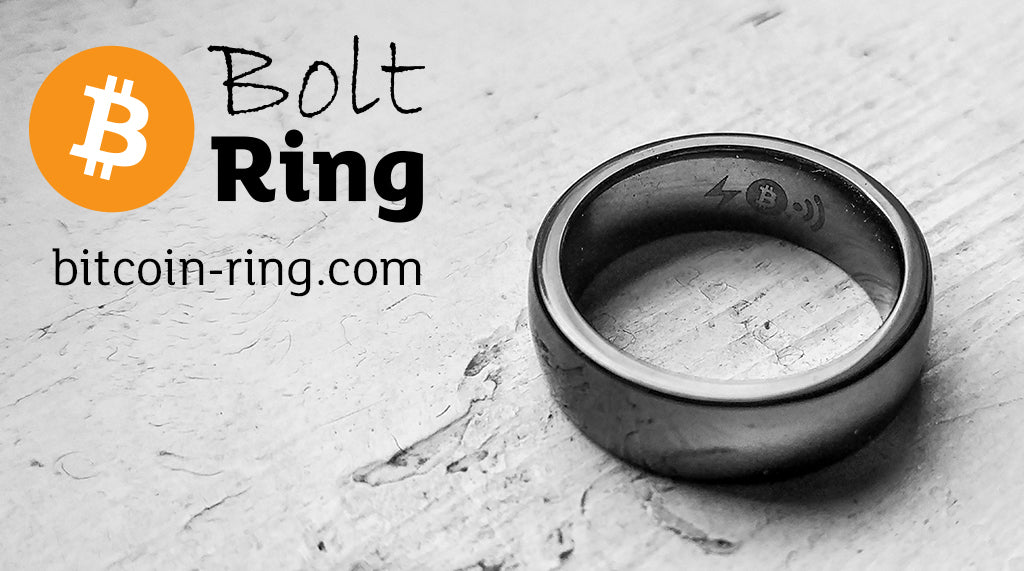
Bitcoin Ring is an NFC tap-and-pay ring linked to a Lightning wallet, offering convenient payments. Leave your phone home when going to the beach and pay for pupusas with your ring! Built on the Bolt Card protocol, it functions like a Bolt card but with a ring replacing the card. The ring itself doesn't store #bitcoin but connects to a Lightning wallet. Safety concerns include potential NFC interception, so treat the funds on the ring wallet like pocket cash! Access to the Lightning wallet remains even if the ring is lost. You can set transaction and spending limits for extra security. The ring is made of ceramic, and it’s water, dust, and scratch-resistant. Opsec seems good too: no flashy BTC logos etc. When BTC hits $1 million, you don't want your finger to be chopped off by an envious no-coiner who doesn't understand that the BTC is not on the ring! image