@npub15546...5l5z
https:
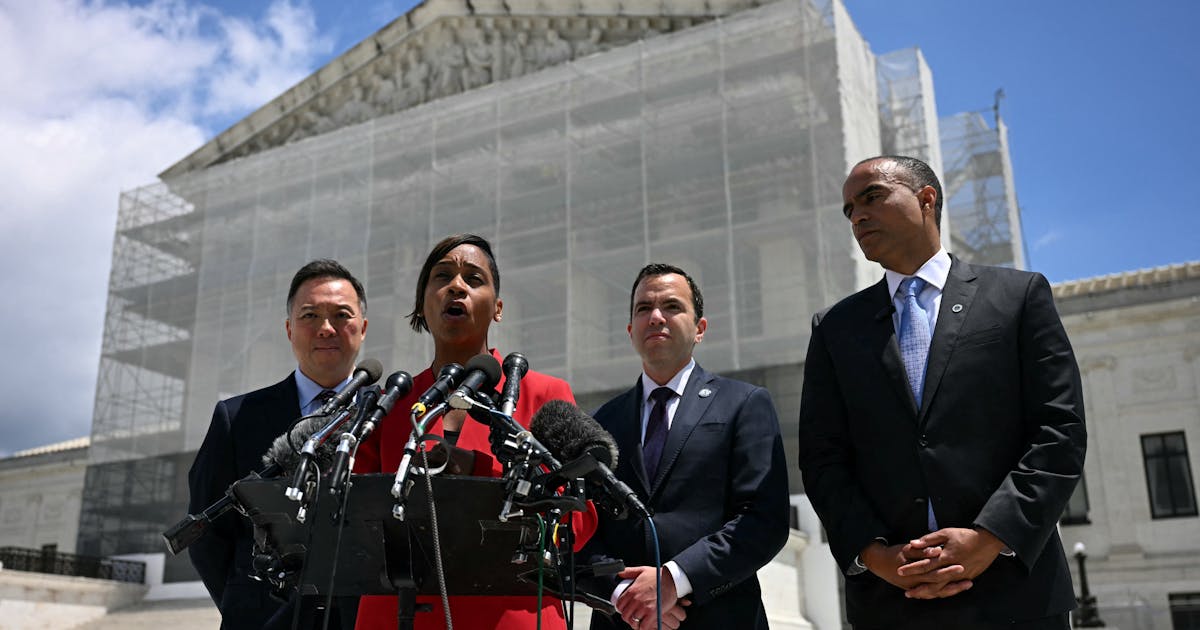
President Donald Trump wants to do a lot of things as president. A fair number of them appear to be either illegal or unconstitutional. To that end, Trump wants to make it harder to stop him in court and easier to keep doing things after courts have found them to be illegal. The Supreme Court’s nine justices appear to be divided on whether to let him win.Oral arguments can be an imperfect indicator of how the court will ultimately decide a case. Tuesday’s session added to the uncertainty by giving no clear impression on some of the weightier matters in play. Some of the conservative justices appeared uneasy with the president’s lackadaisical approach to birthright citizenship. It’s also unclear whether a majority of the justices are prepared to support Trump’s demand to defang the lower courts. “On the day after it goes into effect—this is just a very practical question, how it’s going to work—what do hospitals do with a newborn, what do states do with a newborn?” Justice Brett Kavanaugh asked Solicitor General D. John Sauer. He replied that he didn’t think they would do anything different because the order only disallows federal officials from accepting documents that have the “wrong designation of citizenship.”“How are they going to know that?” Kavanaugh continued. “The federal officials will have to figure that out, essentially,” Sauer replied. That did not appear to satisfy Kavanaugh. “How?” the justice asked. “So you can imagine a number of ways that the federal officials could—,” Sauer began to say, before Kavanaugh interjected. “Such as?” he asked.Sauer finally said that the officials could “require a showing of documentation showing legal presence in the country,” which only drew additional skepticism. “For all the newborns?” Kavanaugh said. “Is that how it’s going to work?”At the same time, many of the justices aired their concerns about the potential warping effects that nationwide injunctions from federal district courts can have on the nation’s political system. “This case is very different from a lot of our nationwide injunction cases in which many of us have expressed frustration at the way district courts are doing their business,” Kagan told Kelsi Corkran, who argued on behalf of the immigrant plaintiffs.She noted that because litigants can choose friendly jurisdictions, they can have a fairly good chance of success when asking for a nationwide injunction against the federal government. “You know, in the first Trump administration, it was all done in San Francisco, and then, in the next administration, it was all done in Texas,” Kagan noted.The case, Trump v. CASA, is about Trump’s executive order that purported to no longer recognize birthright citizenship for some children born on U.S. soil to non-citizen mothers who are either “unlawfully present” in the country or whose presence is “lawful but temporary.” It did not apply retroactively, nor does it affect children with at least one U.S. citizen parent or who are born to green-card holders.In practical terms, Trump’s order would direct federal agencies to no longer provide documents to those children that would attest to their U.S. citizenship. More importantly, it would force those agencies to no longer recognize state or local documents that do the same. How this would work in practice is unclear, but the goal appears to be to deny documents like Social Security cards and passports to the targeted children.Whatever the planned outcome may be, the order is unconstitutional on its face. The Fourteenth Amendment’s Citizenship Clause is unequivocal: “All persons born or naturalized in the United States, and subject to the jurisdiction thereof, are citizens of the United States and of the State wherein they reside.” Congress and the states ratified that clause in 1869 to overturn Dred Scott v. Sandford, the infamous 1857 case where the Supreme Court held that people of African descent could never be citizens, and to indisputably extend citizenship to all formerly enslaved people in the South during Reconstruction.By virtue of that clause, anyone born on U.S. soil is an American citizen. Courts have traditionally interpreted the “subject to the jurisdiction” limitation to apply to children born to foreign diplomats stationed in the United States, since it could interfere with their ability to acquire citizenship in their parents’ country, and to Native Americans living under tribal jurisdiction. The latter category became defunct with the passage of the Indian Citizenship Act of 1924, which extended citizenship to all Native Americans in the country.Some opponents of birthright citizenship, such as the Trump administration, have claimed that it does not apply to children born to foreign-born parents. There is ample historical evidence that the amendment’s drafters meant for it to apply as broadly as possible, and the Supreme Court itself accepted that approach in the 1898 case Wong Kim Ark v. United States, where it held that a California-born man whose parents were subjects of the emperor of China at the time was an American citizen from the moment of his birth.For that reason, every federal court that has heard a legal challenge to Trump’s order has blocked it from taking effect. When the Justice Department asked the Supreme Court to intervene, however, it did not ask the justices to review the cases on the merits. Instead, the administration asked the high court to review the lower courts’ practice of issuing nationwide injunctions against the executive branch when they block federal policies.Nationwide injunctions have bedeviled presidents from both parties over the last few administrations. With Congress hamstrung by the Senate’s filibuster and the House’s gerrymander-fueled hyperpartisanship these days, the White House has often sought to use existing legal powers in novel ways to carry out the agenda that it promised to voters. As a result, the Obama, Biden, and Trump administrations in particular have faced legal challenges against nearly every policy change that they try to make.In some cases, federal judges have issued what are known as nationwide injunctions. (Some critics call them “universal injunctions,” but there is no evidence that they are obeyed on other planets or galaxies.) Courts generally have broad powers to order remedies for the litigants in a particular case. With nationwide injunctions, federal judges have ordered the federal government to not apply a policy change beyond the litigants themselves. In the birthright-citizenship cases, for example, the lower-court judges ordered the Trump administration not to enforce the executive order against anyone, not just the plaintiffs themselves.Some of the justices have criticized this practice for exceeding a court’s traditional powers. “The real problem here is the increasingly common practice of trial courts ordering relief that transcends the cases before them,” Justice Neil Gorsuch wrote in a concurring opinion in 2020, which was joined by Justice Clarence Thomas. “Whether framed as injunctions of ‘nationwide,’ ‘universal,’ or ‘cosmic’ scope, these orders share the same basic flaw—they direct how the defendant must act toward persons who are not parties to the case.”Presidential administrations are obviously not happy with this state of affairs either. Since senators have significant influence over the lower-court appointments in their states, federal judges in many states tend to be ideologically homogenous. Trump has suffered frequent legal defeats at the hands of judges in California, New York, and other blue states. Obama and Biden had to run practically everything they did past a handful of federal judges in Texas thanks to forum-shopping by conservative legal groups. That frustration even led Elizabeth Prelogar, the Biden administration’s solicitor general, to urge the justices to reconsider nationwide injunctions in a court filing last December.Sauer, Prelogar’s successor, urged the court to rein in the injunctions in his opening statement on Thursday. “They encourage rampant forum-shopping,” he told the justices. “They require judges to make rushed, high-stakes, low-information decisions. [...] They operate asymmetrically, forcing the government to win everywhere while the plaintiffs can win anywhere. They invert the ordinary hierarchy of appellate review. They create the ongoing risk of conflicting judgments.”At the same time, Trump’s executive order on birthright citizenship showed how they can be an important check on presidential power. The asymmetry noted by Sauer would go the other way in a world without nationwide injunctions: Every parent who gives birth to a child potentially covered by the executive order would have to sue on their child’s behalf to get it blocked. (Sauer acknowledged that the plaintiffs could bring a nationwide class-action lawsuit but insisted he would vigorously oppose certifying the class.)Justice Elena Kagan told Sauer that the Trump administration’s procedural approach in this case could allow it to avoid future Supreme Court rulings altogether. She noted that every lower court that had considered the executive order on the merits had ruled against it. By definition, the winning party in a case can’t appeal a ruling that it won. At the same time, the Justice Department did not ask the justices to review the merits question, instead only seeking review of the lower courts’ ability to impose nationwide injunctions as a remedy.If they prevailed, Kagan explained, that could lead to a scenario where the Supreme Court never gets to review the merits at all. “If you win this challenge and say there is no nationwide injunction and it all has to be through individual cases, then I can’t see how an individual who is not, you know, being treated equivalently to the individual who brought the case would have any ability to bring the substantive question to us,” she told Sauer.Sauer replied that other individuals could ask a federal district court to intervene. “Yeah, and then they win, and, again, I mean, you need somebody to lose, but nobody’s going to lose in this case,” she said, to laughter in the courtroom. “You’re going to have individual by individual by individual [cases], and all of those individuals are going to win, and the ones who can’t afford to go to court, they’re the ones who are going to lose.”After some dissembling by Sauer, Kagan stated her point more directly. “The real brunt of my question is, in a case like this, the government has no incentive to bring this case to the Supreme Court because it’s not really losing anything,” she explained. “It’s losing a lot of individual cases, which still allow it to enforce its EO against the vast majority of people to whom it applies.”Justice Sonia Sotomayor framed the problem in terms that might resonate more with conservatives. “So, when a new president orders that, because there’s so much gun violence going on in the country, he comes in and he says, ‘I have the right to take away the guns from everyone,’ and he sends out the military to seize everyone’s guns, we and the courts have to sit back and wait until every named plaintiff whose gun is taken comes into court?” she asked. Sauer suggested that the courts could certify a class-action lawsuit on an emergency basis in such a scenario, which seemed insufficient to the task at hand.In theory, the federal government could accept a court’s precedent as binding throughout that jurisdiction. But the Trump administration apparently had no interest in committing to that. At one point, Barrett pressed Sauer on whether it would respect a court’s opinion within its own jurisdiction. “Did I understand you correctly to tell Justice Kagan that the government wanted to reserve its right to maybe not follow a Second Circuit precedent, say, in New York because you might disagree with the opinion?” she asked.“Our general practice is to respect those precedents, but there are circumstances when it is not a categorical practice,” he replied. “I’m not talking about in the Fourth Circuit are you going to respect a Second Circuit [opinion],” Barrett continued. “I’m talking about within the Second Circuit. And can you say if that this administration’s practice or a longstanding one?” Sauer began to reply that it was “as I understand it, longstanding practice,” to which Barrett sharply replied, “Really?”Sauer suggested that there might be scenarios where the department would try to overturn circuit precedent, but Barrett brushed that aside. “I’m talking about this week the Second Circuit holds that the executive order is unconstitutional, and then what do you do the next day or the next week,” she asked. “Generally we follow that,” Sauer replied. “So you’re still saying ‘generally,’” Barrett reiterated. “Yes,” Sauer confirmed.When members of the court pressed Sauer on whether they should grant certiorari before judgment—an emergency power that the Supreme Court can use to review district-court cases without waiting for the appeals courts—the solicitor general again demurred, suggesting that the legal dispute needed more time to “percolate” in the lower courts before reaching the justices. There did not appear to be much appetite for that: Members of the court ranging from Sotomayor and Kagan to Gorsuch and Justice Samuel Alito all pressed the lawyers on whether they should also take up the underlying merits question.Since the justices did not spend any substantial time discussing the merits of the Trump administration’s interpretation of the Citizenship Clause, it remains unclear whether even one of them would ultimately side with it. One possible outcome would be that the justices rehear the case next term by granting the plaintiffs’ oral request during Thursday’s arguments to take up the merits argument as well. That would leave the status quo on birthright citizenship intact until at least the end of the year.To curb nationwide injunctions, the court would also need to reckon with empowering a president who has already shown clear disregard for the courts’ authority. “The real concern, I think, is that your argument seems to turn our justice system, in my view at least, into a ‘catch me if you can’ kind of regime from the standpoint of the executive, where everybody has to have a lawyer and file a lawsuit in order for the government to stop violating people’s rights,” Justice Ketanji Brown Jackson told Sauer at one point.The Supreme Court has already shown extraordinary deference to Trump over the last few years and has occasionally embraced absurd legal theories, such as presidential immunity, that he has proposed. Rewriting the separation of powers to let presidents commit crimes has already had severe consequences for the rule of law. Rewriting the Citizenship Clause on Trump’s behalf could redefine exactly what it means to be an American—a question that the clause was designed to put beyond the whims of presidents, justices, and lawmakers forever.
Trump’s Birthright Citizenship Case Has the Supreme Court Baffled | The New Republic

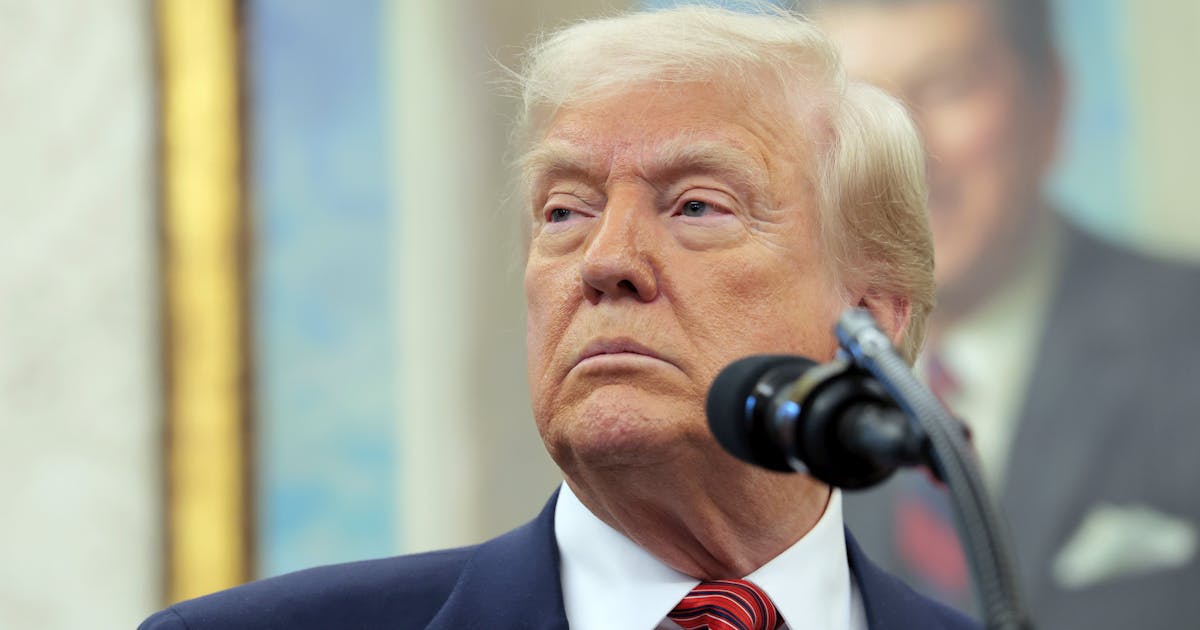 President Donald Trump has been growing angry over the criticism of his decision to accept a $400 million luxury jet from Qatar. He snapped at a reporter who questioned him about it, and erupted over it on Truth Social. Now The Atlantic reports that Trump is privately telling his advisers it’s “humiliating” for a president to fly around in an outdated jet, and has even mused about keeping the gift after he leaves the White House—all of which suggests his mood about the scandal is darkening. Meanwhile, MAGA figures and even some congressional Republicans are criticizing Trump over it. We talked to Atlantic staff writer Russell Berman, who co-wrote that report, about why this story could prove more serious and consequential than it first appeared, why it will be hard for the GOP to brush it off, and what all this says about Trump’s contempt for public service. Listen to this episode here.
 Recently, Semafor’s Ben Smith reported a gossipy exposé on the rapidly dwindling number of tech oligarchs and talking heads who want to spend any time online with Marc Andreessen and David Sacks. According to Smith, Andreessen—the onetime CEO of Netscape, now a cryptocurrency and artificial intelligence investor—maintained a slew of hyper-exclusive Signal group chats for years, in which business and media elites vented about liberals on social media and generally talked politics.“Marc radicalized over time,” the writer Richard Hanania, a literal former neo-Nazi, told Smith. Similarly, Sacks apparently stormed out of the last iteration of the chats a few months ago, accusing “the loudest voices” of “TDS,” an abbreviation for “Trump Derangement Syndrome.”This reflects the broader politics of cryptocurrency, in which both men are invested: The crypto lobby spent dark money in the 2024 elections in a league completely unto itself, and overwhelmingly for the Republican Party. It is difficult to imagine that Republicans would enjoy their current trifecta, fueling the possible collapse of the American republic, if it weren’t for crypto.But Democrats would not be Democrats if it wasn’t for their ability to take a punch in the mouth … and mumble gratitude for the timely wake-up call.Because it appears that despite the cryptocurrency industry’s support for the Republican Party … and despite the Trump family’s brazen embrace of cryptocurrency, Senate Democrats are probably set to provide the critical votes necessary to pass the so-called GENIUS Act sometime before Memorial Day. The GENIUS Act is a very soft touch “regulatory framework” to entrench the so-called “stablecoins” (including one associated with the Trump family) that grease the wheels of cryptocurrency speculation. Some Democrats pushed for language aimed at the Trump family’s crypto profits, but it doesn’t look like that’s going to be in there.And so the Andreessen, Sacks, and cryptocurrency-wide bet that they can attack Democrats (and arguably democracy), confident that they won’t do much in response, seems to be paying off. They should be stoked!Despite being literal billionaires, who all but dictate American economic policy, Andreessen and Sacks still seem to feel disrespected. Andreessen’s bizarre “Techno-Optimist Manifesto” and Sacks’s self-congratulating podcast All In both echo these men’s frustration that the media adulation they took for granted in the 1990s and the 2000s is gone; people, you know, criticize them now. It’s not like it used to be, and dammit, it ought to go back!This is a childish attitude for anyone. But it’s especially bizarre to see from Silicon Valley venture capitalists, who not so very long ago had an ugly and extremely public display of their own business incompetence.Those outside of crypto spaces might have first encountered Sacks two years ago as the de facto face of the bailout of Silicon Valley Bank.This March was the two-year anniversary of the collapse of SVB, the go-to financier for Sacks, Andreessen, and the beloved private start-ups of them and many other venture capitalists. The SVB failure threatened to entirely wipe out these men’s investments due to their own failure to account for deposit insurance restrictions known to most members of the general public.Democrats would have been well within their rights to let the moguls suffer the consequences of their actions. If they really hated the start-up economy as much as is claimed—or had the zeal against corporate greed and corruption that progressive populists urged—then the SVB failure gave them the perfect opportunity to wipe it off the map without lifting a finger.Instead, the Democratic president and treasury secretary bent over backward to skirt long-standing rules and do everything it took to save SVB’s depositors. Two of the biggest beneficiaries of that kindness were Sacks and Andreessen. And instead of appreciation, these tech bros without an understanding of Federal Deposit Insurance Corporation insurance backed Trump and ascendant congressional Republicans while proclaiming Democrats insufficiently solicitous of their business acumen.On the second anniversary of the SVB bailout, let’s remember that it isn’t Democrats who abandoned tech. It’s the tech moguls who abandoned the social contract—not just with the Democratic Party, but with anyone who isn’t them.Silicon Valley Bank was exactly what the name implies. Founded in 1983, it was the go-to financial partner for tech start-ups that needed loans, payroll services, and so on. It also lent heavily to the people behind the firms, providing mortgages and personal credit lines to “founders” building their California mansions.SVB banked half of the venture capital–backed “start-up” business ecosystem. In late 2022, serving this particular niche had made it the sixteenth-largest bank in America. As the tech industry enjoyed a pandemic-induced windfall—everyone was stuck inside with nothing to do but play on their phones for a year—SVB’s year-over-year deposits doubled from $62 billion to $124 billion by March 2021, enough to put the bank in the S&P 500.But with greater deposits comes greater risk. SVB took greater risks, but it did not couple that with greater risk management. While ignoring six separate warnings from the Federal Reserve, it continued investing in low-yield, long-dated bonds, essentially assuming interest rates would stay near zero despite the end of Covid-19 lockdown. This was a bad bet. The Fed jacked up rates in early 2023 in response to inflation (possibly wrong—but a quite mainstream response), sharply diminishing the value of SVB’s bond portfolio. Meanwhile, those same high interest rates meant a lot of tech start-ups couldn’t get attractive loans elsewhere, so they started to tap their SVB deposit accounts for short-term cash. With only those worthless long-dated bonds to sell, SVB found itself in a crunch.A classic bank run ensued. Companies raced to liquidate their SVB accounts before the bank ran out of money. On the morning of March 10, the California Department of Financial Protection and Innovation seized SVB in the largest bank failure since the 2008 financial crisis.This posed an existential threat to the start-up economy. An estimated 89 percent of deposits at the bank exceeded the FDIC limit of $250,000, meaning they were not insured by the federal government and stood to be wiped out in the receivership. That meant a large number of venture-backed companies’ liquid wealth would be eradicated; they’d be unable to make payroll, pay rent and utilities, and generally keep their basic operations going.One such company was Circle, maker of the stablecoin USDC. It stored $3.3 billion at SVB, around 8 percent of its total assets. The entire purpose of a stablecoin is its promise that for each crypto token issued, the issuing company has an old-fashioned U.S. dollar at the ready to swap out to the token’s owner whenever they ask. Think of it like a checking account denominated in a different, private currency, but which promises that this currency is one-to-one convertible into dollars, the same way the numbers on your bank statement are convertible into cash. But unlike checking accounts, stablecoins don’t have a government backstop; USDC is only backed by Circle’s word. Letting SVB falter potentially could have “broken the buck” for Circle, meaning it would not be able to guarantee one-to-one convertibility between USDC and U.S. dollars. The likely ensuing panic could have undermined much of the rest of the crypto ecosystem, to which USDC is a gateway.So what did the venture capitalists who’d sent their portfolio firms to SVB in the first place do?Demand an exception to the rules, of course. “Where is Powell? Where is Yellen? Stop this crisis NOW,” Sacks tweeted indignantly, insisting that the government “announce that all depositors will be safe.” “@POTUS & @SecYellen MUST GET ON TV TOMORROW AND GUARANTEE ALL DEPOSITS UP TO $10M OR THIS WILL SPIRAL INTO CHAOS,” tweeted fellow V.C.-er Jason Calacanis. Andreessen made personal calls to hedge funds and other banks, looking for a buyer, as Silicon Valley Congressmen Ro Khanna and Eric Swalwell started lobbying the president for help. In a crisis of their own making, ignoring risks known to every consumer who’s read the FDIC placard at their local bank, the venture capitalists demanded that the eat-or-be-eaten laws of capitalism never apply to them.Let’s be clear: There are very fair policy arguments for eliminating the $250,000 insurance cap and fully guaranteeing all deposits in American banks. Doing so would help insulate the rest of the economy from any chaos in the financial sector, because it would effectively nationalize credit laundering and accounts-based money, two of the core functions of the banking system. It’s a fairly popular idea, and absolutely anathema to the libertarian ideals men like Sacks, Calacanis, and Andreessen swear by.So, unsurprisingly, it is not what they were proposing. This was not a call to enact legislation or rethink banking rules. It was a call to make sure the rules as written don’t apply to their sector in particular, because they were foolish enough to put all of the eggs in one poorly run basket and were now suffering the consequences. It was a call for a bailout.And that’s precisely what the Biden administration did. Seeing how SVB’s implosion was spreading panic at other tech-linked financial institutions (panic that Sacks’s and Calacanis’s tweets were fueling), Biden and Treasury Secretary Janet Yellen tapped the FDIC’s “systemic risk exception” to have the FDIC fully ensure SVB depositors. The panic calmed, the start-ups got their funds, and one year later, Sacks was calling Biden “a puppet” for moneyed interests out to loot the republic.Sacks was not entirely wrong to accuse the Democratic Party of capture by big money. The problem is that the big money is him, his friends, and his portfolio companies.Bringing up SVB raises the question of whether Biden was right to bail out the depositors. It’s debatable. Saving workaday coders’ jobs from their bosses’ poor decisions, and preventing a wider regional banking crisis, certainly might have been worth the moral hazard of further weakening the credibility of the deposit insurance cap.On the other hand, everyone in finance will always think they’ll get a bailout until the first person doesn’t. If someone has to be the first, it’s hard to think of a better contender than crypto scammers, whose entire product is premised on dodging the rules in the first place. Letting bad actors face the consequences of their decisions before they become systemically significant is how financial stability is supposed to work.If there had to be a bailout, it should have prompted an honest reckoning with that policy and an effort to fully ensure the banking system, in turn prompting a broader conversation about the point of private banks in the twenty-first century. But that’s a failing of Congress, not the Biden administration. (Albeit a quite predictable failing.)What all Democrats, including the Biden White House, should think about is their broader failure to hold crypto, AI, banks, and other irresponsible elite actors to account after saving them from their own mistakes. Sacks should not be able to credibly cosplay as a populist rabble-rouser after shrieking for a special dispensation from the very financial authorities his portfolio firms claim to be bringing down.If Biden hadn’t helped the depositors at SVB and Signature Bank—which catered even more to cryptocurrency and collapsed shortly afterward—many of the tokens Trump appointees are now welding onto the broader financial system likely wouldn’t exist. Moreover, there’d be more Democrats in Congress, most notably Sherrod Brown, the hard-charging former Democratic chair of the Senate Banking Committee who faced an onslaught of dark crypto money in his last reelection bid. Sacks doesn’t get to berate Democrats as “a collection of interests who want to loot the republic” when he and his peers are actively looting the republic right now.This speaks to a broader neurosis in the Democratic Party that is a not-insignificant reason for its current lack of power. When greedy and foolish businessmen cause a potential economic crisis, it is fair and noble to prioritize the interests of workers and the broader economy over the cold discipline of the market. But discipline must still come to those businessmen in some other fashion, or they will never, never learn.It’s not just the moral thing to do, it’s the politically salient thing to do. The best way to defang accusations of cronyism is to make them look ridiculous by cultivating a reputation for afflicting the powerful. Imagine a world where that crypto bro never meandered to Sacks in the first place, because his material needs and well-earned frustration were adequately addressed after 2008. Now imagine how that leaves a world where Sacks and his crypto army are unable to finance a 50-state strategy to knock their Democratic skeptics out of Congress.If the Republican Party really does pose an existential threat to the American system of government, and there is no question that it does, then Democrats are decades past the point where they need to wake up and realize that they are not engaged in a sophomoric debate club or a sports league. They are in a war. To win a war, one must cut off the enemy’s supply chain. In U.S. politics, that means cutting off the dark money that fuels a partisan ecosystem—and the largest source of that dark money on the GOP side is now cryptocurrency.Grifters, opportunists, and self-obsessed capitalists will never have a stable relationship with the Democratic Party. Unions, environmentalists, and civil rights leaders do; they know that the opposition will never welcome them, and they don’t want to be welcome in its circles anyway. As we endure an administration of Sackses and Trumps, a presidency that is definitionally one massive scam, it is up to the Democrats to finally decide what extraction, manipulation, and cruelty is intolerable.
 Donald Trump’s federal government funding freeze is hurting the Head Start program, despite a court order blocking the freeze last week.In multiple states, the early childhood education program’s offices are getting error messages when they try to access the accounts used to request funds, HuffPost reported Tuesday, citing earlier reports from PBS NewsHour journalist Lisa Desjardins.“We’re aware of at least 40 programs that have requested funds to draw them down and have not received those funds as of yet,” Tommy Sheridan, a deputy director at the National Head Start Association, told HuffPost.The Department of Health and Human Services provides grants to more than 1,600 Head Start organizations around the country to provide services to families with young children, including education. While the organizations receive funds annually, they also can draw down money as they need it during the year.Desjardins said she confirmed that Head Start offices in Washington state, Wisconsin, and Pennsylvania were having “rolling blackouts” in their efforts to access funding. One official told HuffPost that the Head Start issues are due to a resulting technical glitch.“That has been resolved, and any ongoing error messages being reported by Head Start providers are a result of the residual backlog of payment approvals from that technical glitch,” the official said.The Justice Department said in a court filing Monday that it instructed federal agencies to unfreeze funds on Friday, but a federal judge in Washington expressed concern that the funding freeze remained in place despite the court’s order.Head Start serves about 800,000 preschool children with $10 billion in grants per year, and the program usually receives bipartisan support from Congress to protect it from cuts. However, the conservative manifesto Project 2025, drafted by the Heritage Foundation, called for eliminating the program, and the Trump administration’s staffers have extensive ties to the document.Several of Trump’s policies and executive orders are straight out of the right-wing Project 2025 playbook, and his funding freeze was so ill thought out and ill planned that we are seeing damaging effects even after it was supposed to be halted. Like many of the president’s actions over the past few weeks, the freeze has only caused chaos and confusion, hurting vulnerable children in the process.