Time is the most scarce monetizable asset we all have. Money, in whatever form, is merely the medium of exchange we buy or spend time. Chasing money = spending time. Creating flexibility = buying time. Either way, time is the only finite resource available to us.
Since January 2024 - Bitcoin has paired up with DXY. It has traded directionally with it. Breaking the trend of trading opposite. i.e. we are seeing “yield curve control” but across Global Macro Asset classes not just the bond curve.
🚨UPDATE🚨 One of my favorite things to do in 2007 was to correlate current prices/days to past major drawdowns in assets. We’re currently most correlated to S&P 👉1937 (88%), 1973 (81%), & 1976 (78%). It’s important bc previously, we experienced 4️⃣ historic market events across several different decades. 1913 - paradigm shift / Central Banks 1920s-40s - geopolitical issues & wars 1944 - new world monetary order 1960/70s - inflation/deflation Life altering times but were spread across six decades. 💡 Today, the data confirms my view that what is “different” is that we are experiencing all 4️⃣ events in one decade, or in the past 5 years. image
Capital stacks, balance sheets, and allocation of capital are what drive economic systems. Hoarded stacks of capital create piles of debt that eventually become worthless, clogging the pipes. Until… a new capital stock is created and re-deployed, unclogging the plumbing and moving liquidity once again.
Bonds with #bitcoin kickers (included in payouts at maturity) is the ultimate inflation hedge. This would be the 21st Century version of TIPs - Treasury Inflation Protected Securities or in this case — BIPs — Bitcoin Inflation Protected Securities. Thoughts @npub1hxwm...40pf? @less add this to your Macro bingo card. Put it on the free space. https://x.com/kanemcgukin/status/1913625735664644514?s=46&t=BCZ86Q6VE35kiDHSK1Vf6w
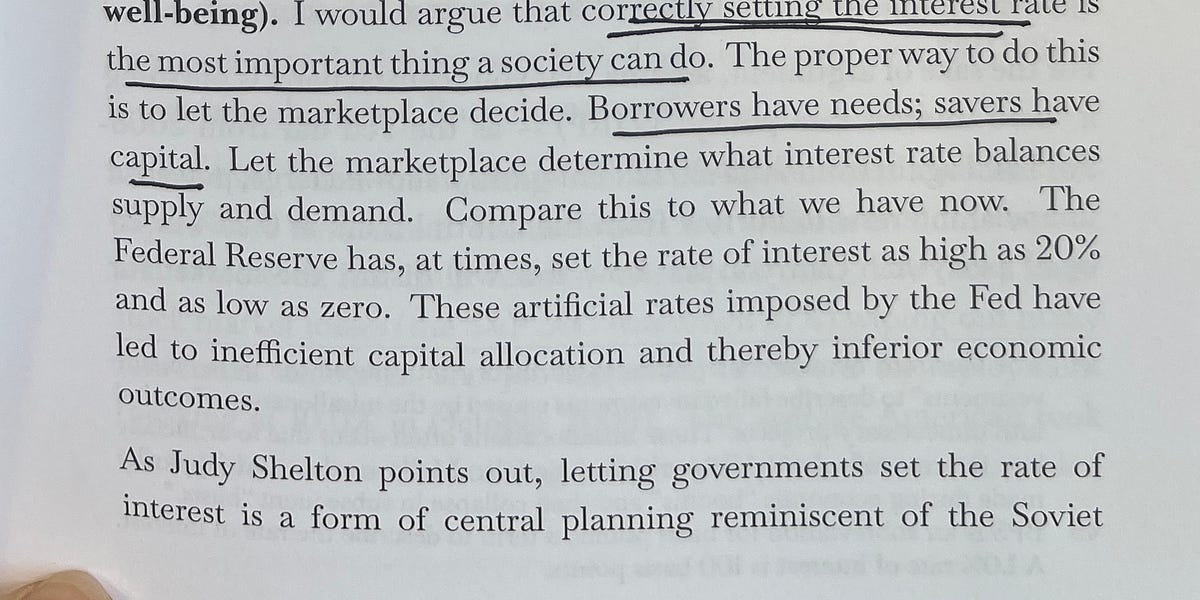
This is actually a phenomenal chart that tells the history of rates AND the challenges we’ve created in banking. 💡High rates = functioning economy 🚫Low rates = broken economy Here’s how Central Banks and Derivatives distorted this. For about 100yrs rates easily stayed between 6-9% and never really went below 6 (1790 to 1880). Charts below. 🏦💸Enter Central Banking Era and things drastically changed. The battle to establish the Central Banking Era created an environment where rates RARELY went above 6% — for the next 100yrs. This was abnormal relative to the past. In this low rate period we had more bank failures and wars. The 1960s/80s brought the Derivatives Era. As financialization and debt became the norm, rates became bi-polar. For the next 55 yrs (charts stops 2010). Rates were erratic (too high and too low), creating more tension, more defaults and liquidity issues. Outside of manipulation and intervention, high rates provide stability and growth (6-9%). They cause piles of capital to move from unproductive to productive use cases — where the profit is higher than the hurdle *rate*. Low allow unproductive use case to survive on low rates.
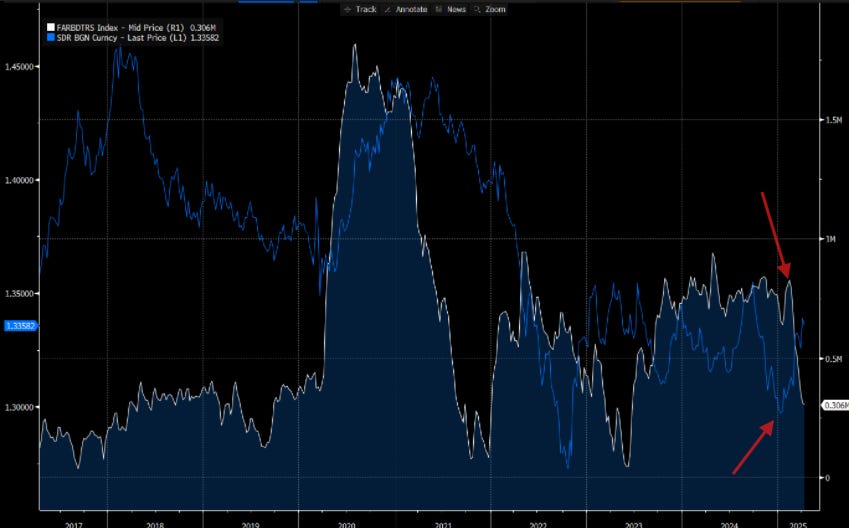
Everyone is watching the FED and their TGA account. But what is the divergence in SDRs telling us? Is this the real liquidity signal? In a squeeze the stuff no one talks about moves first. 🥇 Is this the broken model #bitcoin/stablecoins replace? image
Bitcoin isn’t just another asset — it’s a system following the power law curve. In this episode w/ @Sina_21st / @21st_capital we explore: ⚡️ Bitcoin as a black hole for monetary energy ⚡️ How power laws explain growth & collapse ⚡️ Evolution beyond “store of value” 👂🎙️ image
Out of context but… why do so few still not see the problem here and the correlation to the US “Fundamentally, the UK was, it’s an island who’s industrial base had been largely hollowed out, with a big financial system, highly financialized, highly interest rate sensitive; as a share of GDP. … You can kind of do the math, you can kind of see the options and constraints the Bank of England had” - @LukeGromen Full Luke video below. Base case for me in 2020-2021 👇 image
Would it have been really fun for me to come in and just keep issuing a lot of debt? and… it’s almost like a bodybuilder taking steroids. Outside looks great, you’re muscular. Inside you’re killing your organs. That’s what was going on here.” -@SecScottBessent As a teen, diving deep into MLB’s steroid issue (late 90s) taught me a lot about our current issues and how what appears like a good thing is really damaging to the system. Reflected on those lessons with @npub1guh5...6hjy / @npub1sk7m...jraw (), Glad to see Bessent making a similar connection (around 19min - ) . There is a lot to be learned from this relationship.