
What's going on in Sudan gets an order of magnitude less coverage than what's going on in other military hot spots of the world, despite being of similar magnitude.
Perhaps I tend to think of it a lot because Sudan borders Egypt to the south. So it's geographically in my mind more tangibly.
People can only get emotionally engaged about a handful of things. The world is too big and noisy for us to care about everything. That way lies madness. But it's still interesting which things do reach us, and rile us up.
When violence gets covered heavily in the media, it's often said that it's about the numbers, the humanity of it. But in reality, conflicts at the intersection between major religions, major military powers, or where there is a lot of oil, are what get most of the coverage. If violence happens to people outside of that scope, it's often drowned out and ignored.
Social media and algorithms are powerful. In a situation where it might be reasonable to care about something 2x or 3x as much as another thing due to geopolitical implications and such, social media can put it in front of you 200x or 300x as frequently, and thus make you care or think about it 200x or 300x more.
The issue is fractal, and so it happens the same at smaller scales. In any given industry or community, there are certain topics that get an order of magnitude more coverage and discussion than a dozen other things of similar scale or importance. And then people get sucked into an echo chamber where they think the 3-5x things that are frequently in front of them, and that their mind is mostly focused on, are indeed the 3-5x most important things when in reality it's mostly the algorithm reinforcing itself, and reinforcing that aspect of human nature that moves in groups.
Being able to sculpt your own algorithm is important, but equally it helps to be aware of the algorithm's influence in the first place. When you hear about something a ton, ask why. When you don't hear about something big very often, also ask why.
___
"Sudan plunged into a civil war in April 2023 after a vicious struggle for power broke out between its army and a powerful paramilitary group, the Rapid Support Forces (RSF).
It has led to a famine and claims of a genocide in the western Darfur region - with fears for the residents of city of el-Fasher after it was recently captured by the RSF.
More than 150,000 people have died in the conflict across the country, and about 12 million have fled their homes in what the United Nations has called the world's largest humanitarian crisis."
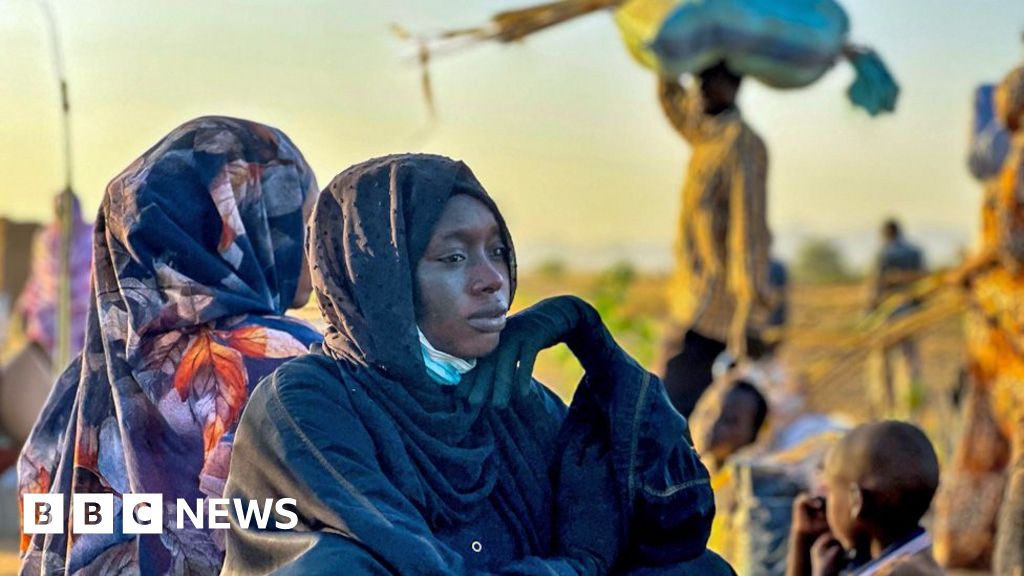
Sudan war: A simple guide to what is happening
Sudan was thrown into disarray in 2023 when its army and a paramilitary group began a power struggle.