Nocachy

Nocachy's avatar
Nocachy
nocachy@nostrwat.ch
npub1kyhz...0v85
Bicycles inventor. I penetrate distances with the power of my thought #contributor nostr:npub17t47c6665266zvgk5rccztna520stvaezjm7smrqgwsn7wkscycqsehap5 🗺️https://nostrwat.ch 🍻https://nostrichpub.com 🥳https://synballo.com 𝄃𝄁 𝄂https://xport.top 📈https://charts.xport.top
Hey folks! Been #vibecoding deep into the terminal lately. Whipped up a clean #CrowdSec monitor for everyone who likes TTYs more than X 👇 image Honestly, I’m kinda tired of messing with it — so if you wanna improve it, feel free to contribute!
--- The Blunt Reality of Prompt-to-Earn: Great Hype, Immature Tech 🛠️ I recently dove into the world of Prompt-to-Earn (P2E) development during the Covalent Speedrun, attracted by the promise of generating functional dApps in mere seconds using AI. My experience, after attempting several projects and reviewing the ecosystem, leads to a blunt conclusion: Prompt-to-Earn is too raw. While the concept promises to democratize development, the current reality is that AI project generation is woefully ill-equipped for anything serious. It's a fantastic starting line, but it's miles away from the finish line for production-grade applications. --- The AI's Critical Failure Point: Complex Logic and Security The primary weakness of the current P2E model is the logic chasm. The moment a project requires anything beyond a simple, one-step function or a basic user interface, the generated code is guaranteed to fail. What the AI excels at are applications with minimal, non-stateful logic: Simple Frontend Games: The ecosystem is dominated by classics like Tic-Tac-Toe, Snake, Coin Toss, and basic Pinball. These projects rely on straightforward, isolated game loops or minimal data interaction. Basic Utilities: Simple calculators, timers, or aesthetic tools like the Graphic Generator and Time Zone Converter are achievable. Minimalist Dashboards: Generating a basic UI that pulls and displays data (like the X Analytics or DeFi Pool Dashboard) is possible, but any complex filtering or interaction logic quickly breaks the build. The Code Quality Problem During development, the AI-produced code consistently exhibited numerous errors and security weaknesses. This forced a deep dive into manual debugging and code review. This completely defeats the "seconds-to-dApp" promise, as creating a truly functional and secure application requires the exact expertise the P2E model is supposed to eliminate. You cannot create serious, secure, or reliable smart contracts without going deep into researching Solidity, JSX, and best practices. The AI is an incomplete tool that trades speed for stability and security. --- Data Speaks: The 26 Survivors Out of all the deployed applications, only a small fraction were actually working, and their nature clearly illustrates the AI's current limitations. The functional projects confirm that the AI is best used for a proof-of-concept shell, not a final product. CategoryWorking App ExamplesUnderlying RequirementSimple GamesCOVALENT SNAKE, Tic-Tac-Toe, NEON PLINKO, Minimal ChessStateless, simple loops, minimal external data.Basic UtilitiesSPOOKY TYPING TEST, Time Zone Converter, Graphic GeneratorSimple utility functions, no blockchain interaction needed.Web3 DashboardsX Analytics, Layer 2 Speed Analyzer, Blockchain Speed MonitorPrimarily basic data retrieval and display (read functions).Niche/AdvancedBase Token Launcher, Predict MarketThese likely work only if their logic is extremely simple or relies on basic template code. --- Conclusion: An Accelerator, Not a Replacement Prompt-to-Earn, in its current iteration, sucks as a replacement for skilled development. It cannot handle the complexity of modern decentralized applications (dApps) like complex AMM logic, secure financial protocols, or robust, state-heavy games. However, it is a phenomenal tool for rapid prototyping. If you need a boilerplate React component, a simple web game to build upon, or a basic display for data, P2E can save you time. But for any serious builder looking to deploy funds or manage user state, the generated output must be treated as un-audited, vulnerable, draft code that requires a substantial amount of manual work from an expert. The current P2E model is an accelerator for simple templates, but not a solution for sophisticated development. The promise of generating complex, secure dApps in seconds remains firmly in the realm of hype.
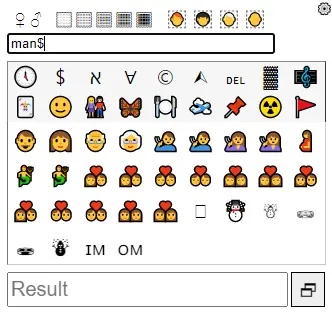
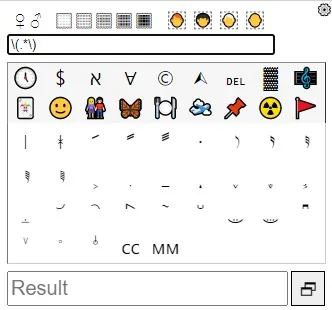
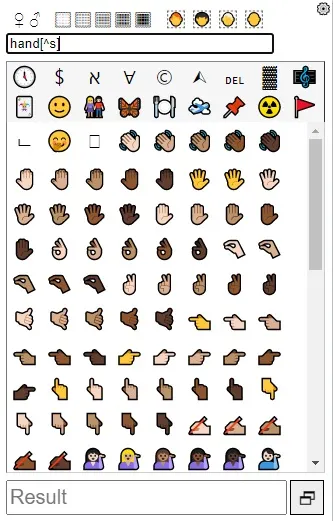
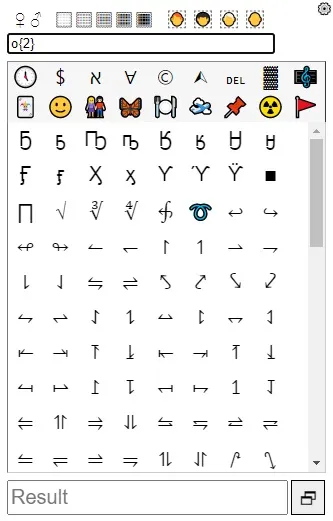
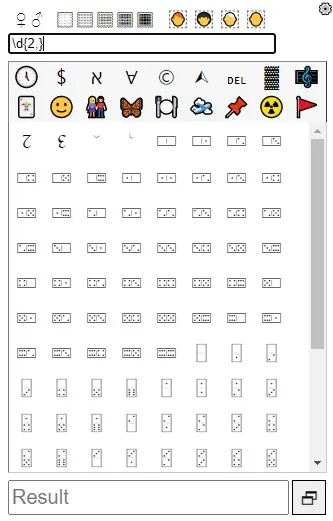
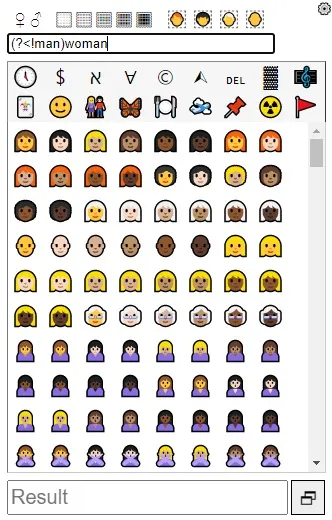
What is Synballo and how it works. Searching for characters is an integral part of tasks involving computer, most people are using search engines that are now part of our daily life and one of the important tools for billions of internet users worldwide. Sometimes 256 ASCII characters are not enough and you have to look in one of many Unicode Standards, it’s not that complicated just about 5 steps: open, search, select, copy and paste. Of course, you can remember a set of alt-codes instead, but can you remember more than a million alt-codes? This problem is not new, it was solved a long time ago, but to this day different operating systems are equipped with rather primitive applications for solving these fundamental tasks. In Windows you have emoji keyboard Win logo key + . (period), much more convenient, but limited to emojis. Therefore, in 2020, I decided to develop a tool for myself and later named it Synballo. Synballo — is an extension for web browsers that provides the most rich and convenient toolkit for working with symbols. In this article I am going to share my best practices in order to give an examples of how you can use Synballo to save time and make your communication easier. First of all, as you already know Synballo is not limited to emojis alone. However, it seemed to me too big a task to include in it more than a million characters. I started with about 7,000 and over the last two years expanded this list to include 8,149 symbols in last version 0.6.4. I made these sets solely based on users preferences. Search function in Synballo is compatible with JavaScript regular expression patterns. You can find full documentation online. I’ll just show a few illustrative examples. Show all .* image Starts with ^man — for all symbols that starts with “man” image Ends with man$ — for symbols that ends with “man” image Escaping characters If you want to search for special characters you have to escape them with a backslash first. For example, when you want to find all the symbols with round brackets in description you should do like so: \(.*\) image To escape asterisk just type: \* Groups and ranges To search the symbols that starts with a letter from “a” to “c” or “d” to “f”, type: ^[a-c|d-f] image For “hand” without letter “s” type: hand[^s] image in the example above ^ works as exclusion, not a starts with Quantifiers Let’s say you want to find symbols with a double o’s, like so: o{2} image you can type instead: oo (which gives the exact same result) But to search for equal or more than two numbers in a row, you do need quantifiers, type: \d{2,} image Assertions There are 4 types of assertions: look ahead , look behind, negative look ahead and negative look behind look ahead: man(?=.woman) , matches “man” only if “man” followed by “woman” with any single character in-between image look behind: (?<=woman).man , matches “woman” only if “woman” followed by “man” with any single character in-between image negative look ahead: woman(?!man) , matches “woman” only if “woman” not followed by “man” image negative look behind: (?<!man)woman image So if you want to search let’s say a “raised” followed by “hand” type: raised(=?.*hand) , matches “raised” only if “raised” followed by “hand” with a set of any characters in-between image I will share some more examples later. Stay tuned.