
@npub10vdl...0q7p
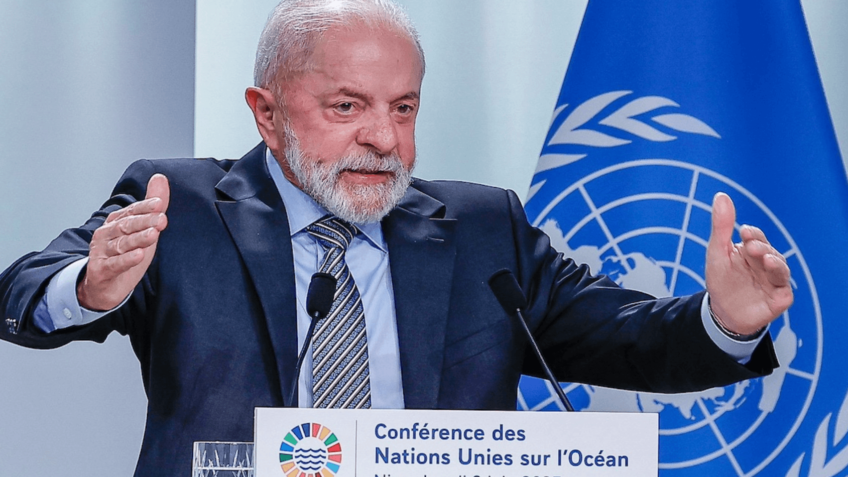 The government of President Luiz Inácio Lula da Silva (PT) has called for a virtual meeting of the BRICS to discuss the multilateral trade system. Lula's goal is to use the meeting to strengthen Brazil's position against the tariffs imposed by President Donald Trump. Lula had announced his intention to call the BRICS meeting on August 13, during the launch of the plan to support companies affected by the American tariffs. The group, which is chaired by Brazil this year, will hold a teleconference to discuss what can be done to improve relations between all countries affected by the tariffs. The BRICS is composed of Brazil, Russia, India, China, South Africa, Egypt, Ethiopia, Iran, Indonesia, and the United Arab Emirates. Saudi Arabia was invited to join after the Johannesburg summit in 2023, but has not officially responded - it has, however, participated in BRICS meetings. Among the BRICS members, Brazil and India are the most affected by Trump's tariffs, both with 50%. According to sources familiar with the preparations, the video conference will not specifically focus on Trump's tariffs, but on multilateralism and the international trade system. The idea is to coordinate positions among members for important international forums that will take place in the coming months, such as the United Nations General Assembly in September. Trump imposed 50% tariffs on Brazil - with a wide range of exceptions - and conditioned any negotiations on the end of the trial of former President Jair Bolsonaro (PL). The Palácio do Planalto and the Supreme Federal Court (STF) have rejected this demand. In addition to tariffs, Trump has imposed sanctions on Brazilian authorities, including STF Minister Alexandre de Moraes - included in the Magnitsky Law, which limits financial operations involving American companies. Also, visas were revoked for Minister of Justice Ricardo Lewandowski, Health Minister Alexandre Padilha's relatives, and technicians who worked on the More Doctors program.
The government of President Luiz Inácio Lula da Silva (PT) has called for a virtual meeting of the BRICS to discuss the multilateral trade system. Lula's goal is to use the meeting to strengthen Brazil's position against the tariffs imposed by President Donald Trump. Lula had announced his intention to call the BRICS meeting on August 13, during the launch of the plan to support companies affected by the American tariffs. The group, which is chaired by Brazil this year, will hold a teleconference to discuss what can be done to improve relations between all countries affected by the tariffs. The BRICS is composed of Brazil, Russia, India, China, South Africa, Egypt, Ethiopia, Iran, Indonesia, and the United Arab Emirates. Saudi Arabia was invited to join after the Johannesburg summit in 2023, but has not officially responded - it has, however, participated in BRICS meetings. Among the BRICS members, Brazil and India are the most affected by Trump's tariffs, both with 50%. According to sources familiar with the preparations, the video conference will not specifically focus on Trump's tariffs, but on multilateralism and the international trade system. The idea is to coordinate positions among members for important international forums that will take place in the coming months, such as the United Nations General Assembly in September. Trump imposed 50% tariffs on Brazil - with a wide range of exceptions - and conditioned any negotiations on the end of the trial of former President Jair Bolsonaro (PL). The Palácio do Planalto and the Supreme Federal Court (STF) have rejected this demand. In addition to tariffs, Trump has imposed sanctions on Brazilian authorities, including STF Minister Alexandre de Moraes - included in the Magnitsky Law, which limits financial operations involving American companies. Also, visas were revoked for Minister of Justice Ricardo Lewandowski, Health Minister Alexandre Padilha's relatives, and technicians who worked on the More Doctors program.
Jornal de Brasília
Lula convoca reunião virtual do Brics para discutir comércio internacional e tarifas - Jornal de Brasília
Lula havia anunciado sua intenção de chamar a reunião do Brics em 13 de agosto, durante lançamento do plano de socorro para as empresas afetada...
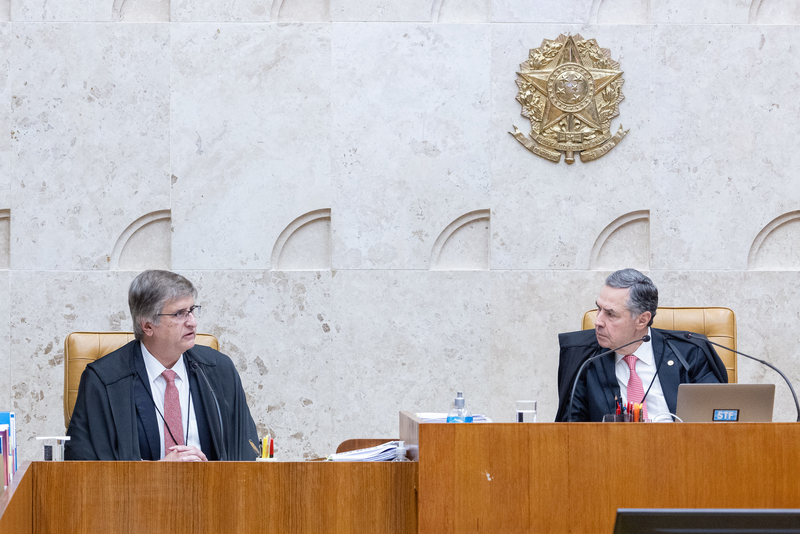 The Attorney General of the Republic, Paulo Gonet, highlighted on Tuesday, 2, that the criminal organization that attempted a coup d'état in 2022 had been planning and promoting the popular uprising from the beginning. According to Gonet, the group sought social instability at all times, which would serve as a factor of legitimation for the declaration of exceptional measures and passed on the coup attempts of January 8. The attempt to convince authorities of the Army and Air Force to join the coup did not achieve the expected success. The conspiratorial group saw, then, in the generation of a social instability scenario a useful context for their purposes, motivating interventionist measures, dragging the Army into the desired scenarios. January 8, 2023, which was not the main objective of the group, became desired and encouraged when it became the available option. Gonet also highlighted that the former aide to Bolsonaro, Mauro Cid, now a delator, confirmed that the former president 'deliberately stimulated the expectation of the population to provoke a situation that would justify the intervention of the armed forces. In a deposition at the Supreme Court, he said that the then-president always gave hopes that something would happen to convince the Armed Forces to carry out the coup.
 The nuclear issue was at the center of the meeting between Chinese President Xi Jinping and Iranian President Hassan Rouhani in Beijing. According to a Chinese government statement released on Tuesday, Xi stated that the use of force is not the correct way to resolve disputes and that only dialogue can ensure a lasting peace in the Middle East. The leader also emphasized that Beijing values Iran's repeated commitment not to seek the development of nuclear weapons and supports Tehran's right to use nuclear energy for peaceful purposes. The meeting took place during the Iranian president's participation in the Shanghai Cooperation Organization summit. For Xi, Tehran's position strengthens international efforts towards a negotiated solution. "China will continue to defend justice, promote a solution to the Iranian nuclear issue that takes into account the reasonable concerns of all parties and strive tirelessly for a lasting peace in the Middle East," he said. The statement also highlighted the strategic aspect of the relationship between the two countries. Xi pointed out that despite changes in the international landscape, bilateral ties have maintained a "stable and healthy" development. Areas where China wants to expand cooperation include trade, investments, clean energy, connectivity, and cultural exchanges. Rouhani, according to the Chinese note, reinforced the weight of the partnership with China and declared total support for Xi's Global Governance Initiative, considering it "of great importance to promote a more just and reasonable international order." He also advocated for greater coordination between Beijing and Tehran to counter "unilateralism and power politics" and ensure regional stability.
 The Finance Minister, Fernando Haddad, criticized the stance of the United States regarding the tariff applied to Brazilian products. He reiterated that the US Treasury Secretary, Scott Bessent, cancelled a previously scheduled meeting due to a claimed lack of agenda, but later received a meeting with Deputy Eduardo Bolsonaro (PL-SP). This statement was made in an interview with the Canal Livre program on the Band, which aired on Sunday, 31, just days after Brazil decided to activate the Economic Reciprocity Law against the US. According to Broadcast (the news system in real-time of the Estado Group), the Brazilian government has already sent the official communication about the probable retaliation to the US government. "I received an email from the US Treasury Secretary, scheduling a virtual meeting time and date. After the cancellation, allegedly due to a lack of agenda, he received Eduardo Bolsonaro", said Haddad. According to him, this type of gesture raises questions about the White House's willingness to dialogue on the commercial crisis. The activation of the reciprocity law was a response to the US process, opened last month, which taxed a significant portion of Brazilian exports. The measure sets a deadline of up to 210 days for effective implementation, creating parity of conditions between the two nations during consultations and information exchanges. Interlocutors involved say that, despite the formal process, the priority of the Lula government remains direct negotiation with the Trump administration. In another excerpt from the Canal Livre interview, Haddad again defended the proposal to exempt from Income Tax those who earn up to R$ 5,000. He emphasized that the proposal is "fiscally neutral" and aims to correct historical inequalities. "To benefit 15 million Brazilians, we will charge 141,000 millionaires who do not pay Income Tax", he said. Asked about the performance of state-owned companies, the minister recognized the Correios' losses as the most delicate case. "The Correios have a structural problem, which is the huge subsidy that remains for them. Because who competes with the Correios does not have the obligation to deliver a letter, it only does what compensates", he explained.