
@npub12472...r9t7
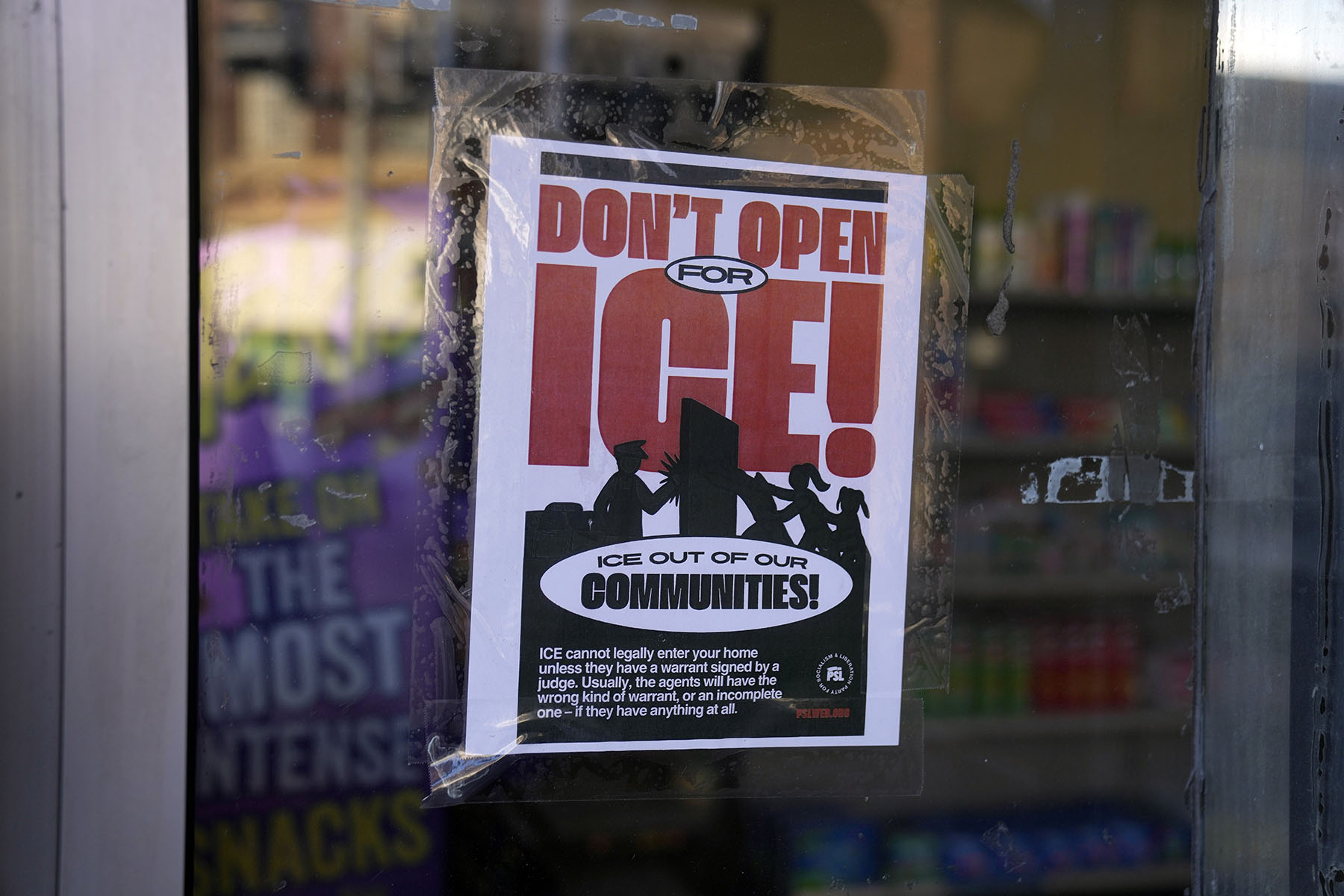 Trump's Department of Homeland Security removed its policy on "sensitive zones" protected from deportation, including women's shelters, schools and churches. Originally published by The 19th Just a day after Trump issued a slate of executive orders aimed at restricting immigration, the Department of Homeland Security (DHS) announced it was rescinding protections for “sensitive zones” where undocumented immigrants were protected from deportation. Some immigrant rights advocates are particularly worried that this could deter women experiencing domestic abuse from going to women's shelters, which will no longer be protected from U.S. Immigration and Customs Enforcement (ICE). “The Trump Administration will not tie the hands of our brave law enforcement, and instead trusts them to use common sense,” a DHS spokesperson said in a statement. The sensitive zones policy, which was created in 2011, initially applied to places like churches, schools and hospitals. In 2021, the list of places was expanded by the Biden administration to include locations offering disaster or emergency relief and social services. The policy was put in place to allow undocumented immigrants access to essential services like health care without the threat of being deported. ICE could enter these places only if there was a threat of terrorism or imminent risk of death, among other exceptions. “What is really important about sensitive zones is that they allow migrant women and families to safely access these spaces without fear that ICE will arrest or deport them there,” said Zain Lakhani, director of the Migrant Rights and Justice Program at the Women’s Refugee Commission. “The impact might be, for instance, that a domestic violence survivor will stay in an abusive situation because they're being forced to choose between their immediate safety and arrest and deportation if they go to a shelter or take their children to a shelter.” The administration could further hamper services for those experiencing domestic violence by expanding the definition of a “public charge,” which Trump did in his first term, though it was struck down by a federal court a year later. The public charge rule, which had previously been defined by a 1999 field guidance, means people can be turned down for visas or green cards if they are determined to be dependent on the government financially. This rule had typically been restricted to cash-assistance initiatives like the Temporary Assistance for Needy Family program, but Trump expanded it to include non-cash assistance programs like food stamps and Section 8 housing. Trump also changed the length of time someone could be in assistance programs before becoming ineligible, leading to a lot of uncertainty over who would be deemed a public charge. Many immigrants were less likely to enroll in programs during this time, even if they were eligible. That had a particular impact on victims of domestic violence. The public charge rule did not apply to people with a U or T visa, which is available to victims of human trafficking and violent crimes like domestic violence. But the change in definition caused confusion both among people dispensing legal advice and the visa recipients themselves, who were entitled to some of these benefits but scared to access them. Housing or food assistance can be the difference between someone staying or leaving an abusive situation, Lakhani said. “There was just a lot of confusion and a huge amount of chilling,” she said. A sign regarding the Immigration and Customs Enforcement is posted on the window of a corner store on the day of President Trump’s Inauguration on January 20, 2025, in the predominantly Latino Little Village neighborhood of Chicago. (Erin Hooley/AP) And now, even the U and T visa program could be dismantled by the Trump administration as called for by Project 2025, which is largely seen as the policy blueprint for Trump’s second term. When someone applies for this visa, it creates an alert to immigration authorities that bars ICE from taking any enforcement action against a person if a tip comes in from the person committing the abuse. Ultimately, that stops abusers or human traffickers from being able to threaten people with deportation, Lakhani said. While these visa programs need an act of Congress to be overturned, Lakhani said, there are levers the administration can pull to make the program ineffective. For example, they could decide to pause new applications for any visa category that is heavily backlogged. U visa applicants are currently waiting around 15 years for resolution of their cases, she said. “The times are just astronomical, right? And so, of course, that is going to be considered a very heavily backlogged category, and so they could essentially cut off all access,” Lakhani said. “So much of these policies, what they do is instill fear, and I think that's really critical,” Lakhani said. “It's extremely dangerous because the state doesn't even need to enforce them, in order people self-select out, and it forces them into these impossible, impossible choices.” Campaign Action

Trump's Department of Homeland Security removed its policy on "sensitive zones" protected from deportation, including women's shelters, schools and churches. Originally published by The 19th Just a day after Trump issued a slate of executive orders aimed at restricting immigration, the Department of Homeland Security (DHS) announced it was rescinding protections for “sensitive zones” where undocumented immigrants were protected from deportation. Some immigrant rights advocates are particularly worried that this could deter women experiencing domestic abuse from going to women's shelters, which will no longer be protected from U.S. Immigration and Customs Enforcement (ICE). “The Trump Administration will not tie the hands of our brave law enforcement, and instead trusts them to use common sense,” a DHS spokesperson said in a statement. The sensitive zones policy, which was created in 2011, initially applied to places like churches, schools and hospitals. In 2021, the list of places was expanded by the Biden administration to include locations offering disaster or emergency relief and social services. The policy was put in place to allow undocumented immigrants access to essential services like health care without the threat of being deported. ICE could enter these places only if there was a threat of terrorism or imminent risk of death, among other exceptions. “What is really important about sensitive zones is that they allow migrant women and families to safely access these spaces without fear that ICE will arrest or deport them there,” said Zain Lakhani, director of the Migrant Rights and Justice Program at the Women’s Refugee Commission. “The impact might be, for instance, that a domestic violence survivor will stay in an abusive situation because they're being forced to choose between their immediate safety and arrest and deportation if they go to a shelter or take their children to a shelter.” The administration could further hamper services for those experiencing domestic violence by expanding the definition of a “public charge,” which Trump did in his first term, though it was struck down by a federal court a year later. The public charge rule, which had previously been defined by a 1999 field guidance, means people can be turned down for visas or green cards if they are determined to be dependent on the government financially. This rule had typically been restricted to cash-assistance initiatives like the Temporary Assistance for Needy Family program, but Trump expanded it to include non-cash assistance programs like food stamps and Section 8 housing. Trump also changed the length of time someone could be in assistance programs before becoming ineligible, leading to a lot of uncertainty over who would be deemed a public charge. Many immigrants were less likely to enroll in programs during this time, even if they were eligible. That had a particular impact on victims of domestic violence. The public charge rule did not apply to people with a U or T visa, which is available to victims of human trafficking and violent crimes like domestic violence. But the change in definition caused confusion both among people dispensing legal advice and the visa recipients themselves, who were entitled to some of these benefits but scared to access them. Housing or food assistance can be the difference between someone staying or leaving an abusive situation, Lakhani said. “There was just a lot of confusion and a huge amount of chilling,” she said. A sign regarding the Immigration and Customs Enforcement is posted on the window of a corner store on the day of President Trump’s Inauguration on January 20, 2025, in the predominantly Latino Little Village neighborhood of Chicago. (Erin Hooley/AP) And now, even the U and T visa program could be dismantled by the Trump administration as called for by Project 2025, which is largely seen as the policy blueprint for Trump’s second term. When someone applies for this visa, it creates an alert to immigration authorities that bars ICE from taking any enforcement action against a person if a tip comes in from the person committing the abuse. Ultimately, that stops abusers or human traffickers from being able to threaten people with deportation, Lakhani said. While these visa programs need an act of Congress to be overturned, Lakhani said, there are levers the administration can pull to make the program ineffective. For example, they could decide to pause new applications for any visa category that is heavily backlogged. U visa applicants are currently waiting around 15 years for resolution of their cases, she said. “The times are just astronomical, right? And so, of course, that is going to be considered a very heavily backlogged category, and so they could essentially cut off all access,” Lakhani said. “So much of these policies, what they do is instill fear, and I think that's really critical,” Lakhani said. “It's extremely dangerous because the state doesn't even need to enforce them, in order people self-select out, and it forces them into these impossible, impossible choices.” Campaign Action
Daily Kos
What a new immigration directive could mean for domestic violence victims
Trump
 What’s that old definition of insanity—doing the same thing over and over again and expecting a different result? Enter Kentucky. Back in 2018, as then-President Donald Trump did his usual bullying act with Europe, the European Union hit back in a smart and targeted manner, slapping retaliatory sanctions against Trump-supporting industries (e.g., coal, agriculture) and states (e.g., Texas, Florida, Kentucky). The tariffs cost those industries dearly, yet voters in those states seemingly decided that free and unfettered trade with our allies was too big a price to pay for transgender people having rights or the price of eggs being too high, so they voted for more of that pain last November. And now in the spotlight is Kentucky’s whiskey industry. Here’s WCPO, an ABC affiliate out of nearby Cincinnati, Ohio: The threat stems from actions taken by the first Trump Administration in 2018, when the U.S. first slapped 25% and 10% tariffs on European steel and aluminum imports, respectively. European Union officials then imposed a 25% retaliatory tariff on American whiskey exports, which it suspended in 2022. "We saw tens—if not hundreds—of millions of millions of dollars of impact on exports that the bourbon industry is just recovering from," Kentucky Gov. Andy Beshear said during a Jan. 16 press conference. "A state, again, that voted for Trump by 30 points will get hit incredibly hard." Eric Gregory, the president of the Kentucky Distillers’ Association, an industry group, told WCPO that the 2018 tariffs cost his industry—and hence the state—upwards of roughly $580 million, which is a breathtaking amount. Those EU tariffs were 25%. The new tariffs, set to take effect on March 31 if no deal is reached between the U.S. and EU, will be double that: 50%. Kentucky distillers export over 95% of the world’s bourbon products, with the EU being their biggest export market, according to Gregory. Want to guess the next-biggest market? Mexico and Canada—Trump’s newest foes. Bourbon is a $9 billion industry, according to the Kentucky Distillers’ Organization. The group says the local industry employs over 23,100 people and generates $358 million in tax revenue. In other words, these distillers and Kentucky could be in for a world of hurt. "We're trying to sound the alarms as much as possible that these are good, paying American jobs that are in jeopardy," Gregory told WCPO. "We have been caught up in trade wars that have nothing to do with whiskey." Donald Trump Except it has everything to do with Trump’s trade wars. Trump started a fight that has already generated a great deal of collateral damage. The smartest trade partners will do what the EU did—retaliate against his own supporters. And given that Trump’s answer to everything right now is “TARIFFS,” expect the pain to go deep. What’s worse for these guys, domestic consumption of alcohol is down. “The new Generation Z (isn't) drinking as much. You've got everything from weight loss drugs that deter the effects of alcohol to supply chain issues," Gregory said. "When you look at cutting off a major supply market like the EU with all this bourbon sitting here, that's a recipe for trouble." "We need President Trump's help to figure out a way to help us get out of this mess that we've been ensnared in,” he added. Of course, Trump doesn't care. Kentucky could’ve done something about it on Election Day, but they opted for this—and by a massive margin. As the state that also foisted Republican Sen. Mitch McConnell on us (as well as Sen. Rand Paul)—if anyone deserves what’s coming, it may just be Kentucky. The hope is now that as countries weigh retaliatory tariffs, they take the EU’s lead and focus their retaliations on red states and red-leaning industries as much as possible. The next four years will suck, but anything that directs the pain at the right people makes it a little more bearable. Daily Kos is on Bluesky! We’ve made it easy for you to join us with the Daily Kos Bluesky Starter Pack. Click this link to follow Daily Kos and start curating your lists.

 The crash of an American Airlines jet and an Army helicopter killed 67 people above Ronald Reagan National Airport, near Washington, D.C., and is the worst U.S. aviation disaster since the November 2001 crash of a jet in the Queens borough of New York City. Among those who perished on Wednesday were figure skaters and their families and coaches returning from a competition, as well as the three military service members aboard the helicopter. The tragedy is once again raising the question of the role that key federal agencies and officials play in protecting the lives of Americans. The Federal Aviation Administration provides oversight of the airline industry, airports, and related matters. But the position of FAA administrator was vacant from Jan. 20—the day of Donald Trump’s inauguration—until the day after this week’s accident, when Trump finally appointed an acting chief of the agency. Why was the position vacant? The previous administrator, Michael Whitaker, resigned roughly a year and a half into his five-year term after a pressure campaign by Trump financier and multibillionaire Elon Musk. Additionally, Wednesday’s crash occurred against the backdrop of actions by Trump and his administration to slash the size of the government and roll back civil rights initiatives meant to diversify the federal workforce and the nation at large. Trump effectively disbanded an aviation safety committee that had been in operation since 1989. He also issued a directive halting a program to encourage the growth of a diverse workforce within the aviation industry, including for the key position of air traffic controller. Now it has emerged that staffing levels at the control tower at Reagan National were “not normal” at the time of the accident, according to an internal preliminary report from the FAA. In his Thursday press conference discussing the crash—instead of addressing the core of these issues, including his role in possibly hobbling the government response—Trump instead blamed a frequent conservative punching bag: diversity. President Donald Trump Conservatives like Trump have for years insisted that the government needs to operate like a business, and that the size of the federal government (including its budget and the size of the workforce) must be curtailed. This message has frequently been touted by Republican politicians, but it has been repeated endlessly in conservative media outlets, like Fox News. Conservatives have so embraced the notion that government must run like a business that Trump, whose businesses have repeatedly failed, has been the leader of the party since 2016. The right has railed against government-based solutions as harbingers of communism and socialism, and that effort has led to even some Democrats, like former President Bill Clinton, making an argument against “big government.” But America is a massive nation. There are more than 341 million Americans behind the largest economy in the world, with the most powerful military in the history of humankind. American policy on both domestic and foreign issues has a ripple effect felt in every other nation in the world. It simply isn’t practical for a nation of that size and scope to operate in the conservative dream of a government in the 1800s. While it remains unclear what specific role the government played in Wednesday’s plane crash, it is a matter of historical fact that massive crises have been caused or exacerbated through government inaction. During the Great Depression of the 1930s, the government failed to alleviate the suffering of millions of Americans under Republican President Herbert Hoover. More recently, under Republican President George W. Bush, big business was allowed to put the global economy at risk while profiting from the mortgage bubble. And under Trump, the purported business skills that were touted during his stint as host of NBC’s “The Celebrity Apprentice” were absent as he failed to manage the COVID-19 pandemic. Outgoing President Herbert Hoover, right, gazes downward as President-elect Franklin D. Roosevelt, accompanied by his son James, takes the oath of office from Chief Justice Charles E. Hughes, in Washington, D.C., on March 4, 1933. What has worked have been the initiatives and legislation the right has decried as “big government.” Under President Franklin Roosevelt, the New Deal became law, leading to massive government expenditure to fight the Great Depression and World War II. Landmark programs like Social Security were created to provide government backing for the retirement of seniors. Later, President Lyndon Johnson put in place his Great Society agenda, expanding the safety net with programs like Medicaid to meet the needs of low-income earners needing health care. That was not being addressed by the profit-motivated private sector. In more recent history, President Barack Obama signed the American Recovery and Reinvestment Act in response to the Great Recession, and saw unemployment significantly decline during his eight years in office. And President Joe Biden passed the American Rescue Plan to stimulate the economy following the massive losses that had occurred on Trump’s watch during the pandemic. Despite the conservative fixation on small government and operating the government like a business, it simply has not worked. There are too many moving parts, and too many lives are at stake for the government to operate like a business working toward a quarterly earnings report. When the government is too small or not given enough resources to operate, disaster has been the result—over and over again. Yet, despite the carnage, conservatives are unlikely to change their rhetoric and world view because they would have to admit they were wrong all along. Campaign Action

 Recently released polling from Navigator Research shows that many voters haven’t heard much about Donald Trump’s upcoming tax plans, which include extending his 2017 tax cuts for the rich. Those tax cuts are largely set to expire at the end of 2025. Fifty percent of registered voters said they have heard “a little” or “nothing” about Trump’s tax plan, according to Navigator’s polling, which was fielded Dec. 5-8. Another 50% said they have heard “a lot” or “some” about the plan. When asked about their support for the plan—without being provided a description of it—voters split predictably down party lines, with 37% in favor of it and 39% opposed. About a quarter (24%) weren’t sure. However, support changes dramatically based on how the plan is presented. When presented with a Democratic framing of the plan—essentially, “tax cuts for the rich”—62% of voters opposed the plan, with only 25% supporting it. But when presented with a Republican framing—that the cuts will “lower taxes for everyone and unleash American business to improve our economy and bring down costs”—support flipped: 64% were in favor and 24% were opposed. Such Republican messaging is fantasy, of course. The 2017 tax cuts didn’t deliver on those promises the first time around, skewing its benefits to the wealthy. And the cuts were unpopular around the time of their passage as well as later in his term. Maybe more revealing is that Democratic messaging is more effective than Republican messaging when it focuses on the personal impact of the tax cuts. Trump’s billionaire friends will benefit the most from tax giveaways. Billionaire Elon Musk, set to co-lead a toothless advisory commission on cutting government spending, has shown a willingness to use his social media platform X to distort information in Trump’s favor. And other billionaires, like Amazon’s Jeff Bezos, seem just as willing. And that’s before they’re offered billions more in government welfare. Click here for Daily Kos’ Bluesky Starter Pack. Join us on Bluesky and @#$% Elon Musk!

 House Speaker Mike Johnson quietly implemented the bathroom ban targeting transgender Rep. Sarah McBride, Democrat of Delaware, following his swearing in to the 119th Congress. To the delight of transphobic GOP Rep. Nancy Mace of South Carolina, the policy mandates that single-sex facilities—including restrooms, locker rooms, and changing rooms—be used solely based on a person’s sex assigned at birth. “The Chair announces to the House a new policy that will be implemented in the 119th Congress pursuant to clause 3 of rule I,” the Congressional Record states. “In all areas of the Capitol subject to the Speaker’s general control under clause 3 of rule I, all single-sex facilities—such as restrooms, changing rooms, and locker rooms—are reserved for individuals of that biological sex. This policy will be enforced by the Sergeant-at-Arms. It is important to note that each Member office has its own private restroom, and unisex restrooms are available throughout the Capitol.” The rule was first established by Johnson in November after Mace threw a fit over the news that McBride was elected. Following Johnson’s reelection as speaker earlier this month, Mace’s bathroom ban made headlines again when it noticeably wasn’t included in the House Rules Package. Instead, Johnson managed to sneak through the rule as part of the unilateral authority given to him under the House rules. It’s not precisely clear why Johnson would choose to go this route, and his team did not respond to Daily Kos’ request for comment. However, one congressional staffer familiar with the matter speculated that Johnson might have done so as to not pit Congress members directly against each other. “This was a political move so that people didn’t have to vote on the basis of banning staff and their fellow members of Congress,” they told Daily Kos. Recently on X, Mace has referred to McBride as a “perv,” misgendered her, and argued that “protecting women isn’t transphobic.” And while Mace is expected to continue berating her fellow Congresswoman’s existence on McBride’s home turf Friday, McBride will be busy actually doing her job. Speaking to Axios, McBride’s spokesperson Michaela Kurinsky-Malos said, “This weekend Congresswoman McBride will attend a bipartisan meeting with her colleagues from the House to discuss solutions to the most pressing issues facing her constituents.” McBride has only made one statement on X regarding the ban and Mace’s transphobic attacks. “This is a blatant attempt from far right-wing extremists to distract from the fact that they have no real solutions to what Americans are facing. We should be focused on bringing down the cost of housing, health care, and child care, not manufacturing culture wars,” she wrote. The targeted bathroom ban comes at a time when rights for transgender people have taken an international debate stage. Last month, the UK banned the use of puberty blockers for minors in a historical move setting the tone for medical access for transgender youth. Just days before, the U.S. Supreme Court heard a case challenging a similar law in Tennessee that bans access to gender-affirming medical care for minors. Donate now to support Southern California relief efforts.
 Google is the latest California-based tech giant to make a major donation to President-elect Donald Trump’s inauguration, which will take place on Jan. 20, or Martin Luther King, Jr. Day. On Thursday, CNBC, which cited a statement from a Google spokesperson, said that Google donated $1 million to Trump’s inaugural fund earlier this week. “Google is pleased to support the 2025 inauguration, with a livestream on YouTube and a direct link on our homepage,” said Karan Bhatia, Google’s global head of government affairs and public policy. “We’re also donating to the inaugural committee.” Bhatia added that Google has donated to previous president’s inaugurations and also provided livestreams the day of. With its $1 million donation, Google joins other tech titans in cozying up to Trump. Jeff Bezos’ Amazon; Meta, the parent company of Facebook, Instagram, and Threads; Sam Altman, the CEO of Open AI; and Uber have already made similar donations. In addition to its $1 million cash to Trump’s inaugural fund, Amazon will also make a $1 million in-kind donation by streaming the event on Amazon Video. Although it’s not unheard of for major corporations to donate to inaugural committees, Trump has already set a record in donations. President Joe Biden’s 2020 inaugural committee raised nearly $62 million, compared with the $107 million Trump’s committee raised in 2016. Already, the Trump-Vance inaugural committee has raised an eye-popping $170 million. It’s not clear that any of these tech giants will be rewarded for their efforts, though. According to The New York Times, some of the biggest seven-figure donors won’t even receive perks such as VIP tickets because of their high demand. This seems to suggest that the companies simply see donations as a way to suck up to the president-elect, especially since many of them—specifically Bezos and Zuckerberg, the CEO of Meta—had a stormy professional relationship with Trump during his first four years in the White House and Trump is reportedly keeping tabs on who cuts checks for him. Some other Silicon Valley giants that have donated, including Perplexity AI, an artificial intelligence company, have taken notice of this apparent trend. “Unlike other tech companies who have recently donated to President Trump’s inaugural fund, Perplexity didn't exist during his previous term, so this is an opportunity for us to collaborate on shared goals rather than mending a frayed relationship,” Perplexity Chief Business Officer Dmitry Shevelenko said in a statement in December. Notably, this isn’t the only way billionaire CEOs are kowtowing to Trump. Earlier this week, Zuckerberg announced plans to disband its fact-checking team—a move widely interpreted as a way to curry favor with the former and incoming president. In the past, Trump has accused social media companies, including Facebook, of censorship and of having a bias against conservatives. Unlike some of the others donating to Trump, though, Google and the president-elect appear to have a fairly decent relationship—at least for the moment. Google CEO Sundar Pichai was also among the billionaires who congratulated Trump on his win in November. Still, that doesn’t mean Google and other tech giants are free from Trump’s ire once he’s back in the White House. Large tech companies have faced heightened scrutiny from both sides of the political aisle. After all, during his first term, the Trump administration sued Google over allegations that it violated antitrust law. He’s since signaled, however, that he might not break up the company during his second term. Knowing Trump, though, it’s entirely possible he’ll change his stance. In a Dec. 4 post to his social media website, Truth Social, Trump accused “Big Tech” of running amok. He wrote: “Big Tech has run wild for years, stifling competition in our most innovative sector and, as we all know, using its market power to crack down on the rights of so many Americans, as well as those of Little Tech!” Donate now to support Southern California relief efforts.

 Jimmy Carter was celebrated Thursday for his personal humility and public service before, during and after his presidency during a funeral at Washington National Cathedral featuring the kind of pageantry the 39th U.S. president typically eschewed. All of Carter's living successors were in attendance, with President Joe Biden, the first sitting senator to endorse his 1976 run for the White House, delivering a eulogy. Biden and others took turns praising Carter's record — which many historians have appraised more favorably since losing his bid for a second term in 1980 — and extolling his character. The casket of former President Jimmy Carter is pictured during a state funeral at the National Cathedral. “He built houses for people who needed homes,” said Joshua Carter, a grandson who recalled how Carter regularly taught Sunday school in his native hamlet of Plains, Georgia, after leaving the White House. “He eliminated diseases in forgotten places. He waged peace anywhere in the world, wherever he saw a chance. He loved people.” The flag-draped casket of former President Jimmy Carter arrives at the National Cathedral for his state funeral. Jason Carter, another grandson, praised his grandfather and his wife Rosalynn, who died in 2023. He wryly noted the couple's frugality, such as washing and reusing Ziploc bags, and the former president's struggles with his cellphone. “They were small-town people who never forgot who they were and where they were from no matter what happened in their lives,” said Jason, who chairs the Carter Center, a global humanitarian operation founded by the former president after leaving office. The extraordinary gathering offered an unusual moment of comity for the nation in a factionalized, hyper-partisan era. Former President Barack Obama and President-elect Donald Trump, political rivals who have mocked each other for years, sat next to each other Thursday and talked for several minutes, even sharing a laugh. Biden, who will leave office in 11 days, hinted at politics in repeating several times that “character” was Carter's chief attribute. Biden said the former president taught him the imperative that “everyone should be treated with dignity and respect.” President Joe Biden touches the casket of former President Jimmy Carter during Carter’s state funeral. “We have an obligation to give hate no safe harbor,” Biden said, also noting the importance of standing up to “abuse in power.” Those comments echoed Biden's typical criticisms of Trump, his predecessor and successor. As Trump went to his seat before the service began, he shook hands with former Vice President Mike Pence in a rare interaction since Pence’s refusal to help Trump overturn his election defeat to Biden four years ago. Vice President Kamala Harris, who lost to Trump in November, entered afterwards and was not seen interacting with him. Michelle Obama, the former first lady, did not attend. Former and current presidents, vice presidents, and spouses attend former President Jimmy Carter’s state funeral. Carter died Dec. 29 at the age of 100, living so long that two of the eulogies were written by people who died before him — his vice president Walter Mondale and his White House predecessor Gerald Ford. “By fate of a brief season, Jimmy Carter and I were rivals,” said the eulogy from Ford, which was read by his son Steven. “But for the many wonderful years that followed, friendship bonded us as no two presidents since John Adams and Thomas Jefferson.” Carter defeated Ford in 1976 but the presidents and their wives became close friends, and Carter eulogized Ford at his own funeral. Days of formal ceremonies and remembrances from political leaders, business titans and rank-and-file citizens have honored Carter for decency and using a prodigious work ethic to do more than obtain political power. The proceedings began Thursday morning as military service members carried Carter’s flag-draped casket down the east steps of the U.S. Capitol, where the former president had laid in state, to be transported to the cathedral. There was also a 21-gun salute. The flag-draped casket of former President Jimmy Carter is carried from the U.S. Capitol on the way to his state funeral at the National Cathedral. At the cathedral, the Armed Forces Chorus sang the hymn “Be Still My Soul” before Carter’s casket was brought inside. Mourners also heard from 92-year-old Andrew Young, a former Atlanta mayor, congressman and U.N. ambassador during the Carter administration. Carter outlived much of his Cabinet and inner circle, but remained especially close to Young — a friendship that brought together a white Georgian and Black Georgian who grew up in the era of Jim Crow segregation. The Honorable Andrew Young speaks a Homily next to the flag-draped casket of former President Jimmy Carter during Carter’s state funeral. "Jimmy Carter was a blessing that helped create a great United States of America," Young said. “Hail to the Chief” was performed by the band as his casket was carried out. Carter once tried to stop the traditional standard from being played for him when he was president, seeing it as an unnecessary flourish. Thursday concludes six days of national rites that began in Plains, Georgia, where Carter was born in 1924, lived most of his life and died after 22 months in hospice care. Ceremonies continued in Atlanta and Washington, where Carter, a former Naval officer, engineer and peanut farmer, has lain in state since Tuesday. After the morning service in Washington, Carter's remains, his four children and extended family will return to Georgia on a Boeing 747 that serves as Air Force One when the sitting president is aboard. Jack Carter, right, and his wife Liz react during the state funeral of former President Jimmy Carter. The outspoken Baptist, who campaigned as a born-again Christian, will then be remembered in an afternoon funeral at Maranatha Baptist Church, the small edifice where he taught Sunday school for decades after leaving the White House and where his casket will sit beneath a wooden cross he fashioned in his own woodshop. Following a final ride through his hometown, past the old train depot that served as his 1976 presidential campaign headquarters, he will be buried on family land in a plot next to Rosalynn, to whom Carter was married for more than 77 years. Former President Jimmy Carter and his wife former first lady Rosalynn Carter sit together during a reception to celebrate their 75th wedding anniversary on July 10, 2021. Carter, who won the presidency promising good government and honest talk for an electorate disillusioned by the Vietnam War and Watergate, signed significant legislation and negotiated a landmark peace agreement between Israel and Egypt. But Carter also presided over inflation, rising interest rates and international crises — most notably the Iran hostage situation with Americans held in Tehran for more than a year. Carter lost in a landslide to Republican Ronald Reagan in 1980. Former White House aide Stu Eizenstat used his eulogy to make an effort to reframe the Carter presidency as more successful than voters appreciated at the time. He noted Carter deregulated U.S. transportation industries, streamlined energy research and created the Federal Emergency Management Agency. He emphasized that Carter’s administration secured the release of the American hostages in Iran, though they were not freed until after his 1980 defeat. “He may not be a candidate for Mount Rushmore, but he belongs in the foothills,” Eizenstat said. Campaign Action

 Responding to the Los Angeles area’s apocalyptic wildfires will be the first test of the newly minted Republican Congress. After this past summer’s hurricanes left disaster funding running low, Congress will almost certainly have to allocate more funding to help Californians rebuild from what’s projected to be the costliest wildfire in modern California history. But with Donald Trump offering only scorn and blame as Californians flee for safety and reckon with the loss of their homes, livelihoods, and possessions, it's unclear whether the incoming president will allow Congress to pass aid to help them rebuild. In 2019, during Trump’s first term, he threatened to pull federal funding from California when it was being destroyed by yet another major fire. In 2018, when yet more deadly wildfires swept through California, Trump refused to approve disaster aid for the state until his aides explained to him how many residents in the impacted areas voted for him. “We went as far as looking up how many votes he got in those impacted areas … to show him these are people who voted for you,” Mark Harvey, Trump’s former senior director for resilience policy on the National Security Council staff, told E&E News last year. Water is dropped by helicopter on the burning Sunset Fire in the Hollywood Hills section of Los Angeles on Wednesday, Jan. 8, 2025. What's more, it's unclear whether Republicans would even put disaster-relief legislation on the floor for a vote. Hard-liners in the GOP conference often demand funding offsets for disaster relief, complicating the passage of funding as Americans suffer. House Speaker Mike Johnson was noncommittal when asked by a reporter on Wednesday whether his chamber is prepared to move on disaster relief in the wake of the fires. “We haven’t addressed it yet,” Johnson told The Hill. Meanwhile, rather than offering any consolation or promise to help California, Trump instead spent much of Wednesday spreading lies about the fires, hurling insults at California Gov. Gavin Newsom, and calling on the Democratic governor to resign. "This is a true tragedy, and it's a mistake of the governor and, you could say, the [Biden] administration,” Trump told reporters on Capitol Hill, where he was meeting with Republican lawmakers to discuss how to implement his destructive agenda. “They don’t have any water.” President-elect Trump: "What's happening California is a true tragedy...They don't have any water. They didn't have water in the fire hydrants...the governor has not done a good job...I got along well with him...looks like we're going to be the one having to rebuild it." pic.twitter.com/96tS0vkxre— CSPAN (@cspan) January 9, 2025 But experts say Trump is dead wrong both about the cause of the fire and about firefighters’ current inability to contain it. “It’s not a matter of having enough water coming from Northern California to put out a fire. It’s about the continued devastating impacts of a changing climate,” Mark Gold, water scarcity director for the Natural Resources Defense Council and a board member of the Metropolitan Water District of Southern California, told Cal Matters. Fire crews battle the Eaton Fire on Wednesday, Jan. 8, 2025, in Altadena, California. Newsom's office, aside from helping coordinate the fire response, had to respond to Trump's lies. "[Los Angeles Department of Water and Power] said that because of the high water demand, pump stations at lower elevations did not have enough pressure refill tanks at higher elevations, and the ongoing fire hampered the ability of crews to access the pumps. To supplement, they used water tenders to supply water—a common tactic in wildland firefighting. But broadly speaking, there is no water shortage in Southern California right now, despite Trump's claims that he would open some imaginary spigot," the governor's press office wrote in a post on X, where disinformation about the fire is spreading as fast as the blaze itself. Newsom himself, in an interview with CNN’s Anderson Cooper, responded to Trump’s conduct. “People are literally fleeing, people have lost their lives, kids lost their schools, families completely torn asunder, churches burned down—this guy wanted to politicize it,” Newsom said, adding, “I have a lot of thoughts, and I know what I want to say—I won’t.” Cooper: Trump chose to attack you, blame you for this. Newsom: People are literally fleeing. People have lost their lives. Kids lost their schools, families completely torn asunder, churches burned down. This guy wanted to politicize it… I stood next to a President of the… pic.twitter.com/K7nZydcNik— Acyn (@Acyn) January 9, 2025 Trump was also complaining that he will have to deal with the recovery efforts once he is inaugurated on Jan. 20. “NO WATER IN THE FIRE HYDRANTS, NO MONEY IN FEMA. THIS IS WHAT JOE BIDEN IS LEAVING ME. THANKS JOE!” Trump wrote in another unhinged Truth Social post on Wednesday. Biden, meanwhile, spent his Wednesday meeting with Newsom and vowing to help Californians for as long as he is in office. “We’re prepared to do anything and everything, as long as it takes, to contain the Southern California fires and help reconstruct. But we know it'll be a hell of a long way,” Biden wrote in a Wednesday post on X. “The federal government is here to stay as long as you need us.” We’re prepared to do anything and everything, as long as it takes, to contain the Southern California fires and help reconstruct. But we know it'll be a hell of a long way. The federal government is here to stay as long as you need us. pic.twitter.com/roLsYjKOki— President Biden (@POTUS) January 9, 2025 Right now, Daily Kos is falling short of our 2024 goal. Your donations are how we make ends meet. Can you please donate $5 right now so we can close the books on 2024?

 New York's highest court on Thursday declined to block Donald Trump's upcoming sentencing in his hush money case, leaving the U.S. Supreme Court as the president-elect's likely last option to prevent the hearing from taking place Friday. One judge of the New York Court of Appeals issued a brief order declining to grant a hearing to Trump's legal team. Trump has asked the Supreme Court to call off Friday’s sentencing. His lawyers turned to the nation’s highest court Wednesday after New York courts refused to postpone the sentencing by Judge Juan M. Merchan, who presided over Trump’s trial and conviction last May on 34 felony counts of falsifying business records. Trump has denied wrongdoing. In a filing to the top New York court, Trump’s attorneys had said Merchan and the state’s mid-level appellate court both “erroneously failed” to stop the sentencing, arguing that the Constitution requires an automatic pause as they appeal the judge’s ruling upholding the verdict. While Merchan has indicated he will not impose jail time, fines or probation, Trump’s lawyers argued a felony conviction would still have intolerable side effects, including distracting him as he prepares to take office. Trump’s attorneys have argued that the Manhattan trial violated last summer’s Supreme Court ruling giving Trump broad immunity from prosecution over acts he took as president. At the least, they have said, the sentencing should be delayed while their appeals play out on the immunity issue. Judges in New York have found that Trump's convictions related to personal matters rather than official acts. Trump’s attorneys called the case politically motivated, and said that the sentencing threatens to disrupt the Republican's presidential transition as he prepares to return to the presidency on Jan. 20. Sentencing Trump now would be a “grave injustice,” his attorney D. John Sauer wrote. Sauer is also Trump’s pick to be solicitor general, who represents the government before the high court. The emergency motion to the U.S. Supreme Court was submitted to Justice Sonia Sotomayor, who hears emergency appeals from New York. Campaign Action
 As the Texas Longhorns and Ohio State Buckeyes prepare to go head-to-head in Friday’s Cotton Bowl in Arlington, Texas, some sports fans have a pointed message to Texas Sen. Ted Cruz: Stay far away. Their messages come after the senator and Vice President-elect JD Vance, an Ohio native and Buckeyes supporter, agreed to a friendly wager on social media. Under the rules of the bet, which Cruz initiated, the Republican affiliated with the losing school (Ohio State University for Vance and the University of Texas at Austin for Cruz) must deliver food and beer from their home state to the winner while wearing the victorious team’s jersey. Cruz posted the terms of the bet to X on Tuesday, and Vance quickly agreed to participate. “Alright which Texas ice cream should I have Ted bring with the Buckeyes win?” Vance responded in a matter of minutes, adding in a follow-up post, “To be clear, @tedcruz, you’re on!” Cruz responded: “The only possible answer is Blue Bell ice cream. Plus Texas BBQ & Shiner Bock beer. But, it won’t matter because the Horns are gonna win! Texas by 5. The only possible answer is Blue Bell ice cream. Plus Texas BBQ & Shiner Bock beer. But, it won’t matter because the Horns are gonna win! Texas by 5. #HookEm