
Water spots on your plant leaves? Clogged mist heads? Fertilizers don't seem to go far as you think they should? Let's talk calcium carbonate!
I spent some time today cleaning out my Fre-Flo water conditioner and I wanted to share a bit about irrigation water and fertilizer utilization in #garden and #nursery situations.
 This device here takes the calcium ions in our water and carbonate ions in the water and combines them back together into a form of calcium carbonate crystals called vaterite, which is like talc powder when dried.
Since the ions are combined into the crystal and remain crystalized in the water, they won't bond with other ions in the water or soil.
This helps prevent a few things for us in the garden:
- the calcium and carbonate ions from bonding with other fertilizers, helping to lessen the amount of fertilizers needed and improving the efficiency of microbes in the soil getting needed nutrients to plants
- helps us from getting water spots on our plant leaves in the nursery and clogging irrigation parts with minerals. The vaterite will wash off in the rain rather than form crystals on the plant surfaces.
Incidentally we're using this to treat all the water in our house/farm since it's in-line with the line from the well. So this helps with clogged shower heads and sinks and water spots as well as making soap go farther.
Inside this device is a core which is coated with a catalyst to combine the calcium and carbonate ions into crystals. The rough surface helps add turbidity to the water to ensure the ions come in contact with the catalyst:
This device here takes the calcium ions in our water and carbonate ions in the water and combines them back together into a form of calcium carbonate crystals called vaterite, which is like talc powder when dried.
Since the ions are combined into the crystal and remain crystalized in the water, they won't bond with other ions in the water or soil.
This helps prevent a few things for us in the garden:
- the calcium and carbonate ions from bonding with other fertilizers, helping to lessen the amount of fertilizers needed and improving the efficiency of microbes in the soil getting needed nutrients to plants
- helps us from getting water spots on our plant leaves in the nursery and clogging irrigation parts with minerals. The vaterite will wash off in the rain rather than form crystals on the plant surfaces.
Incidentally we're using this to treat all the water in our house/farm since it's in-line with the line from the well. So this helps with clogged shower heads and sinks and water spots as well as making soap go farther.
Inside this device is a core which is coated with a catalyst to combine the calcium and carbonate ions into crystals. The rough surface helps add turbidity to the water to ensure the ions come in contact with the catalyst:
 The core fits into a pipe which goes in-line with your water line, so it doesn't impeded the flow of water:
 This gets cleaned out 2-3x per year with some CLR (Calcium-Lime-Rust) solvent just to clean up the catalyst. There are no filters or consumables other than the CLR cleaner.
Here is the website for the company describing the science behind it:
This gets cleaned out 2-3x per year with some CLR (Calcium-Lime-Rust) solvent just to clean up the catalyst. There are no filters or consumables other than the CLR cleaner.
Here is the website for the company describing the science behind it:
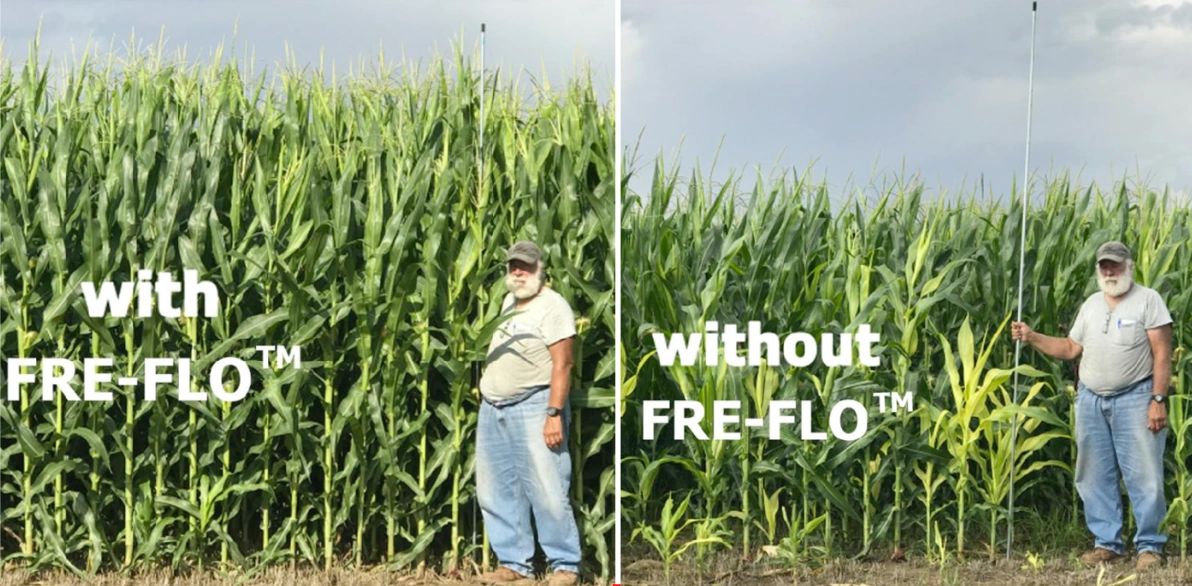 I learned about the effects of calcium carbonate salts especially with respect to soil science (fertilizers) from John Kempf via Matt Powers Regenerative Soil Science course. Here's an article on the interaction of hard water specifically calcium carbonate in agriculture:
 #plantstr #gardening #permaculture #grownostr
This device here takes the calcium ions in our water and carbonate ions in the water and combines them back together into a form of calcium carbonate crystals called vaterite, which is like talc powder when dried.
Since the ions are combined into the crystal and remain crystalized in the water, they won't bond with other ions in the water or soil.
This helps prevent a few things for us in the garden:
- the calcium and carbonate ions from bonding with other fertilizers, helping to lessen the amount of fertilizers needed and improving the efficiency of microbes in the soil getting needed nutrients to plants
- helps us from getting water spots on our plant leaves in the nursery and clogging irrigation parts with minerals. The vaterite will wash off in the rain rather than form crystals on the plant surfaces.
Incidentally we're using this to treat all the water in our house/farm since it's in-line with the line from the well. So this helps with clogged shower heads and sinks and water spots as well as making soap go farther.
Inside this device is a core which is coated with a catalyst to combine the calcium and carbonate ions into crystals. The rough surface helps add turbidity to the water to ensure the ions come in contact with the catalyst:
The core fits into a pipe which goes in-line with your water line, so it doesn't impeded the flow of water:
This gets cleaned out 2-3x per year with some CLR (Calcium-Lime-Rust) solvent just to clean up the catalyst. There are no filters or consumables other than the CLR cleaner.
Here is the website for the company describing the science behind it:
FRE-FLO WATER SYSTEMS, INC.
FRE-FLO WATER SYSTEMS, INC.
Conditioning Water Naturally Since 1972
Scientific American
The Chemistry of Bumper Crops [Excerpt]
Irrigation is more than just throwing water on a field—it can be a nuanced chemical conversation between humans and plants
 Here's a closeup of the bag. Looks like the cardboard is starting to break down in here.
 Not ideal that the tree isn't in the ground yet, but if you need to preserve some plants until you have time to plant them, this works pretty well for me.
I can share some other resources on Effective Microorganisms (EM) if you're interested.
The other thing cool about EM-1 was discovered after the Fukashima nuclear plant accident. At a nursery in Japan, they were testing the crops after the fallout to make sure that there were not radioactive elements present in the food.
One of the fruit nurseries does a soil drench and foliar application of EM-1 to build up the biology in the soil and on the leaves.
They found that the fruit from this nursery had very little or no contamination from the radioactive elements.
My understanding is the EM-1 helps establish good fungal and bacterial presence in the soil and on the leaves which forms a sort of protection from the radioactive elements. Instead of taking in the raw element as ions, the fungi is preventing the plant from taking them in as the plants are relying on the fungi to provide them with what nutrients they need, and not just taking them from the soil.
#grownostr #permaculture #gardening #plantstr
Not ideal that the tree isn't in the ground yet, but if you need to preserve some plants until you have time to plant them, this works pretty well for me.
I can share some other resources on Effective Microorganisms (EM) if you're interested.
The other thing cool about EM-1 was discovered after the Fukashima nuclear plant accident. At a nursery in Japan, they were testing the crops after the fallout to make sure that there were not radioactive elements present in the food.
One of the fruit nurseries does a soil drench and foliar application of EM-1 to build up the biology in the soil and on the leaves.
They found that the fruit from this nursery had very little or no contamination from the radioactive elements.
My understanding is the EM-1 helps establish good fungal and bacterial presence in the soil and on the leaves which forms a sort of protection from the radioactive elements. Instead of taking in the raw element as ions, the fungi is preventing the plant from taking them in as the plants are relying on the fungi to provide them with what nutrients they need, and not just taking them from the soil.
#grownostr #permaculture #gardening #plantstr