How to Clear RAM Cache, Buffers, and Swap in Linux Without Reboot "Like any other operating system, GNU/Linux has implemented memory management efficiently and even more than that. However, if any process is eating away your memory and you want to clear it, Linux provides a way to flush or clear the RAM cache. In general, it is not a good idea to manually free up Buffer and Cache in Linux which might be used by the Linux kernel, which is designed to manage these resources efficiently, and manually clearing them can disrupt system performance." So, you can choose to apply any of these commands, and they won't do any harm, but the closing thought is that you should not normally really need to do so. Linux will use available RAM anyway so do not think that if it only uses 20% of RAM that is better than 80%. See #technology #Linux #opensource
If you find OpenStreetMap a bit difficult to plan off-road routes, try OpenRouteService OpenRouteService (ORS) is an open source route planner service that leverages OpenStreetMap data to provide a variety of routing and spatial analysis services. It actually uses a forked and modified version of the GraphHopper routing engine (another option that can be used, and which is present inside OpenStreetMap as a routing alternative). I was trying to plan a 4x4 trail between two places, but was finding that OpenStreetMap was routing me via a gravel road I did not want to follow. OSM also only has one export format which is GeoJSON. Switching to GrassHopper within OSM did actually help choose the correct route, but then I found OpenRouteService. ORS has quite a few more options for adding and moving waypoints which allows you to more precisely plan your route. It also have 5 different export options including Standard GPX which I wanted. It allows a maximum speed to be set too, but sadly the minimum is 80km/h where I'd prefer to have set it to 50km/h for the route I was taking (still I can just mentally adjust the time). Interestingly too, you can deploy it yourself using Docker, with a Docker Compose file. Once you can your route, you can import that into any other navigation app, and use that in your vehicle. See #technology #opensource #navigation #openstreetmap image
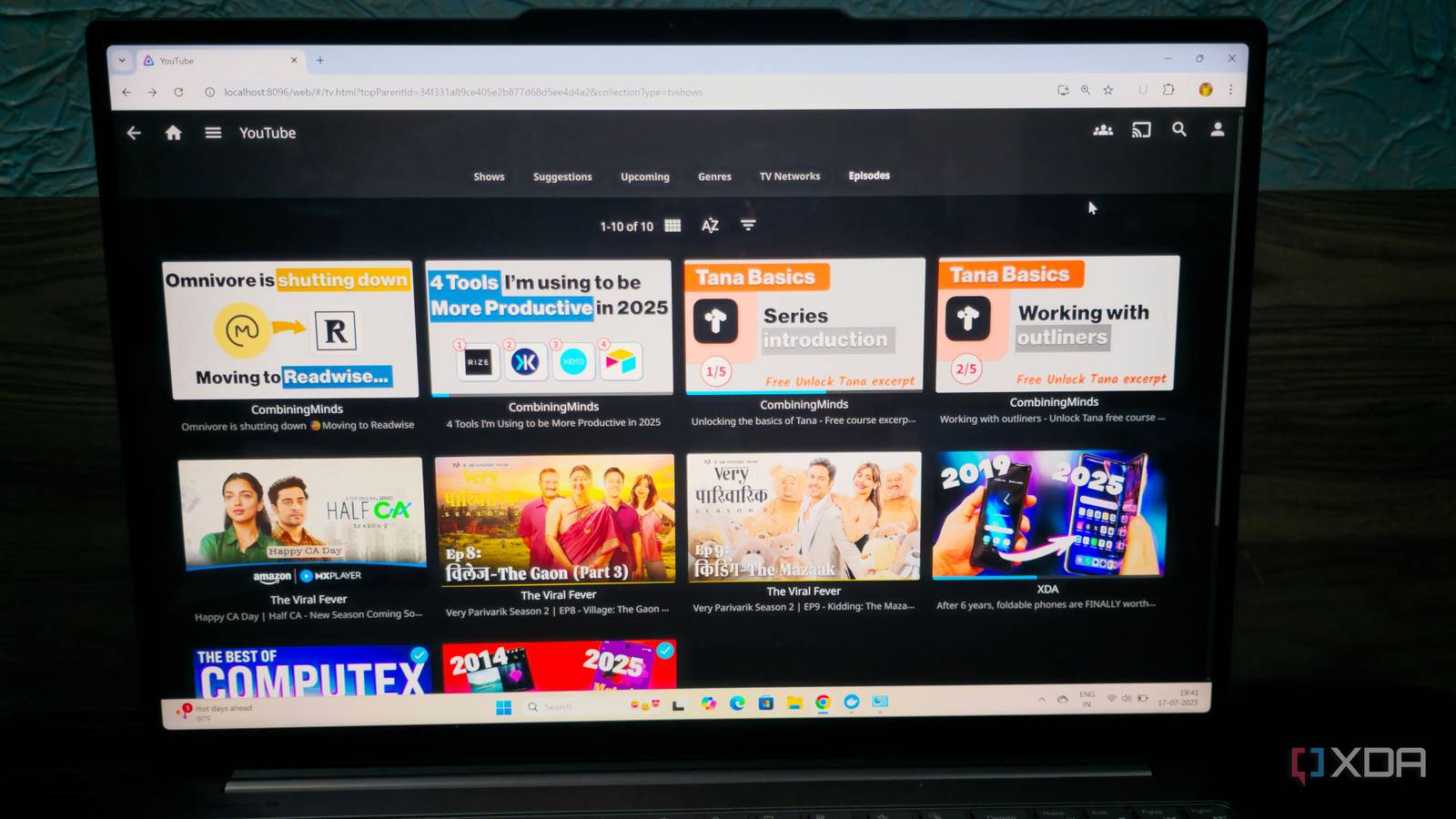
You can watch YouTube on Jellyfin with TubeArchivist This is quite interesting, especially for those with bandwidth issues or wanting to watch offline (dare I say without ads or tracking...). TubeArchivist actually will run completely self-contained on its own, but there is also a Jellyfin plugin that will integrate it into Jellyfin, and the power of Jellyfin is the organising and curating of what you watch. You can tweak many settings, including resolution, but of course it may still fill up your disk storage over time. There are quite a few handy stats though and that includes how much disk storage is being used. Also, interestingly, it will pull through the views and likes from YouTube. The linked article is especially useful with regard to the integration with Jellyfin. See #technology #videos #Jellyfin #opensource #selfhosting
Proton's New AI Assistant Lumo Offers a Private and Encrypted Chat Alternative On the plus side (not the Plus plan) this is an AI assistant that promises to keep your conversations completely private, even for the free version. "Proton says Lumo doesn't keep chat logs on its servers, and everything stays encrypted on your device using the same technology that protects the company's other services, so no one else can read your conversations – including Proton itself." On the not so Plus side, there is a Plus version, but it appears that Proton "Unlimited" plan subscribers, like myself, are limited to the free version only. Which is OK, but it may be time to reconsider that naming of that plan as it is getting further and further away from "unlimited". Some quick comparisons by running through some queries I already did in Perplexity is leaving me with a feeling that it is not as intuitive as Perplexy in terms of interpreting my actual question, and the answers are a bit more vague versus Perplexity's. It does however also provide sources for its answers (not all though). And of course a Proton subscriber, I don't get anything extra on the AI. So, I'm a little mixed on this one, but I suppose its privacy first focus may be plus for many. See #technology #AI #privacy
I'm finally able to use Wayland on an ongoing basis It was the need for Waydroid only working under only Wayland, that forced me to again have another go at Wayland this week on my Manjaro KDE Plasma. Yet again I hit some issues, one or two of which were show-stoppers, but I have finally overcome them, and although there are some irritations, they are now pretty minor, and I have workarounds to make everything work now. These were all issues that made Wayland feel, for me, it was not quite ready for full prime time. Key for me was to be sure that: * Steam games worked * KMyMoney finance app worked * My hundreds of shortcuts in Steam Deck worked * OBS Studio worked * VLC Media player worked * Wayland was stable without intermittent crashes I suspect that XWayland has largely been the reason everything now seems so much better. For KMyMoney I had long since sorted out that if I added the environment variable "QT_QPA_PLATFORM=xcb", this sorted out the non-display of the application. This may even not be needed any more. My biggest challenge had been to find alternatives to the excellent xdotool utility, which I use extensively in Bitfocus Companion for my hundred plus productivity shortcuts. Not only is xdotool exclusively for X11, but it is really easy to use as it uses the key names such as Enter, Space, etc. Yes there is ydotool, but it is really difficult to do set up say 'xdotool key Ctrl_L+f' in ydotool as this must be 'ydotool key 29:1 33:1 33:0 29:0' and just don't dare forget one of the key up sequences otherwise it will all break. I started looking into dotool this week as well as other options. Nothing beats xdotool for simplicity of use. I'm not sure why or when, but I tested out an existing xdotool shortcut... and it just worked! Wow, OK so this must be some XWayland improvement. This made me very happy, as converting everything to ydotool would be pain times 100. Wayland still has its 'security' limitations on insertions into keyboard/mouse input, so I do sometimes get a popup that I must accept, but it works! Wayland also does not like keystrokes to be inserted into background windows, but I see there is now an application called Kdotool which I must still explore. The other irritation was not being able to resize application windows. Normally, I'd move the mouse cursor to any corner of an app and then drag it bigger or smaller. Wayland was just not allowing this to happen. So what I've discovered to make this happen is two things: One can hold down the Meta key and then hold the right mouse button near that corner, and then do the usual resizing quite quickly. How will I remember the key combination? Well with my Stream Deck, as I now have a key mapped to hold the Meta key down, and reminds me to right-click the mouse. The other thing I discovered was, resizing does sort of work if you have extremely fine motor skills. You have to position the mouse about a pixel outside the corner of an app, and then you can grab and resize it like 'normal'. If you do this on the corner or just inside the app, it does not work. So the issue seems to be that the resize handle area is extremely small. I've looked inside the window theme settings and cannot seem to see anything that would make this larger. Yes, I know there is a setting called 'Enable extended resize handles' and I have that ticked already. There is also a window menu that has an option for resizing, but that is too clunky to use, so the above two workarounds see m to work OK for me for now. Another thing was my mouse cursor 'sticking' as it moved across screen one to two, and from two to three. It only happens when I move it fairly slowly. Turns out this is a feature for those not wanting to go past the screen edges. But there is a setting not only to adjust the stickiness, but also to disable that. So sorted too. I have some open apps that show blank icons in the toolbar. This is not too serious, as if I hover the mouse cursor over them, their preview shows what they are. For now too, it is only my Joplin notes app that does this under Wayland. OBS Studio works as-is. The only issue seemed to be the screen to capture. It is a super easy fix, but must be reversed if you ever use X11 again. Basically I had to just add a new screen capture and I think its properties were for Pipewire capture or something like that. Everything else worked as before. The last thing that was broken, was VLC media player was giving codec errors on playback. The short of it was I just needed to install additional codec plugins (not sure why, as it all worked as-is on X11). Or one can also install the Flatpak version of VLC and that works out of the box (or is that inside the container?). Other media players like MPV just worked as normal without any changes. Some screenrecorders, like Vokoscreen will work, but they lose their ability to record only a window or a rectangular area, as they are X11 specific. OBS Studio can do the job, but I also installed Kooha which does do rectangular areas under Wayland. I've now been using Wayland for two and a bit days. No need yet to go back into X11 to do anything, and Wayland has been stable so far. I've tried two games under Steam Games, and they are working, and my Stream Deck shortcuts for those games are also working fine. Very ironically, the Waydroid app is not starting after the second day. It was the reason for me re-trying Wayland again. But that is not really a Wayland issue itself. It looks like I'm now fully moved over to Wayland, and my mind is at rest, at least for the showstoppers I had before with it. image #technology #Linux #opensource #Wayland

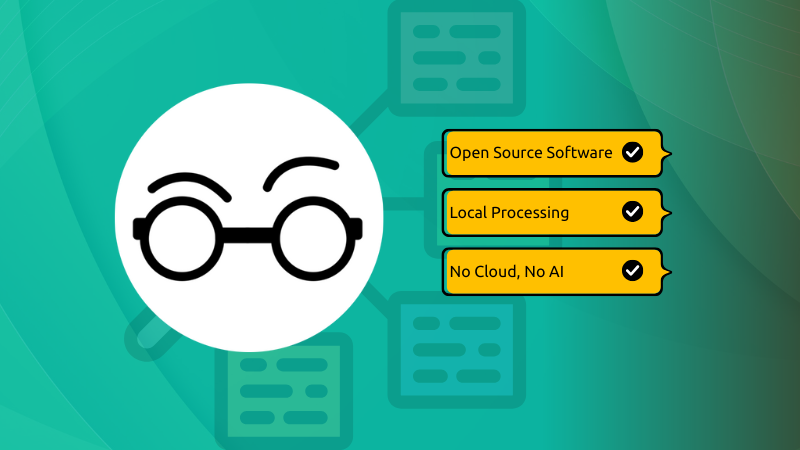
Harper is a grammar checker that is on-device and open source "When it comes to grammar checking, Grammarly is the premium tool for it. It's a proprietary tool and it was among the first one to make a mark as a web-based Grammar checking tool. Then there is LanguageTool that is/was open source, made in Germany and offers hosted service for free or for a price (you get additional features). LanguageTool was acquired a couple of years back and since then it's privacy policy has changed as it processes data on US servers, instead of European ones." I'm trying out Harper and although it works fine, it is a very new product (less than a year old), so there are some improvements that can be made. For example, I'd like to see auto-correction rules we can add ourselves for whenever I type teh to be changed to the. But it is being updated regularly I see. Right now too it only supports English (but being open source I think that will change soon). It has plugins for Firefox, Chrome, Obsidian, WordPress, and it can be integrated into various code editors as well as into JavaScript/TypeScript/Rust codebases. There are no mobile apps as the view is that most keyboards have their own built-in spell and grammar checkers. But the privacy-first approach does mean no data going into someone's cloud, and does mean also better speed and even working offline. That would also mean right now no syncing of personal dictionaries across devices, but I'm sure that can be added in time to use Nextcloud, Dropbox, and other personal cloud services. See and GitHub site at #technology #opensource #spellchecker #privacy
KDE Itinerary is a digital travel assistant with a priority on protecting your privacy This is an open source Linux and Android app, that syncs between devices using services such as KDE Connect, Nextcloud, or DavDroid. It does itinerary planning for various modes of transport and accommodation booking, complete with map views, boarding passes, train coach layouts, etc. It can even do real-time delay and platform change information for trains, and give weather forecasts for destinations along your trip (services permitting, I imagine). The focus is on privacy, though, so this does not seem to be a travel sharing app that shows photos etc. See #technology #opensource #travel
Jack Dorsey interview on the problems with Big Tech social media Really interesting insights into the beginnings of Twitter, and why any company running a centralised social network can be a problem. Investors/VCs = profits = permissions needed ≠ open protocols. He covers the cycle of how new profit based ventures want to lure in as many users as possible, and then close the taps and squeeze out as much profit as they can. As much as a profit corporation (or public benefit corporation) wants to do what is right for the Internet, the problem is their loyalty to shareholders/investors comes first. Jack explains the why's of this quite well in the interview, and the solution he sees is to have open protocols and permissionless access, as this would prevent many platforms from being able to take decisions that cause greater harm than good. The drive toward open standards was undertaken for much the same reason when it comes to all sorts of standards, whether they be document standards, units of measure, USB interfaces, tyre sizes, etc. Open standards promote interconnectivity, more competition, less vendor lock-in, etc. All of these benefits users and consumers. It is the same with social networks. A centralised social network is easy to target for censorship, managing permissions for access, government control, etc. Unfortunately centralised networks with centralised control and investors/VCs, means money to advertise, create great looking user interfaces, to influence politicians and media organisations, etc to use them. But these could still play a role with open protocols and permissionless access, where they channel that money into the influencing and great UI, but still compete openly using open protocols. Users can choose to use their app or service, but they won't be locked into it. Everything could change tomorrow if all users demanded only open protocols and permissionless access (both already exist with networks like Nostr, Secure Scuttlebutt, and others which do not require registering for an account on any server). Certainly, any social network would have to then follow the users... but that will never happen as that is not how users think or act in the real world. One way would be for governments to enact laws that only open protocols are allowed to be used, but that also won't happen in practice. We've seen many governments enact regulations that bound them to only using open document standards, and then they continued to use .docx formats. So it is quite clear that we know technically would be the best way forward, we also know those solutions actually exist, but how to move the masses to them to create a tipping point... Big unknown! So where we sit right now is, many users have already opted to go the way of open protocols and permissionless access, and although these networks are flourishing in their own right, they do not represent anything close to a tipping point of change. Part of the challenge may be that these are all separate networks (you need to choose one or more to use) and there is no network of networks (a single protocol to rule the interoperability between all networks). But despite that, the foundations are laid, and fundamental to that is that a user owns and controls their profile. No-one can take away or ban you from using your profile on Nostr, Secure Scuttlebutt, and similar networks. I'm hoping the Revolution.Social podcast series will start to create greater awareness around this challenge, and try to establish a greater global consensus around moving towards a new tipping point for creating a protocol to rule them all, owned by no-one, but used by all. That also needs to mean that your profile is portable enough to be used everywhere, and not be locked into a single network. But listen to episode one of this podcast to understand why this is needed and to understand why any corporation running a centralised social network, is never going to be in the interests of its users or the Internet at large. See #technology #socialnetworks #decentralisation #openstandards
Bluestar Linux: Arch Power, User-Friendly Polish “While the Linux universe is full of distros—314 active distributions, according to Distrowatch—there are arguably only a handful that strike a good balance between high performance and great aesthetics. One such distro is Bluestar Linux. Those coming to Linux from Windows or macOS will find the Plasma desktop environment to be a natural progression from their previous operating systems.” Personally, I'm quite hooked on a blend of an Arch based distro with a KDE desktop environment, so I found this option quite interesting. Arch distros are certainly getting more and more popular. My own days of distro hopping though have long been on pause, and I suppose I'll only hop again if something is very seriously bugging me on Manjaro. Being Linux though, any distro really does not stop you running anything made for Linux (and usually even for Windows), so don't think the default selection of software offered by Bluestar would in any way limit you. See #technology #opensource #Linux
A fascinating listen into the power of Public Relations, and how it became another term for propaganda. Awareness should be the school curriculum. "In this episode we'll meet the godfathers of American PR, Ivy Lee and Edward Bernays, and explore the origins and evolution of industry-funded experts who shaped everything from the breakfast table to our understanding of the economy and science." Listen at