Profile

User's avatar
npub1zlhg...de9x
npub1zlhg...de9x
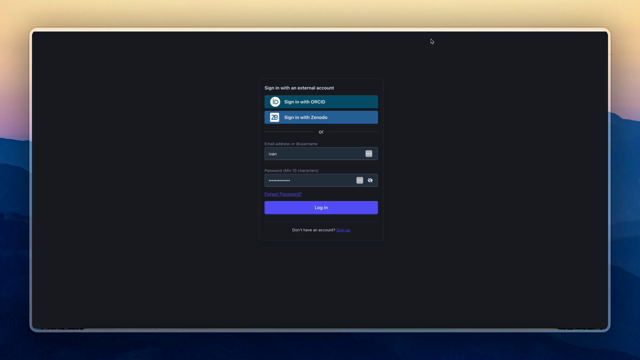
**Fediverse Report – #141** Mastodon is working towards making one of the longstanding pain points of the fediverse a thing of the past, with the new ability to show all replies to a post. Bonfire is making strides with their Open Science Network platform, and Ghost is now the most popular server software on the fediverse.## The News Mastodon is [talking about their latest 4.5 update]( ) and what that means for developers. One important feature is for Mastodon servers to find missing replies, one of the longstanding pain points of the fediverse. When you view a conversation on Mastodon, you don’t always see all the responses because posts are unevenly spread across different servers.Mastodon 4.5 tackles the missing replies problem with an automatic background fetch system. The feature was introduced in 4.4 but is now enabled by default with UI support. Since this background process takes time, Mastodon introduces a new feature for developers called AsyncRefresh. This tells apps that the server is still gathering replies, and apps can then refresh the conversation once everything’s loaded. The [Bonfire project]( ) allows for various types of fediverse platforms to be build. Bonfire can be used to build social platforms, this is called the Bonfire Social part. But Bonfire is also working towards an Open Science version of the platform, called [Open Science Network]( ). The platform connects to various scientific integrations, such as persistent researcher identifiers (ORCID), archival repositories and DOIs, and federated open-science infrastructure so discussion can become formalised, creditable and preserved. A demo video of what that looks like can be seen [here]( ). Bonfire says they expect to have a 1.0 release candidate ready before the end of the year. In other science-to-fediverse connections: [Encyclia]( ) is a bridge that connects ORCID records to the fediverse, and they started [bridging]( ) the first few researchers ORCID’s accounts to the fediverse. In the three months since Ghost has launched their fediverse integration, around [10k Ghost servers]( ) have turned on federation. This makes Ghost now the most popular server software on the fediverse, if you’re counting the number of servers, with around 30% of total fediverse servers now Ghost servers. In terms of server software is long-form writing highly popular in general, the second most popular software is WordPress , with 28% of servers running the WordPress. When it comes to active accounts it is quite a different story however, with Mastodon, Pixelfed and Lemmy together making up 90% of active accounts on the network. A new [research paper](https://dl.acm.org/doi/pdf/10.1145/3757688 ) that looks at how people on Mastodon curate their feeds. They write: ā€œIn summary, we found that while most participants clearly preferred chronologically ordered feeds, they were not completely against algorithms. In fact, we learned that people find chronological ordering most valuable when they check their feeds frequently, as it provides a timely overview of activities during their absence. However, they identified some scenarios in which algorithm intervention can be useful. For example, when they haven’t checked their feeds for longer, they express a desire for algorithmic recommendations to highlight missed content tailored to their interests. They disliked the machine learning algorithmic recommendations due to the lack of agency and transparency.ā€ To me there is a large space for the fediverse to further evolve regarding feeds. While it largely depends on a single chronological following feed, even within that space there is lots of room for innovation and new ideas (see Phanpy’s Catchup). It feels to me that many people are placing value on only having a chronological following feed due to their bad experiences with algorithmic recommendation feeds. While the harms of these kinds of algorithmic feeds are clear, there seems to be little interest in the fediverse to explore what other versions of healthy feeds would look like. IFTAS’s Jaz-Michael King [writes](https://jaz.co.uk/2025/10/30/there-is-one-fediverse-there-are-a-million-pickleball-courts/ ) about the fediverse and how we can create better social networking places. King: ā€œThat’s why the fediverse shouldn’t be chasing migrations. We don’t need to become the next Twitter. We need to be the first of something else.Growth will come, but not by chasing the habits of a declining model. Growth will come when we fully embrace what makes the fediverse distinct.ā€ Loops is continuing to get closer to being a fully federated short-forum video platform. The loops.video flagship server is now [federating]( ) with the rest of the network. However, the Loops apps for Android and iOS can are still incompatible with this latest version, so for now the Loops.video server cannot be used via the apps. Creator Daniel Supernault [says]( ) that these updates will be ā€œsoonā€, a term for which he holds a fairly wide definition of, historically. Hilda Bastian wrote a blog about how ā€˜[A Mastodon Migration From Bluesky Would Be Different’]( ), that got popular on the fediverse. Many people highlighted the quote ā€œā€œI’m going back to the Fediverse. Back to Mastodon. To the nerds, the hobbyists, the idealists. The people who don’t talk about reach, but about relevance. To those who understand that decentralization isn’t nostalgic, it’s the future. That digital sovereignty isn’t a gimmick, it’s a survival strategy. Yes, the Fediverse is sometimes clunky, nerdy, uncomfortable. But it belongs to us. It’s not over-regulated, not driven by capital, not buggered up by algorithms. It’s what social media once aspired to be: A network of people, not brands.ā€œ What I find interesting about the quote is that it describes the self-identification of the fediverse very well. The fediverse is indeed clunky and nerdy, operated by hobbyists and idealists. It’s one of the main powers that allows the network to sustain itself for so long. But I do feel that people who highlight this in an approving manner do not really grapple with the extent these same characteristics interfere with goals to make the fediverse a mainstream platform. What makes the fediverse appealing for it’s current user base is not what makes it appealing to a wide audience. There’s an uncomfortable tension here: growth and mainstream appeal of the fediverse might just make it lose what people enjoy. Or even stronger: these same characteristics of nerdy clunkiness is also what it prevents from mainstream growth.## The Links<li>A <a href="https://community.hachyderm.io/blog/2025/10/27/a-minute-from-the-moderators/">blog post</a> by the Hachderm.io server moderators on ā€œHow can you use mental health to protect yourself online?ā€ as a fediverse moderator.</li><li>Fediverse marketplace platform Flohmarket is <a href="https://mastodon.xyz/@Profpatsch/115453765333062690">working</a> on the ability to log into the platform with any fediverse account.</li><li><a href="https://framapiaf.org/@peertube/115457577086395939">PeerTube is now 10 years old!</a></li><li><a href="https://mitra.social/objects/019a17cf-e370-2278-c196-713c73e5cdea">This week’s fediverse software updates.</a></li><li>A <a href="https://furry.engineer/@soatok/115429079922221582">currently-in-development project</a> to add E2EE to the fediverse.</li>#nlnet image


**Fediverse Report – #138**## The NewsWeDistribute has [published an extensive overview](https://wedistribute.org/2025/10/wafrn-chaotic-good/ ) and review of [Wafrn]( ), the Tumblr-like platform that is both on the fediverse as well as on ATProto. Wafrn is a unique platform in the open social web, and it is the first and only platform that fully integrates both protocols. The name Wafrn explains the tone of the project well: it stands for ā€˜We Allow Female Representing Nipples’, which is a reference to the language Tumblr used when they banned porn. Because Wafrn natively integrates both protocols, there is no bridging involved like there is with Bridgy Fed, and a Wafrn account connects with all accounts on both networks, although the ATProto features are somewhat limited and not all implemented. Wafrn also recently released a new feature to [migrate your Bluesky account]( ) to a Wafrn server. This gives another option for people who are looking to move away from Bluesky and are interested in the fediverse, without having to give up their connection to the rest of the Bluesky network. Short-form video platform Loops has [announced]( ) it is joining the fediverse. In an announcement post, creator Daniel Supernault explains that Loops has now implemented support for ActivityPub. The [marketing](https://www.kickstarter.com/projects/pixelfed/pixelfed-foundation-2024-real-ethical-social-networks ) on Loops and the fediverse was always a bit fuzzy, while it was advertised as a fediverse platform, the actual fediverse integration was still in development. With this update, Loops is now using ActivityPub. However, this does not go for the main Loops server, Loops.video, just yet, as Supernault [says]( ) that he is ā€œworking on an updated app build that supports the new APIs and other servers besides just the hardcoded loops.video server!ā€ Supernault [says]( ) that this will happen ā€˜this week’, although the project has missed deadlines before. Still, for those people who are self-hosting a Loops server, the code for federation is now indeed available. In the update, Supernault also talks about some of the technical design choices that he’s made for federation with Loops. Loops servers use the ā€˜Note’ content type to send out the videos. This means that a Loops video is effectively quite similar to a microblog made on a platform like Mastodon or Misskey, which also use the ā€˜Note’ type. Most platforms indeed use ā€˜Note’, as this allows for compatibility with Mastodon. ActivityPub allows for a wide variety of content types (called Activities, which is where the protocol gets its name from), but in practice most platforms fall back to ā€˜Note’, even when other types (like ā€˜video’ for Loops) would make more sense. It indicates one of the challenges of the open-ended nature of how ActivityPub works: the protocol allows for a diverse set of Activities, but in practice it is more beneficial for most platforms to fall back to a single type, that all other platforms also use. [An excellent overview of last week’s FediForum](https://thenewstack.io/everything-big-starts-small-building-open-social-web-apps/ ) by Richard MacManus for The New Stack. MacManus covers the keynote speech, as well as some of the products that were demoed at the event: alternative app store AltStore, how you can now move your Mastodon account to Bluesky with Bounce, as well as two platforms currently in development that are getting close to release: the privacy-focused photo sharing app Frequency, and the monetisation platform CrowdBucks. Pandacap is a single-user artwork gallery and feed reading platform, that supports a wide range of protocols. It supports ActivityPub, ATProto, RSS. It also has the option to crosspost your image posts and text posts to attached DeviantArt, Fur Affinity, or Weasyl accounts. Pandacap does not have a timeline like most platform, instead opting for a design that centers around an inbox, similar to feed reading apps for RSS. Pandacap has been around for a bit, but I had completely missed it and don’t think I had ever covered it before. PeerTube is now [officially]( ) recognised as a [Digital Public Good]( ). A digital public good recognized by the Digital Public Goods Alliance is an open-source resource that uses approved open licenses and demonstrably supports at least one of the UN’s Sustainable Development Goals (SDG). For PeerTube this means that it contributes to SDG 9, which aims to ā€œsignificantly increase access to information and communications technology and strive to provide universal and affordable access to the Internet in least developed countries. PeerTube also contributes to the SDG for developing ā€œeffective, accountable and transparent institutions at all levelsā€ and ensuring ā€œresponsive, inclusive, participatory and representative decision-making at all levels.ā€ Fedify, the ActivityPub server framework that [secured two sources of funding last week]( ), has a major new [update]( ), with security enhancements, improved DX, and expanded framework support. An [extensive interview]( ) with the creators of event planning app Mobilizon. Mobilizon got created by Framasoft, the organisation who also builds PeerTube. Framasoft saw the project as completed, and handed the further development over to Kaihuri, a small French organisation who also runs one of the most active Mobilizon instances. The Project Libres podcast interviews Alexandra, one of the two people behind Kaihuri, in French, but a transcript in English is available. ## The Links<li><a href="https://mitra.social/post/0199cfeb-216a-fe8c-33b9-014862b4405a">This week’s fediverse software updates.</a></li><li><a href="https://video.fedihost.co/w/gt2QJzod4UKHQ8Z9jb3USB">The Solo Instance Problem</a> – a PeerTube video by FediHost in which they talk about some of the challenges for self-hosting a solo instance for the fediverse.</li><li>The Social Web Foundation <a href="https://socialwebfoundation.org/2025/10/10/interview-with-john-onolan-about-ghost-6/">talks</a> with Ghost CEO John O’Nolan about Ghost 6 and ActivityPub.</li><li><a href="https://discoverfedi.app/">DiscoverFedi.app</a> is a new site that lets you explore other instance’s timelines in various manners, with an <a href="https://mkultra.monster/social-media/2025/10/13/discover-fedi/">accompanying blog post</a> explaining the project.</li>#nlnet image
**Fediverse Report – #137**## The NewsAltStore, an alternative app store for iOS, is [joining]( ) the fediverse. The store launched early last year as an alternative to Apple’s own App Store, thanks to the EU’s Digital Markets Act. AltStore has been growing over the last year, and is now taking the next steps. AltStore is now connecting to the fediverse via their own Mastodon server. The integration that AltStore has build consists of every app on the store automatically also becoming a fediverse account, hosted on their [AltStore Mastodon server.]( ) They explain: ā€œUsing ActivityPub, we plan to federate apps, app updates, and news alerts from AltStore to the open social web. Each AltStore source will receive its own ActivityPub account, which can then be followed by any other open social web account. You’ll be able to like, boost, and reply to everything, and most importantlyĀ all these interactions will appear natively in AltStore.ā€ For now, they are using the microblogging format (ActivityPub ā€˜Notes’), but AltStore plans to publish new native ActivityPub objects specifically for software releases, that can be used by other fediverse app market places. The organisation also has raised 6M USD in VC funding for further development. They believe that the long-term success of the AltStore is tied closely to the success of the open social web, and they are donation 500k USD to various fediverse projects. AltStore is donating 300k USD to Mastodon, and the other 200k USD is split across various fediverse projects: the bridging software Bridgy Fed (which AltStore uses to also connect their store to Bluesky), the fediverse clients Ivory, Phoenix and Tapestry, the mastodon server mstn.social (as operator Stux is also a regular publisher to the AltStore), and the platforms Akkoma, PeerTube and Bookwyrm, as well as the Fedify ActivityPub software framework. Recently I [wrote]( ) about how the app stores are the most likely choke point that authoritarian governments will use to apply pressure to force open social web platforms into compliance. Alternative ways of distributing apps that fall outside of the control of two Big Tech platforms is a crucial part of keeping the open social web open. AltStore connecting their marketplace to the fediverse is a great step into taking back control from these two gatekeepers, although much more work remains to be done. Over on ATProto people are also experimenting with distributing apps and software packages via the protocol, and the space of app distribution via open protocols is primed for more experimentation and projects. Mastodon has shared more [information]( ) on their upcoming plans to introduce ā€˜Packs’ to Mastodon. The design is based on Bluesky’s Starter Packs, which is a list of accounts you can create and share for other people to easily follow. Mastodon is taking a careful approach to designing the feature, and is actively soliciting feedback from the community. The main change that Mastodon is making is in giving people control over if and when they can appear in a Pack, as well as giving people the ability to easily remove their account from a Pack if they so desire. One of the pain points for Starter Packs on Bluesky is that people got included on Starter Packs with no easy way to remove them from the list. When the Starter Pack got popular, that resulted in an account getting lots of new followers, but in a way that collapsed the context of the account, resulting in conflict. One of the [challenge]( ) points with Starter Packs is that the identity of an account does not always match with what they are actually posting about. For example, if someone has a PhD in philosophy and sometimes posts about that, they might get added to a philosophy Starter Pack. But in practice they might mostly post about US politics, or reposts anime, which creates a mismatch in expectation and friction between the original account and the new follower from a Starter Pack. Bluesky’s Starter Pack have gotten a lot of praise for their effectiveness in onboarding entire communities at the same time during migration waves, when entire communities move from one platform to another all at once. This seems to be one of the major reasons for Mastodon to also adopt a similar feature with Packs. But for Bluesky, the feature has turned out to be a mixed bag, with the developer who created Starter Packs being decidedly [mixed]( ) on the feature herself. She [says]( ) that Starter Packs are indeed highly valuable during migration waves, but that in other times they are susceptible to abuse for engagement-hacking, as well as the context collapse earlier. Mastodon is taking a careful approach with their Pack feature, and they are [actively engaging]( ) with the learnings from Bluesky, so it’ll be interesting to see how the feature will turn out in Mastodon. You can soon [transfer]( ) your social graph from Mastodon to Bluesky, with the new version of Bounce. [Bounce](https://bounce.anew.social/ ) is a tool by A New Social, the organisation behind the bridging software that connects various open social web protocol. With Bounce, you can move your account from one social networking protocol to another. The organisation [earlier released a version]( ) which allows you to port your Bluesky account to the fediverse. With the new update, which will be available on October 20, you can now do the same in reverse: move from the fediverse to Bluesky. The projects by A New Social, both Bounce and Bridgy Fed, represent an effort to give people more control over their own digital identity and social graph. Both ActivityPub and ATProto give people the option to move their account to a different platform on the same protocol. With tools like Bounce, this capability is enhanced even more, with the ability to move an account to a different protocol as well. For people more interested in moving from Bluesky to the fediverse, the tool [Slurp]( ) now allows you to import your Bluesky posts into your fediverse account. Fediverse podcasting platform Castopod now has a [repository]( ) for plugins for the platform. With [plugins]( ) people can customise their Castopod instance to their own needs. As anyone can create plugins, this allows for greater diversity in development of the software. Castopod also announced during this week’s Fediforum that there are now over [1000 podcasts]( ) using Castopod. A pro-Russian propaganda network has [targeted]( ) the fediverse and Bluesky, ā€œpromoting pro-Russian narratives and linking to Telegram channels associated with known state-aligned disinformation operationsā€, IFTAS reports. Their findings are based on the work of the [antibot4navalny research team]( ), which notes that the campaign makes use of the Bridgy Fed to get their accounts that impersonate news organisations into Bluesky. The ActivityPub framework Fedify has gotten a [192K EUR grant]( ) by the Sovereign Tech Fund to further strenghten the ecosystem. The grant will be used for further development of the framework. Fedify is already in use by Ghost, and is also supported by Ghost. Mastodon is [soliciting]( ) feedback for their new Terms of Service for their mastodon.social and mastodon.online servers. The organisation originally proposed a new ToS in June, but retracted those after criticism from the community. ## The Links<li><a href="https://shkspr.mobi/blog/2025/10/getting-started-with-mastodons-quote-posts-technical-implementation-details-for-servers/">Getting started with Mastodon’s Quote Posts – technical implementation details for servers</a></li><li><a href="https://lemmy.ml/post/37159433">Lemmy development update for September 2025.</a></li><li><a href="https://openchannels.fm/how-decentralized-social-platforms-grew-from-identica-to-modern-day-mastodon/">How Decentralized Social Platforms Grew from Identica to Modern-Day Mastodon</a> – a podcast interview with Evan Prodromou by WordPress-ActivityPub developer Matthias Pfefferle.</li><li><a href="https://blog.joinmastodon.org/2025/10/trunk-tidbits-september-2025/">Trunks &amp; Tidbits, Mastodon’s monthly engineering blog, for September 2025.</a></li><li>A new <a href="https://fediversobr.org/">forum</a> for the Brazilian fediverse community.</li>#nlnet image
**Fediverse Report – #136**## The News[Newsmast]( ), the UK organisation that helps news organisations create their own social media places on the fediverse, has taken a new direction. In a [blog post]( ) founder Michael Foster describes how news organisations do not gel well with the original approach of either Mastodon servers or the channel.org communities. The finding of Newsmast is that this is too confusing and tech-centric for news organisations to really grasp. Instead, Newsmast is now going in the direction of apps, as ā€œindependent news publishers and campaigning organisations love the idea of having an app.ā€ The product offering is that Newsmast creates a white-label of an app that uses their (fediverse-enabled) backend, which the news organisation can theme and customise to their needs. This gives news organisations an app, which is what they want and conceptually relate to, while also giving them a community that can connect to the wider open social web if they want to. Newsmast has already rolled out one of such apps, for the Media Revolution campaign. Foster says that they are about toĀ start working with a UK-based Fediverse community for another such project, where the Newsmast white-label app will be used to create a customised app for the community. A new [paper](https://openjournals.uwaterloo.ca/index.php/JoCI/article/view/6644/6411 ) by [Christina Dunbar-Hester]( ) about her experiences dealing with targeted harrassment on Mastodon, describing what some of the moderation practices in a decentralised system actually looks like. She writes: ā€œAs currently configured, Mastodon values noncentralization, but it stops short of rewriting power relations to encodeheterogeneity (Suchman, 2002). FLOSS universalism and FLOSS relations of domination pervade both the user base and many (certainly not all) ā€œpower usersā€ who assume control of and take responsibility for many of the parts of the network through moderationand administration roles.ā€ The entire paper is worth reading, Dunbar-Hester concludes: ā€œa possibility for a more accountable decentralized social media network might *resemble* Mastodon, but prioritize intentional, self-organized choices about *equitable* online sociality that foreground social powerā€. [ActivityPub Fuzzer]( ) is a new tool to help ActivityPub developers test their interoperability with other fediverse projects. Fuzzer is a program that runs locally, and emulates how other fediverse projects structure their messages. This allows a developer to test interoperability against a large array of fediverse platforms. The open nature of ActivityPub makes it so that interoperability between platforms is trickier than it might be assumed, with various platforms all having their slightly different interpretations of the protocol. Fuzzer is created by Darius Kazemi at the Applied Social Media Lab. IFTAS, the Independent Federated Trust And Safety organisation has [announced]( ) they are shutting down the IFTAS Connect community at the end of the month. The IFTAS Connected community was a place for fediverse moderators to come together and have conversations about moderation, share resources and more. IFTAS also runs their yearly moderator [Needs Assessment survey]( ), and one of the consistent [findings](šŸ“„.pdf ) is that fediverse moderators often struggle with guidance, toolings and burnout. Such a community was meant as a place for moderators to connect with each other and help towards those issues. However, IFTAS found that after 18 months of operating the place, usage remained low. It indicates one of the persistent challenges for fediverse moderation: moderation is largely done by each server independently, with little cooperation between communities which have a lot in common. There is a large potential in the fediverse for collaboration between communities, but making this collaboration happen has proven to be challenging. WordPress is continuing towards becoming a full fediverse platform with their ActivityPub plugin. The latest update of the plugin now [supports]( ) following a ā€˜reader timeline’, showing all the posts of accounts you follow from your WordPress account. There is now also support for Mastodon’s new quote posting feature, allowing you to quote post the WordPress post from Mastodon. Matthias Pfefferle, developer of the WordPress ActivityPub integration, also talked on his [podcast]( ) to Dave Weiner, creator of the RSS standard, about WordPress, textcasting and open web standards. Bandwagon, the fediverse platform for music sharing, discovery and sales, shares their [updates]( ) of the last few months, with various improvements to the platform across the board. Developer Ben Pate says that the next big priority is to add account migration. Elsewhere in fediverse music, a [blog post]( ) on how to revive indie music videos on the fediverse. A selection of [tools]( ) for Lemmy, which gives you the option to view trends, threadiverse statistics, a leaderboard of most active users, stats on individual users, and more. Fediverse advocate Elena Rossini has published an extensive [fediverse starter guide]( ). The guide explains what the fediverse is ([via her excellent video](https://videos.elenarossini.com/w/64VuNCccZNrP4u9MfgbhkN )), the various types of software that are available, the values of the fediverse, and why it matters. It is these last two points I think are noteworthy: the fediverse is inherently a political project, and it is important to understand the values of the network as a context of why the network exists and why people care about it.## The Links<li><a href="https://mitra.social/post/019987c8-484d-f913-d511-5e8329f9741f">This week’s fediverse software updates.</a></li><li>A <a href="https://rasterweb.net/raster/2025/09/26/mapping-bike-rides-part-iv/">blog post</a> on how to map your bike rides using the fediverse <a href="https://wanderer.to/">wanderer.to</a> platform.</li><li>A blog post reflecting on the <a href="https://destructured.net/labeling-politics-mastodon">Labeling politics on Mastodon.</a></li><li>The Fireside Fedi livestream had episodes talking about <a href="https://video.firesidefedi.live/w/hetrYEY5ZBYFNjKtdyEBhS?start=3s">ActivityPub, the W3C and more with Ben Goering</a>, and with <a href="https://video.firesidefedi.live/w/osXBTapZ1ocYoyYwkXEzgi">Reiver about FediCon and CrowdBucks.</a></li><li>Utrecht University (shout-out to my alma mater) <a href="https://dub.uu.nl/nl/nieuws/directie-its-wil-dat-uuers-mastodon-gaan-gebruiken">wants their students to use Mastodon.</a></li><li>Fediverse advocate Chris Trottier is in the process of setting up a <a href="https://atomicpoet.org/objects/2289eb47-0f39-463d-a056-8568e12e70f3">PeerTube co-op</a>.</li>#nlnet image
**Fediverse Report – #135** Last week I wrote an article about Bluesky, political violence and how language is actively being shaped in a way that sets up for a potential future crackdown on Bluesky by the authoritarian regime. The article is on the surface about Bluesky, but I think it is relevant to the fediverse as well. The main idea is that the open social networks are actively being framed as a place for ā€˜left’ people and democrats, while at the same time there are louder calls for the US government to crack down on all left and democratic spaces. Furthermore, an [article]( ) by the Federalist lays out what strategy might likely be used: leverage the control over the app stores. The NewsMastodon is [launching]( ) paid services to make money beyond donations and grants. The company will now offer hosting, moderation, and support services for organisations that want their own servers on the fediverse. The new services target organisations that want their own presence on the fediverse, but lack the operational capacity to manage a Mastodon server. Mastodon will handle server setup and maintenance, and optionally provide moderation services as well. The organisation says this will create steady income while keeping their donation-based model. This new service is mainly targeted at institutions, and so far, Mastodon has onboarded three government agencies. The most high profile is the European Commission’s Mastodon server, as well as a German state and a French city. In the announcement post, the organisation is clearly aware of the potential criticism of how this might interfere with goals of decentralisation. But with the number of fediverse servers in the tens of thousands, the fediverse is in a state where onboarding a additional institutions via managed servers will likely increase, not decrease, the resilience of the network. My personal observation working with the onboarding of governmental organisations in the past is that one of the main barriers is that of institutional capacity. Even when a government organisation has decided they want to have a presence on the fediverse, a significant amount of the challenge in getting there is figuring out internal responsibilities and capabilities. Virtually no (government) organisation has experience with handling these new types of questions, like how to handle moderation for example. As the fediverse grows and it becomes normalised for organisations to run their own fediverse server to handle their social networking presence, organisations can build up institutional capacity to easily run their own server. In the meantime, Mastodon’s new service can bridge the gap for organisations who want to build their own independent social networking presence, but does not have the capacity to manage everything that this entails. [Gaza Verified]( ) is a grassroots initiative in the fediverse to verify the accounts of Palestinians in Gaza. The ongoing genocide in Gaza has lead to Palestinians to internet platform for fundraising and donations. This in turn has also caused scammers to take advantage of the situation by creating fake accounts pretending to be Palestinians and create [scam fundraisers]( ). This creates a challenge for moderation teams, for whom it is [challenging]( ) to figure out how to know if you are dealing with a real or scam fundraiser. Gaza Verified aims to help by having people known within the fediverse community have Signal video calls with the accounts of Palestinians on the fediverse, as well as keeping regularly in touch with them. In turn they use the Mastodon verification system to provide credibility. The Gaza Verified project also held a general fundraiser for all the Gaza Verified people, [raising more than 22k USD]( ). PieFed 1.2 [update]( ) includes a variety of new features, including support for events and the ability to be reminded about a post in the future. It also allows admins to restrict NSFW content in certain countries. This helps with compliance for age verification laws, such as the UK’s OSA. [Best-o-Masto]( ) is an alternative Mastodon client with a limited and specific purpose: ā€œWhen you open the app, it shows you the 20 most popular posts from accounts you follow in the last few hours. You can favourite those posts, boost them, or open them in a real Mastodon client, and that’s about it.ā€ Best-o-Masto is available for iOS and iPadOS for free. [Flare]( ) is a new open source client that combines all open social networks into a single client. Flare supports Mastodon, Bluesky, Misskey, and RSS. It cannot yet combine all those post into a single unified timeline, a feature that is still on the roadmap. This compares to a similar app like [Openvibe]( ), which also supports Nostr and Threads. Flare also has a local history, where it saves posts from your feeds locally, which can then be searched by you later. This feature, of saving posts locally for search, caused a great amount of in early 2023 in the fediverse with [Searchtodon](https://searchtodon.social/Adventures-in-Mastoland.html ). How this feature in Flare will be perceived now, 2,5 years later, might be a good indication if values have shifted on the fediverse.## The Links<li>The German minister of Digitalisation <a href="https://social.bund.de/@BMDS/115231008702916101">addresses the Mastodon community</a> in a short video.</li><li>The <a href="https://catodon.social/notes/acw8haqar91a1s9d">Catodon project is shutting down</a>. Catodon was a fork-of-a-fork of Misskey, and the announcement post has more details on the background of the project as well.</li><li>PeerTube latest app <a href="https://framapiaf.org/@peertube/115247835478732259">update</a> allows you to download videos.</li><li><a href="https://mitra.social/post/01996401-5448-91c3-6b99-781bc3b76916">This week’s fediverse software updates.</a></li><li><a href="https://hackers.pub/@cocoa/2025/how-to-build-a-simple-activitypub-reminder-bot-in-python">How to Build a Simple ActivityPub Reminder Bot in Python</a>.</li> image